Request Demo
Last update 18 Nov 2025

Ospedale Luigi Sacco
Last update 18 Nov 2025
Overview
Related
NCT05271786
WEANING FROM TRACHEOSTOMY: A MULTICENTER, OBSERVATIONAL REVIEW OF PROCEDURES AND PROTOCOLS AND A RESTROSPECTIVE VALIDATION OF THE QSQ SCORING SYSTEM

100 Clinical Results associated with Ospedale Luigi Sacco
Login to view more data
Login to view more data
01 Sep 2025Travel Medicine and Infectious Disease
An outbreak of acute pulmonary histoplasmosis after exposure to guano in a hollow tree in Ecuador
Article
Author: Gardin, Samuele ; Grancini, Anna ; Wheat, L Joseph ; Lo Menzo, Sara ; Brundu, Monica ; Mazzitelli, Maria ; Cattelan, Annamaria ; Antinori, Spinello ; Torre, Alessandro ; Schiuma, Marco ; Gervasoni, Cristina ; Giacomelli, Andrea ; Casalini, Giacomo
BACKGROUND:
Outside of classic endemic areas, histoplasmosis has gained attention due to an increased incidence in immunocompetent travellers, attributable to changes in behaviours during travel.
METHODS:
A cluster of five patients who presented with acute pulmonary histoplasmosis after travelling to the Ecuadorian Amazon Region is described in this article.
RESULTS:
Five patients (four females and one male), all in their 20s, presented with acute pulmonary histoplasmosis between sixteen and twenty-three days after the potential airborne exposure after travelling to the Ecuadorian Amazon Region. The initial common exposure is presumed to have occurred during activities inside a hollow tree trunk with guano exposure. Initial symptoms included fever and arthro-myalgias in three cases, and gastrointestinal symptoms with asthenia and lymphadenopathy in the other two cases. Symptoms progressed variably within one week to include chest pain, dyspnoea, and night sweats. Serology was negative in 2 patients during the acute phase but subsequently turned positive in all five cases. Chest CT scans performed within one week from symptom onset in all cases revealed multiple bilateral nodules. In three cases, follow-up chest CT scans performed four-six weeks after symptom onset showed the evolution of nodules into cavitations despite treatment with itraconazole.
CONCLUSIONS:
This cluster of histoplasmosis cases highlights the clinical variability associated with this fungal infection. The development of pulmonary cavitation during the acute phase of the disease is an infrequent finding that poses additional clinical challenges and suggests the requirement of rigorous follow-up in individuals with acute histoplasmosis returning from the Amazon region.
01 Aug 2025European Journal of Internal Medicine
Clinical factors associated with limited therapeutic implementation in patients with heart failure and reduced ejection fraction hospitalized in internal medicine wards
Letter
Author: Bartoli, Arianna ; Cogliati, Chiara ; Ceriani, Elisa ; Donadoni, Mattia
01 Aug 2025CLINICAL INFECTIOUS DISEASES
NAT2 Slow Acetylator Phenotype as a Significant Risk Factor for Hepatotoxicity Caused by Antituberculosis Drugs: Results From a Multiethnic Nested Case-Control Study
Article
Author: Montrasio, Cristina ; Civati, Aurora ; Galimberti, Miriam ; Clementi, Emilio ; Cheli, Stefania ; Battini, Vera ; Schiuma, Marco ; Gori, Andrea ; Antinori, Spinello ; Torre, Alessandro ; Mosini, Giulia ; Mariani, Ilaria ; Carnovale, Carla ; Radice, Sonia
Abstract:
Background:
Under standard therapies, the incidence of drug-induced liver injury (DILI) in patients with tuberculosis ranges from 2% to 28%. Numerous studies have identified the risk factors for antituberculosis DILI; however, none have been conducted in a multiethnic real-world setting. The primary outcome of the current study was to identify the risk factors that could be used as the best predictors of DILI in a multiethnic cohort.
Methods:
A nested case-control study was conducted in patients at the tuberculosis clinic of Luigi Sacco Hospital in Milan.
Results:
The study included 102 patients (mean age [SD], 45.6 [15.6] years). For each patient with hepatotoxicity, 2 controls were matched for sex, age, body mass index, tuberculosis/tuberculosis infection diagnosis, and index date. We found that N-acetyltransferase 2 gene (NAT2) slow acetylator status was the best independent predictor of DILI (odds ratio, 5.97 [95% confidence interval, 1.38–25.76]; P = .02].
Conclusions:
NAT2 genotype–guided dosing may help optimize antituberculosis drug treatment and prevent treatment failure.
Clinical Trials Registration:
ClinicalTrials.gov NCT06539455
100 Deals associated with Ospedale Luigi Sacco
Login to view more data
100 Translational Medicine associated with Ospedale Luigi Sacco
Login to view more data
Corporation Tree
Boost your research with our corporation tree data.
login
or

Pipeline
Pipeline Snapshot as of 11 Mar 2026
No data posted
Login to keep update
Deal
Boost your decision using our deal data.
login
or

Translational Medicine
Boost your research with our translational medicine data.
login
or

Profit
Explore the financial positions of over 360K organizations with Synapse.
login
or

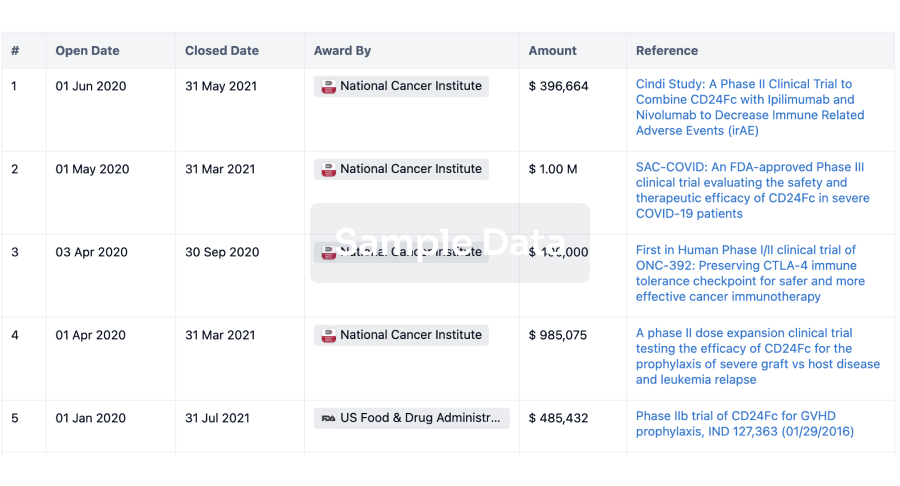
Grant & Funding(NIH)
Access more than 2 million grant and funding information to elevate your research journey.
login
or
Investment
Gain insights on the latest company investments from start-ups to established corporations.
login
or

Financing
Unearth financing trends to validate and advance investment opportunities.
login
or

AI Agents Built for Biopharma Breakthroughs
Accelerate discovery. Empower decisions. Transform outcomes.
Get started for free today!
Accelerate Strategic R&D decision making with Synapse, PatSnap’s AI-powered Connected Innovation Intelligence Platform Built for Life Sciences Professionals.
Start your data trial now!
Synapse data is also accessible to external entities via APIs or data packages. Empower better decisions with the latest in pharmaceutical intelligence.
Bio
Bio Sequences Search & Analysis
Sign up for free
Chemical
Chemical Structures Search & Analysis
Sign up for free