Request Demo
Last update 08 May 2025
Lewis Katz School of Medicine
Education|United States
Education|United States
Last update 08 May 2025
Overview
Related
100 Clinical Results associated with Lewis Katz School of Medicine
Login to view more data
0 Patents (Medical) associated with Lewis Katz School of Medicine
Login to view more data
179
Literatures (Medical) associated with Lewis Katz School of Medicine21 Apr 2025·Cancer Research
Abstract 6222: Racial and socioeconomic influences on survival outcomes in small cell lung cancer: Analysis of concomitant radiation, immunotherapy, and demographic variables
Author: Gandler, Helen ; Desai, Parth Anil ; Adavelly, Pranay
21 Apr 2025·Cancer Research
Abstract 4926: African American patients with stage III laryngeal squamous cell carcinoma have poorer survival despite similar definitive treatment and follow-up care
Author: Desai, Parth Anil ; Adavelly, Pranay ; Miyamoto, Curtis ; Price, Jeremy ; Gandler, Helen ; Bauman, Jessica
01 Apr 2025·Journal of the American Academy of Dermatology
A Technique for Enhanced Tension Control: The Benefits of Presetting Sutures in Wound Closure
Article
Author: Doss-Hom, Nicholas S ; Levit, Eyal K ; Levit, Sophia K
1
News (Medical) associated with Lewis Katz School of Medicine15 Jul 2022
ROCKVILLE, Md.--(BUSINESS WIRE)-- Creative Bio-Peptides, Inc, a preclinical-stage biotechnology company developing novel therapies to balance the innate immune system and promote regeneration of damaged neurons, today announced the publication of findings from a preclinical study showing that treatment with the small oral peptide chemokine receptor antagonist RAP-103 reduced the amount of opioid needed after surgery by 50% and reversed chronic neuropathic pain caused by diabetes, the most common chronic pain condition, affecting nearly half of diabetics (1).
These data were published online on July 9 ahead of print in the peer-reviewed scientific journal Life Sciences.
“In collaboration with The Center for Substance Abuse Research at Temple University, and the Alan Edwards Centre for Research on Pain at McGill University, the team at Creative Bio-Peptides has uncovered a potential opioid sparing treatment in acute pain and new non-opioid pain reliever for neuropathic pain conditions”, said Michael Ruff, PhD, President and CEO of Creative Bio-Peptides.
Inflammation sits at the crossroads of persistent pain and the opioid crisis. RAP-103 balances the inflammatory response by blocking several small peptide hormones of the innate immune system called chemokines, resulting in less pain, neuronal regeneration, and reduced opioid use. The results identify chemokine receptor antagonist RAP-103 as a potential treatment to reduce post-surgical acute pain in the presence of an opioid and as a non-opioid treatment for chronic pain conditions, including diabetic peripheral neuropathy (DPN) and persistent post-surgical pain (PPSP).
About the Study
Proinflammatory chemokines produced by an innate immune response to injury are key components in both the development and maintenance of pain states. Both the initial neuroinflammatory response to nerve damage and the subsequent immune responses that evolve over days to weeks contribute as much to the development and maintenance of chronic neuropathic pain conditions as the initial injury itself. Chemokines that facilitate a protective response to acute tissue injury can become causes of chronic pain and understanding the dysregulated innate immune response to initial tissue damage that drives the conversion to chronic pain is a topic of current pain treatment research focus.
Studies that led to the publication of this paper had revealed that chemokine-opioid receptor crosstalk can be exploited to influence the therapeutic and adverse effects of opioids. Activated chemokine receptors, especially CCR2, CCR5 and CXCR4, can increase pain by acting on opioid receptors to reduce their effectiveness, a process called desensitization. “Although opioids are widely prescribed for pain, in many circumstances, they have only modest efficacy. The present study shows that inhibition of chemokines can augment the potency of morphine and reduce the doses required for the same analgesic effect. Thus, opioid related side effects in the treatment of pain will be reduced as well” said Saadet Inan, PhD, a study author and Senior Scientist, Department of Neural Sciences, Center for Substance Abuse Research, Lewis Katz School of Medicine, Temple University.
Funded in part by the National Institutes of Health’s (NIH) HEAL Initiative and the National Institute of Neurological Disorders and Stroke, the studies were designed to examine both the ability of RAP-103 to reduce the amount of an opioid needed to manage pain after surgery (where opioids are commonly used) and to assess, using a streptozotocin-induced pain model of diabetic peripheral neuropathy (DPN), its ability to block DPN, a chronic pain condition in which opioids often do not work, or can even enhance pain.
“Peripheral neuropathic pain, whether the result of surgery or disease, is characterized by an unbalanced pro-inflammatory vs anti-inflammatory profile. Potential therapies, like RAP-103, that modulate key inflammatory pathways, e.g., cytokines and chemokines, may influence the trajectories of complex and elusive chronic pain disorders”, said Ji Zhang, MD, PhD, a senior study investigator and Professor, Alan Edwards Centre for Research on Pain, McGill University, Montreal, Canada.
RAP-103 is not an opioid and did not have a direct pain benefit by itself in acute pain but did have the predicted effect to increase the action of an opioid, in this case morphine, to deliver a greater anti-pain benefit with 2-fold less opioid needed. In a test of RAP-103 effect in diabetic neuropathy, a chronic pain condition, RAP-103 by itself alleviated pain nociception by lowering the innate immune response in peripheral nerves.
Creative Bio-Peptides is examining RAP-103's safety and effects in other poorly treated chronic pain conditions which occur with use of chemotherapies or persistent pain after surgeries with the objective of progressing to clinical trials.
About Creative Bio-Peptides (CBP)
CBP was started in 2017 with the mission to improve patients’ lives by challenging prevalent conventions about the causes and treatment approaches of neurodegenerative diseases, and to bring to market innovative therapeutics for important conditions caused by innate immune system activation in persistent post-surgical pain, dementias, and opioid use disorder. RAP-103, the company’s new oral lead peptide, is based on the first generation non-oral DAPTA (Peptide T), which was safe and effective in multiple controlled trials for improving cognitive endpoints (2, 3, 4). RAP-103 is well tolerated in preclinical safety studies with rapid brain entry and stability.
CollaborateSmall molecular drug
100 Deals associated with Lewis Katz School of Medicine
Login to view more data
100 Translational Medicine associated with Lewis Katz School of Medicine
Login to view more data
Corporation Tree
Boost your research with our corporation tree data.
login
or

Pipeline
Pipeline Snapshot as of 03 Mar 2026
No data posted
Login to keep update
Deal
Boost your decision using our deal data.
login
or

Translational Medicine
Boost your research with our translational medicine data.
login
or

Profit
Explore the financial positions of over 360K organizations with Synapse.
login
or

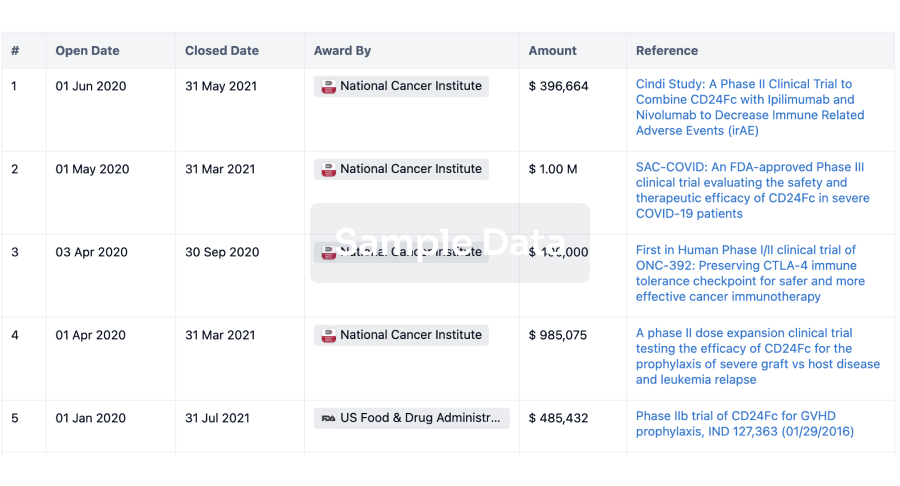
Grant & Funding(NIH)
Access more than 2 million grant and funding information to elevate your research journey.
login
or
Investment
Gain insights on the latest company investments from start-ups to established corporations.
login
or

Financing
Unearth financing trends to validate and advance investment opportunities.
login
or

AI Agents Built for Biopharma Breakthroughs
Accelerate discovery. Empower decisions. Transform outcomes.
Get started for free today!
Accelerate Strategic R&D decision making with Synapse, PatSnap’s AI-powered Connected Innovation Intelligence Platform Built for Life Sciences Professionals.
Start your data trial now!
Synapse data is also accessible to external entities via APIs or data packages. Empower better decisions with the latest in pharmaceutical intelligence.
Bio
Bio Sequences Search & Analysis
Sign up for free
Chemical
Chemical Structures Search & Analysis
Sign up for free