Request Demo
Last update 08 May 2025
UFSP2
Last update 08 May 2025
Basic Info
Synonyms C4orf20, FLJ11200, UFM1 specific peptidase 2 + [2] |
Introduction Thiol-dependent isopeptidase that specifically cleaves UFM1, a ubiquitin-like modifier protein, from conjugated proteins, such as CD274/PD-L1, CYB5R3, DDRGK1, MRE11, RPL26/uL24, TRIP4 and RPL26/uL24 (PubMed:25219498, PubMed:27351204, PubMed:27926783, PubMed:30783677, PubMed:31595041, PubMed:32160526, PubMed:33473208, PubMed:35394863, PubMed:35926457, PubMed:36543799, PubMed:36893266, PubMed:37795761, PubMed:38383785). While it is also able to mediate the processing of UFM1 precursors, a prerequisite for conjugation reactions, UFSP2 mainly acts as a protein deUFMylase that mediates deconjugation of UFM1 from target proteins (PubMed:27926783). Mediates deUFMylation of RPL26/uL24, a critical step to release the UFM1 ribosome E3 ligase (UREL) complex during the recycling of 60S ribosome subunits from the endoplasmic reticulum (PubMed:38383785). Catalyzes deUFMylation of TRIP4, regulating intracellular nuclear receptors transactivation and thereby regulate cell proliferation and differentiation (PubMed:25219498). |
Analysis
Perform a panoramic analysis of this field.
login
or
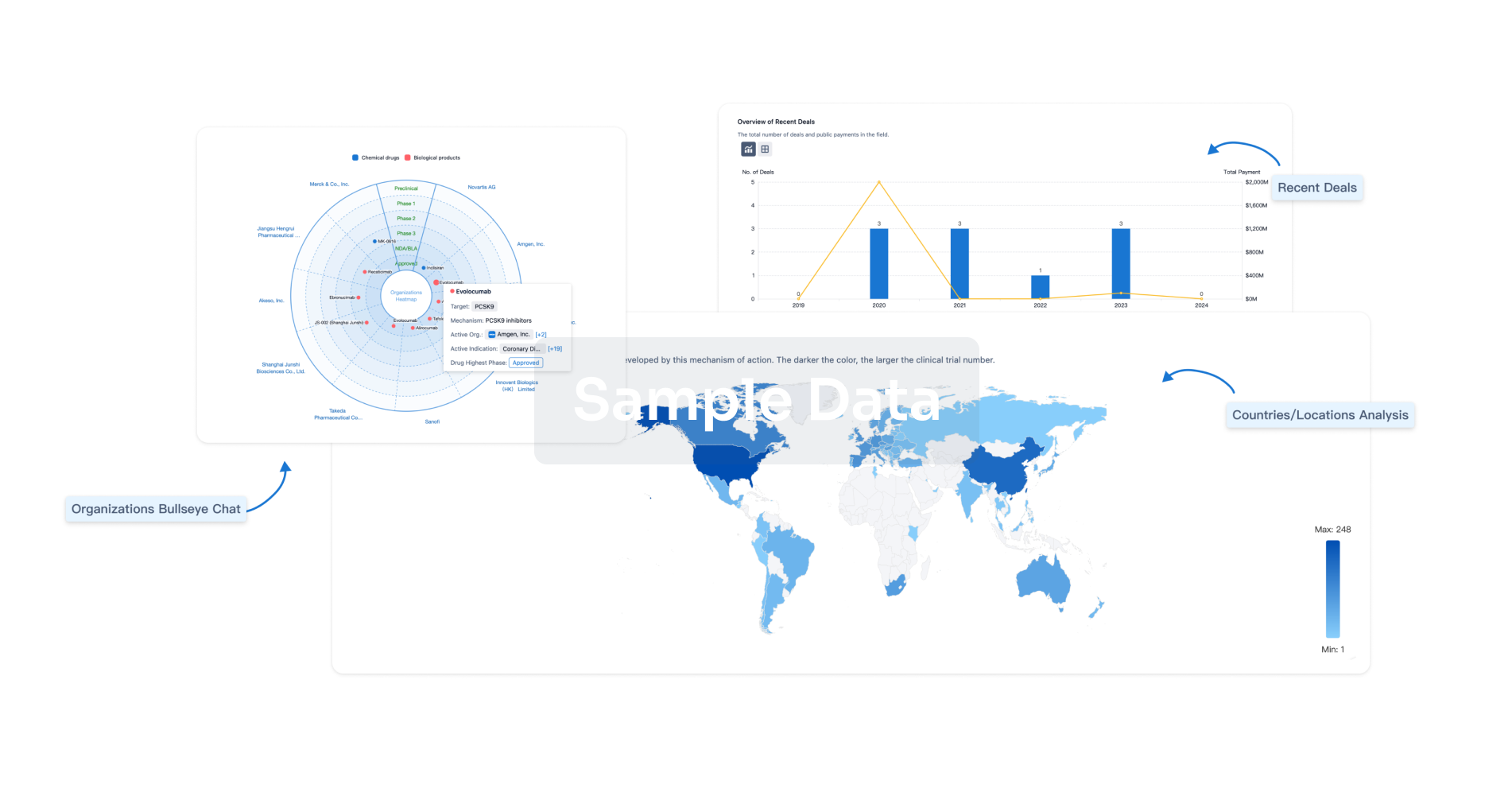
AI Agents Built for Biopharma Breakthroughs
Accelerate discovery. Empower decisions. Transform outcomes.
Get started for free today!
Accelerate Strategic R&D decision making with Synapse, PatSnap’s AI-powered Connected Innovation Intelligence Platform Built for Life Sciences Professionals.
Start your data trial now!
Synapse data is also accessible to external entities via APIs or data packages. Empower better decisions with the latest in pharmaceutical intelligence.
Bio
Bio Sequences Search & Analysis
Sign up for free
Chemical
Chemical Structures Search & Analysis
Sign up for free