Request Demo
Last update 17 Dec 2025
AMYs x Cholinesterase x TYR
Last update 17 Dec 2025
Basic Info
Related Targets |
Related
100 Clinical Results associated with AMYs x Cholinesterase x TYR
Login to view more data
100 Translational Medicine associated with AMYs x Cholinesterase x TYR
Login to view more data
0 Patents (Medical) associated with AMYs x Cholinesterase x TYR
Login to view more data
162
Literatures (Medical) associated with AMYs x Cholinesterase x TYR01 Feb 2026·COMPUTATIONAL BIOLOGY AND CHEMISTRY
In vitro antioxidant (spectrophotometric/electrochemical) and enzymatic activities of aniline derivative Schiff base: Experimental and computational assessment
Article
Author: Bensouici, Chawki ; Messasma, Zakia ; Ailane, Leila ; Boukoucha, Nada Hiba ; Hani, Mostefa ; Aggoun, Djouhra ; Ouennoughi, Yasmina
Hereby, the in vitro biological, electrochemical, computational, molecular docking, and in silico ADMET properties of the H2L ligand have been investigated. The antioxidant potential was evaluated using spectrochemical as well as electrochemical assays. H2L was found to exhibit intriguing antioxidant capacities in almost several in vitro applications of tests such as DPPH, ABTS, GOR, PRAC, reducing power, CUPRAC, phenanthroline, and the optical properties of silver nanoparticles (SNPs). The H2L showed scavenging ability against electrochemically generated superoxide anion radical (O2·-) by electrochemical reduction of O2 quantitated in terms of I %. Furthermore, H2L was tested for some enzymatic inhibition activities (cholinesterase, tyrosinase, urease, and α-amylase), displaying higher inhibition toward these selected enzymes. A theoretical study was carried out by the density functional (DFT) method (gas phase/B3LYP functional associated with the 6-31G (d,p) basis) for thermodynamic behavior, stability, and reactivity prediction. Then, a docking study was performed using AutoDock and MG-tools programs with the same selected proteins with PDB IDs as follows: 4EY7, 4BDS, 2Y9X, 3LA4, and 2QV4, respectively, to visualize the best docked pose and favorable ligand-protein binding interactions. The in silico results revealed that H2L exhibited stronger tyrosinase inhibitory activity than kojic acid. Thus, these results showed good agreement with the experimental data obtained from the enzyme-inhibiting assay. Finally, several important physicochemical descriptors were examined through in silico ADMET analysis and additionally processed through in vitro PAMPA-BBB permeability assay. Finally, to identify the optimal combinations with the antioxidant responses and based on the results obtained from the response surface methodology (RSM), optimization analyses were also carried out.
01 Oct 2025·PREPARATIVE BIOCHEMISTRY & BIOTECHNOLOGY
Ultrasound-assisted extraction of
Stachys chasmosericea
: phytochemical profile, antioxidant potentials via RACI analysis, and enzyme inhibitory activities
Article
Author: Sarikurkcu, Cengiz ; Isitez, Nilay ; Kargin Solmaz, Fatma Ozlem
Understanding the bioactive potential of plant extracts requires detailed evaluations of their chemical composition and bioactivities. This study investigated the chemical profiles, antioxidant properties, and enzyme inhibitory activities of water and methanol extracts of Stachys chasmosericea Ayasligil & P.H.Davis obtained via ultrasound-assisted extraction. The methanol extract displayed significantly higher total phenolic and flavonoid contents compared to the water extract. Chromatographic analysis revealed verbascoside and chlorogenic acid as the dominant compounds in the methanol extract, whereas the water extract contained higher levels of polar compounds like p-coumaric acid. Antioxidant assays demonstrated the methanol extract's superior activity. Conversely, the water extract excelled in metal chelation. RACI values confirmed the methanol extract's overall antioxidant superiority (RACI = 0.65) over the water extract (RACI = -0.65). Enzyme inhibition assays revealed the methanol extract's stronger activity against AChE, BChE, α-amylase, α-glucosidase, and tyrosinase whereas the water extract showed weaker inhibition. Both extracts demonstrated potential for managing oxidative stress and enzyme-related disorders but require further in vivo validation. This study highlights S. chasmosericea, particularly its methanol extract, as a promising source of natural antioxidants and enzyme inhibitors. Future research should focus on isolating individual bioactives and exploring their mechanisms of action in biological systems.
17 Sep 2025·NATURAL PRODUCT RESEARCH
Chemical composition and antioxidant, enzyme inhibition and cytoprotective activity of two Antarctic lichens of the genus
Psoroma
(Pannariaceae)
Article
Author: Ortega-Valencia, José Erick ; Simirgiotis, Mario J. ; Torres-Benítez, Alfredo ; Pereira, Iris ; Hillmann-Eggers, Mathias ; Gómez-Serranillos, María Pilar ; Sanchez, Marta
Lichens contain different types of chemical compounds with multiple biological activities that demonstrate their potential pharmacological use. This research aims to report the metabolomic identification of the ethanolic extracts of P. antarcticum and P. hypnorum, their antioxidant, enzyme inhibitory, and their cytoprotection activity. Sixteen metabolites were identified in P. antarcticum and twelve in P. hypnorum; the extracts reported variable antioxidant activity with IC50 >350 µg/mL in DPPH·, values >18 µmol Trolox/g in ORAC and >40 µmol Trolox/g in FRAP and a phenolic compound content >10 mg GAE/g, as well as significant results in cholinesterases, α-glucosidase, pancreatic lipase, α-amylase, and tyrosinase enzyme inhibition activities with IC50 ranging from 18 to 510 µg/mL, and which were complemented by molecular docking experiments. Both extracts showed improved cytoprotection at the concentrations of 0.5 to 1.0 μg/mL. This study contributes to the knowledge of the chemical diversity of Antarctic lichen extracts and their effectiveness in the evaluation of biological activities related to neurodegenerative diseases and metabolic syndrome.
Analysis
Perform a panoramic analysis of this field.
login
or
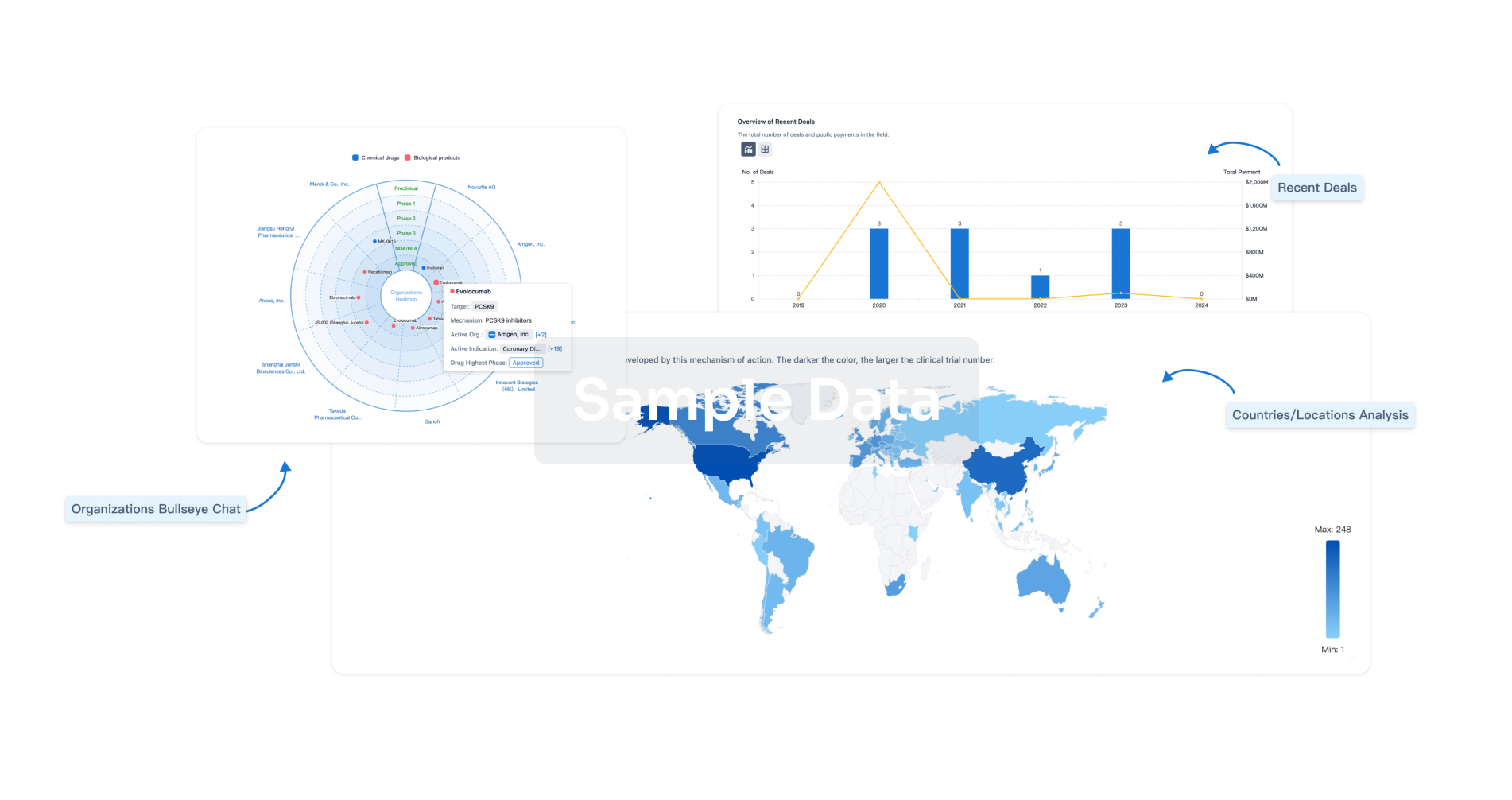
AI Agents Built for Biopharma Breakthroughs
Accelerate discovery. Empower decisions. Transform outcomes.
Get started for free today!
Accelerate Strategic R&D decision making with Synapse, PatSnap’s AI-powered Connected Innovation Intelligence Platform Built for Life Sciences Professionals.
Start your data trial now!
Synapse data is also accessible to external entities via APIs or data packages. Empower better decisions with the latest in pharmaceutical intelligence.
Bio
Bio Sequences Search & Analysis
Sign up for free
Chemical
Chemical Structures Search & Analysis
Sign up for free