Advancements in Immuno-Oncology: The Role of EOS100850 in Targeting T Cell Suppression and Enhancing Anti-Tumor Response
To address this challenge, a new compound, EOS100850, was developed. This compound is a highly selective A2AR inhibitor with a sub-nanomolar Ki and does not penetrate the brain. It has been shown to effectively inhibit A2AR signaling in human T lymphocytes, even in the presence of high adenosine concentrations, and to restore cytokine production.
EOS100850 was also tested in an in vivo assay using mice, where it demonstrated a significant inhibition of pCREB, a marker of A2AR activation. Notably, the compound's pharmacodynamic activity lasted longer than its presence in the plasma, indicating a prolonged effect.
In a mouse A20 lymphoma model, EOS100850, when combined with anti-PD-L1, significantly suppressed tumor growth compared to anti-PD-L1 alone. The compound is described as a potent, insurmountable, and best-in-class A2AR blocker, specifically optimized for use in immuno-oncology.
The abstract concludes by citing the research in the context of the American Association for Cancer Research Annual Meeting 2018, emphasizing the potential of EOS100850 for further study and development in human cancer treatment.
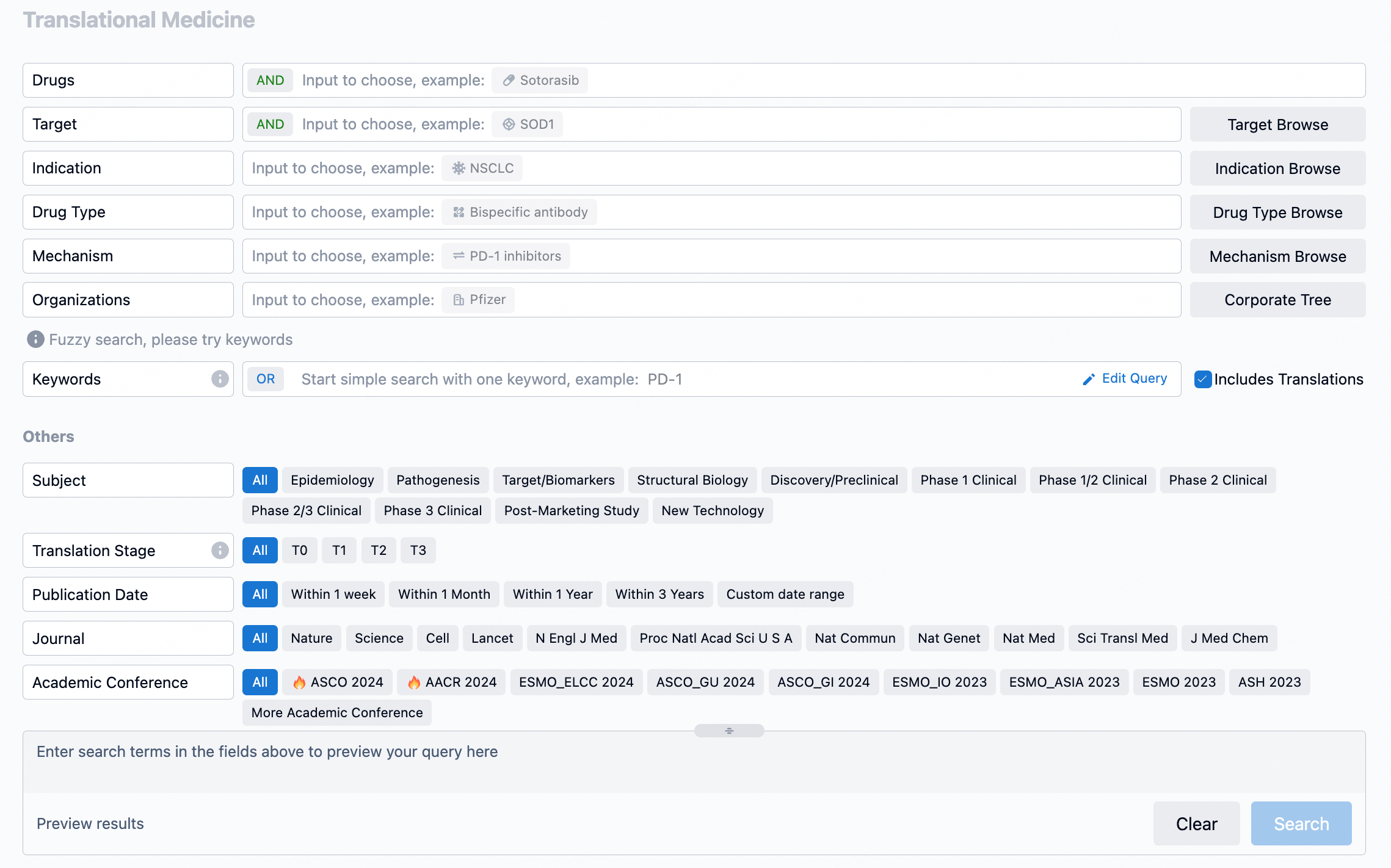
How to Use Synapse Database to Search and Analyze Translational Medicine Data?
The transational medicine section of the Synapse database supports searches based on fields such as drug, target, and indication, covering the T0-T3 stages of translation. Additionally, it offers a historical conference search function as well as filtering options, view modes, translation services, and highlights summaries, providing you with a unique search experience.
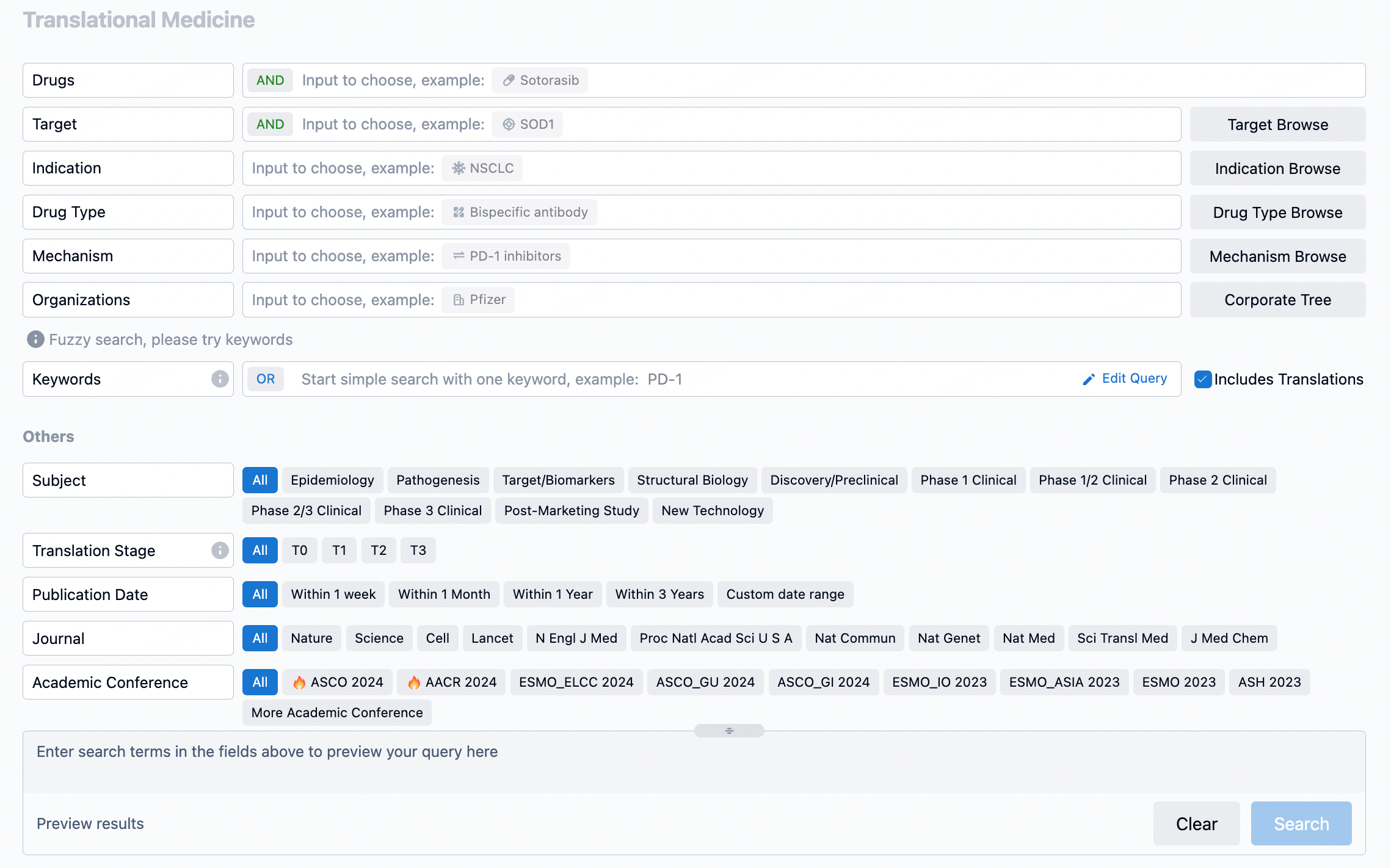
Taking obesity as an example, select "obesity" under the indication category and click search to enter the Translational Medicine results list page. By clicking on the title, you can directly navigate to the original page.
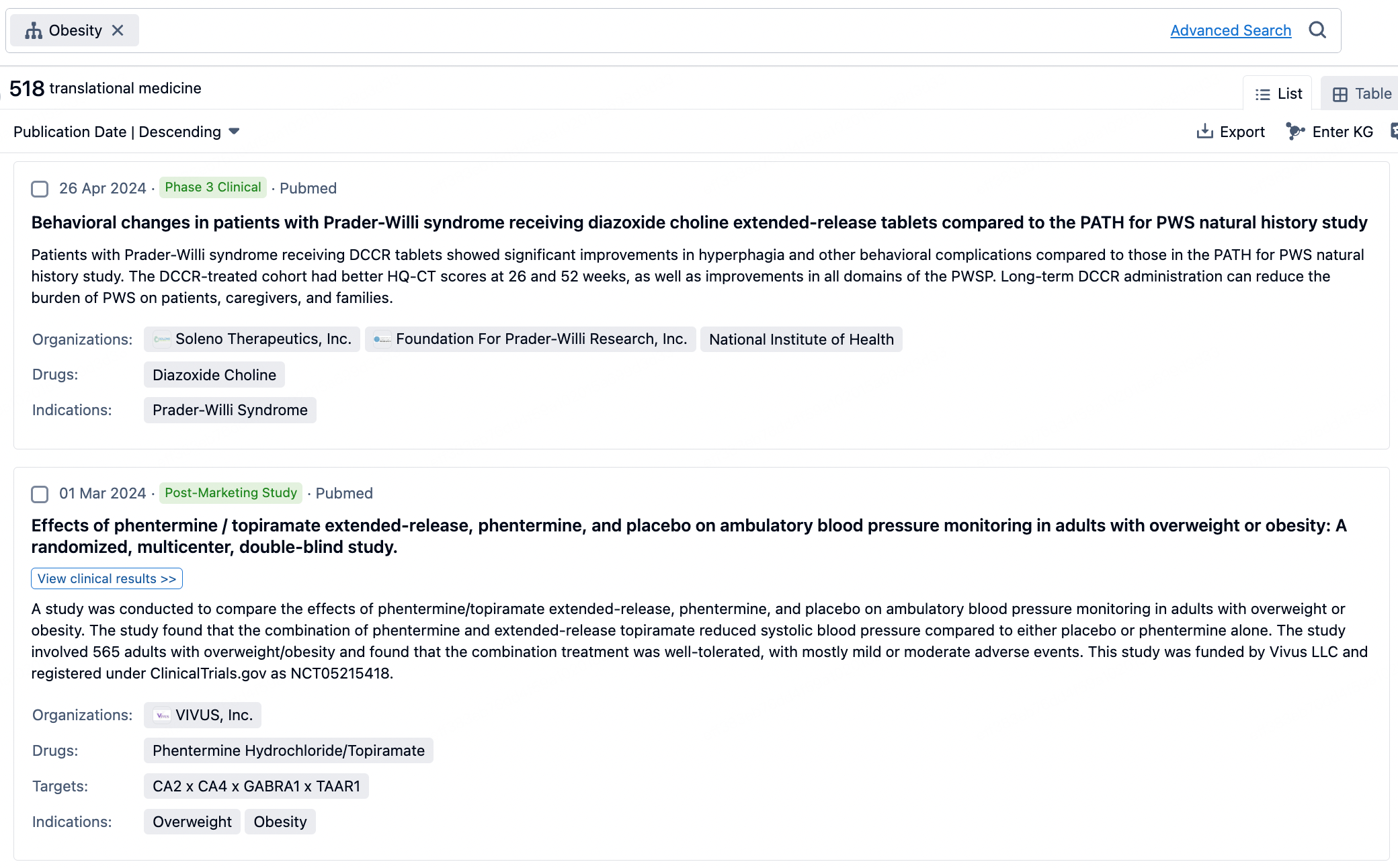
By clicking the analysis button, you can observe that GLP-1R treatment for obesity has gained significant attention over the past three years, with preclinical research still ongoing in 2023. Additionally, there are emerging potential targets, such as GDF15, among others.
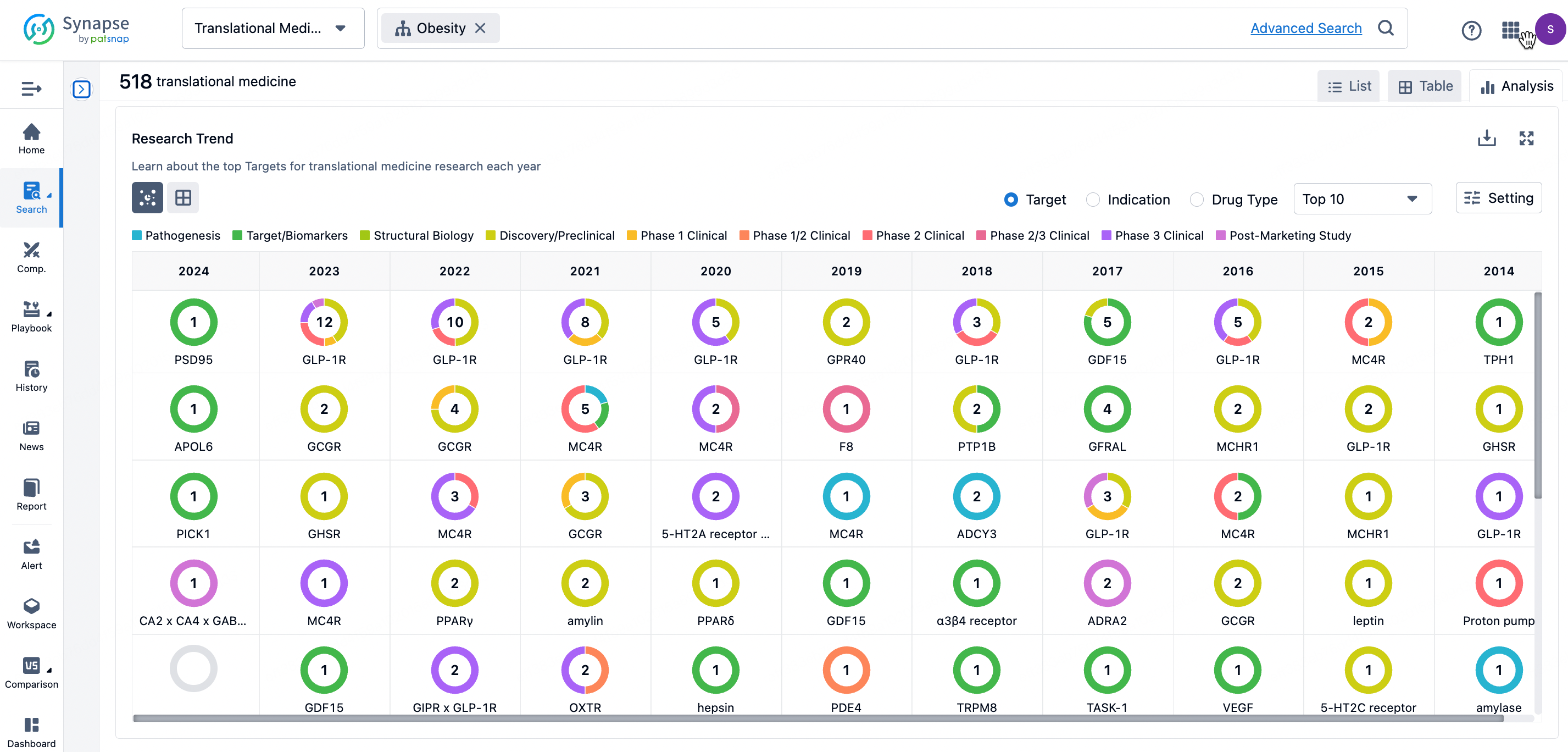
Click on the image below to go directly to the Translational Medicine search interface.