Advancements in PARP Inhibition: The Emergence of IDX-1197 as a Promising Therapeutic Agent
IDX-1197 was evaluated in vitro using PARP enzyme assays and catalytic inhibition assays in Hela cells. Its in vivo efficacy was assessed in patient-derived xenograft (PDX) models of ovarian and breast cancer. The inhibitor's impact on tumor PAR levels was measured using ELISA in PDX models.
Results demonstrated that IDX-1197 effectively inhibited PARP1 and PARP2 with IC50 values of 1.4 nM and 1.0 nM, respectively, while showing no significant effect on PARP5A (Tankyrase-1). In DNA damage-induced Hela cells, IDX-1197 markedly reduced PAR expression mediated by PARP1. In a germline BRCA1-mutated ovarian cancer PDX model, IDX-1197 showed significant PAR inhibition in tumor tissues up to 24 hours post-dose and potent tumor growth inhibition in a dose-dependent manner, outperforming Olaparib.
Moreover, IDX-1197 displayed improved antitumor activity against breast cancer PDX models, including both germline and non-germline BRCA-mutated cases. It exhibited greater tumor growth inhibition compared to both Olaparib and Niraparib.
In conclusion, IDX-1197 is a highly potent and selective PARP1/2 inhibitor with significant in vitro and in vivo activities across multiple cancer models. The preclinical data suggest that IDX-1197 has the potential to be a best-in-class PARP inhibitor, effective for both non-germline BRCA-mutated and BRCA-mutated patients. IDX-1197 has since entered a phase 1 clinical trial in Korea, supported by National OncoVenture.
The research was presented by Myongjae Lee and colleagues at the AACR-NCI-EORTC International Conference on Molecular Targets and Cancer Therapeutics in 2017.
How to Use Synapse Database to Search and Analyze Translational Medicine Data?
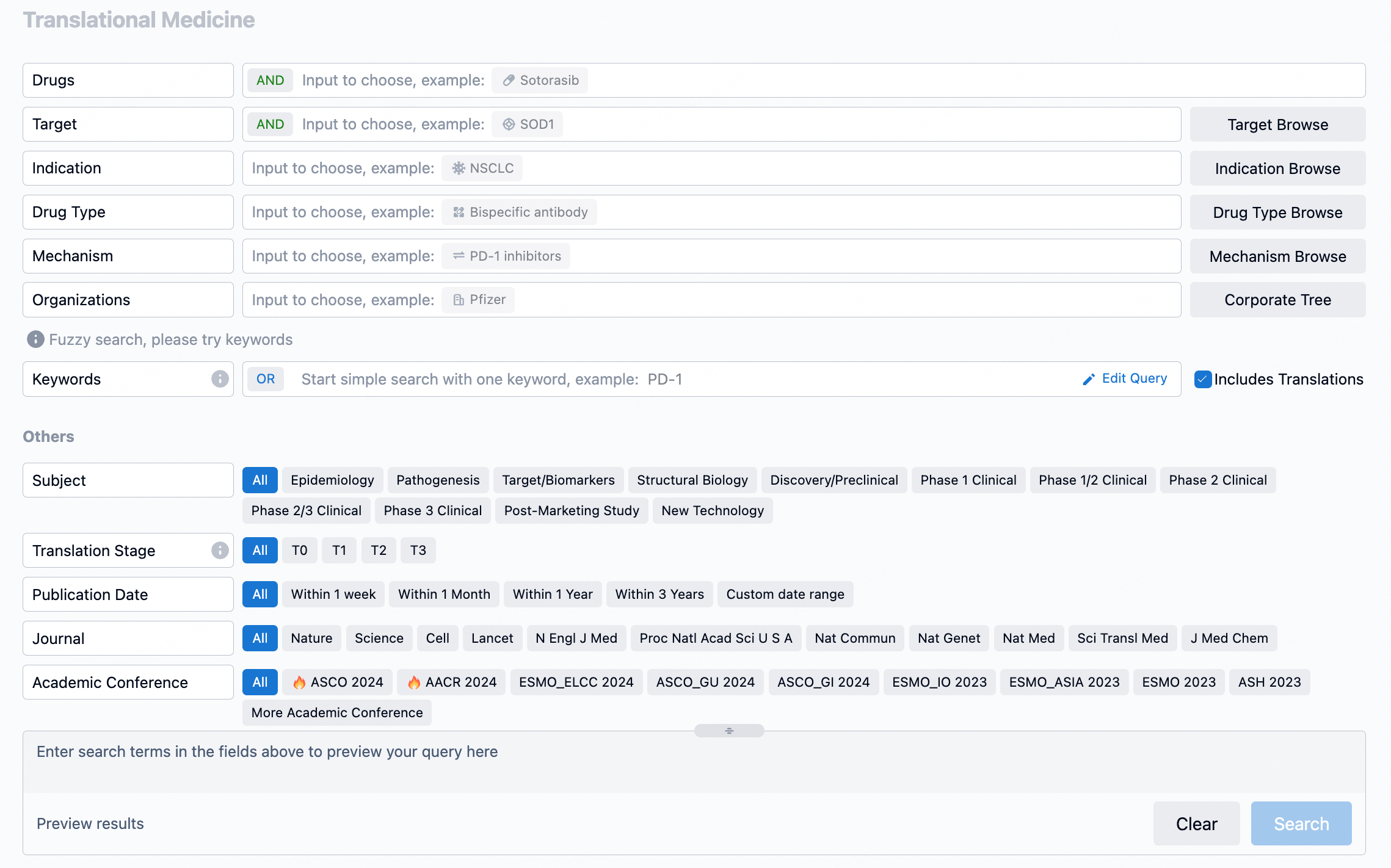
The transational medicine section of the Synapse database supports searches based on fields such as drug, target, and indication, covering the T0-T3 stages of translation. Additionally, it offers a historical conference search function as well as filtering options, view modes, translation services, and highlights summaries, providing you with a unique search experience.
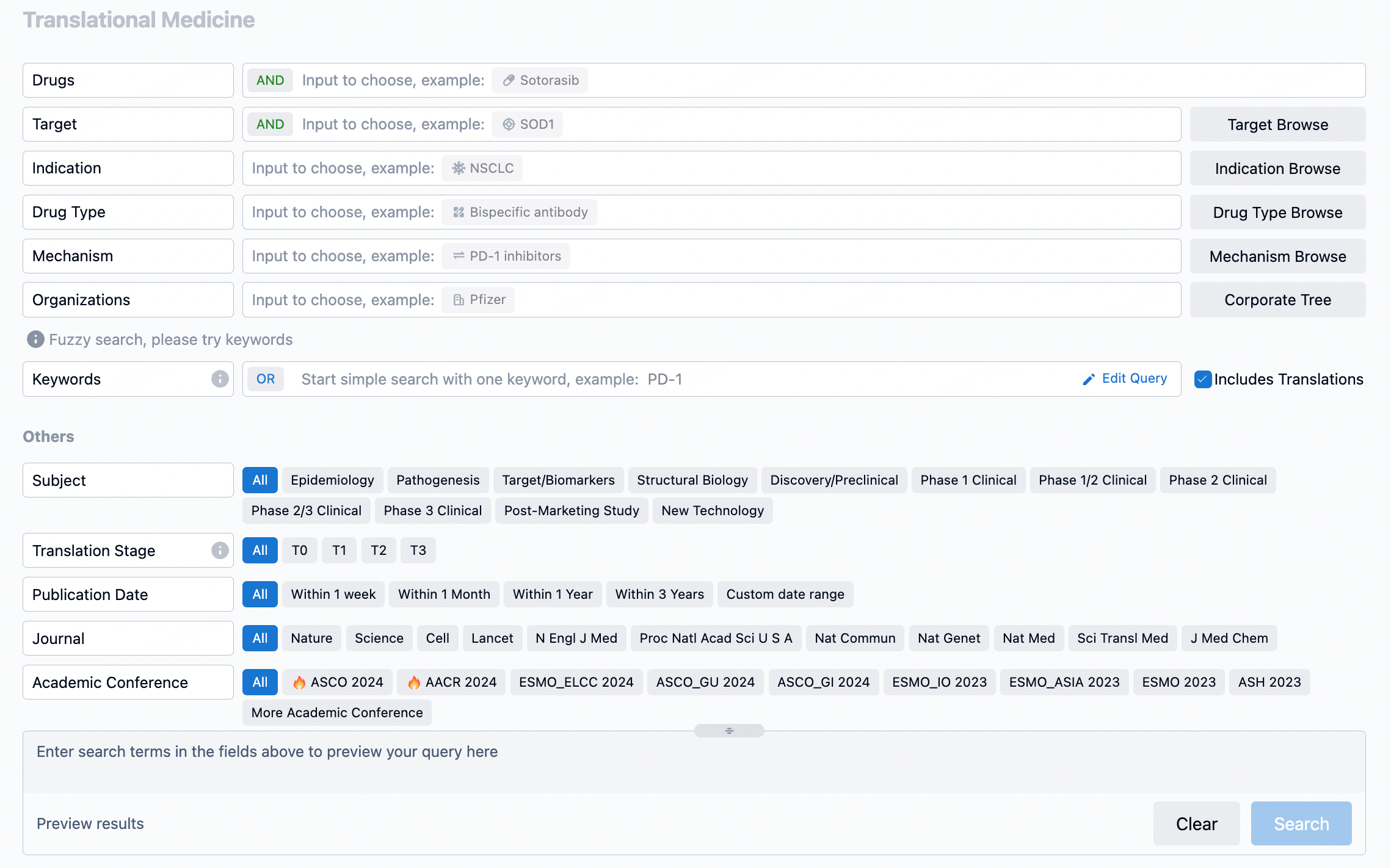
Taking obesity as an example, select "obesity" under the indication category and click search to enter the Translational Medicine results list page. By clicking on the title, you can directly navigate to the original page.
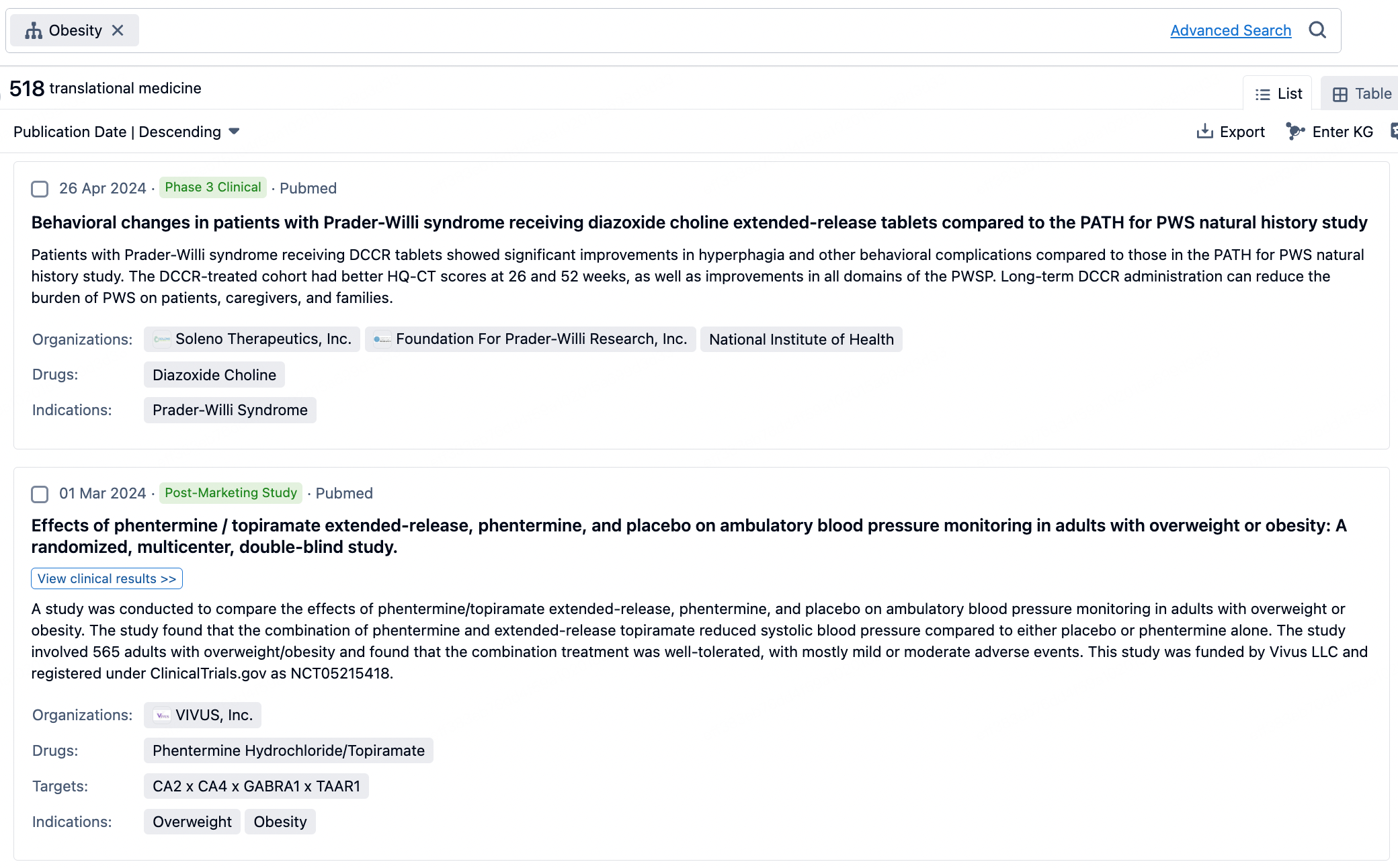
By clicking the analysis button, you can observe that GLP-1R treatment for obesity has gained significant attention over the past three years, with preclinical research still ongoing in 2023. Additionally, there are emerging potential targets, such as GDF15, among others.
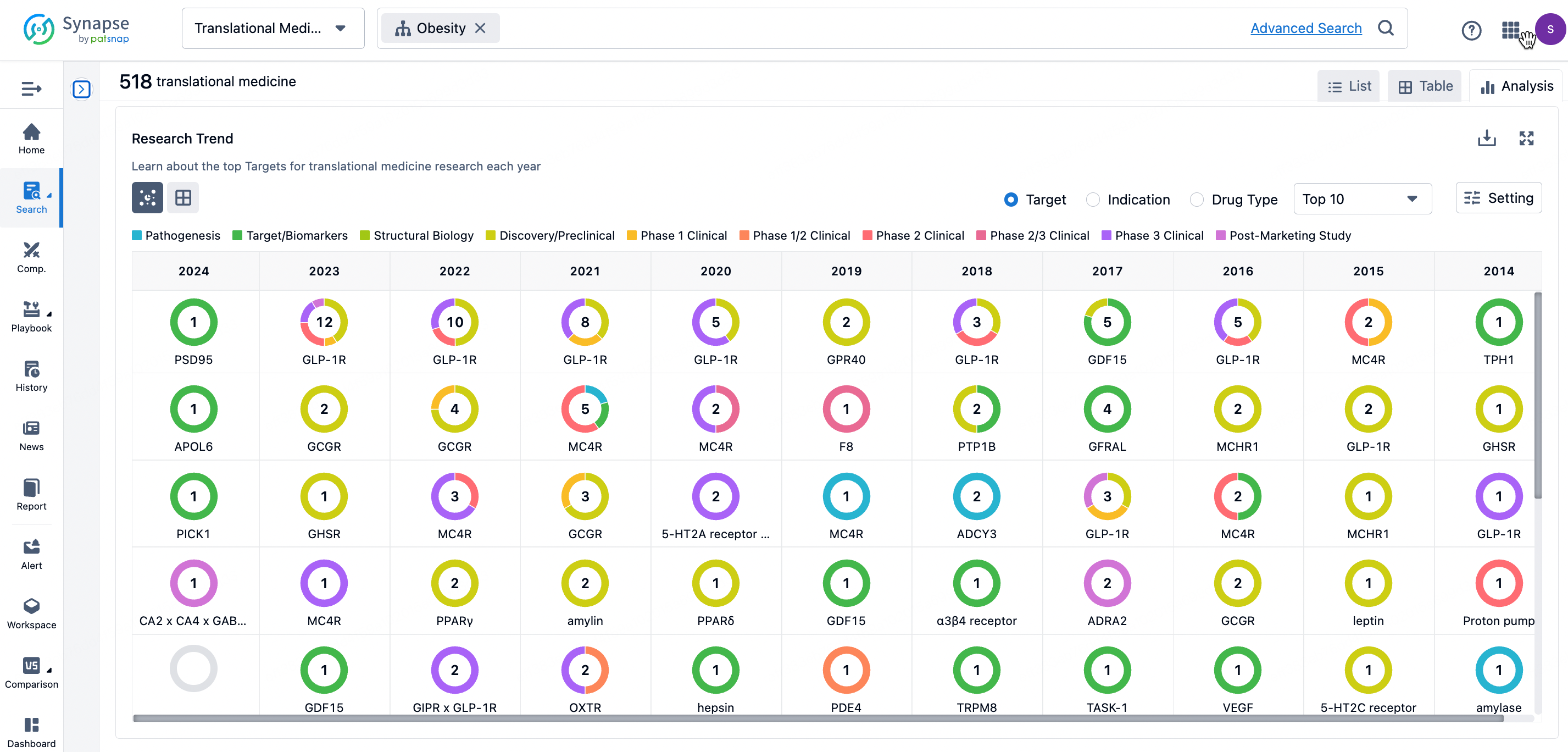
Click on the image below to go directly to the Translational Medicine search interface.