Assessing the Safety of Second-Generation Anti-CTLA4 Variants in Primate Models
Tests in monkeys showed that all three antibodies activated immune cells, but BMS-986218 did so more than ipilimumab, and BMS-986249 did so less and later. The monkeys tolerated the drugs well at certain doses, but some had mild diarrhea or lost a little weight. Higher doses caused serious problems for some monkeys, and a few had to be put down.
The main side effect was inflammation in tissues, which was worst with BMS-986218 and least with BMS-986249. The stomach, cecum, colon, and kidneys were most affected, but other organs could be affected at higher doses. Most of these effects got better after the treatment stopped, but some monkeys still had problems.
The best doses for the monkeys were 3 mg/kg for BMS-986218, 10 mg/kg for ipilimumab, and 50 mg/kg for BMS-986249. These results suggest that the new antibodies might be better than ipilimumab with more benefits and fewer risks.
This study was presented at a conference and published in a journal by several authors.
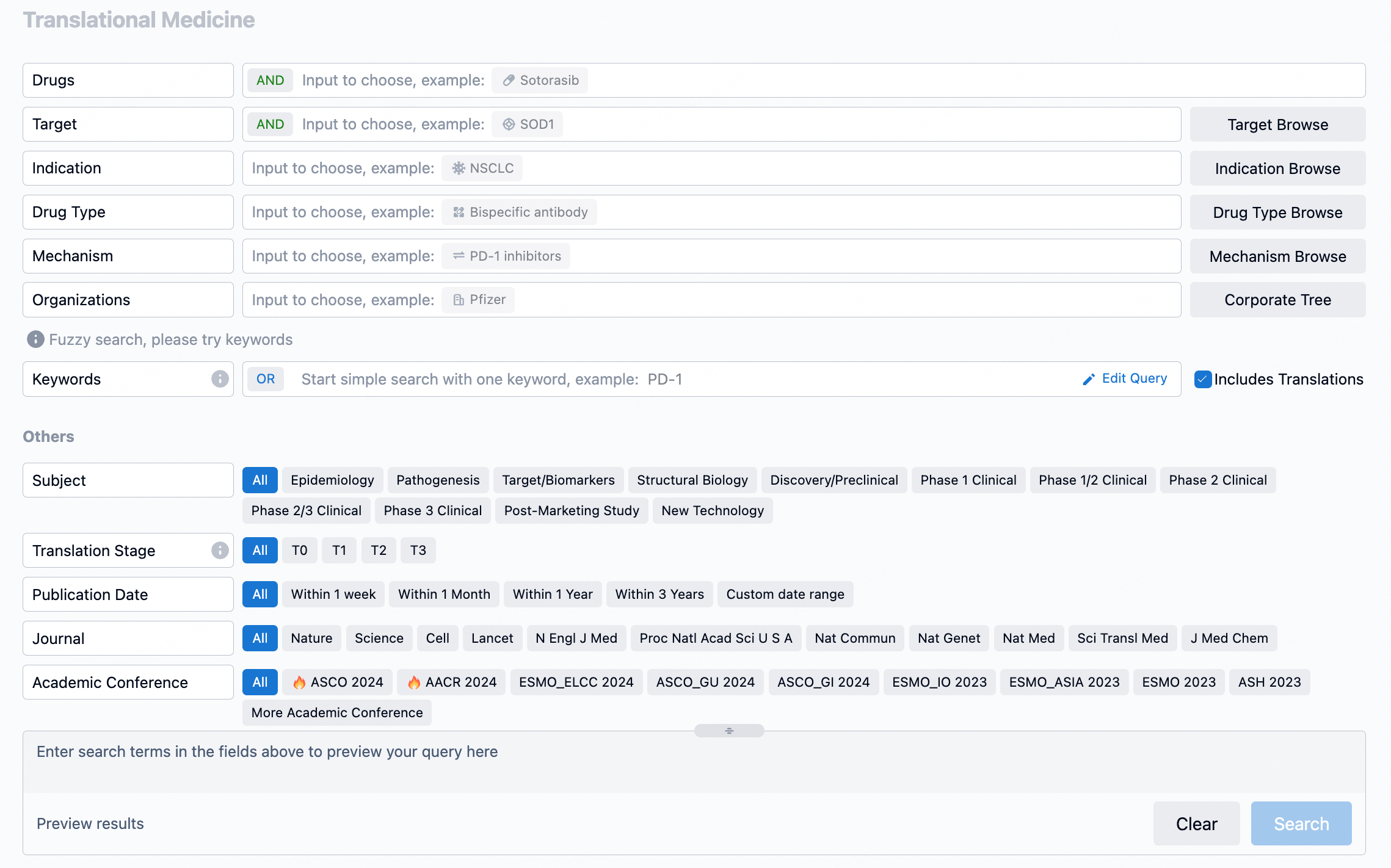
How to Use Synapse Database to Search and Analyze Translational Medicine Data?
The transational medicine section of the Synapse database supports searches based on fields such as drug, target, and indication, covering the T0-T3 stages of translation. Additionally, it offers a historical conference search function as well as filtering options, view modes, translation services, and highlights summaries, providing you with a unique search experience.
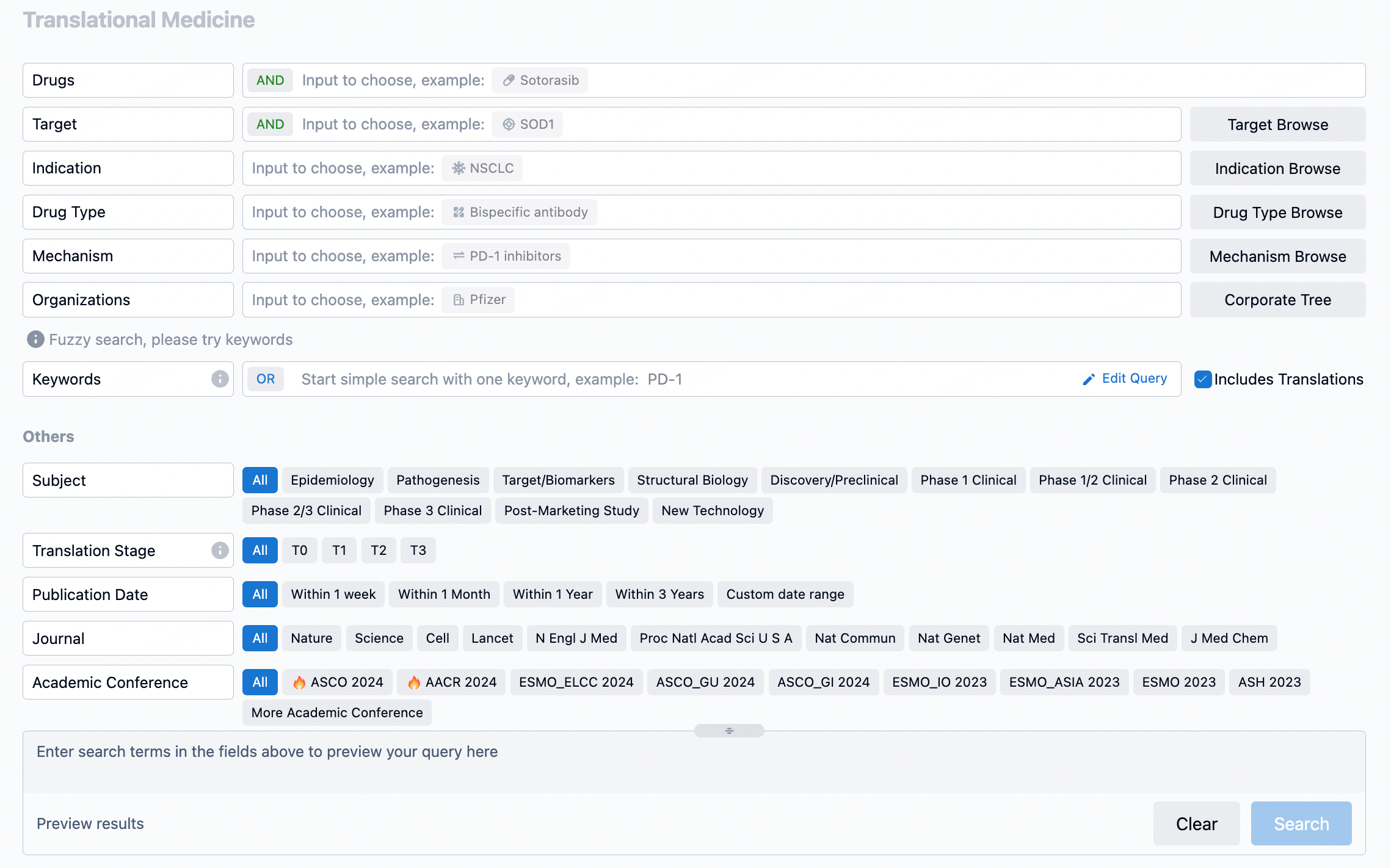
Taking obesity as an example, select "obesity" under the indication category and click search to enter the Translational Medicine results list page. By clicking on the title, you can directly navigate to the original page.
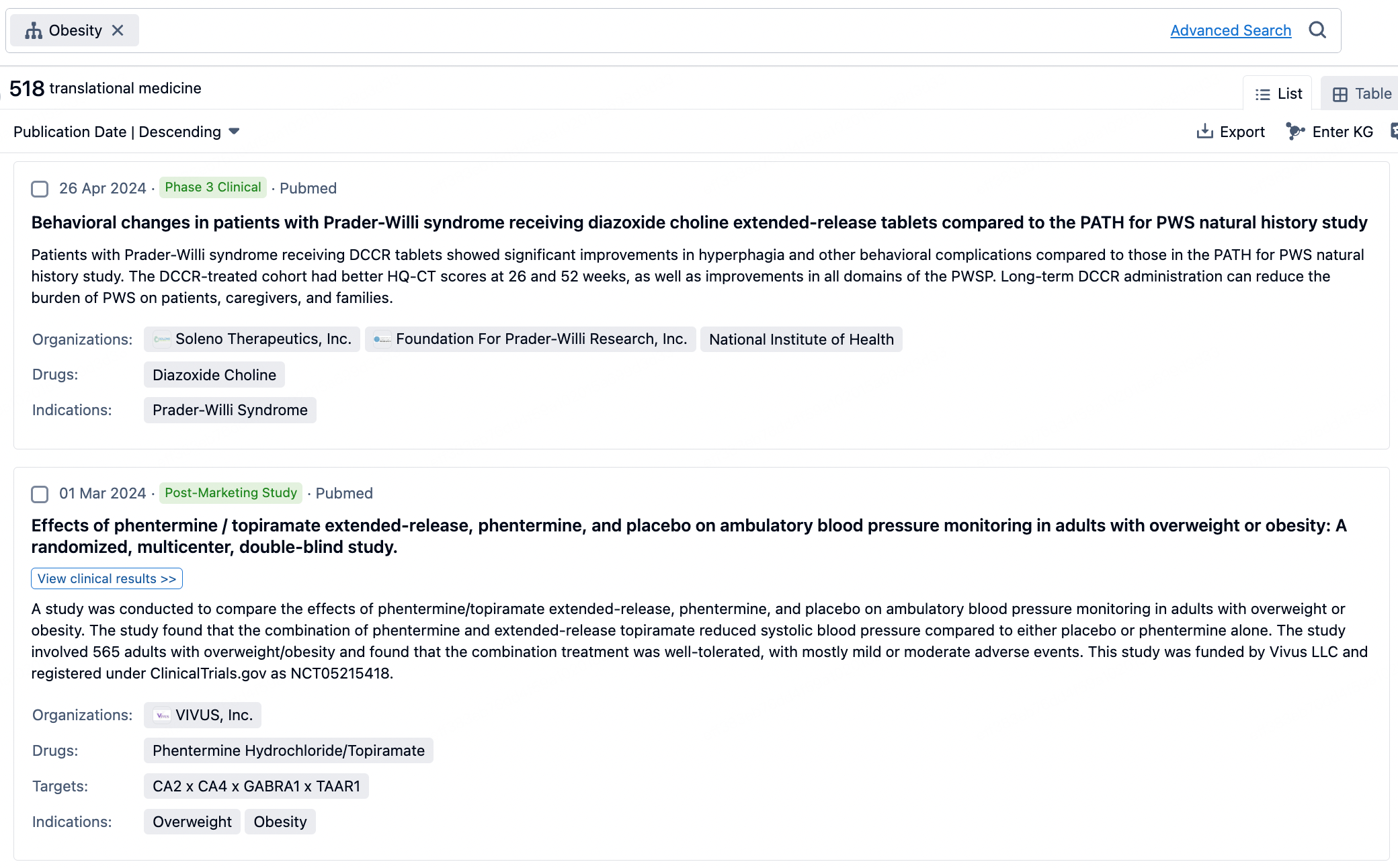
By clicking the analysis button, you can observe that GLP-1R treatment for obesity has gained significant attention over the past three years, with preclinical research still ongoing in 2023. Additionally, there are emerging potential targets, such as GDF15, among others.
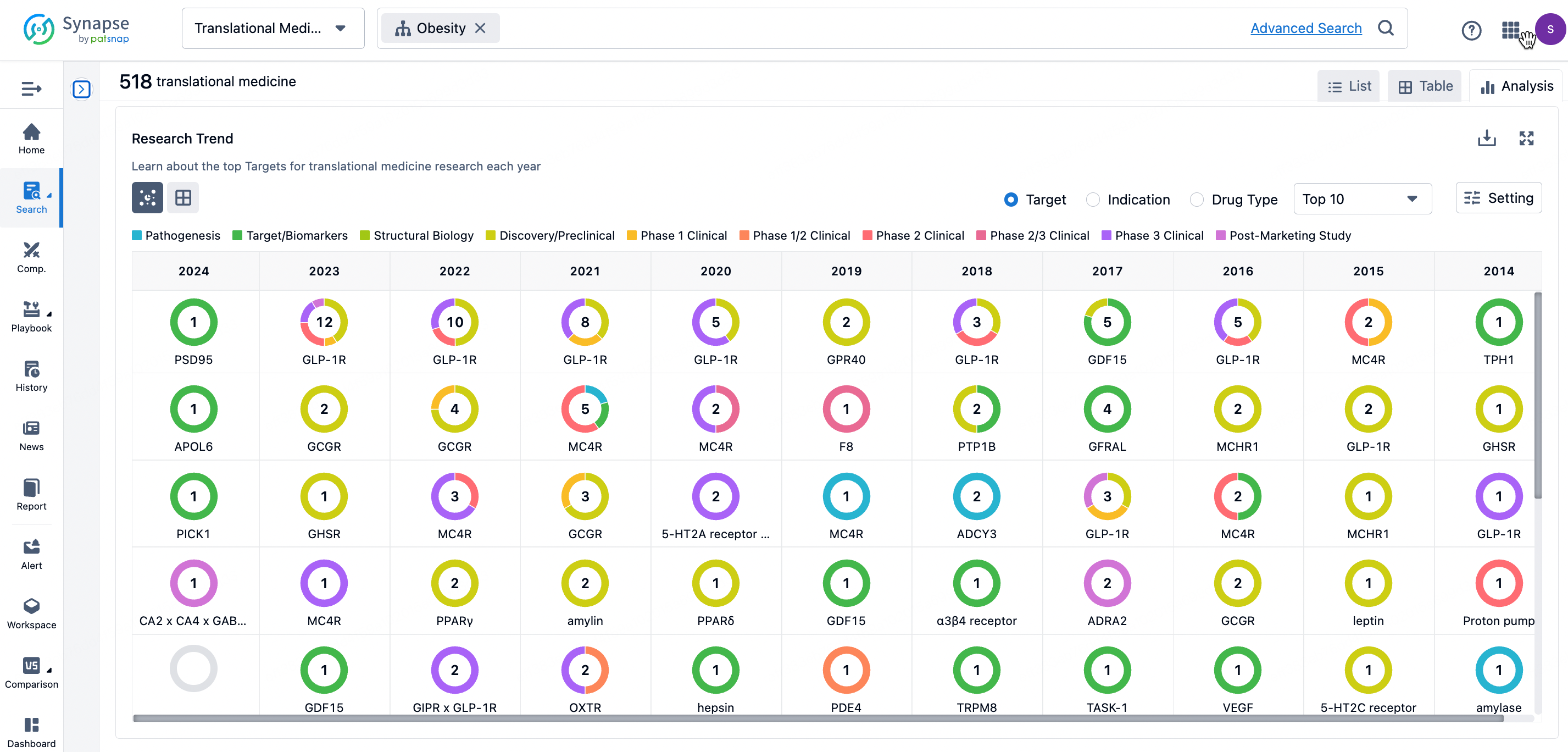
Click on the image below to go directly to the Translational Medicine search interface.