Assessment of 18F-Fluoroethyl and 18F-Fluoropropyl Analogs for A2A Receptor PET Imaging in Rats
The tracer kinetics were analyzed using 1-tissue-compartment modeling (1TCM) and 2-tissue-compartment modeling (2TCM), as well as the Logan graphical analysis. The midbrain, cerebellum, and hippocampus were considered as potential reference regions. The total volume of distribution (VT) in these regions was compared under baseline and full blocking conditions, and the striatal nondisplaceable binding potential (BPND) was assessed using a simplified reference tissue model (SRTM) with distribution volume ratio minus 1 (DVR - 1) for both 60- and 90-minute scans.
The Akaike information criterion indicated that 1TCM was suitable for 18F-FPSCH, and 2TCM was suitable for 18F-FESCH. The baseline striatal VT was not significantly different between the two tracers. After pretreatment with KW-6002, there was a significant reduction in striatal VT, but no significant change in the VT of the hippocampus, midbrain, or cerebellum. The baseline striatal SRTM BPND was not significantly different from DVR - 1 for both tracers, except for a 60-minute scan with midbrain as the reference region for 18F-FPSCH. The Bland-Altman analysis showed a smaller bias for 18F-FESCH with a 60-minute scan. After pretreatment, the striatal SRTM BPND for 18F-FPSCH was significantly lower than for 18F-FESCH when using the midbrain or cerebellum as the reference region.
The conclusion of the study is that 18F-FESCH is the most appropriate PET ligand for quantifying A2A receptor expression in the rat brain under baseline and blocking conditions. Accurate quantification can be achieved with a 60-minute dynamic PET scan using either the cerebellum or midbrain as the reference region.
How to Use Synapse Database to Search and Analyze Translational Medicine Data?
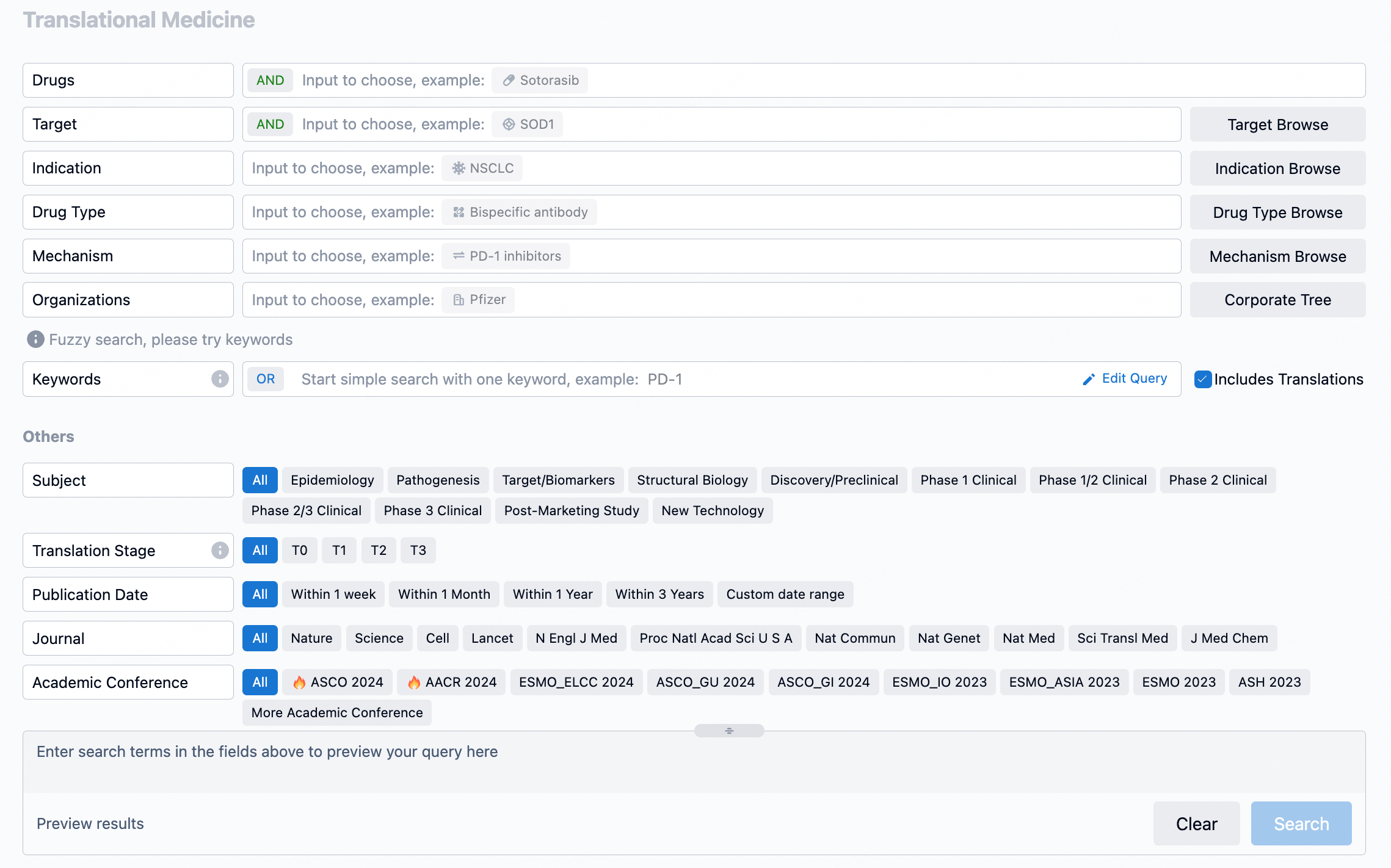
The transational medicine section of the Synapse database supports searches based on fields such as drug, target, and indication, covering the T0-T3 stages of translation. Additionally, it offers a historical conference search function as well as filtering options, view modes, translation services, and highlights summaries, providing you with a unique search experience.
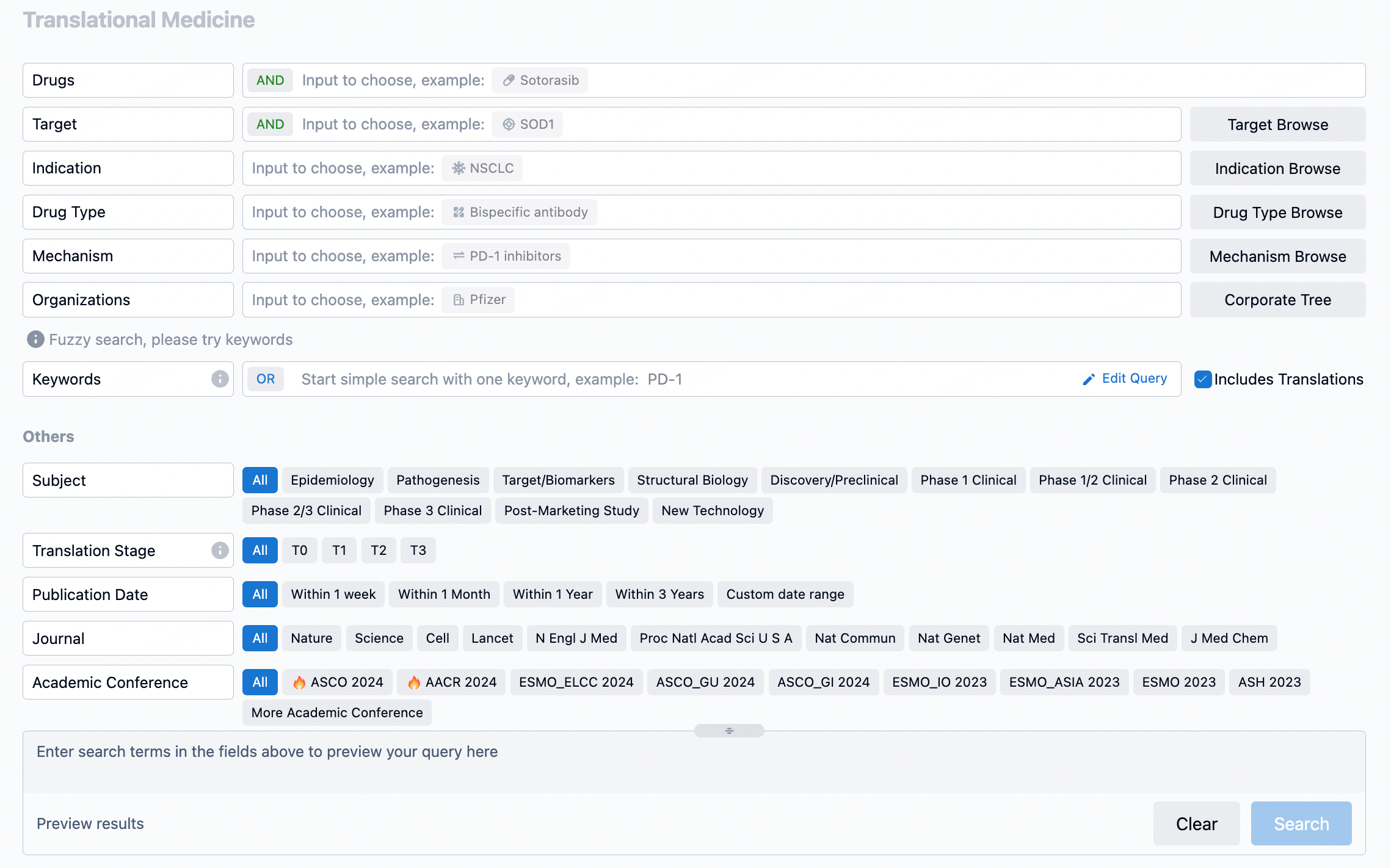
Taking obesity as an example, select "obesity" under the indication category and click search to enter the Translational Medicine results list page. By clicking on the title, you can directly navigate to the original page.
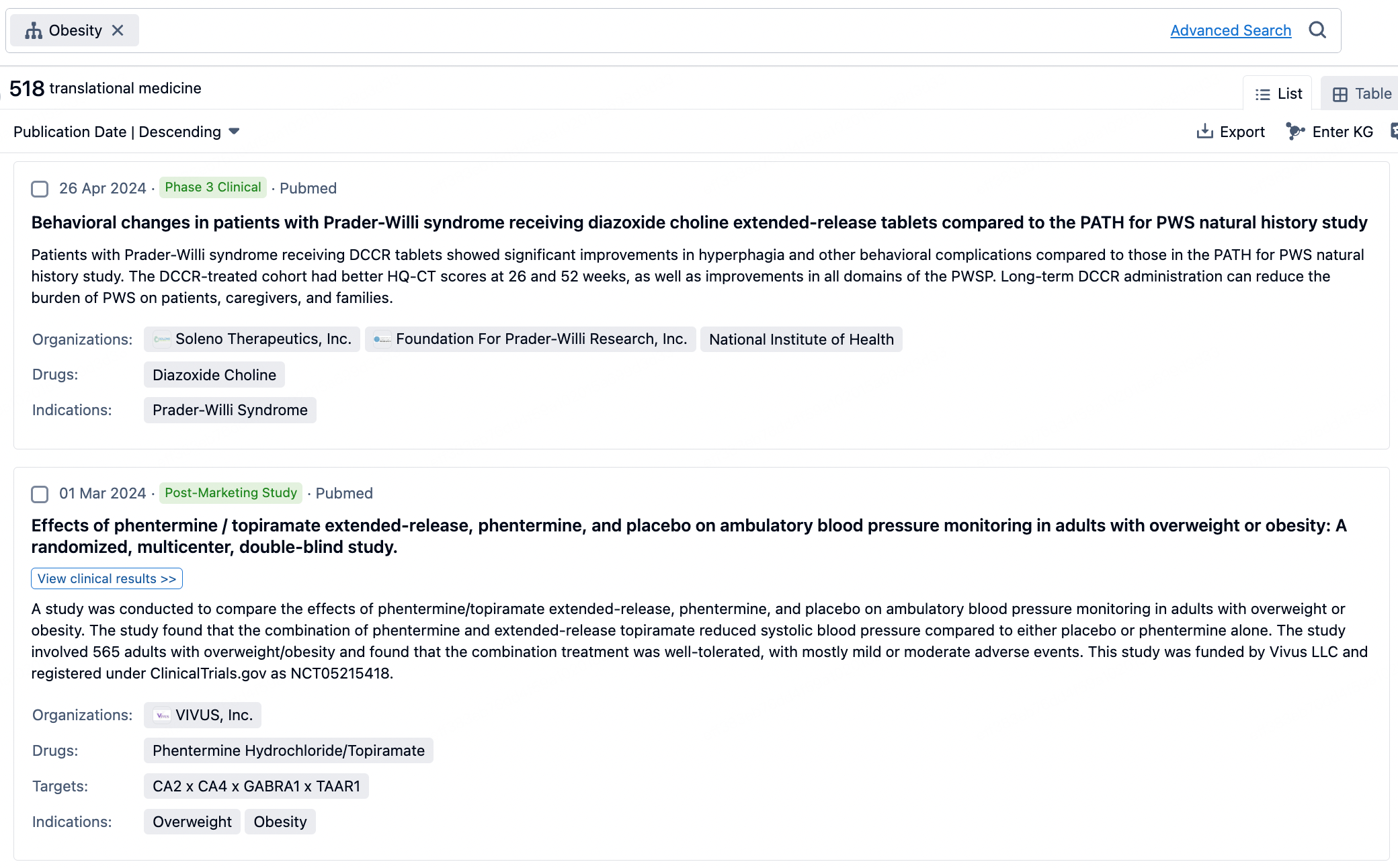
By clicking the analysis button, you can observe that GLP-1R treatment for obesity has gained significant attention over the past three years, with preclinical research still ongoing in 2023. Additionally, there are emerging potential targets, such as GDF15, among others.
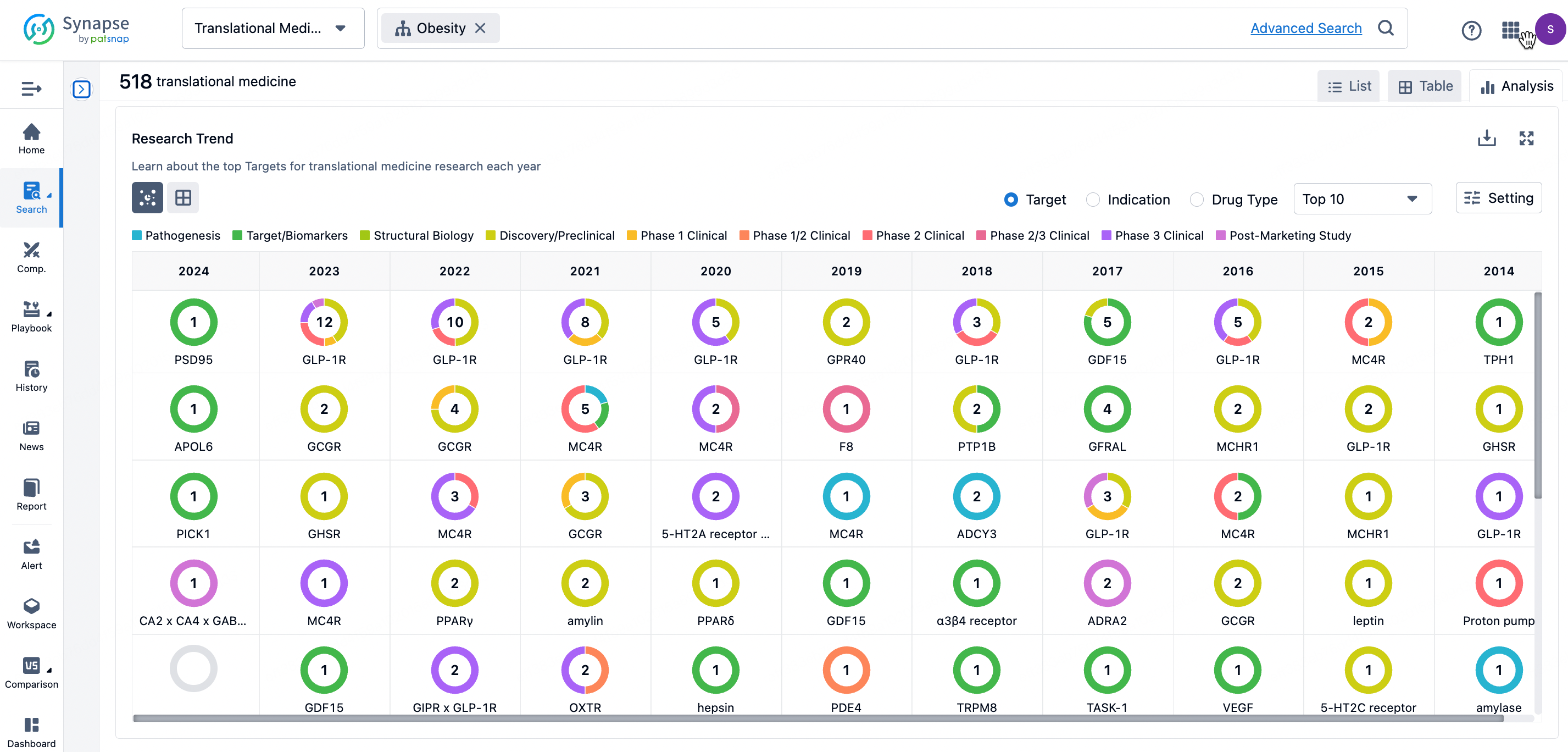
Click on the image below to go directly to the Translational Medicine search interface.