Enhanced Oral Bioavailability of Alvocidib: The Development and Efficacy of TP-1287 Prodrug
The development of an oral form of alvocidib could enable chronic dosing to maintain MCL-1 suppression. Alvocidib's permeability and solubility at acidic pH present challenges for oral formulation. To address this, researchers synthesized a phosphate prodrug, TP-1287, which demonstrated improved solubility across a range of pH levels, including neutral and basic conditions.
Pharmacokinetic studies in mice showed that TP-1287 effectively converted to alvocidib, achieving high oral bioavailability. In tumor xenograft models, TP-1287 exhibited significant anti-tumor efficacy and a robust therapeutic dosing window, with substantial inhibition of the MCL-1 biomarker and tumor growth.
The prodrug TP-1287 overcomes solubility limitations of alvocidib and shows promising anti-tumor effects when orally administered. These findings support the progression of TP-1287 to clinical trials for solid tumors where MCL-1 suppression could be beneficial.
The research was presented by Wontak Kim and colleagues at the American Association for Cancer Research Annual Meeting in 2017.
How to Use Synapse Database to Search and Analyze Translational Medicine Data?
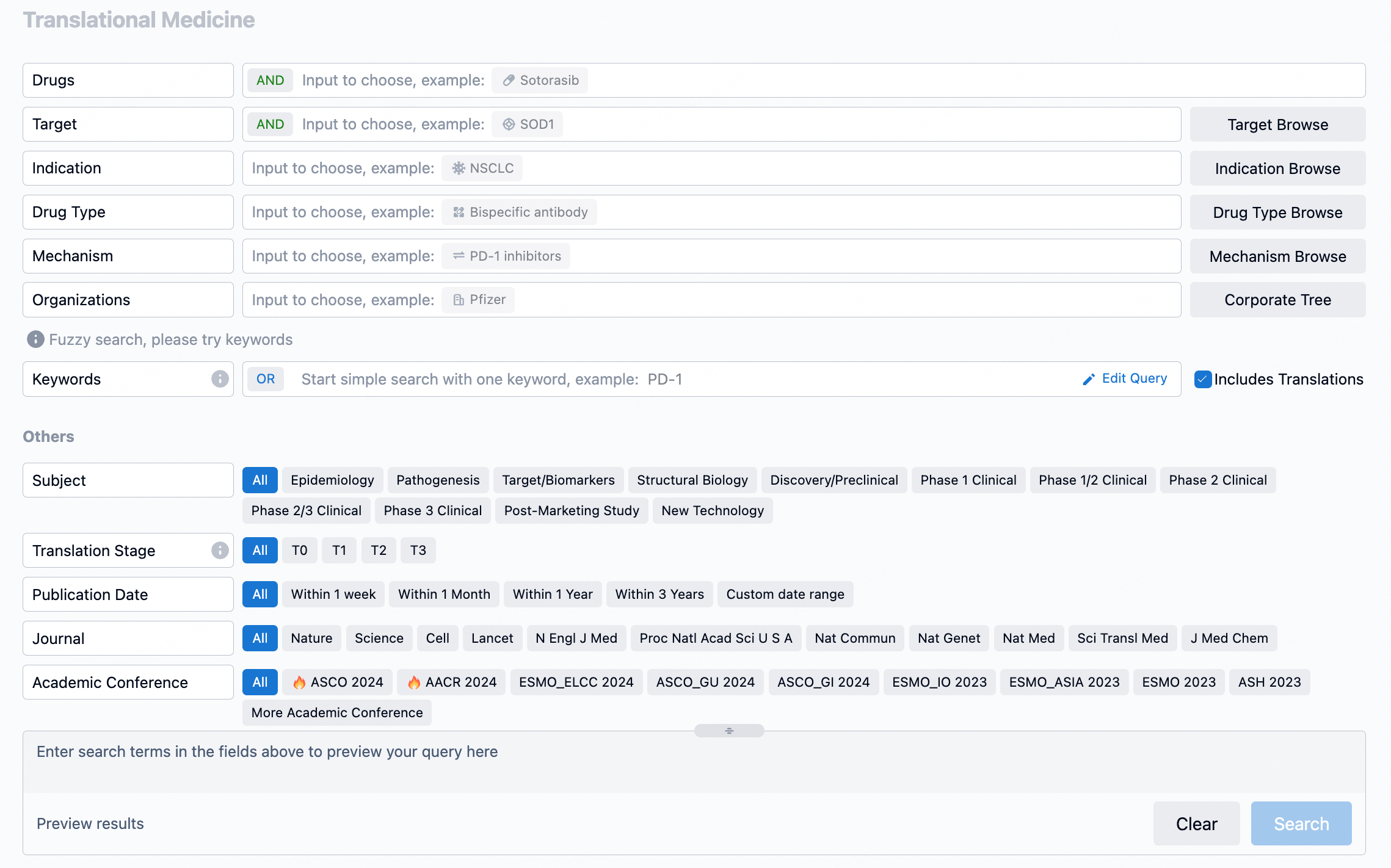
The transational medicine section of the Synapse database supports searches based on fields such as drug, target, and indication, covering the T0-T3 stages of translation. Additionally, it offers a historical conference search function as well as filtering options, view modes, translation services, and highlights summaries, providing you with a unique search experience.
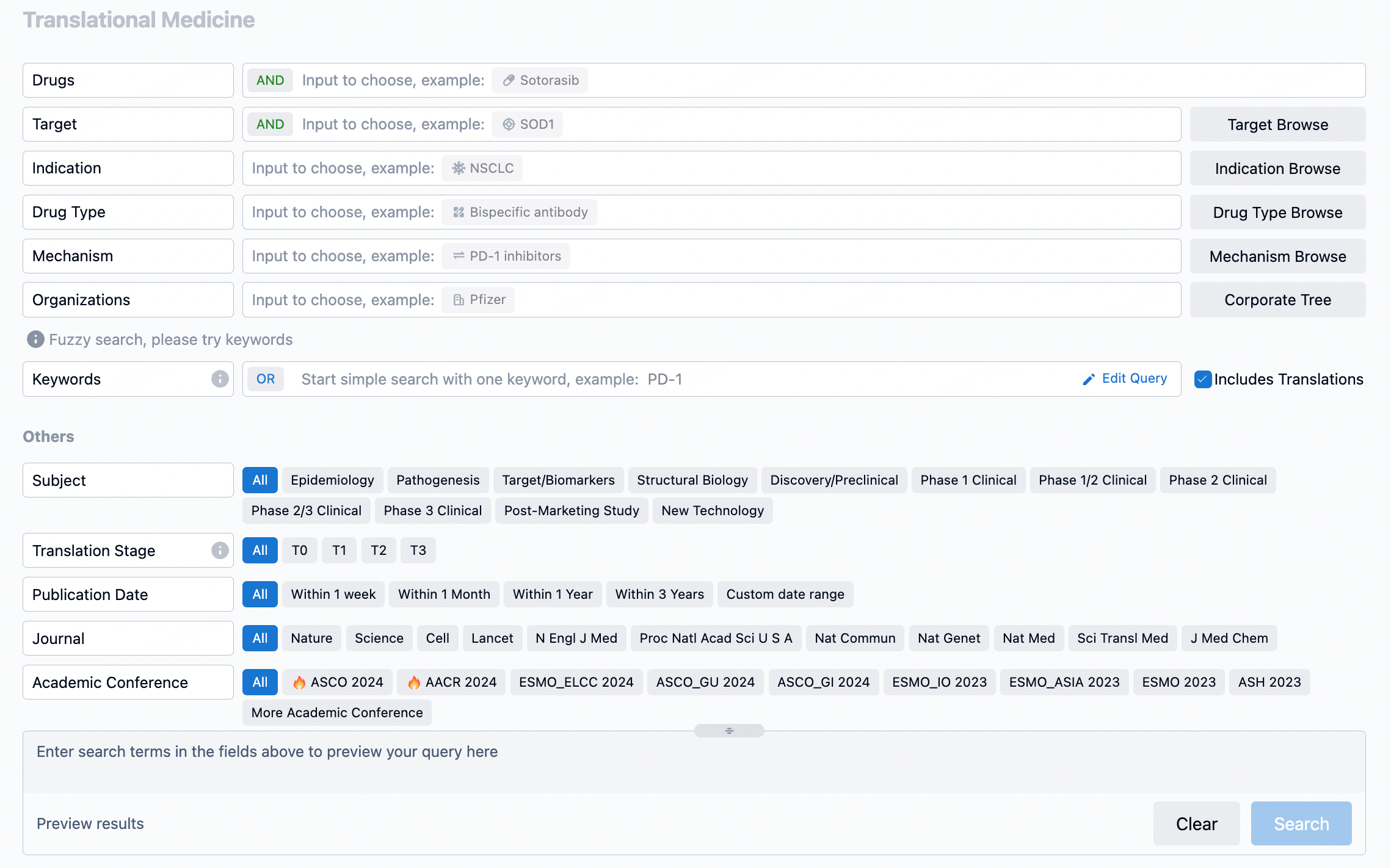
Taking obesity as an example, select "obesity" under the indication category and click search to enter the Translational Medicine results list page. By clicking on the title, you can directly navigate to the original page.
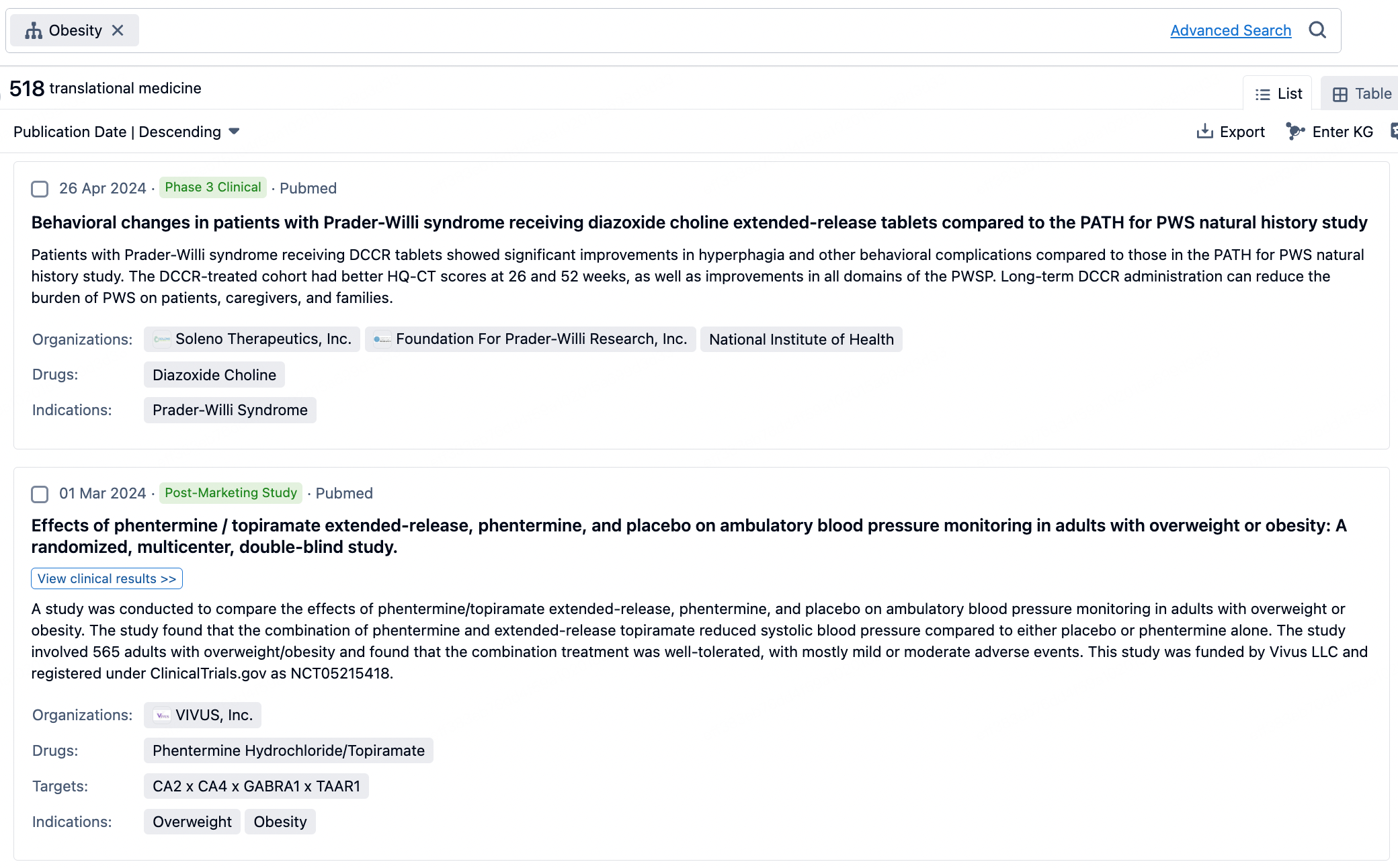
By clicking the analysis button, you can observe that GLP-1R treatment for obesity has gained significant attention over the past three years, with preclinical research still ongoing in 2023. Additionally, there are emerging potential targets, such as GDF15, among others.
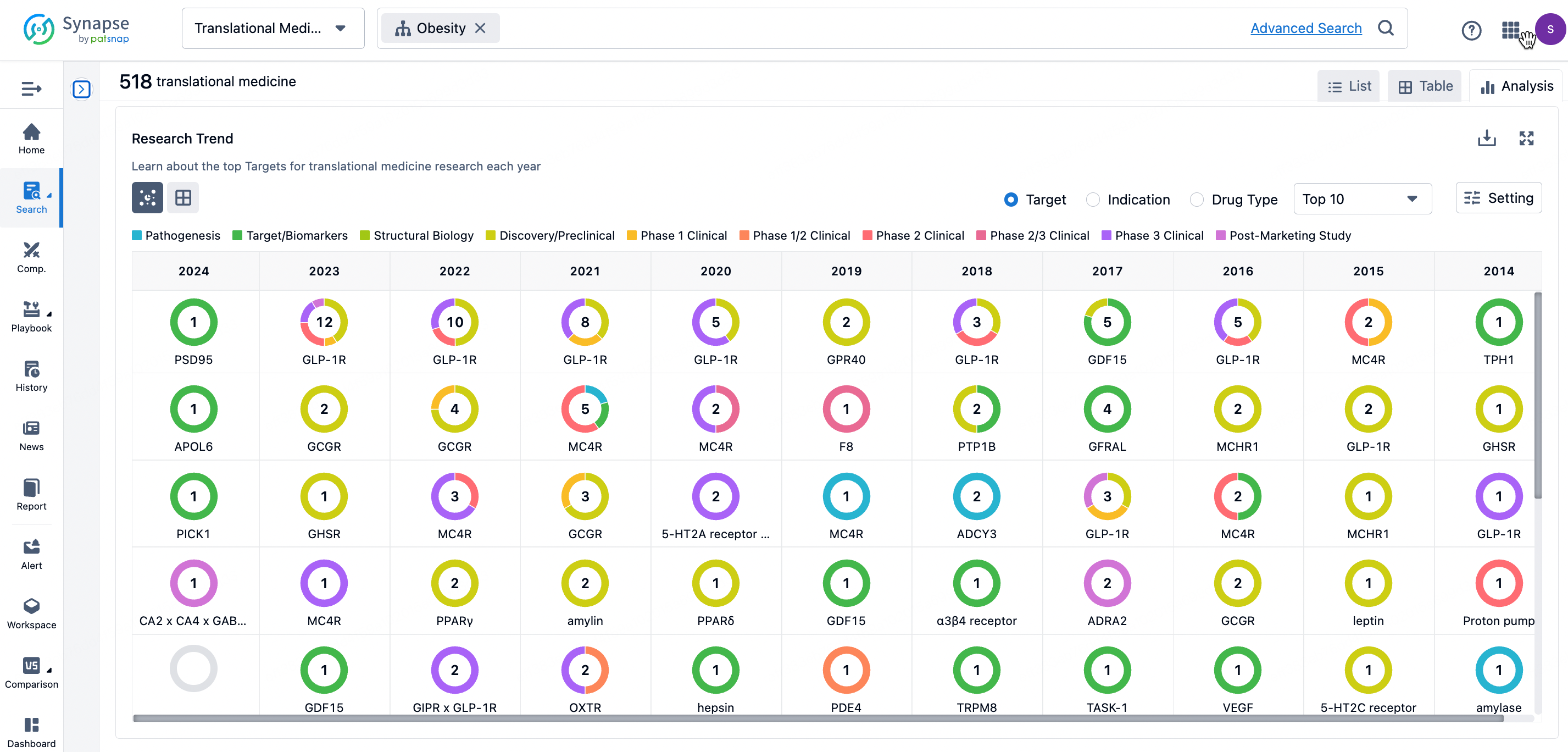
Click on the image below to go directly to the Translational Medicine search interface.