Enhancing Chemotherapy Efficacy: The Role of PROTAC 753B in Targeting BCL-XL/BCL-2 and Eliminating Senescent AML Cells
The research also revealed that 753B can counteract chemotherapy-induced senescence in AML cells, which is associated with chemoresistance. The PROTAC agent was able to revert the senescence phenotype and induce death in senescent AML cells. The study suggests that the senescent AML population, which expresses higher levels of BCL-XL/2, is particularly susceptible to 753B.
Furthermore, the study observed that the degradation of BCL-XL/2 by 753B was accompanied by an upregulation of MCL-1 in most cell lines tested. This upregulation was linked to an increased dependence on MCL-1, as evidenced by enhanced binding of BIM to MCL-1 and facilitated cytochrome c release. The combination of 753B with an MCL-1 inhibitor showed a synergistic effect in inducing apoptosis.
When tested on blasts from primary AML samples, 753B significantly reduced cell viability with a median IC50 value of 0.36 μM and was more potent than DT2216. It also showed comparable potency to ABT-263 in Venetoclax-resistant AML samples. 753B induced apoptosis in both bulk blasts and CD34+ stem/progenitor cells.
In conclusion, the PROTAC 753B has shown the ability to effectively reduce cell viability and eliminate chemotherapy-induced senescent leukemia cells through the induction of apoptosis. Ongoing in vivo studies are evaluating the combination of 753B with chemotherapy in xenograft models.
How to Use Synapse Database to Search and Analyze Translational Medicine Data?
The transational medicine section of the Synapse database supports searches based on fields such as drug, target, and indication, covering the T0-T3 stages of translation. Additionally, it offers a historical conference search function as well as filtering options, view modes, translation services, and highlights summaries, providing you with a unique search experience.
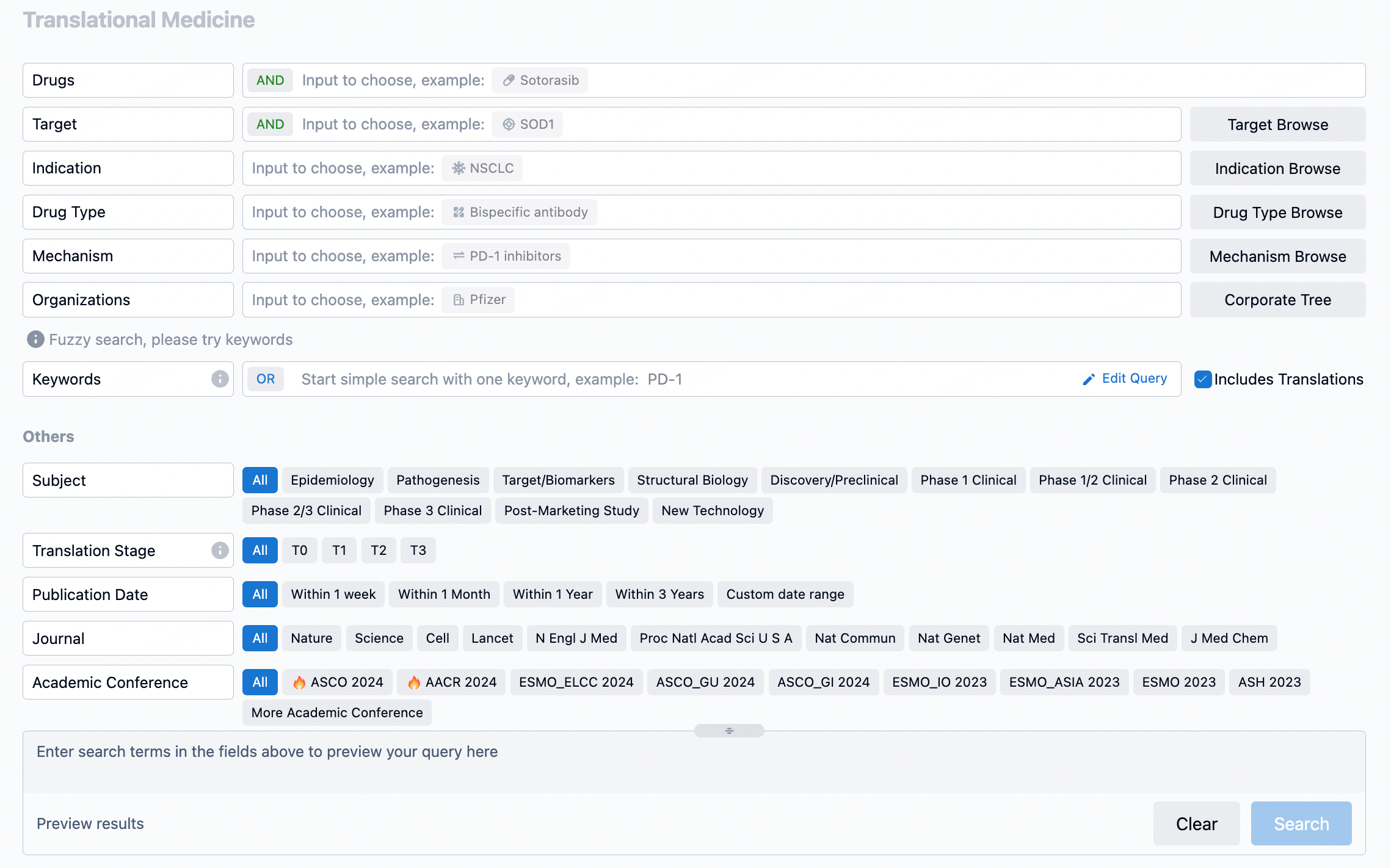
Taking obesity as an example, select "obesity" under the indication category and click search to enter the Translational Medicine results list page. By clicking on the title, you can directly navigate to the original page.
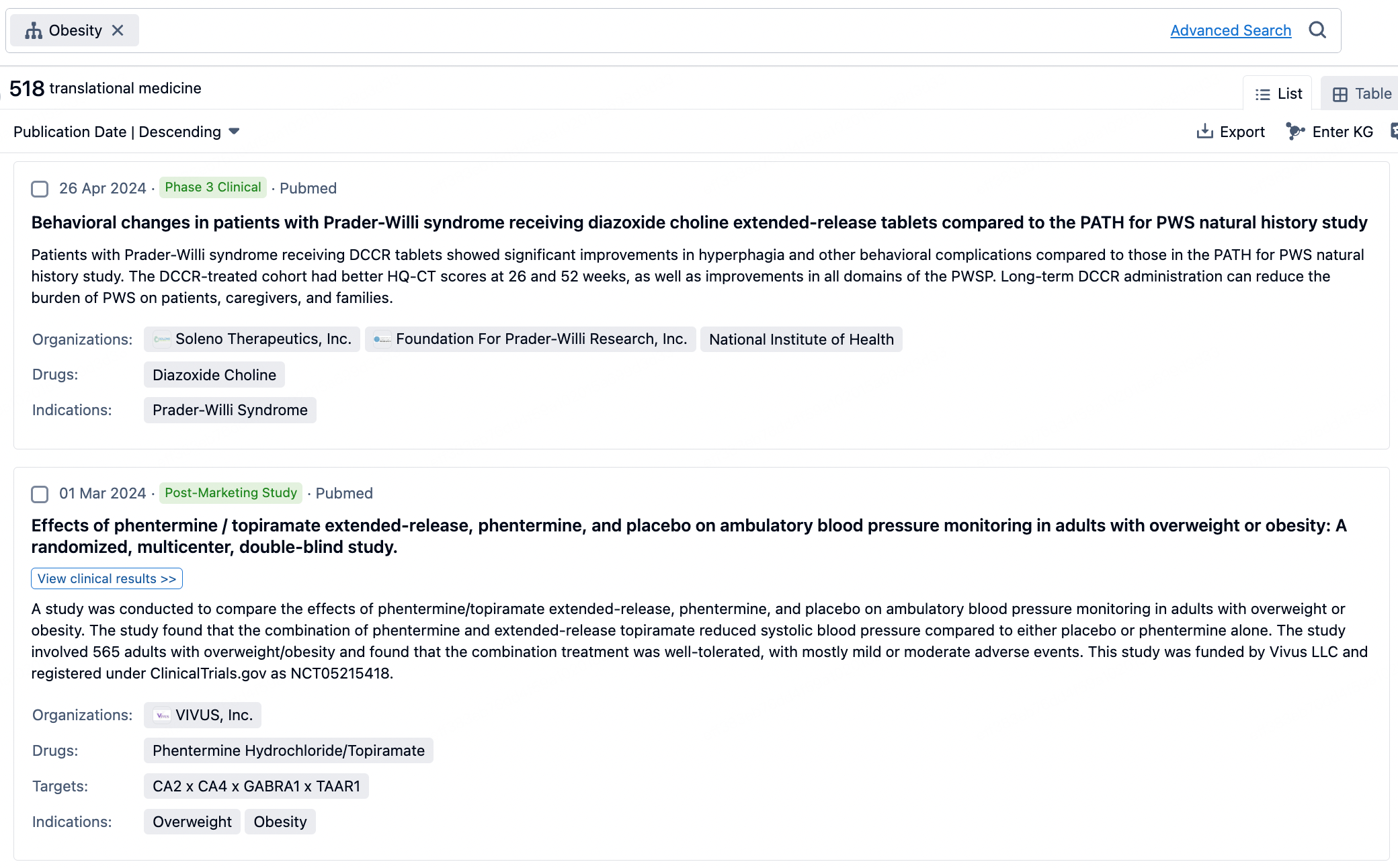
By clicking the analysis button, you can observe that GLP-1R treatment for obesity has gained significant attention over the past three years, with preclinical research still ongoing in 2023. Additionally, there are emerging potential targets, such as GDF15, among others.
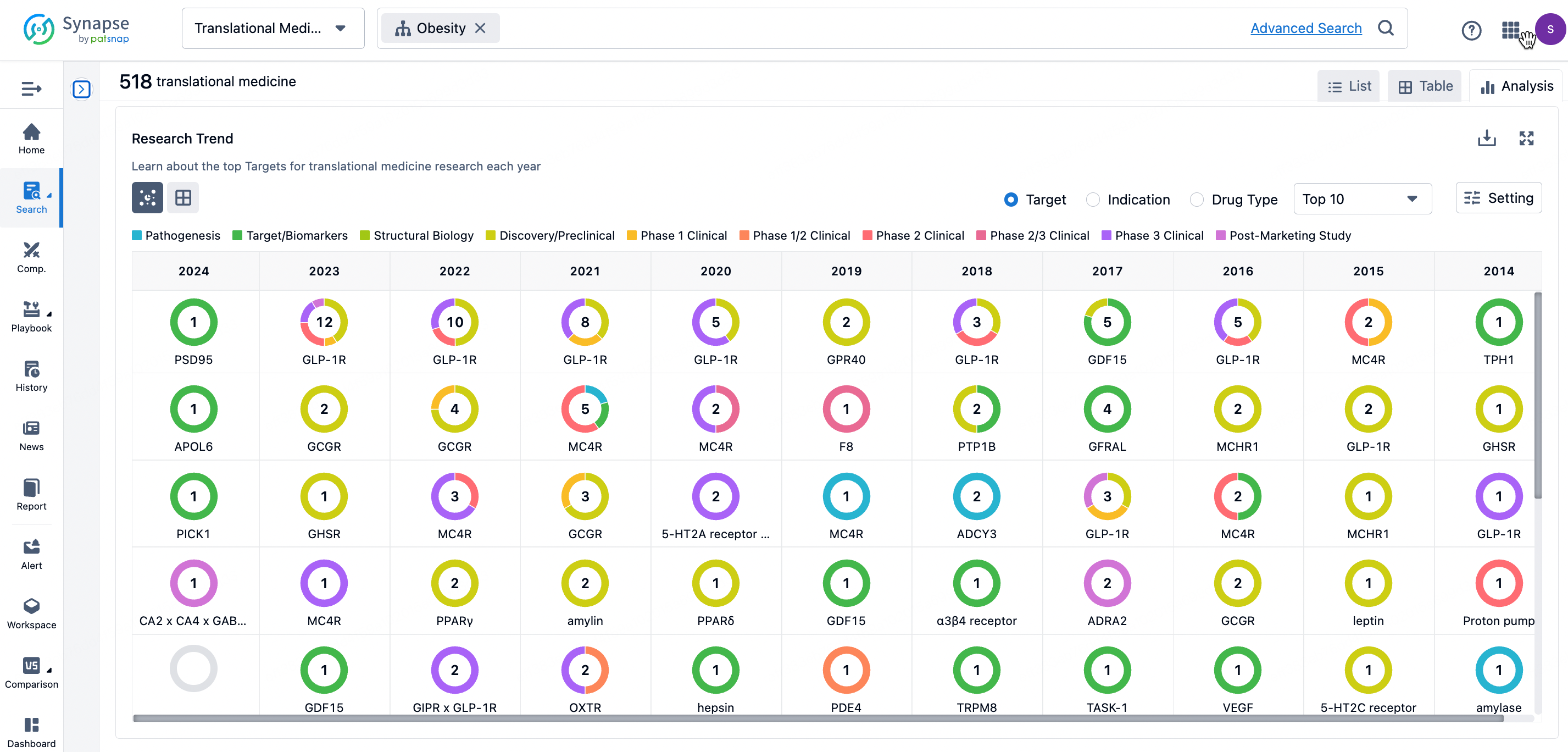
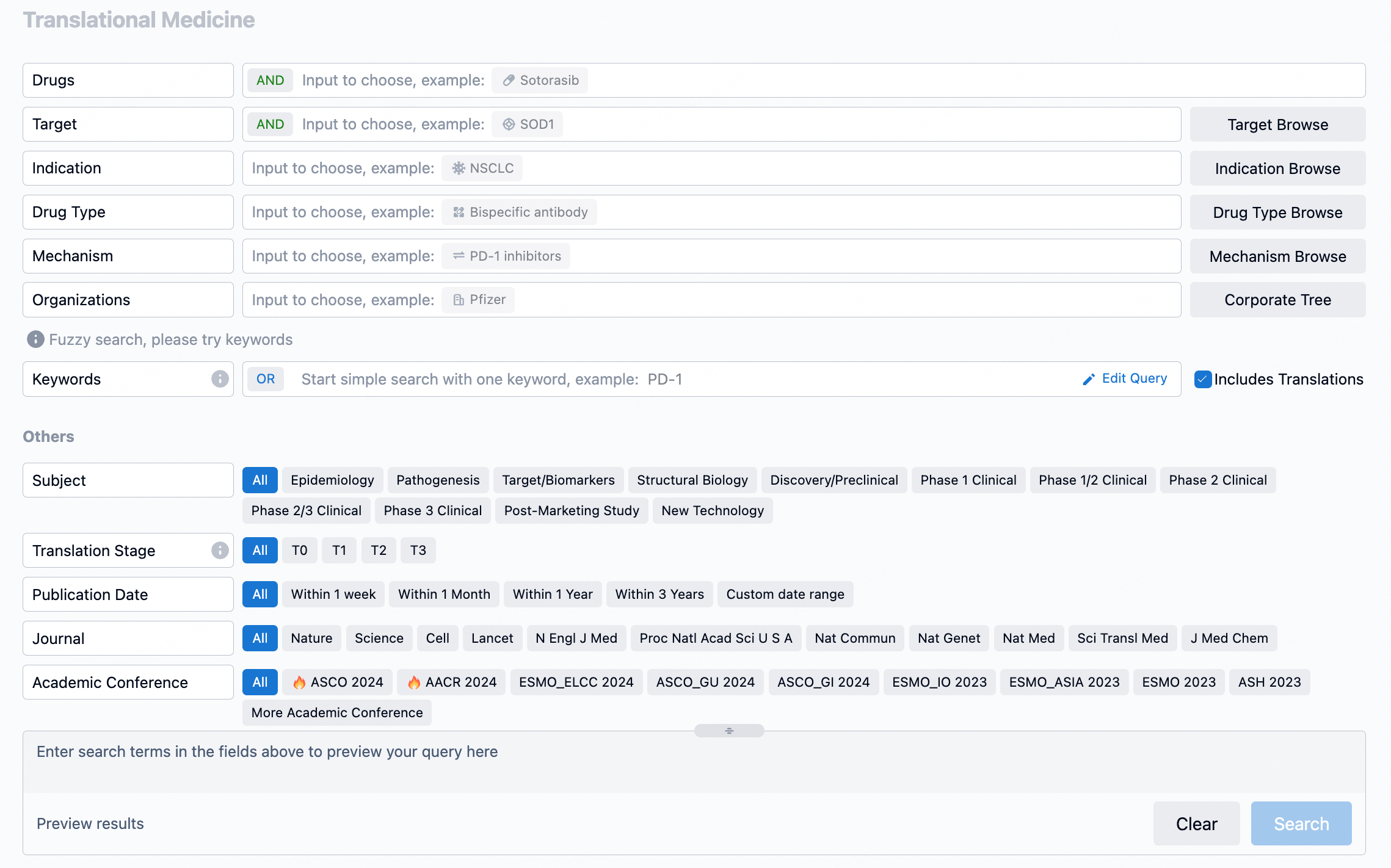
Click on the image below to go directly to the Translational Medicine search interface.