Enhancing Clotting in Hemophilia: The Synergistic Effect of PF-06741086 and rFVIIa
In the study, the impact of PF-06741086 on the blood clotting process was examined alongside recombinant Factor VIIa (rFVIIa), which is commonly used to bypass clotting factor deficiencies. Experiments were conducted using plasma from severe hemophilia A patients, and the results showed that combining PF-06741086 with rFVIIa led to a significant increase in the production of thrombin, a key enzyme in clotting. This combination was found to be more effective than rFVIIa alone, as it not only increased peak thrombin levels but also reduced the time taken for clotting to occur.
Further analysis was conducted on additional hemophilia A plasmas, including those with inhibitors, as well as hemophilia B plasmas. The study consistently demonstrated that the addition of PF-06741086, either alone or with rFVIIa, enhanced thrombin generation. Notably, in samples with inhibitors, PF-06741086 was able to restore normal clotting activity on its own.
The research also measured the effect of PF-06741086 in non-hemophilic plasma, confirming that the addition of the antibody did not lead to excessive clotting. The study concluded that the combination of rFVIIa and PF-06741086 could be a promising therapeutic approach for hemophiliacs, as it effectively boosts thrombin generation without causing over-clotting.
The disclosures section indicates that several authors, including Rakhe, Hett, Murphy, and Pittman, are employed by Pfizer, the company developing PF-06741086.
How to Use Synapse Database to Search and Analyze Translational Medicine Data?
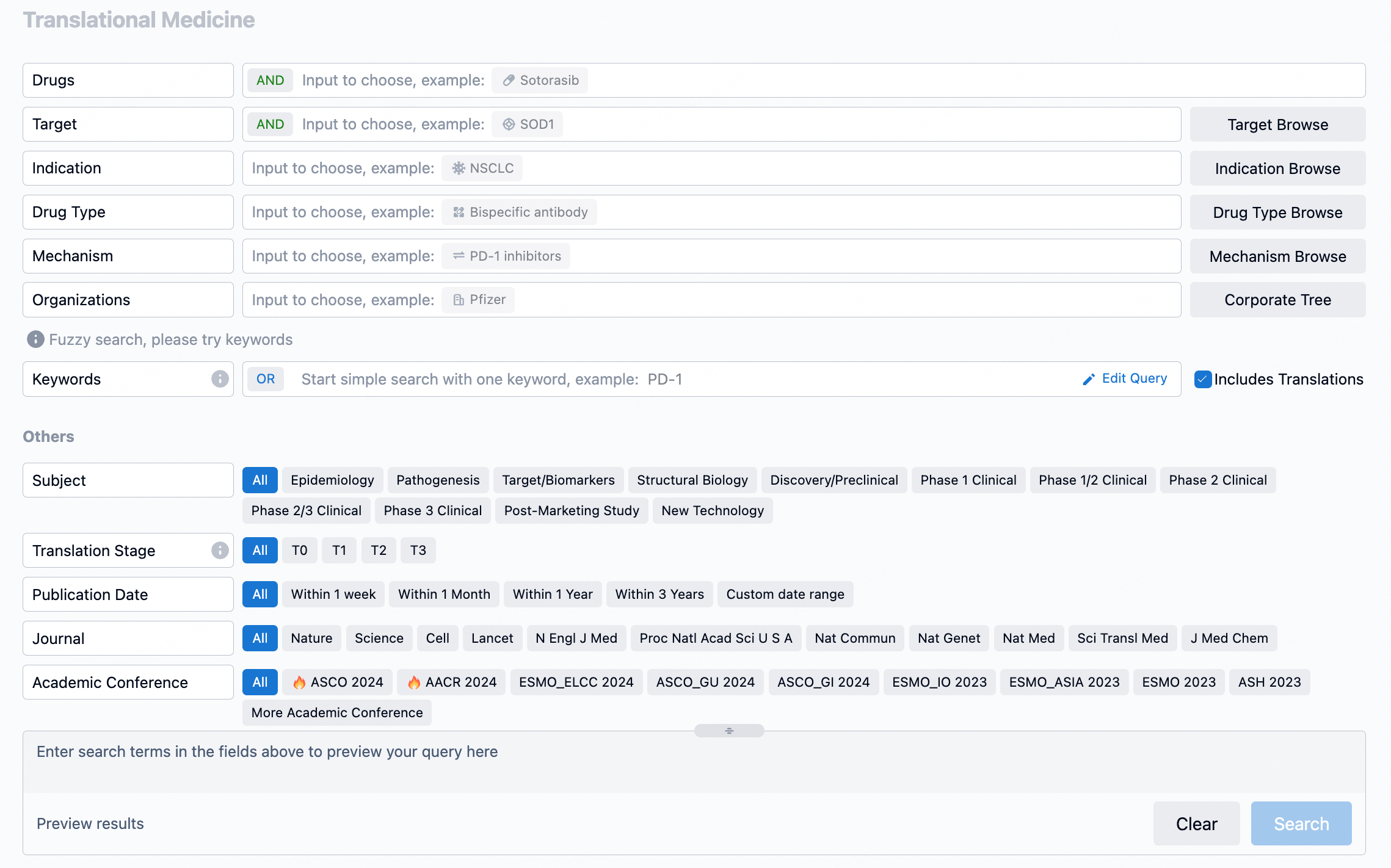
The transational medicine section of the Synapse database supports searches based on fields such as drug, target, and indication, covering the T0-T3 stages of translation. Additionally, it offers a historical conference search function as well as filtering options, view modes, translation services, and highlights summaries, providing you with a unique search experience.
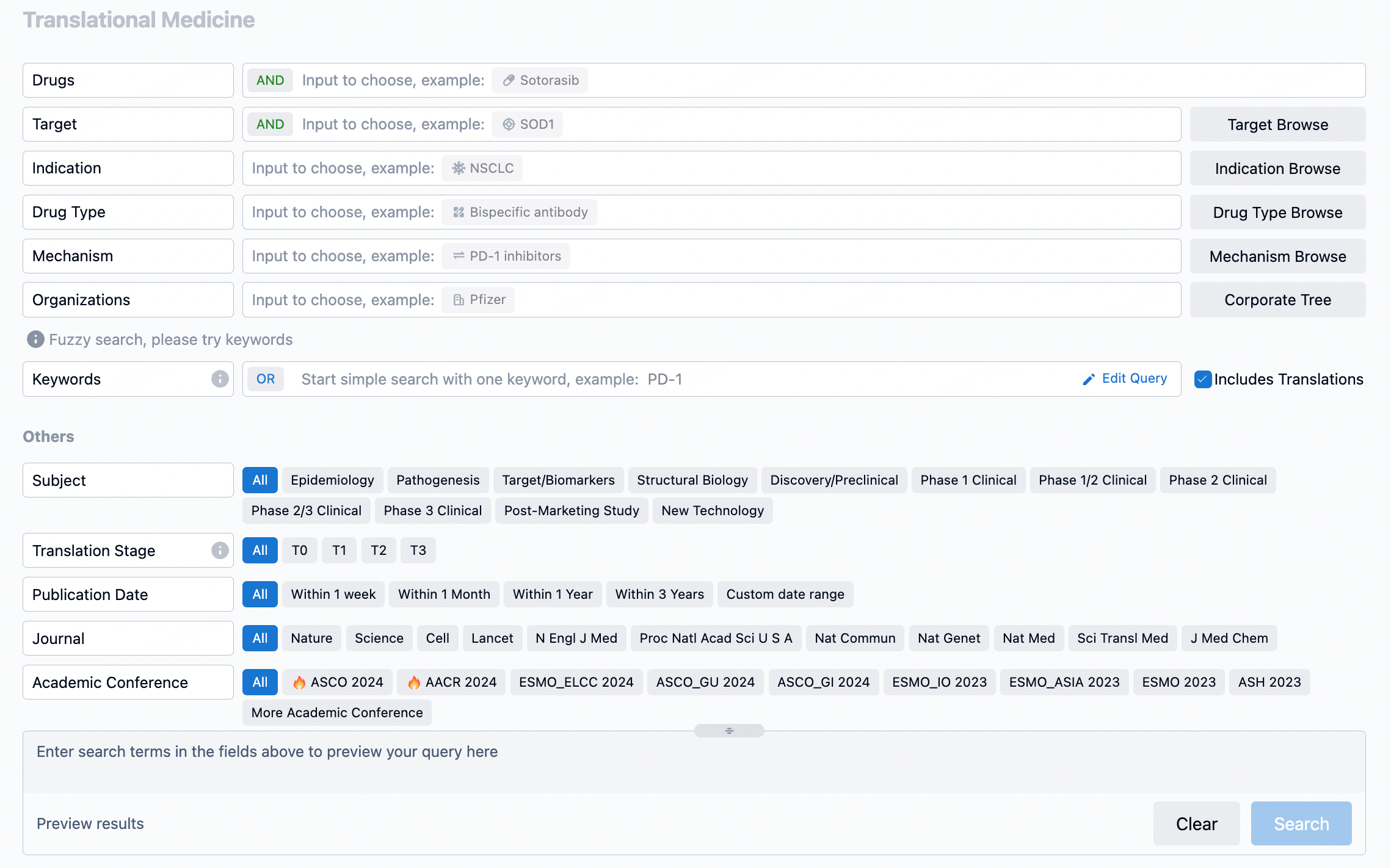
Taking obesity as an example, select "obesity" under the indication category and click search to enter the Translational Medicine results list page. By clicking on the title, you can directly navigate to the original page.
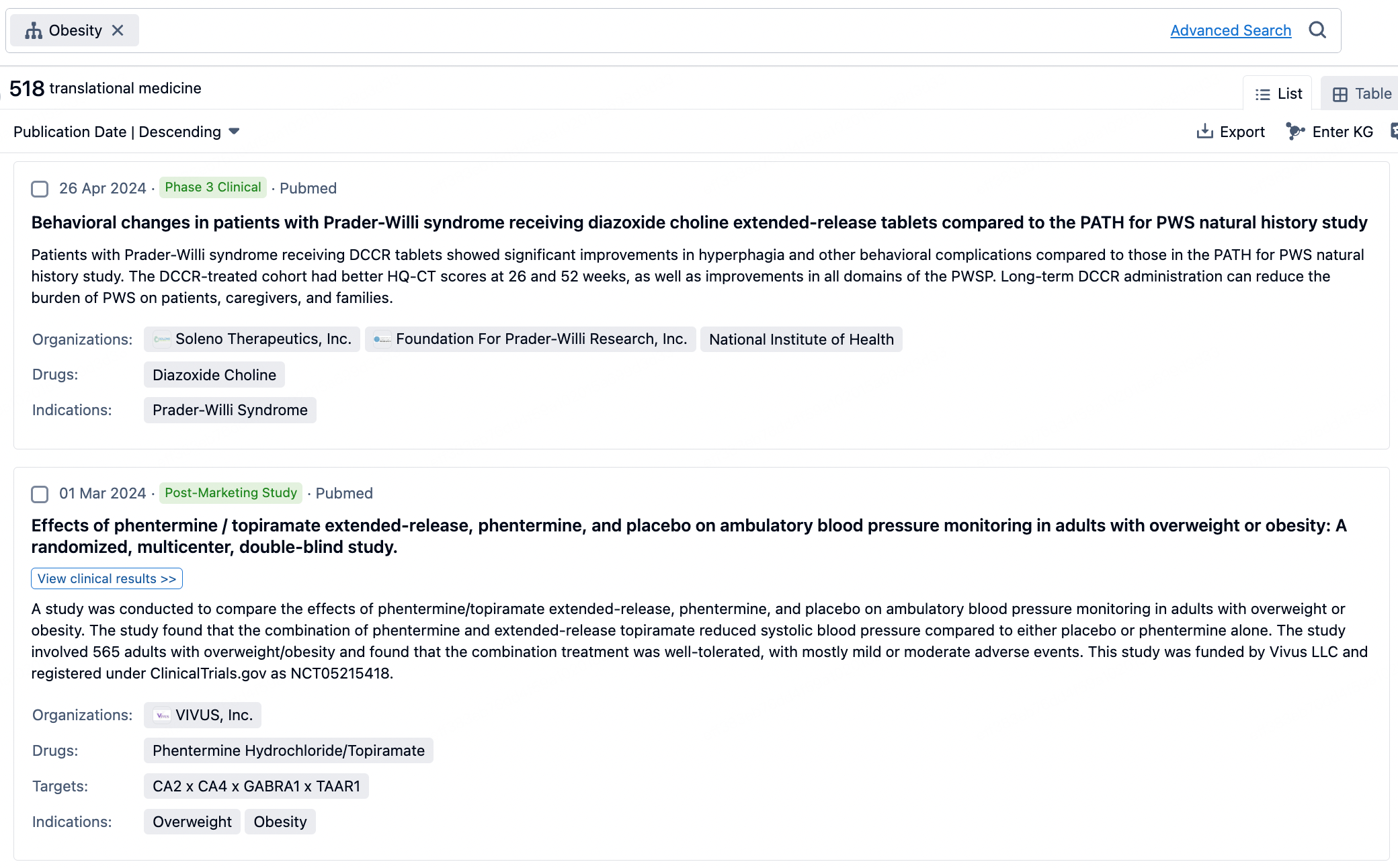
By clicking the analysis button, you can observe that GLP-1R treatment for obesity has gained significant attention over the past three years, with preclinical research still ongoing in 2023. Additionally, there are emerging potential targets, such as GDF15, among others.
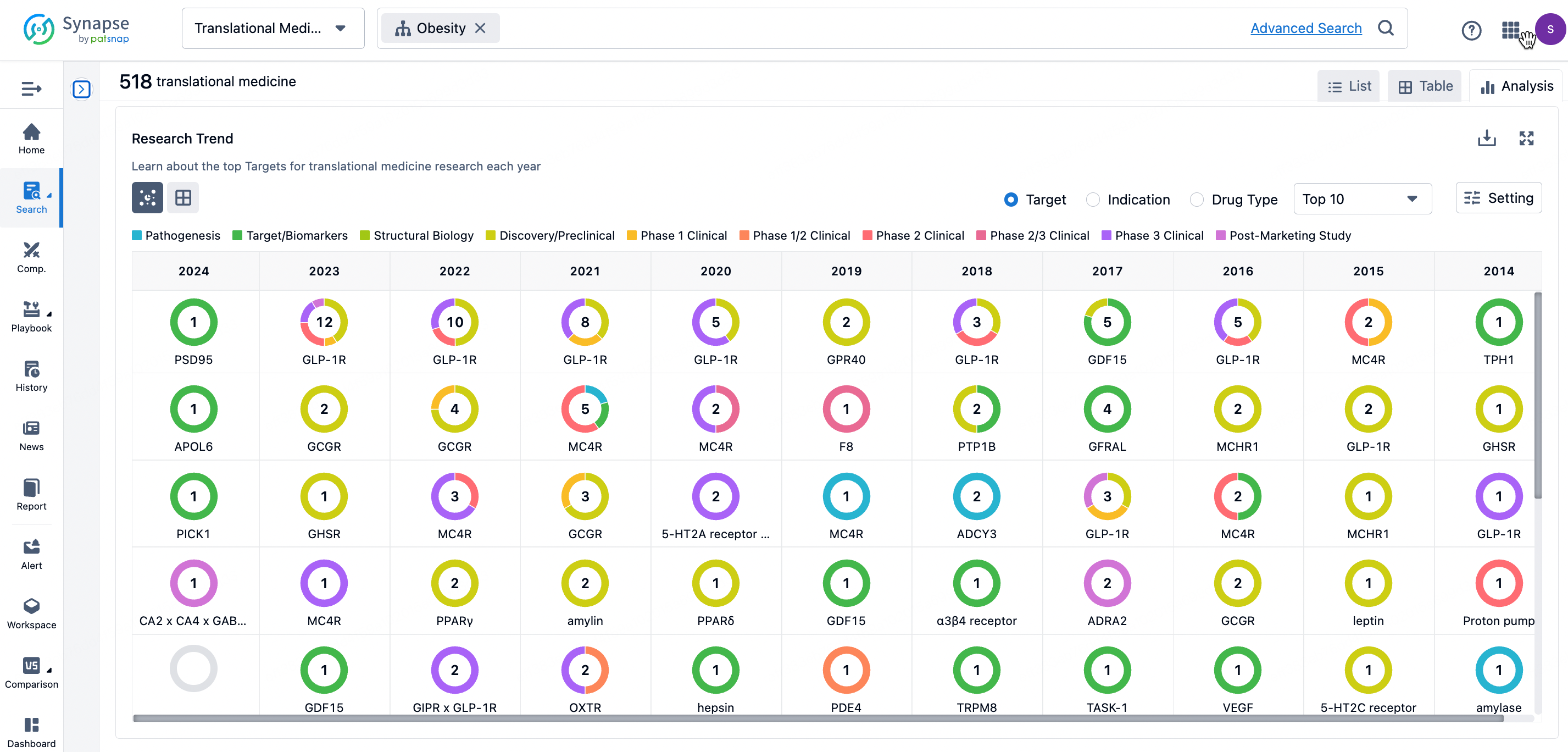
Click on the image below to go directly to the Translational Medicine search interface.