Exploring the Role of Sigma-1 Receptors in Memory Enhancement by ANAVEX1-41: Insights from Aminotetrahydrofuran Derivative
In laboratory tests, ANAVEX1-41 demonstrated high affinity for muscarinic receptors, particularly M1, M3, M4, and M2, and was a selective ligand for sigma-1 receptors. When tested in mice, the drug did not affect learning when administered alone but was effective in reducing memory impairment caused by scopolamine, with the optimal dose being 0.1 mg/kg. The anti-amnesia effect was blocked by the sigma-1 antagonist BD1047 and by pretreatment with a sigma-1 receptor-targeted antisense oligodeoxynucleotide, particularly in long-term memory tests.
Furthermore, ANAVEX1-41 was found to reduce signs of depression-like behavior in mice at doses of 30 and 60 mg/kg, an effect that did not seem to involve sigma-1 receptors as it was not affected by BD1047 or the antisense treatment.
The study concludes that ANAVEX1-41 has potential as an anti-amnesia drug, with its effects mediated through both muscarinic and sigma-1 receptors, the latter possibly playing a role in enhancing long-term memory. The research was published in the British Journal of Pharmacology in 2007.
How to Use Synapse Database to Search and Analyze Translational Medicine Data?
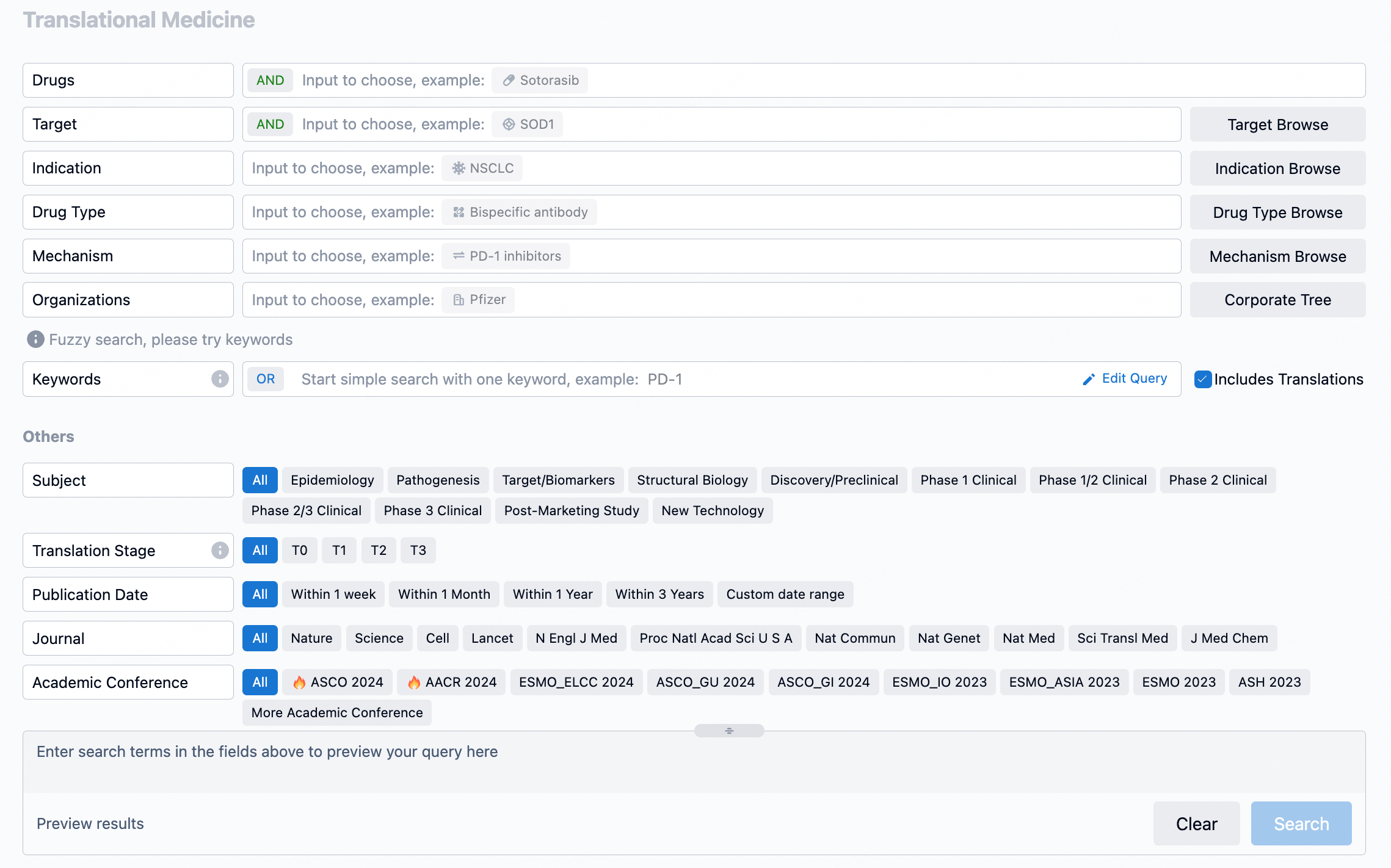
The transational medicine section of the Synapse database supports searches based on fields such as drug, target, and indication, covering the T0-T3 stages of translation. Additionally, it offers a historical conference search function as well as filtering options, view modes, translation services, and highlights summaries, providing you with a unique search experience.
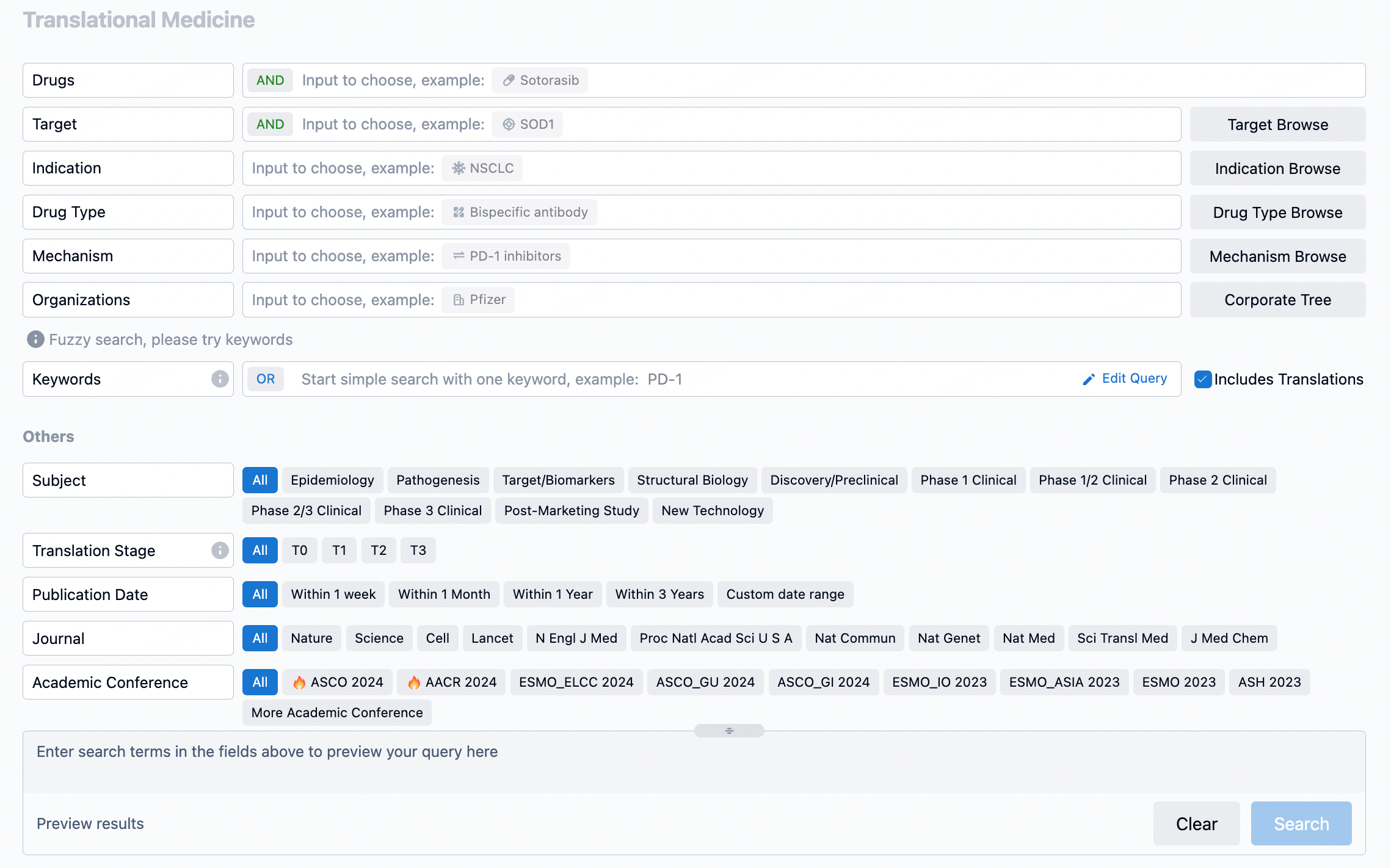
Taking obesity as an example, select "obesity" under the indication category and click search to enter the Translational Medicine results list page. By clicking on the title, you can directly navigate to the original page.
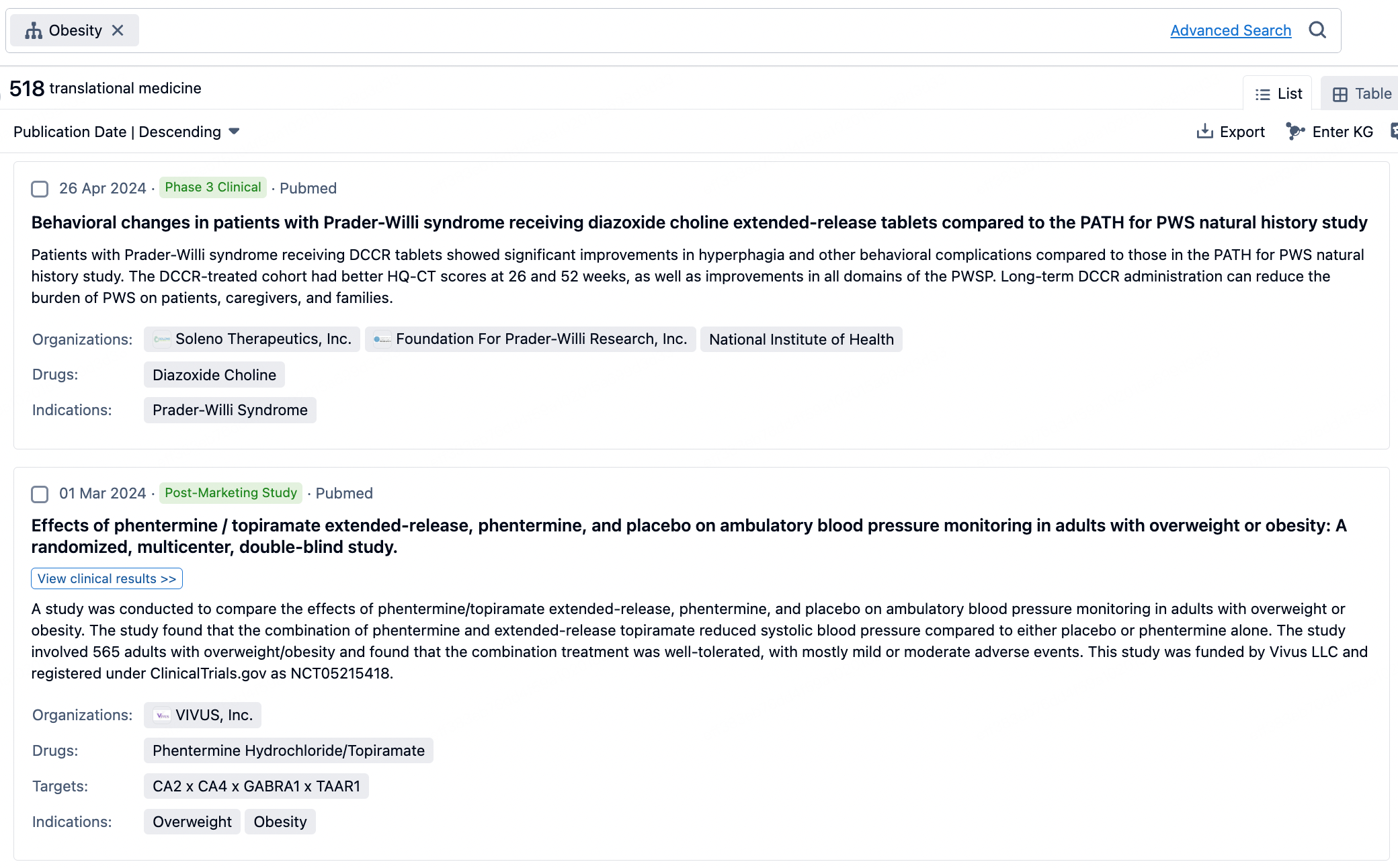
By clicking the analysis button, you can observe that GLP-1R treatment for obesity has gained significant attention over the past three years, with preclinical research still ongoing in 2023. Additionally, there are emerging potential targets, such as GDF15, among others.
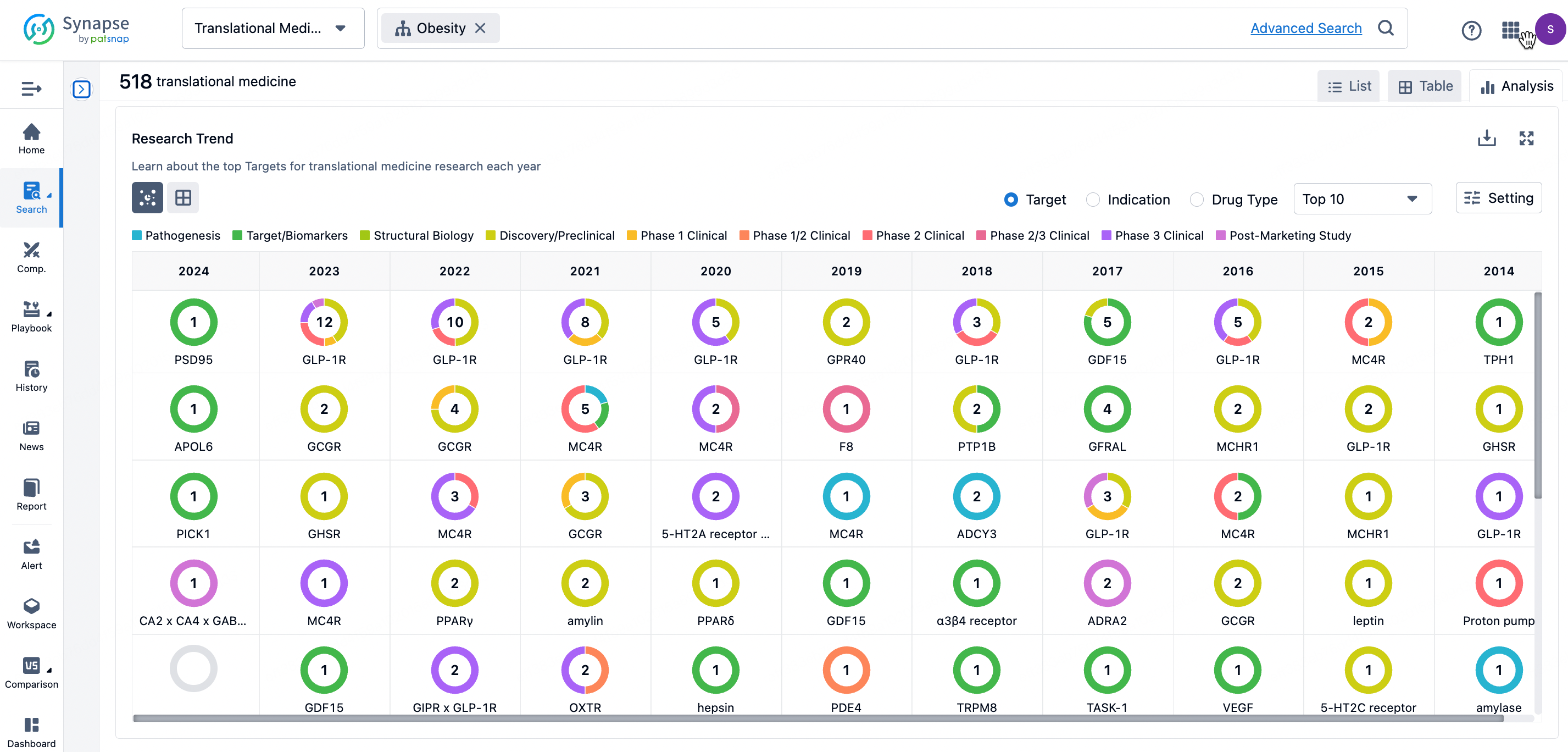
Click on the image below to go directly to the Translational Medicine search interface.