Inhibition of Wnt Pathway by SM08502: Targeting Pancreatic Cancer Growth and Overcoming Stromal Resistance
The study aimed to evaluate the efficacy of SM08502 in vitro and in vivo using PC models. The compound was tested on 14 PC cell lines, and its antitumor potential was assessed in Capan-1 and HPAFII xenografts in nude mice. The in vitro analysis included cell viability, colony formation, apoptosis induction, and Wnt-related gene expression in several cell lines. The in vivo assays measured tumor growth inhibition (TGI) and the compound's impact on tumor stroma by co-implanting cancer-associated fibroblasts (CAFs) in the xenograft models.
SM08502 showed potent inhibition of cell viability across all cell lines, with EC50 values ranging from 0.072 to 0.526 μM. It also reduced colony formation and Wnt-related gene expression by at least 50% and induced apoptosis in the tested cells. In the HPAFII xenograft model, SM08502 significantly inhibited tumor growth, with a TGI of 93%, and induced regression in a subset of mice. Even when administered intermittently, the compound significantly inhibited tumor growth.
In experiments modeling the effects of tumor stroma, co-implantation of CAFs increased tumor growth but did not affect the activity of SM08502, which still induced significant TGI in both Capan-1 and HPAFII xenografts. These findings indicate that SM08502 not only downregulates Wnt pathway-related gene expression and exhibits strong antitumor activity but also has the potential to overcome the protective effects of stroma in PC.
A phase 1 clinical trial is underway to assess the safety, tolerability, and pharmacokinetics of SM08502 in patients with advanced solid tumors, suggesting a promising direction for the treatment of pancreatic cancer.
How to Use Synapse Database to Search and Analyze Translational Medicine Data?
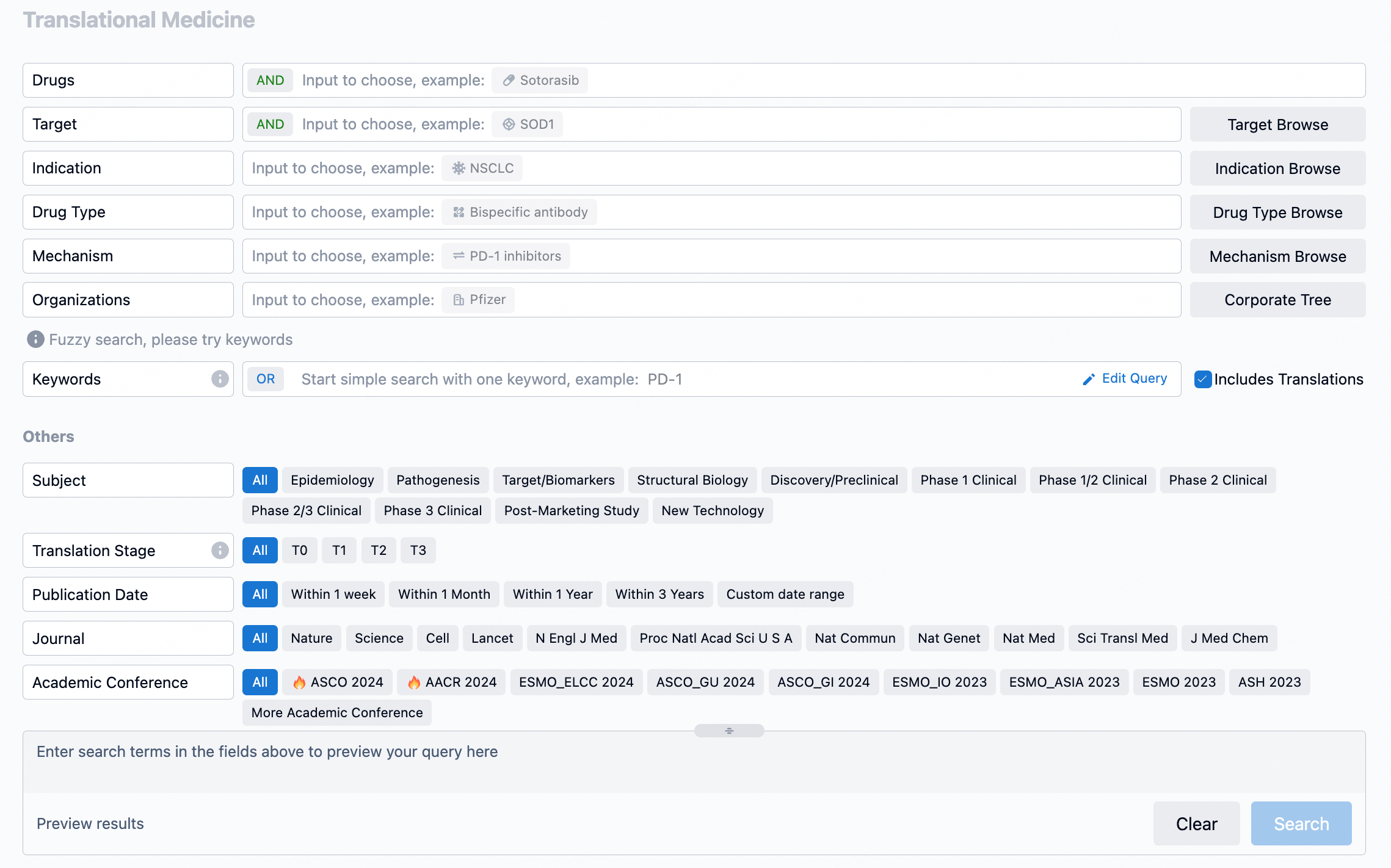
The transational medicine section of the Synapse database supports searches based on fields such as drug, target, and indication, covering the T0-T3 stages of translation. Additionally, it offers a historical conference search function as well as filtering options, view modes, translation services, and highlights summaries, providing you with a unique search experience.
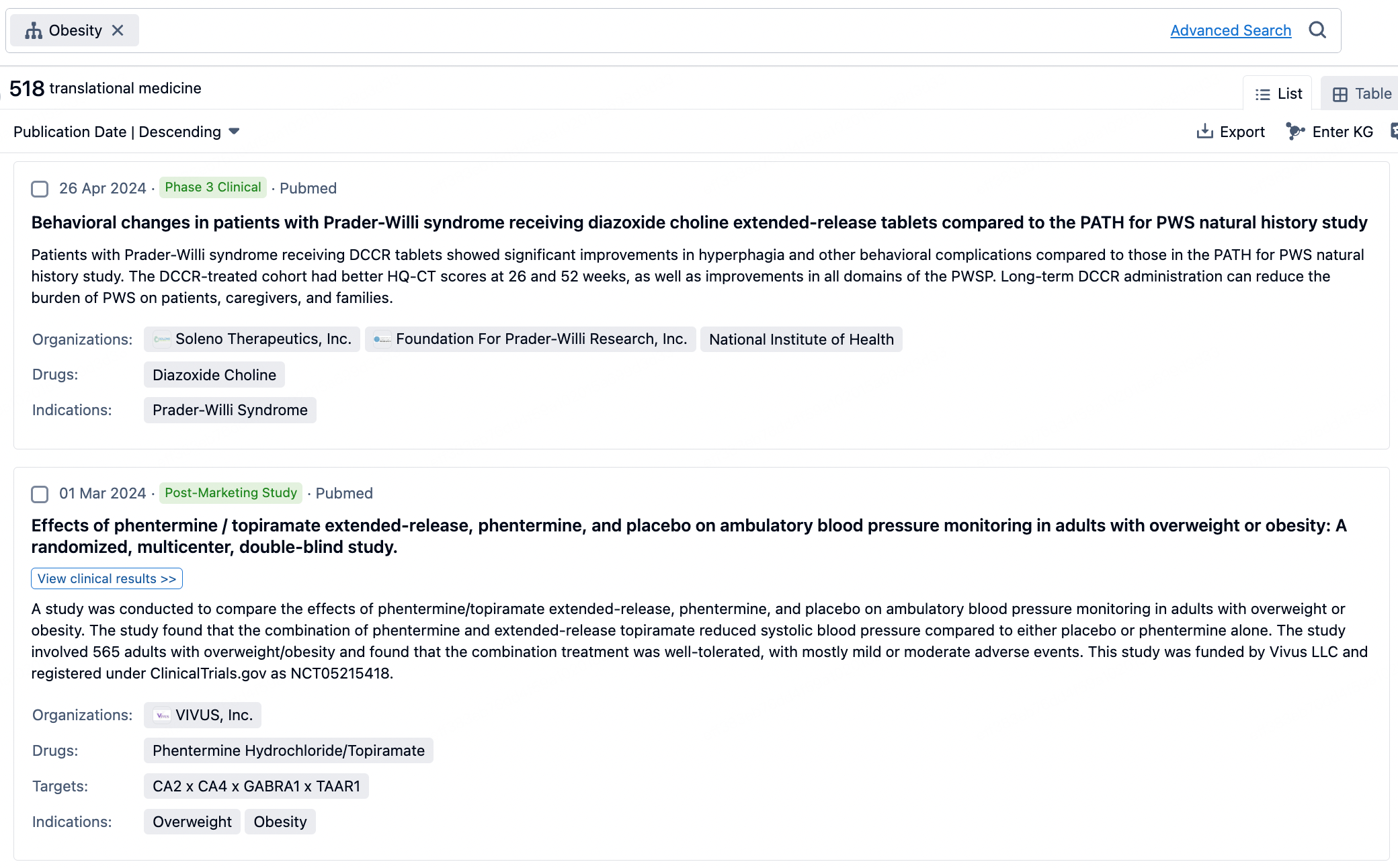
Taking obesity as an example, select "obesity" under the indication category and click search to enter the Translational Medicine results list page. By clicking on the title, you can directly navigate to the original page.
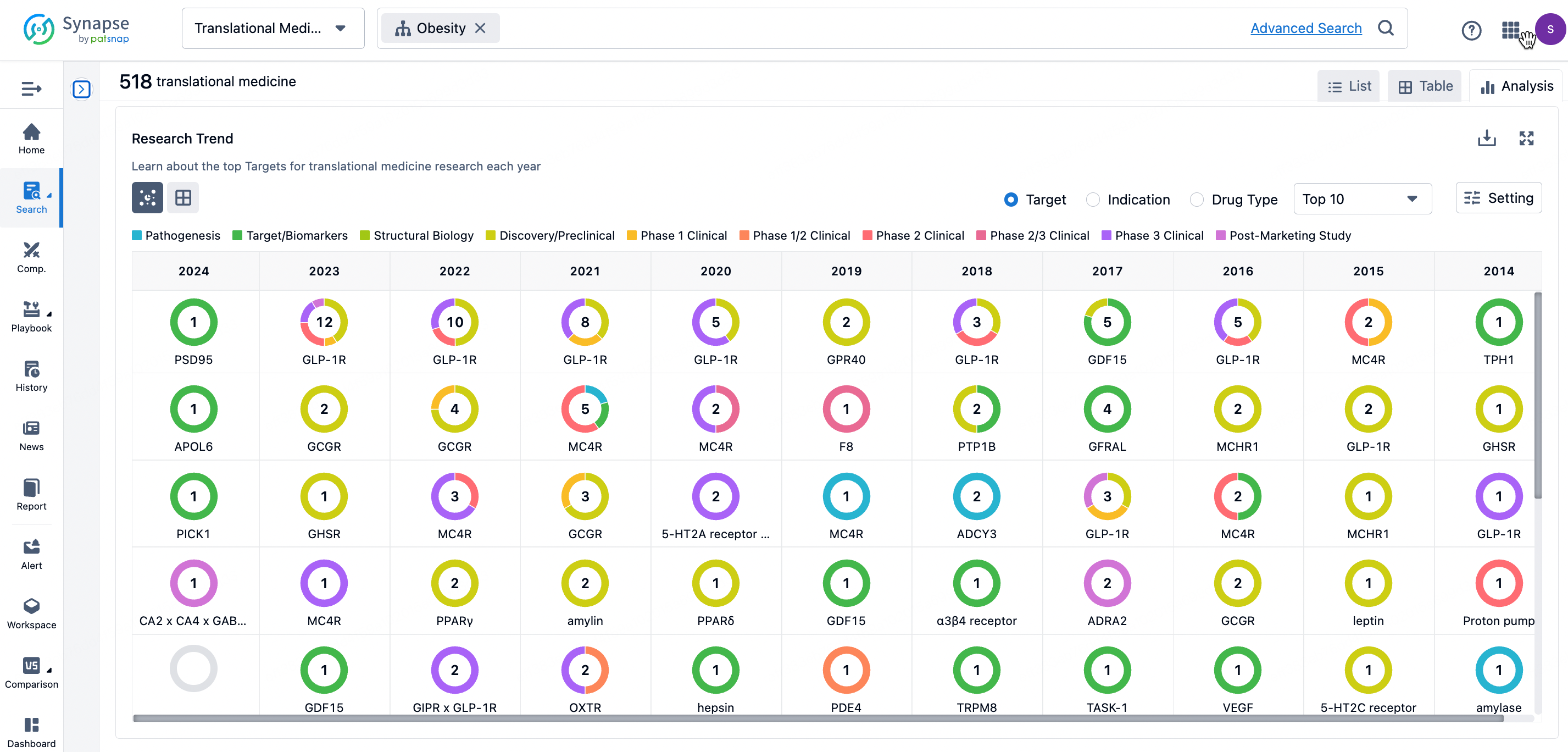
By clicking the analysis button, you can observe that GLP-1R treatment for obesity has gained significant attention over the past three years, with preclinical research still ongoing in 2023. Additionally, there are emerging potential targets, such as GDF15, among others.
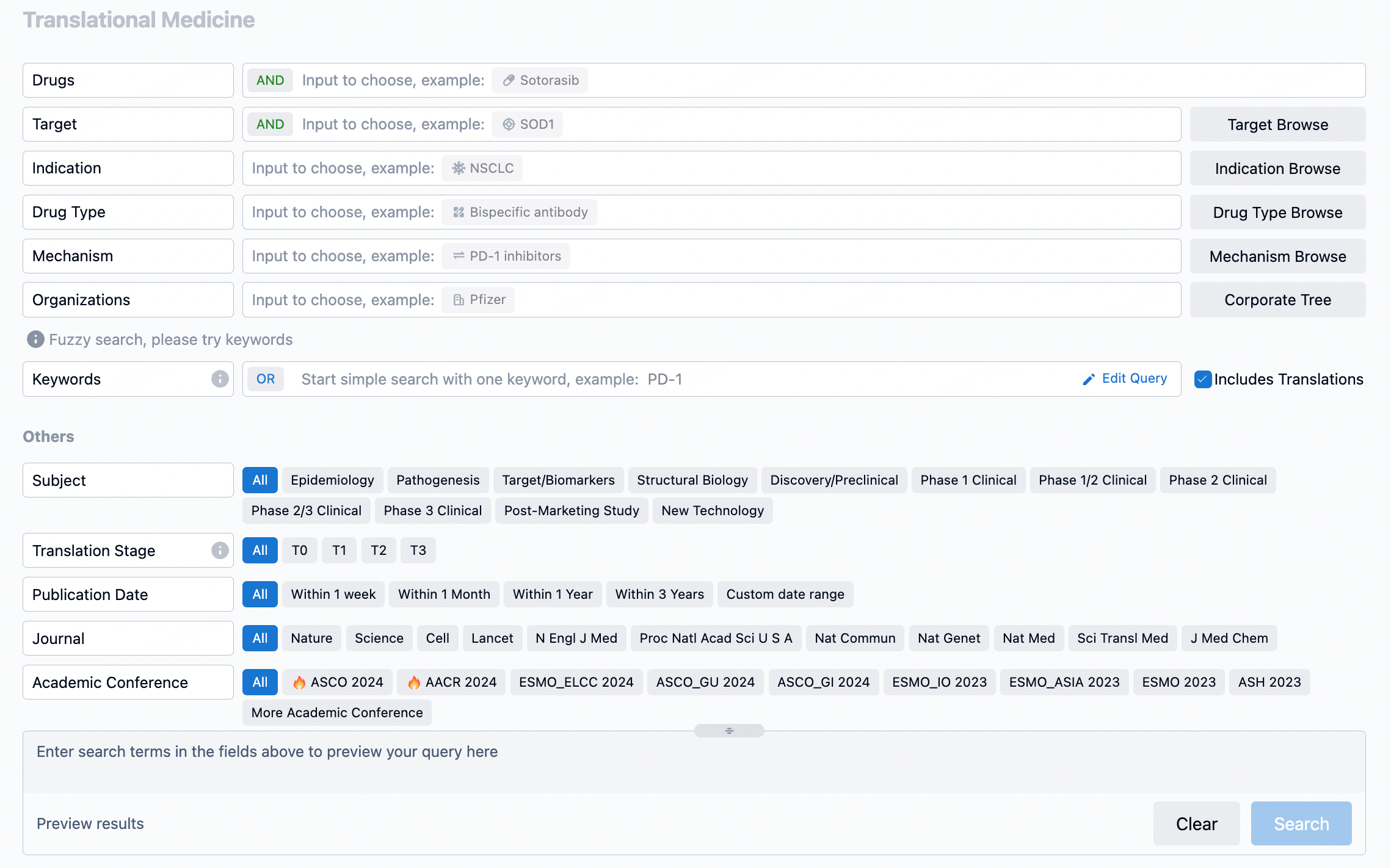
Click on the image below to go directly to the Translational Medicine search interface.