Rapid Apoptosis Induction by Dual Bcl-2/xL Inhibitor AZD4320 in Preclinical Hematologic Tumor Models
A new compound, AZD4320, has been synthesized with a high affinity for Bcl-2 and Bcl-xL, akin to navitoclax, but with properties that allow for intravenous administration, potentially reducing the toxicities associated with oral navitoclax. AZD4320 acts as a genuine BH3 mimetic, disrupting the interaction between Bcl-2 and BH3-only proteins and requiring functional BAK and BAX for the apoptotic process. Kinetic studies on the Bcl-2-dependent B-ALL cell line RS4;11 showed a dose- and time-dependent increase in cleaved caspase-3 and a decrease in cell viability. AZD4320 was also effective against a range of hematological cancer cell lines with a median EC50 of 182nM, but solid tumor cell lines were less responsive. Compared to venetoclax, AZD4320 demonstrated greater sensitivity in hematological tumor cell lines and maintained potency in a venetoclax-resistant ABC-DLBCL cell line. In vivo studies with RS4;11 xenograft tumors showed tumor regression and induction of cleaved caspase-3 following a single dose of AZD4320.
The findings underscore the potential of a dual Bcl-2/xL inhibitor like AZD4320 as a foundational therapy for a variety of hematological cancers and as a means to overcome resistance to other BH3 mimetics and targeted treatments.
How to Use Synapse Database to Search and Analyze Translational Medicine Data?
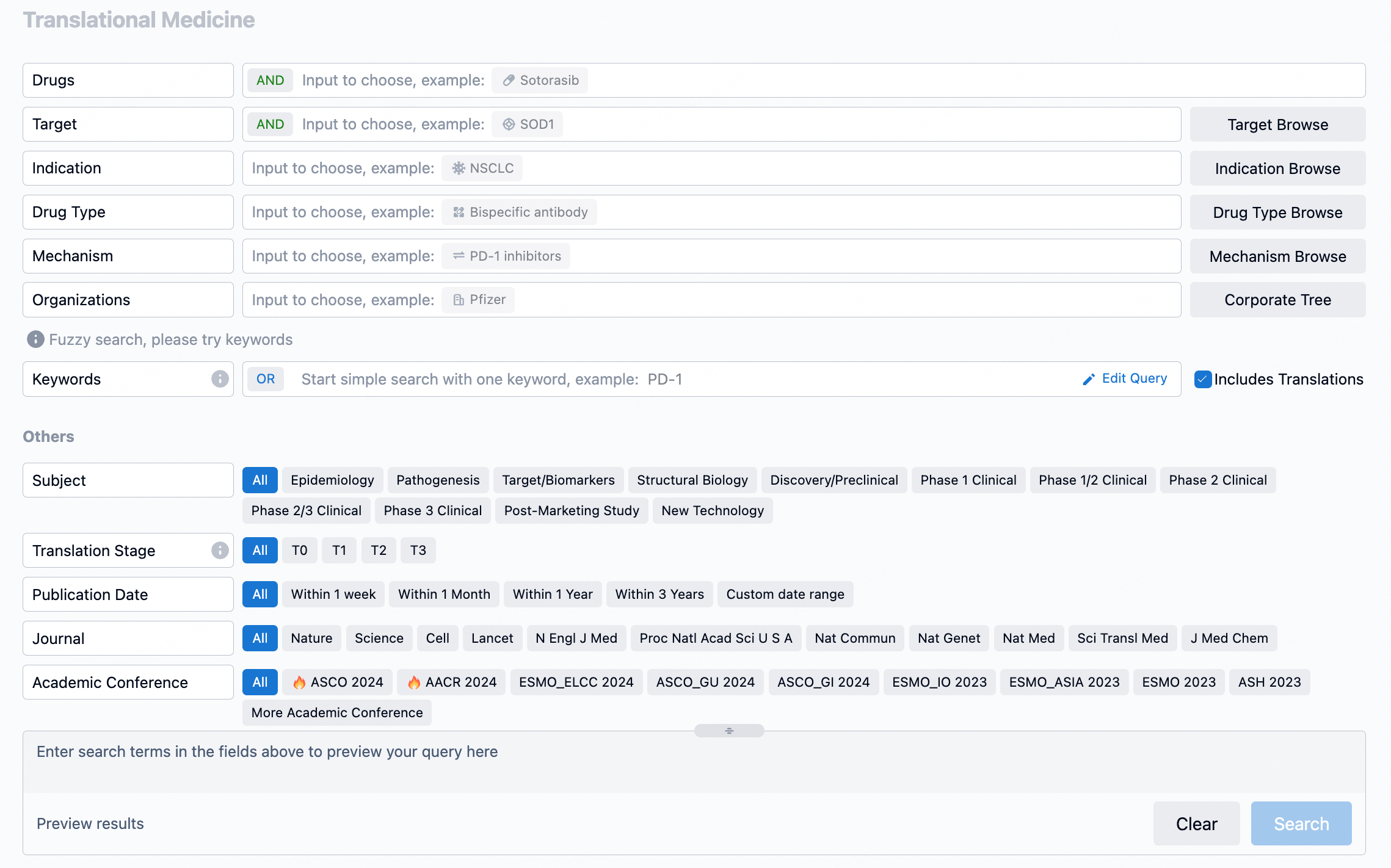
The transational medicine section of the Synapse database supports searches based on fields such as drug, target, and indication, covering the T0-T3 stages of translation. Additionally, it offers a historical conference search function as well as filtering options, view modes, translation services, and highlights summaries, providing you with a unique search experience.
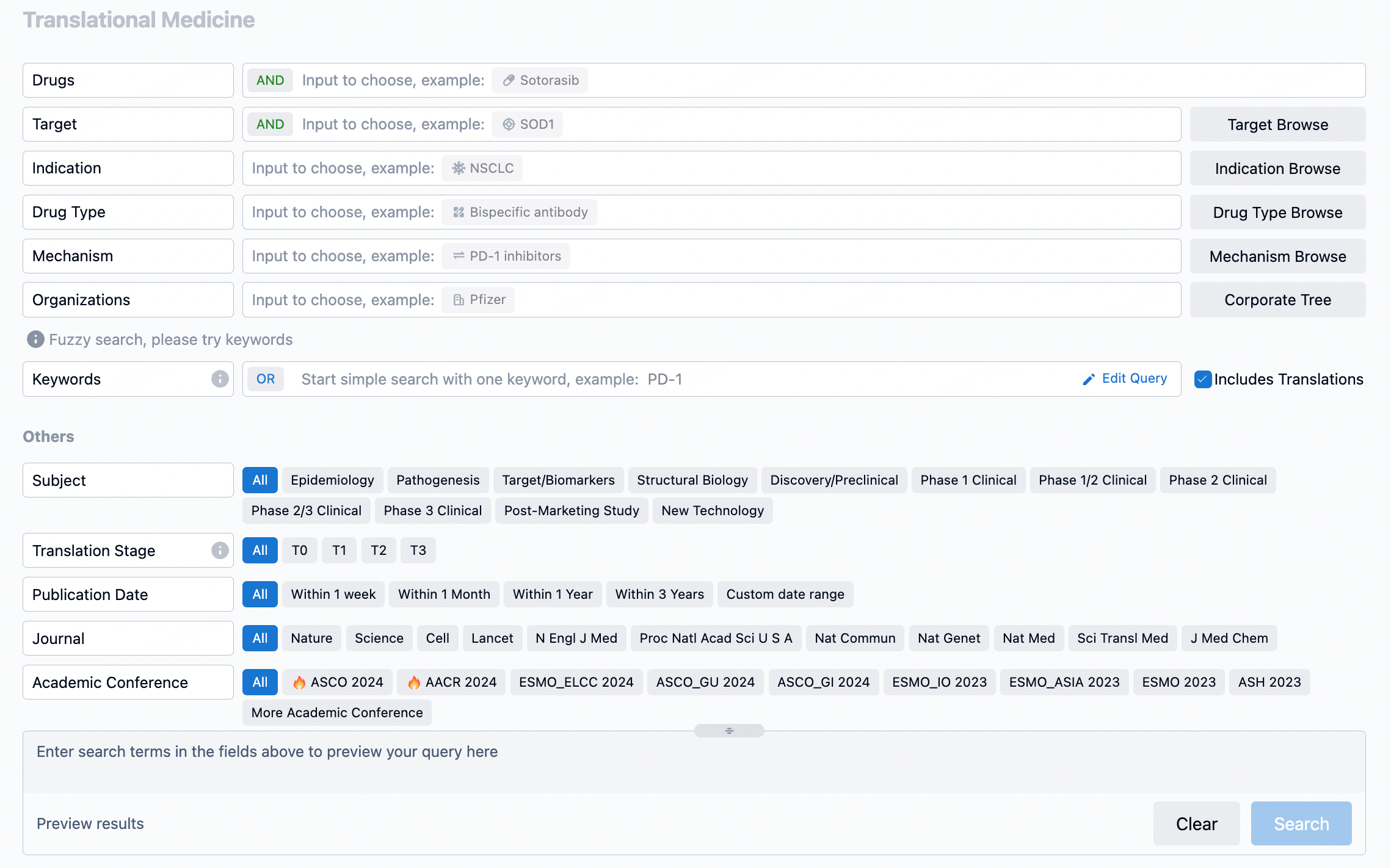
Taking obesity as an example, select "obesity" under the indication category and click search to enter the Translational Medicine results list page. By clicking on the title, you can directly navigate to the original page.
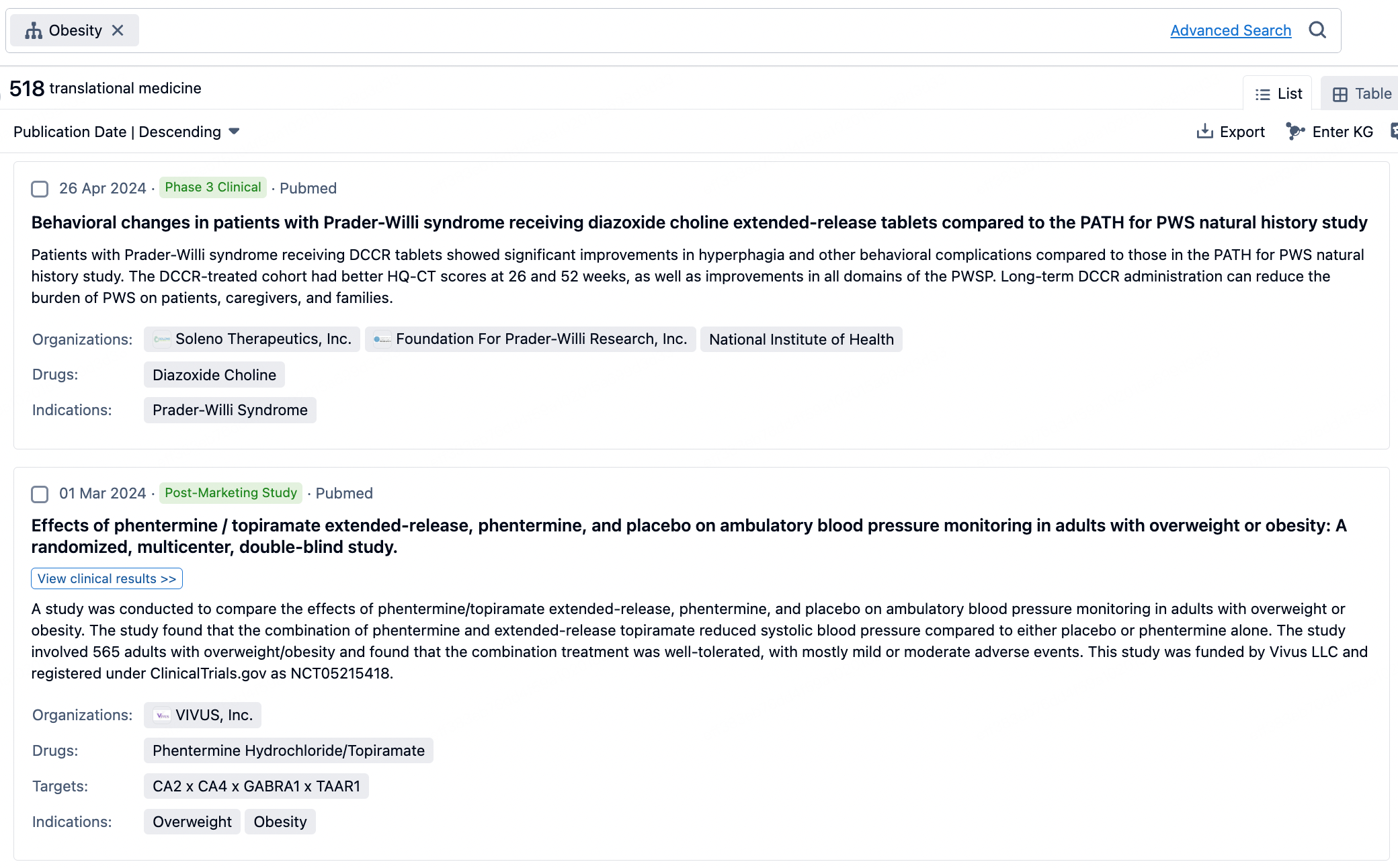
By clicking the analysis button, you can observe that GLP-1R treatment for obesity has gained significant attention over the past three years, with preclinical research still ongoing in 2023. Additionally, there are emerging potential targets, such as GDF15, among others.
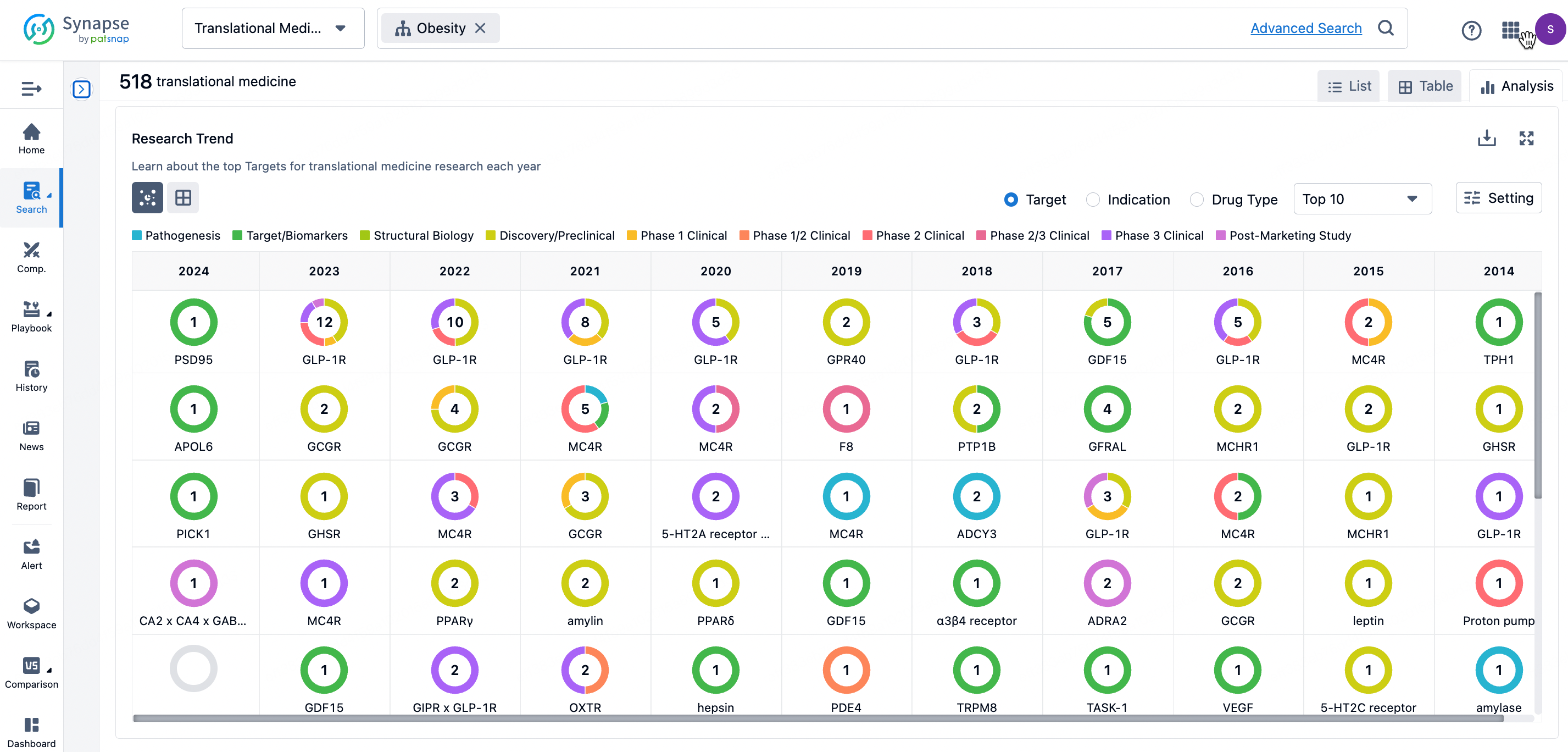
Click on the image below to go directly to the Translational Medicine search interface.