Targeting Resistant KIT Mutations: The Therapeutic Potential of DCC-2618 in Advanced Cancer Models
The inhibitory effects of DCC-2618 on different KIT isoforms were evaluated using a standard spectrophotometric assay. CHO cells were used to express mutant KIT or PDGFRα, and the compound's impact on phosphorylation levels was measured through ELISA or western blot. The proliferation of several cell lines was assessed using a fluorescent dye, with experiments conducted in triplicate. In vivo studies were carried out using xenograft models.
DCC-2618 showed nanomolar potency against multiple KIT forms, including wild-type and various mutations. It effectively inhibited exon 17, exon 9/13, exon 9/14, and exon 9/17 KIT mutations, as well as exon 11/17 KIT mutations with primary or secondary mutations. In the MO7e cell line, DCC-2618 inhibited wild type KIT phosphorylation with an IC50 of 36 nM. It also potently inhibited KIT activation in human GIST cell lines and murine mastocytosis P815 cell line with specific mutations.
In vivo, DCC-2618 at a dose of 50 mg/kg resulted in significant inhibition of KIT phosphorylation in the GIST T1 xenograft model and nearly complete tumor stasis when administered twice daily. It also induced tumor regressions in PDX GIST and AML xenograft models with specific KIT mutations.
DCC-2618 is a strong inhibitor of KIT with single and double mutations, including exon 17 mutations resistant to current inhibitors. It has potential as a treatment for KIT-driven cancers and is being developed for clinical trials. The study was presented at the 106th Annual Meeting of the American Association for Cancer Research.
How to Use Synapse Database to Search and Analyze Translational Medicine Data?
The transational medicine section of the Synapse database supports searches based on fields such as drug, target, and indication, covering the T0-T3 stages of translation. Additionally, it offers a historical conference search function as well as filtering options, view modes, translation services, and highlights summaries, providing you with a unique search experience.
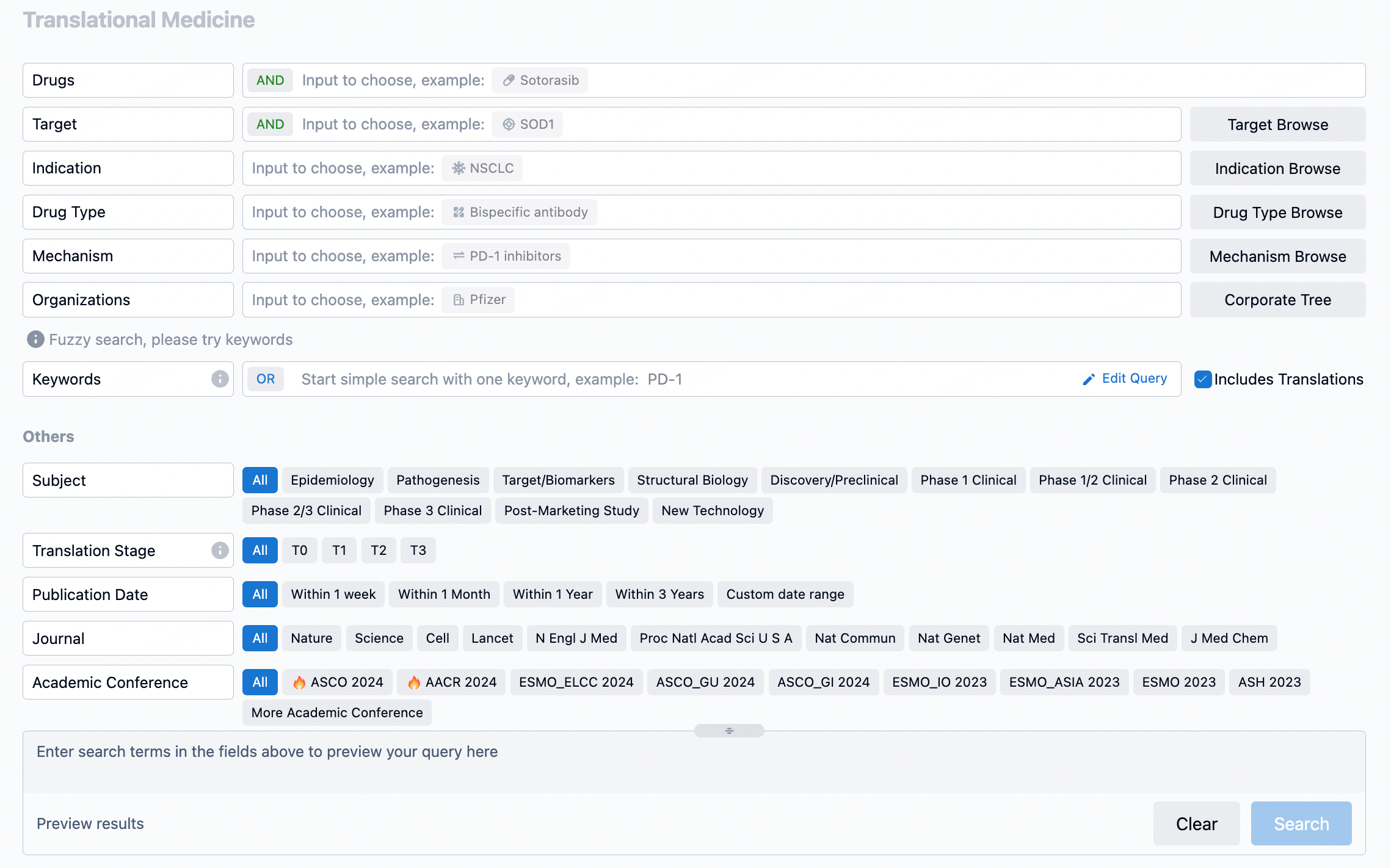
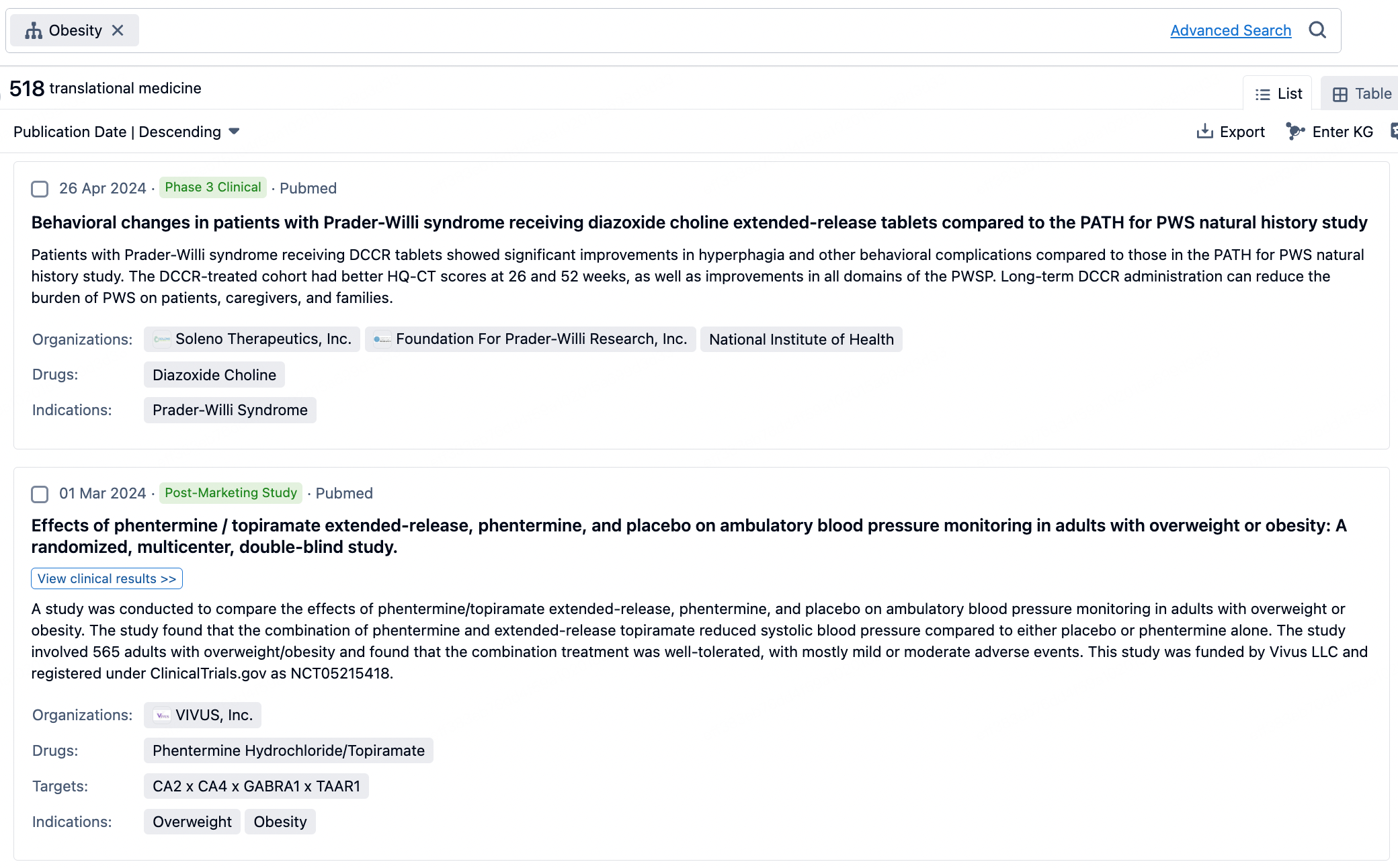
Taking obesity as an example, select "obesity" under the indication category and click search to enter the Translational Medicine results list page. By clicking on the title, you can directly navigate to the original page.
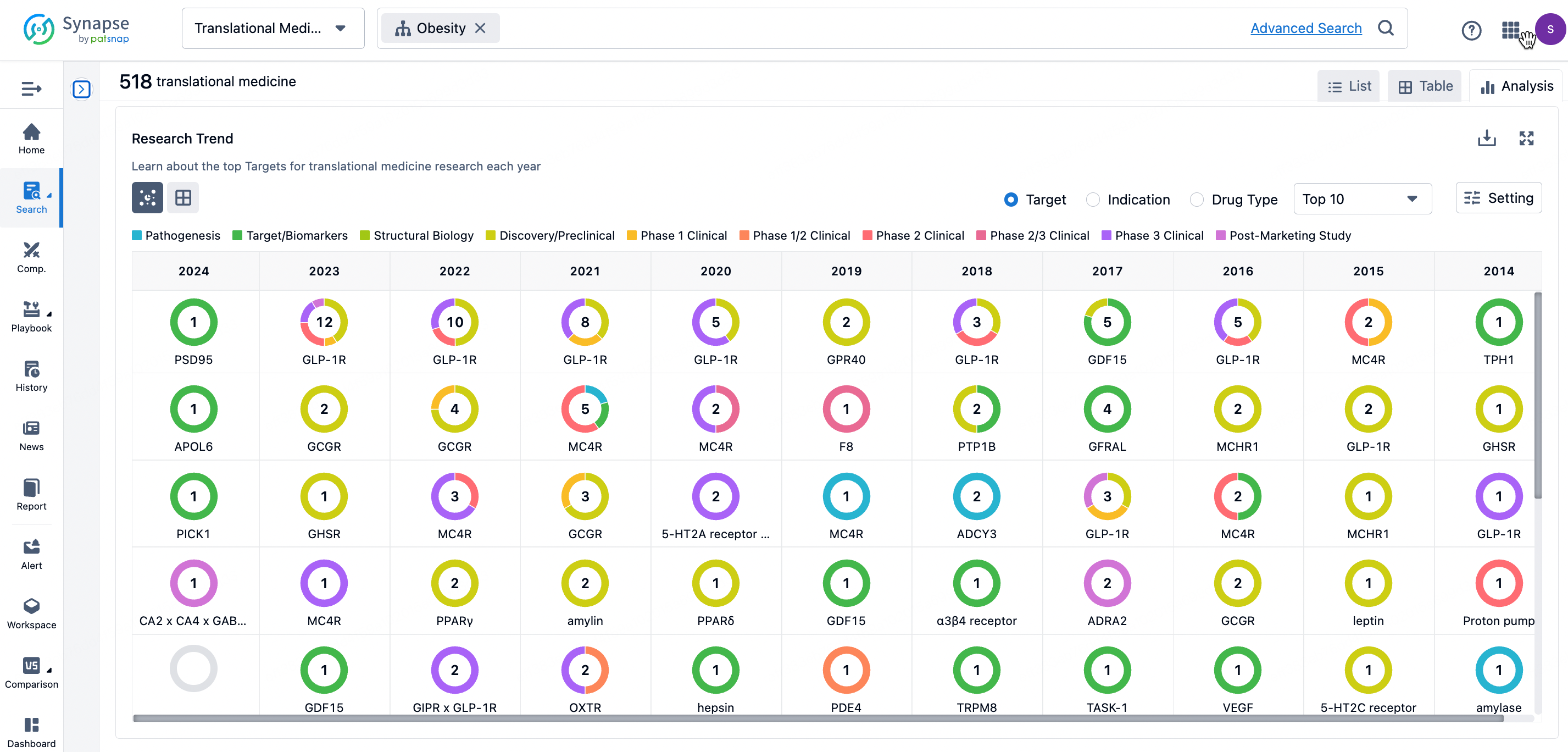
By clicking the analysis button, you can observe that GLP-1R treatment for obesity has gained significant attention over the past three years, with preclinical research still ongoing in 2023. Additionally, there are emerging potential targets, such as GDF15, among others.
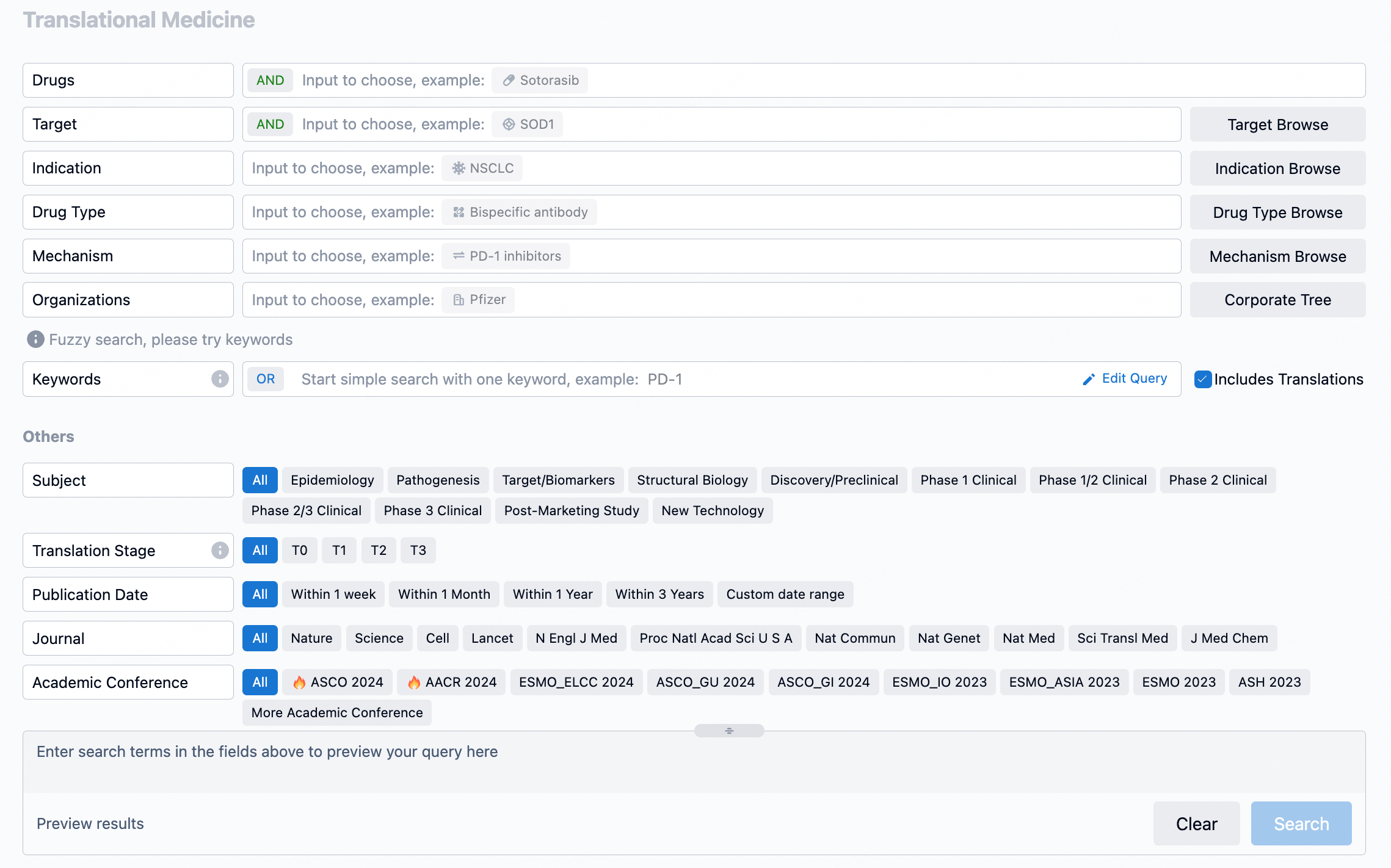
Click on the image below to go directly to the Translational Medicine search interface.