Unraveling the Role of Arginine Methyltransferase 1 in Cocaine-Induced Behavioral Alterations
Our study has found that giving mice repeated doses of cocaine increases the activity of PRMT1 in a specific region of the brain called the nucleus accumbens. We identified a compound, SKLB-639, which specifically inhibits PRMT1. When this compound was given to mice, it reduced the preference for environments associated with cocaine, similar to the effects seen when PRMT1 is genetically reduced.
Furthermore, we discovered that reducing PRMT1 in the nucleus accumbens leads to changes in the methylation and acetylation of other histones, which are also important for gene regulation. We also observed that a particular methylation pattern of histone H4 is increased after cocaine treatment and that this change influences the expression of two proteins, Cdk5 and CaMKII.
By using a technique to reduce PRMT1 levels in the nucleus accumbens, we showed that this reduction decreases the levels of Cdk5 and CaMKII in mice treated with cocaine. Importantly, the increase in histone methylation caused by repeated cocaine administration lasts for a considerable time, with elevated levels observed up to a week after the last dose of cocaine.
These findings highlight the potential of targeting PRMT1 as a strategy for treating cocaine addiction, suggesting that inhibiting this enzyme could help reduce the behavioral effects associated with cocaine use.
How to Use Synapse Database to Search and Analyze Translational Medicine Data?
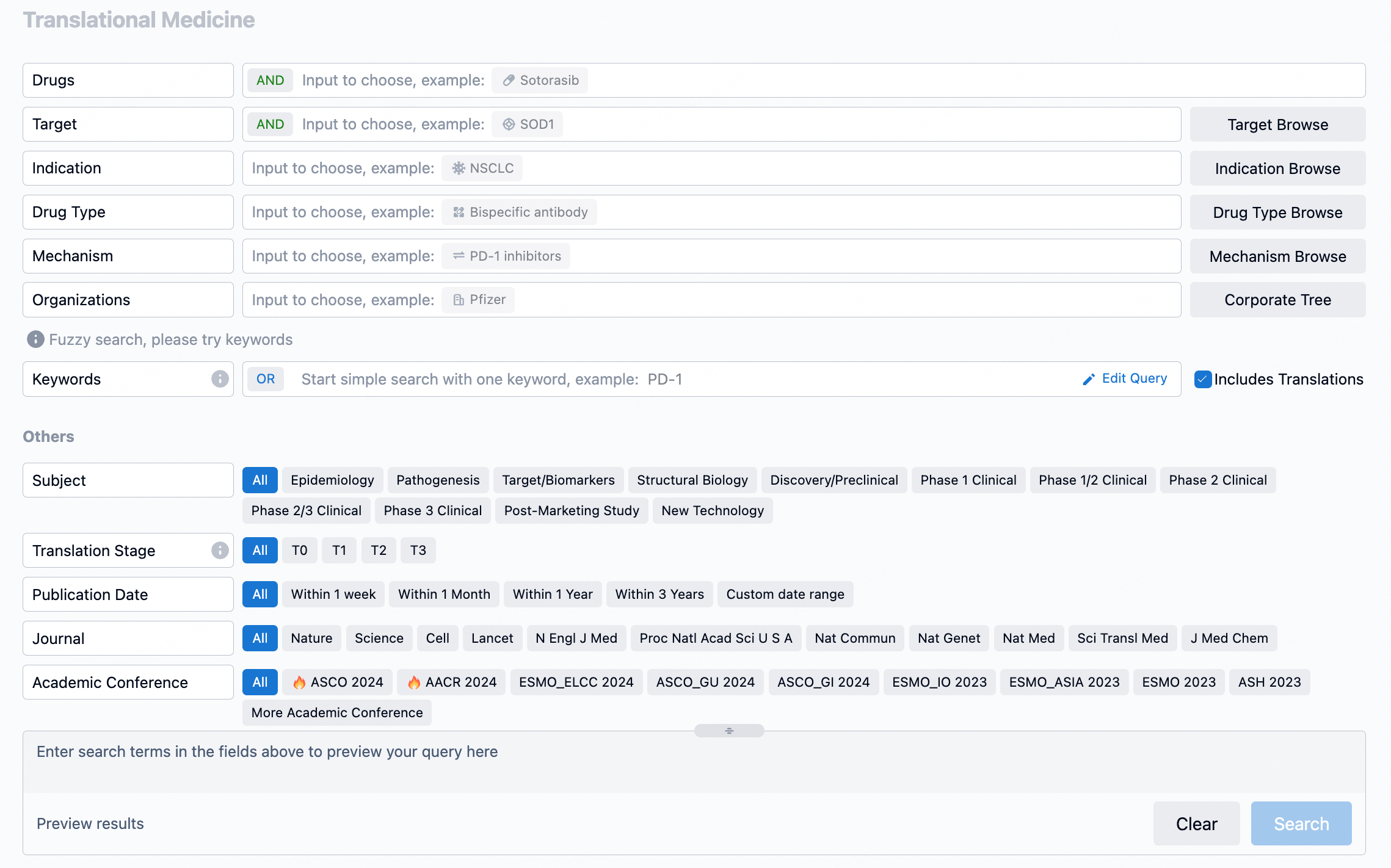
The transational medicine section of the Synapse database supports searches based on fields such as drug, target, and indication, covering the T0-T3 stages of translation. Additionally, it offers a historical conference search function as well as filtering options, view modes, translation services, and highlights summaries, providing you with a unique search experience.
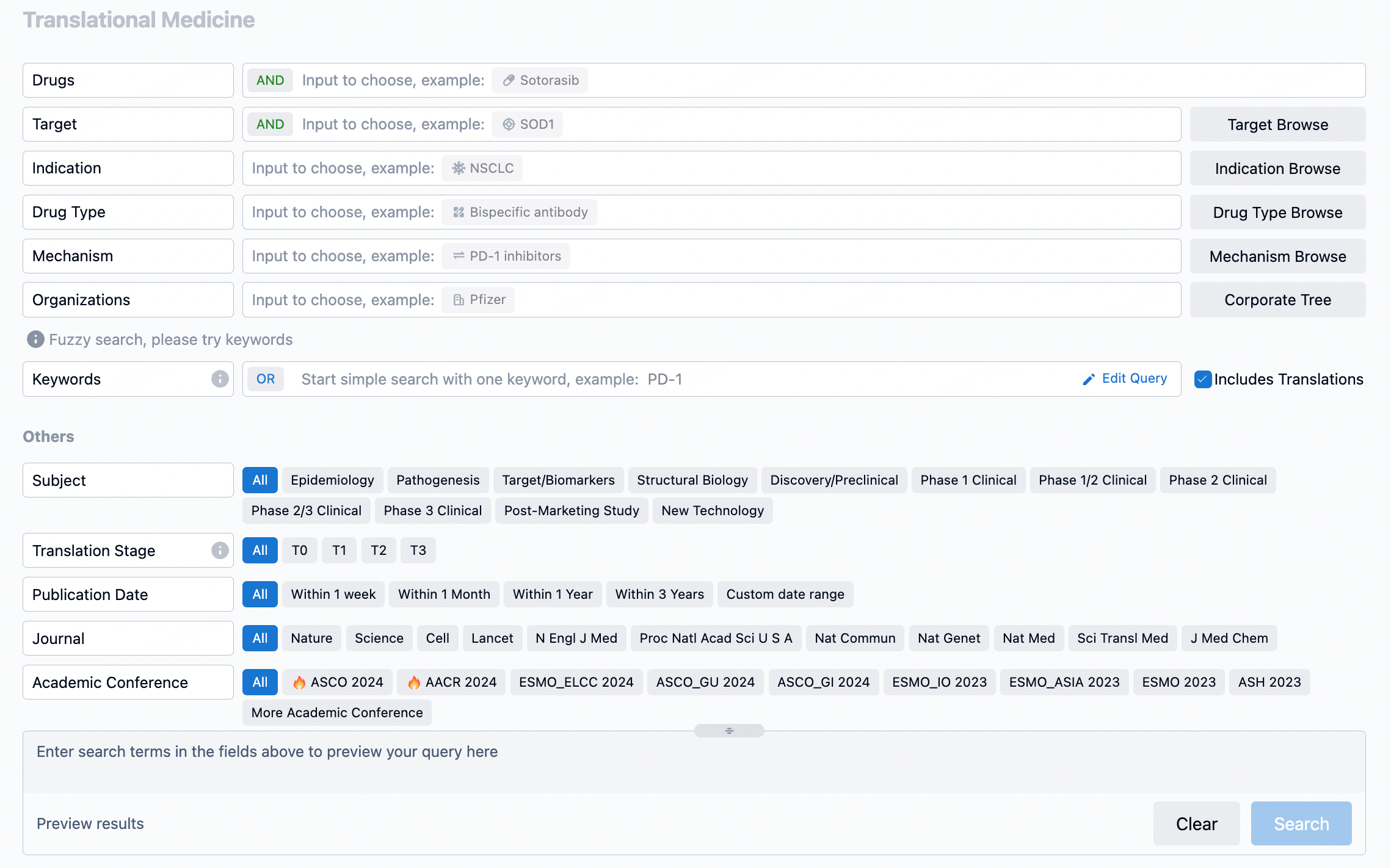
Taking obesity as an example, select "obesity" under the indication category and click search to enter the Translational Medicine results list page. By clicking on the title, you can directly navigate to the original page.
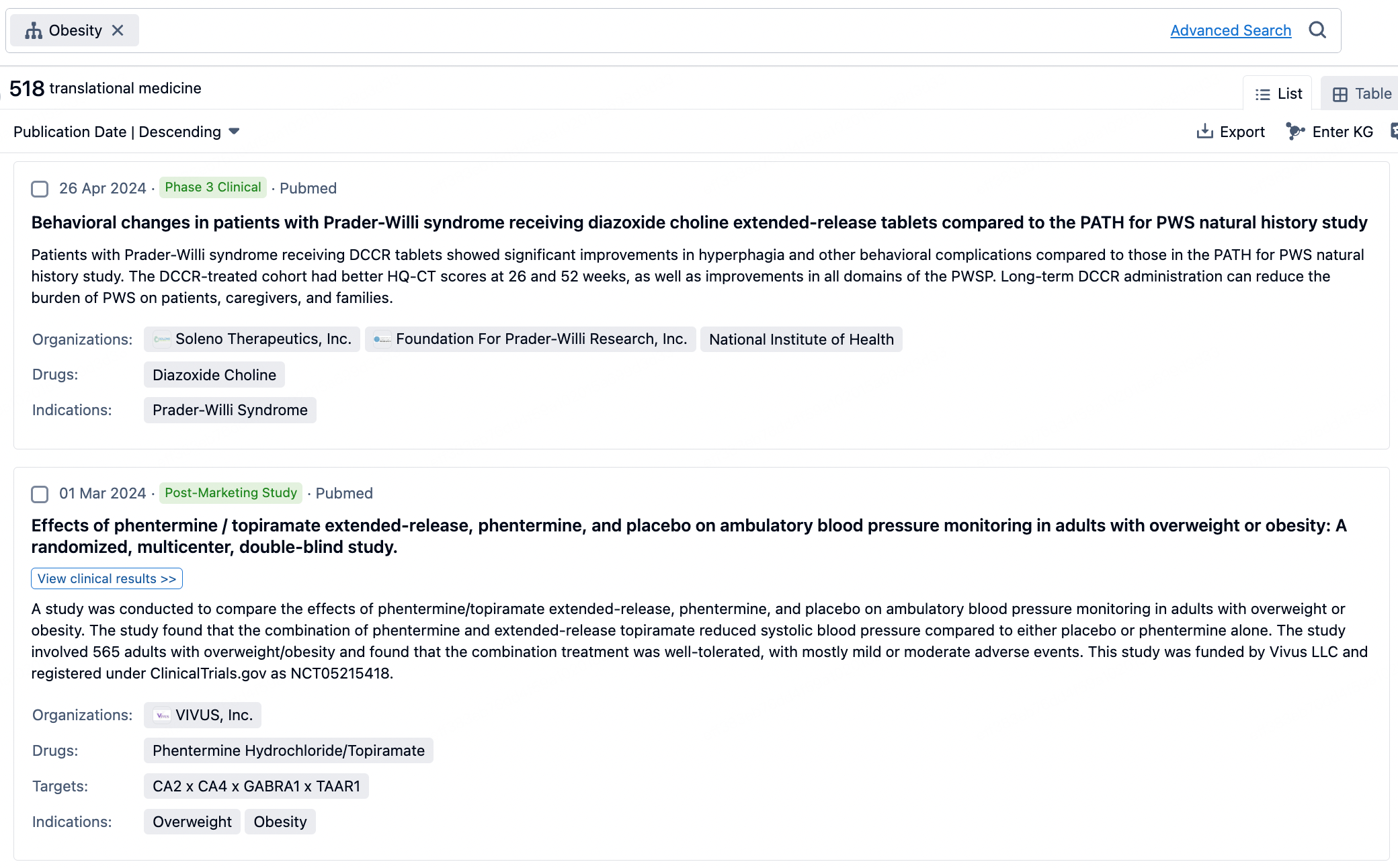
By clicking the analysis button, you can observe that GLP-1R treatment for obesity has gained significant attention over the past three years, with preclinical research still ongoing in 2023. Additionally, there are emerging potential targets, such as GDF15, among others.
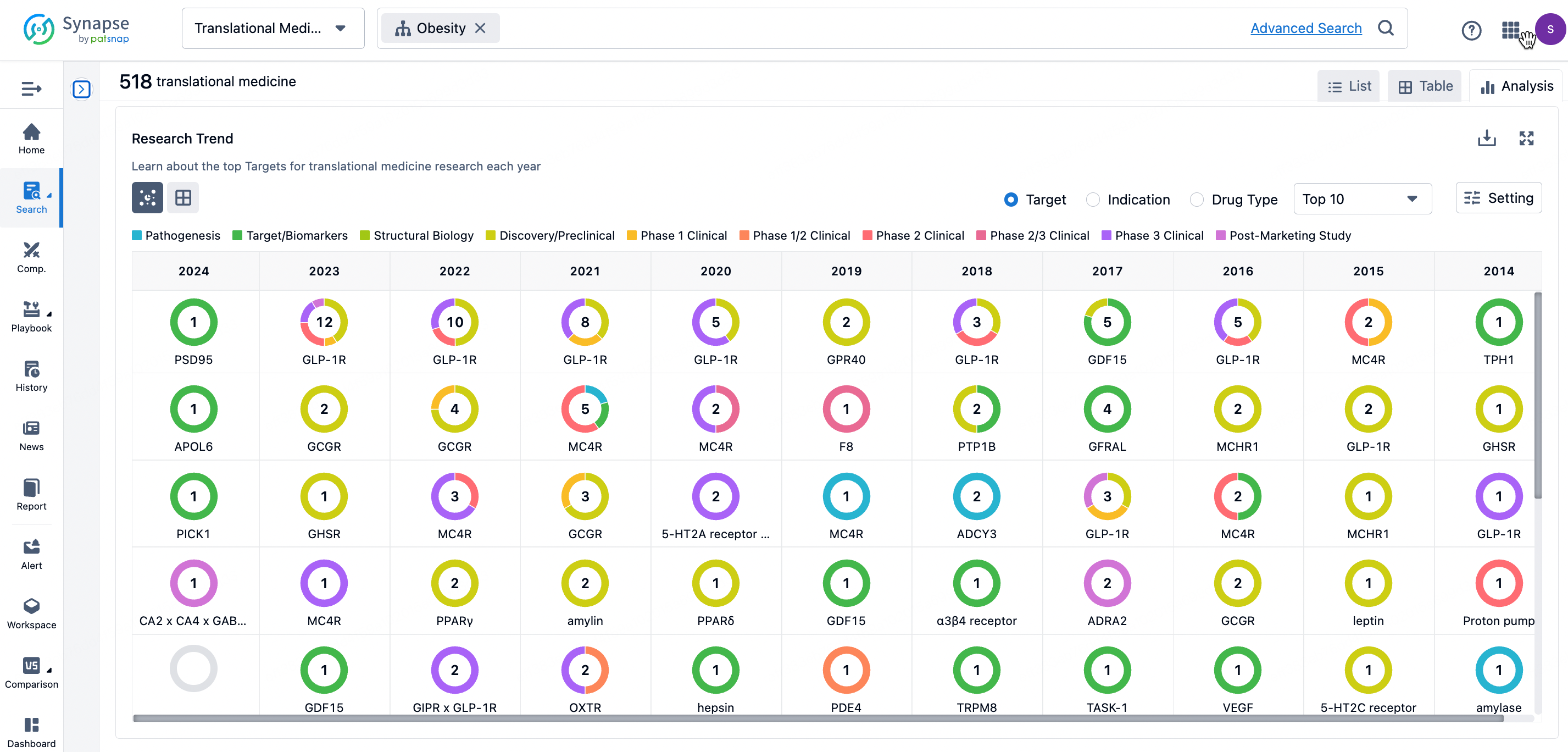
Click on the image below to go directly to the Translational Medicine search interface.