Request Demo
What are 11β-HSD inhibitors and how do they work?
21 June 2024
11β-Hydroxysteroid dehydrogenases (11β-HSDs) are enzymes that play a crucial role in the regulation of glucocorticoid action within tissues. There are two main isoforms of this enzyme: 11β-HSD1 and 11β-HSD2. These enzymes are responsible for the interconversion of active glucocorticoids, like cortisol, and their inactive forms, such as cortisone. The balance maintained by these enzymes is essential for various physiological processes, including metabolism, immune response, and stress adaptation. Inhibitors targeting 11β-HSD have gained significant attention in recent years for their potential therapeutic applications.
11β-HSD inhibitors work by modulating the activity of the 11β-HSD enzymes. Specifically, 11β-HSD1 inhibitors reduce the conversion of inactive cortisone to active cortisol, thereby decreasing cortisol levels within tissues. This reduction can lead to a wide range of metabolic effects, including improved insulin sensitivity, reduced fat accumulation, and decreased inflammation. On the other hand, 11β-HSD2 inhibitors increase cortisol availability by preventing its conversion to cortisone, a mechanism that could theoretically be useful in conditions where enhanced glucocorticoid activity is desirable.
The mechanism of action for 11β-HSD inhibitors is based on the selective inhibition of these enzymes. By targeting 11β-HSD1, these inhibitors can reduce cortisol levels in tissues where excessive glucocorticoid activity contributes to metabolic disorders. For instance, lower cortisol levels can result in improved insulin signaling pathways, which is particularly beneficial for individuals with type 2 diabetes or metabolic syndrome. Conversely, inhibiting 11β-HSD2 can be advantageous in conditions requiring enhanced glucocorticoid activity, although the focus has traditionally been on 11β-HSD1 inhibitors due to their broader therapeutic potential.
11β-HSD inhibitors are primarily being researched and developed for their potential in treating metabolic diseases. One of the primary applications is in the management of type 2 diabetes. By lowering tissue-specific cortisol levels, 11β-HSD1 inhibitors can improve insulin sensitivity and glucose tolerance, thereby aiding in better blood sugar control. Clinical trials have shown promising results, with some inhibitors demonstrating significant improvements in markers of metabolic health.
Obesity is another area where 11β-HSD inhibitors hold promise. Elevated cortisol levels in adipose tissue are associated with increased fat storage and inflammation, contributing to obesity and its related complications. By inhibiting 11β-HSD1, these drugs can reduce cortisol-mediated fat accumulation and inflammation, potentially offering a new avenue for obesity treatment. Some studies have indicated that 11β-HSD1 inhibitors can lead to weight loss and improved metabolic profiles in obese individuals.
Additionally, 11β-HSD inhibitors have potential applications in cardiovascular diseases. Excessive glucocorticoid activity is linked to hypertension and atherosclerosis, conditions that are common in individuals with metabolic syndrome. By modulating cortisol levels, 11β-HSD inhibitors could offer cardioprotective effects, although more research is needed to fully understand their impact on cardiovascular health.
Beyond metabolic and cardiovascular diseases, there is emerging interest in the role of 11β-HSD inhibitors in neurodegenerative diseases and cognitive decline. Cortisol is known to affect brain function, and dysregulated glucocorticoid activity has been implicated in conditions like Alzheimer's disease. Inhibiting 11β-HSD1 in the brain could potentially reduce cortisol-induced neurotoxicity and improve cognitive outcomes, representing a novel therapeutic strategy for neurodegenerative diseases.
In conclusion, 11β-HSD inhibitors represent a promising class of drugs with potential applications across a range of therapeutic areas. By modulating cortisol levels within tissues, these inhibitors can impact metabolic health, obesity, cardiovascular diseases, and possibly even neurodegenerative conditions. Ongoing research continues to explore their full therapeutic potential, and future developments in this field may lead to new and effective treatments for some of the most challenging medical conditions.
11β-HSD inhibitors work by modulating the activity of the 11β-HSD enzymes. Specifically, 11β-HSD1 inhibitors reduce the conversion of inactive cortisone to active cortisol, thereby decreasing cortisol levels within tissues. This reduction can lead to a wide range of metabolic effects, including improved insulin sensitivity, reduced fat accumulation, and decreased inflammation. On the other hand, 11β-HSD2 inhibitors increase cortisol availability by preventing its conversion to cortisone, a mechanism that could theoretically be useful in conditions where enhanced glucocorticoid activity is desirable.
The mechanism of action for 11β-HSD inhibitors is based on the selective inhibition of these enzymes. By targeting 11β-HSD1, these inhibitors can reduce cortisol levels in tissues where excessive glucocorticoid activity contributes to metabolic disorders. For instance, lower cortisol levels can result in improved insulin signaling pathways, which is particularly beneficial for individuals with type 2 diabetes or metabolic syndrome. Conversely, inhibiting 11β-HSD2 can be advantageous in conditions requiring enhanced glucocorticoid activity, although the focus has traditionally been on 11β-HSD1 inhibitors due to their broader therapeutic potential.
11β-HSD inhibitors are primarily being researched and developed for their potential in treating metabolic diseases. One of the primary applications is in the management of type 2 diabetes. By lowering tissue-specific cortisol levels, 11β-HSD1 inhibitors can improve insulin sensitivity and glucose tolerance, thereby aiding in better blood sugar control. Clinical trials have shown promising results, with some inhibitors demonstrating significant improvements in markers of metabolic health.
Obesity is another area where 11β-HSD inhibitors hold promise. Elevated cortisol levels in adipose tissue are associated with increased fat storage and inflammation, contributing to obesity and its related complications. By inhibiting 11β-HSD1, these drugs can reduce cortisol-mediated fat accumulation and inflammation, potentially offering a new avenue for obesity treatment. Some studies have indicated that 11β-HSD1 inhibitors can lead to weight loss and improved metabolic profiles in obese individuals.
Additionally, 11β-HSD inhibitors have potential applications in cardiovascular diseases. Excessive glucocorticoid activity is linked to hypertension and atherosclerosis, conditions that are common in individuals with metabolic syndrome. By modulating cortisol levels, 11β-HSD inhibitors could offer cardioprotective effects, although more research is needed to fully understand their impact on cardiovascular health.
Beyond metabolic and cardiovascular diseases, there is emerging interest in the role of 11β-HSD inhibitors in neurodegenerative diseases and cognitive decline. Cortisol is known to affect brain function, and dysregulated glucocorticoid activity has been implicated in conditions like Alzheimer's disease. Inhibiting 11β-HSD1 in the brain could potentially reduce cortisol-induced neurotoxicity and improve cognitive outcomes, representing a novel therapeutic strategy for neurodegenerative diseases.
In conclusion, 11β-HSD inhibitors represent a promising class of drugs with potential applications across a range of therapeutic areas. By modulating cortisol levels within tissues, these inhibitors can impact metabolic health, obesity, cardiovascular diseases, and possibly even neurodegenerative conditions. Ongoing research continues to explore their full therapeutic potential, and future developments in this field may lead to new and effective treatments for some of the most challenging medical conditions.
How to obtain the latest development progress of all targets?
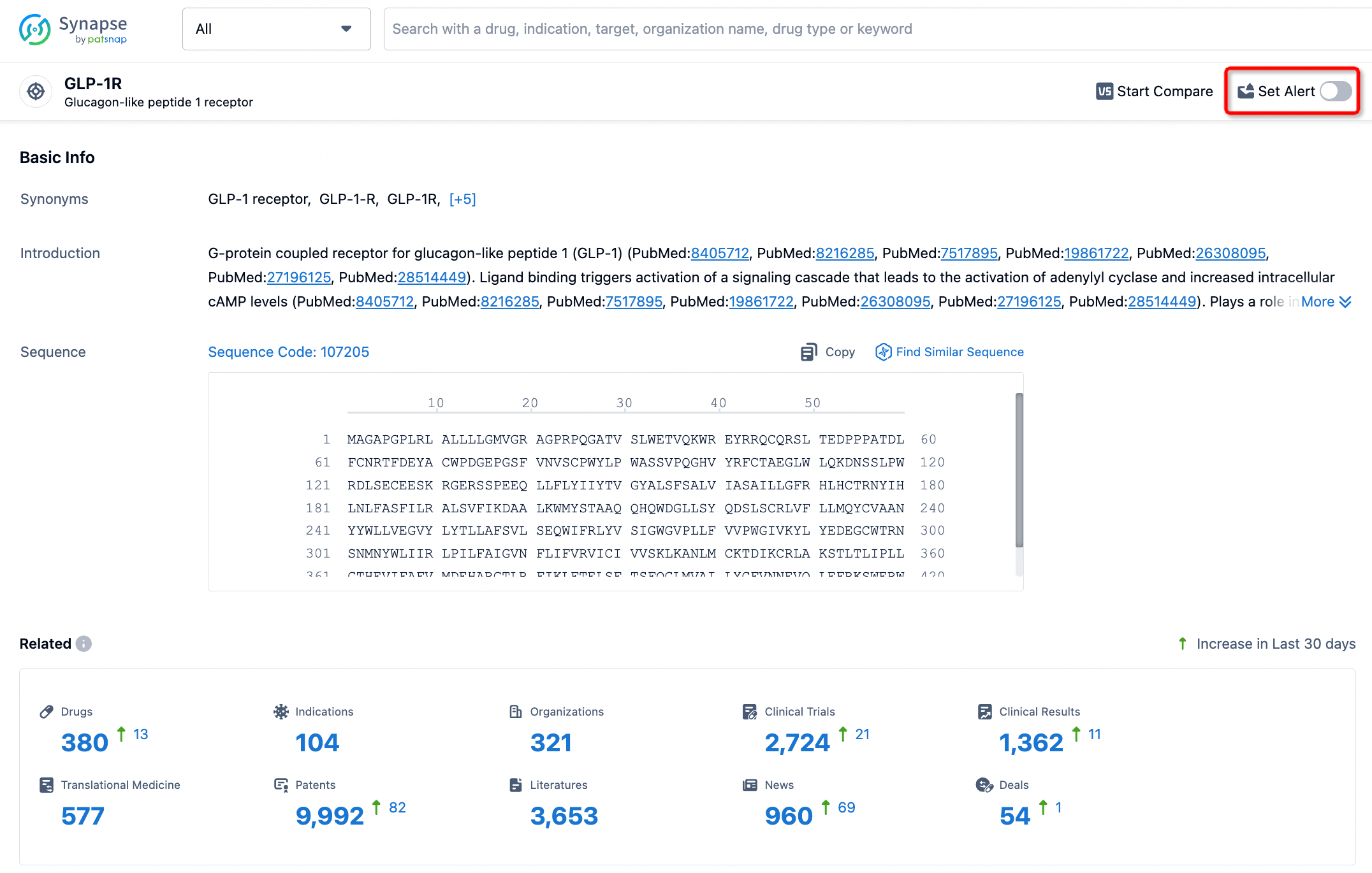
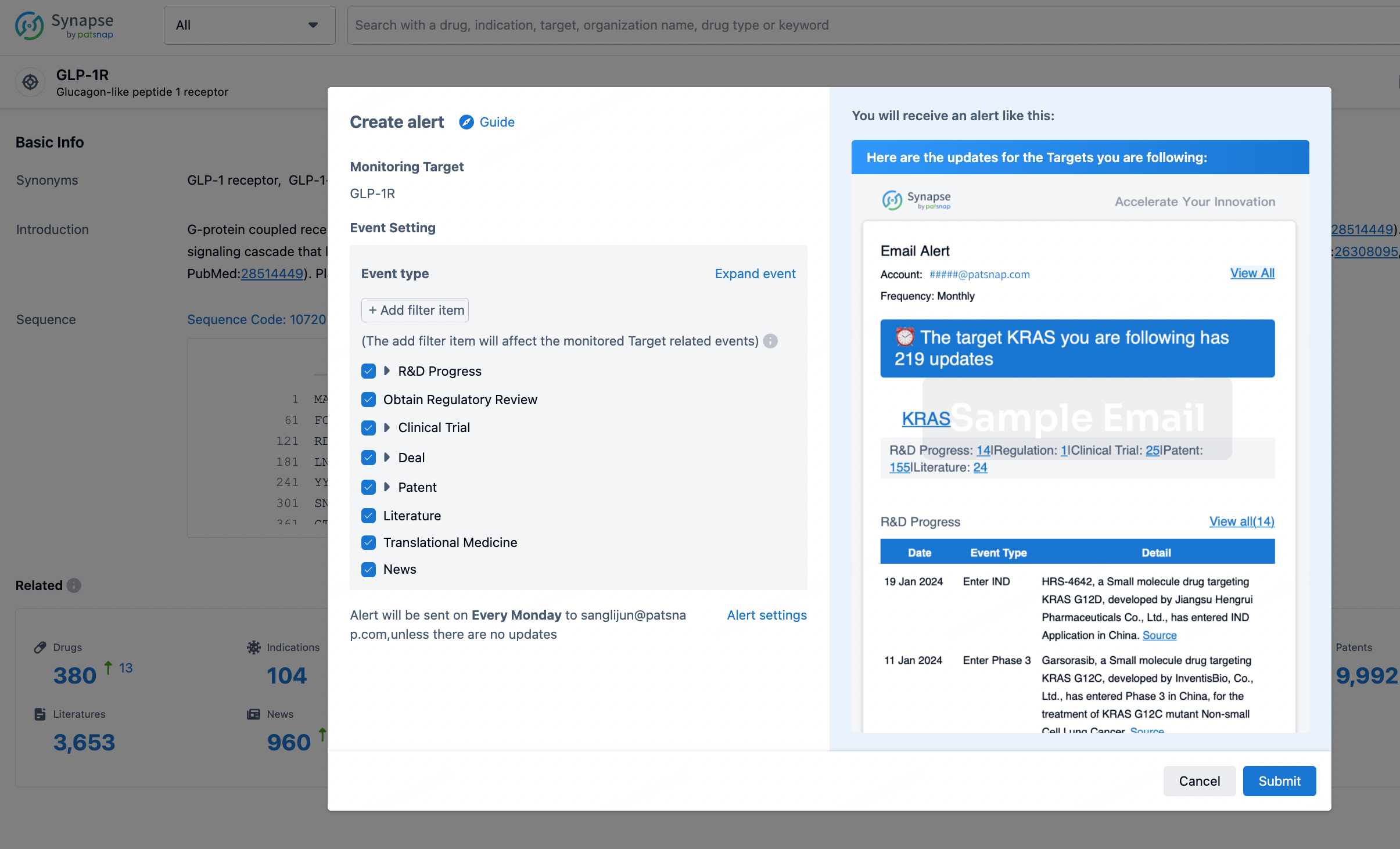
In the Synapse database, you can stay updated on the latest research and development advances of all targets. This service is accessible anytime and anywhere, with updates available daily or weekly. Use the "Set Alert" function to stay informed. Click on the image below to embark on a brand new journey of drug discovery!
AI Agents Built for Biopharma Breakthroughs
Accelerate discovery. Empower decisions. Transform outcomes.
Get started for free today!
Accelerate Strategic R&D decision making with Synapse, PatSnap’s AI-powered Connected Innovation Intelligence Platform Built for Life Sciences Professionals.
Start your data trial now!
Synapse data is also accessible to external entities via APIs or data packages. Empower better decisions with the latest in pharmaceutical intelligence.