Request Demo
What are α10β1 antagonists and how do they work?
25 June 2024
Introduction to α10β1 antagonists
The field of molecular biology and pharmacology is continually evolving, leading to the development of novel therapeutic agents that target specific cellular pathways. Among these emerging therapies are α10β1 antagonists, which represent a promising class of compounds with potential applications in various medical conditions. α10β1 integrins are a type of cell surface receptor involved in a multitude of biological processes, including cell adhesion, proliferation, and migration. By antagonizing these receptors, researchers believe that they can modulate pathological processes such as inflammation, fibrosis, and cancer progression. This blog post aims to provide an overview of α10β1 antagonists, their mechanism of action, and their potential therapeutic uses.
How do α10β1 antagonists work?
To understand how α10β1 antagonists function, it is essential first to grasp the role of α10β1 integrins in cellular biology. Integrins are transmembrane receptors that facilitate cell-extracellular matrix (ECM) adhesion. α10β1 integrin is primarily expressed in cartilage and some types of connective tissue, playing a crucial role in maintaining the structural integrity of these tissues. When activated, integrins undergo conformational changes that allow cells to adhere to the ECM, which is crucial for cellular signaling, survival, and function.
α10β1 antagonists are designed to inhibit the interaction between α10β1 integrins and their ligands in the ECM. By binding to the integrin in a manner that prevents its activation or blocks its interaction with ECM components, these antagonists effectively disrupt the downstream signaling pathways initiated by integrin-ligand binding. This blockade can result in reduced cell adhesion, migration, and proliferation—processes that are often dysregulated in pathological conditions such as cancer and fibrosis.
The specificity of α10β1 antagonists is one of their most compelling features. By selectively targeting α10β1 integrins, these antagonists aim to minimize off-target effects and reduce the risks associated with systemic immunosuppression or toxicity. This precision in targeting makes them a valuable tool for dissecting the roles of specific integrins in disease and potentially offers a safer therapeutic profile compared to broader-spectrum agents.
What are α10β1 antagonists used for?
The targeted action of α10β1 antagonists opens up a broad spectrum of potential applications in various medical fields. One of the primary areas of interest is oncology. In many types of cancer, integrins are known to facilitate tumor cell invasion and metastasis. By inhibiting α10β1 integrins, these antagonists can potentially reduce tumor growth and prevent the spread of cancerous cells to other parts of the body. Preclinical studies have shown promising results, indicating that α10β1 antagonists can effectively hinder tumor progression and improve survival rates in animal models.
Another significant application is in the treatment of fibrotic diseases. Fibrosis is characterized by the excessive accumulation of ECM components, leading to tissue scarring and organ dysfunction. Conditions such as pulmonary fibrosis, liver cirrhosis, and systemic sclerosis involve aberrant integrin signaling pathways. By disrupting these pathways, α10β1 antagonists may offer therapeutic benefits in reducing fibrosis and restoring normal tissue architecture.
Inflammatory diseases also stand to benefit from α10β1 antagonism. Integrins play a key role in the recruitment and activation of immune cells during inflammatory responses. In chronic inflammatory conditions like rheumatoid arthritis and inflammatory bowel disease, excessive integrin activity can exacerbate tissue damage. α10β1 antagonists have the potential to modulate the inflammatory response, thereby alleviating symptoms and preventing disease progression.
Moreover, α10β1 antagonists are being explored for their potential in regenerative medicine. Given their role in cell adhesion and migration, these compounds could be used to facilitate tissue repair and regeneration. For instance, in cartilage repair, where α10β1 integrins are abundantly expressed, antagonists might help in modulating the activity of chondrocytes and improving tissue regeneration outcomes.
In conclusion, α10β1 antagonists represent a promising frontier in targeted therapy, with potential applications spanning oncology, fibrosis, inflammatory diseases, and regenerative medicine. Ongoing research and clinical trials will further elucidate their efficacy and safety, paving the way for their integration into modern therapeutic regimens.
The field of molecular biology and pharmacology is continually evolving, leading to the development of novel therapeutic agents that target specific cellular pathways. Among these emerging therapies are α10β1 antagonists, which represent a promising class of compounds with potential applications in various medical conditions. α10β1 integrins are a type of cell surface receptor involved in a multitude of biological processes, including cell adhesion, proliferation, and migration. By antagonizing these receptors, researchers believe that they can modulate pathological processes such as inflammation, fibrosis, and cancer progression. This blog post aims to provide an overview of α10β1 antagonists, their mechanism of action, and their potential therapeutic uses.
How do α10β1 antagonists work?
To understand how α10β1 antagonists function, it is essential first to grasp the role of α10β1 integrins in cellular biology. Integrins are transmembrane receptors that facilitate cell-extracellular matrix (ECM) adhesion. α10β1 integrin is primarily expressed in cartilage and some types of connective tissue, playing a crucial role in maintaining the structural integrity of these tissues. When activated, integrins undergo conformational changes that allow cells to adhere to the ECM, which is crucial for cellular signaling, survival, and function.
α10β1 antagonists are designed to inhibit the interaction between α10β1 integrins and their ligands in the ECM. By binding to the integrin in a manner that prevents its activation or blocks its interaction with ECM components, these antagonists effectively disrupt the downstream signaling pathways initiated by integrin-ligand binding. This blockade can result in reduced cell adhesion, migration, and proliferation—processes that are often dysregulated in pathological conditions such as cancer and fibrosis.
The specificity of α10β1 antagonists is one of their most compelling features. By selectively targeting α10β1 integrins, these antagonists aim to minimize off-target effects and reduce the risks associated with systemic immunosuppression or toxicity. This precision in targeting makes them a valuable tool for dissecting the roles of specific integrins in disease and potentially offers a safer therapeutic profile compared to broader-spectrum agents.
What are α10β1 antagonists used for?
The targeted action of α10β1 antagonists opens up a broad spectrum of potential applications in various medical fields. One of the primary areas of interest is oncology. In many types of cancer, integrins are known to facilitate tumor cell invasion and metastasis. By inhibiting α10β1 integrins, these antagonists can potentially reduce tumor growth and prevent the spread of cancerous cells to other parts of the body. Preclinical studies have shown promising results, indicating that α10β1 antagonists can effectively hinder tumor progression and improve survival rates in animal models.
Another significant application is in the treatment of fibrotic diseases. Fibrosis is characterized by the excessive accumulation of ECM components, leading to tissue scarring and organ dysfunction. Conditions such as pulmonary fibrosis, liver cirrhosis, and systemic sclerosis involve aberrant integrin signaling pathways. By disrupting these pathways, α10β1 antagonists may offer therapeutic benefits in reducing fibrosis and restoring normal tissue architecture.
Inflammatory diseases also stand to benefit from α10β1 antagonism. Integrins play a key role in the recruitment and activation of immune cells during inflammatory responses. In chronic inflammatory conditions like rheumatoid arthritis and inflammatory bowel disease, excessive integrin activity can exacerbate tissue damage. α10β1 antagonists have the potential to modulate the inflammatory response, thereby alleviating symptoms and preventing disease progression.
Moreover, α10β1 antagonists are being explored for their potential in regenerative medicine. Given their role in cell adhesion and migration, these compounds could be used to facilitate tissue repair and regeneration. For instance, in cartilage repair, where α10β1 integrins are abundantly expressed, antagonists might help in modulating the activity of chondrocytes and improving tissue regeneration outcomes.
In conclusion, α10β1 antagonists represent a promising frontier in targeted therapy, with potential applications spanning oncology, fibrosis, inflammatory diseases, and regenerative medicine. Ongoing research and clinical trials will further elucidate their efficacy and safety, paving the way for their integration into modern therapeutic regimens.
How to obtain the latest development progress of all targets?
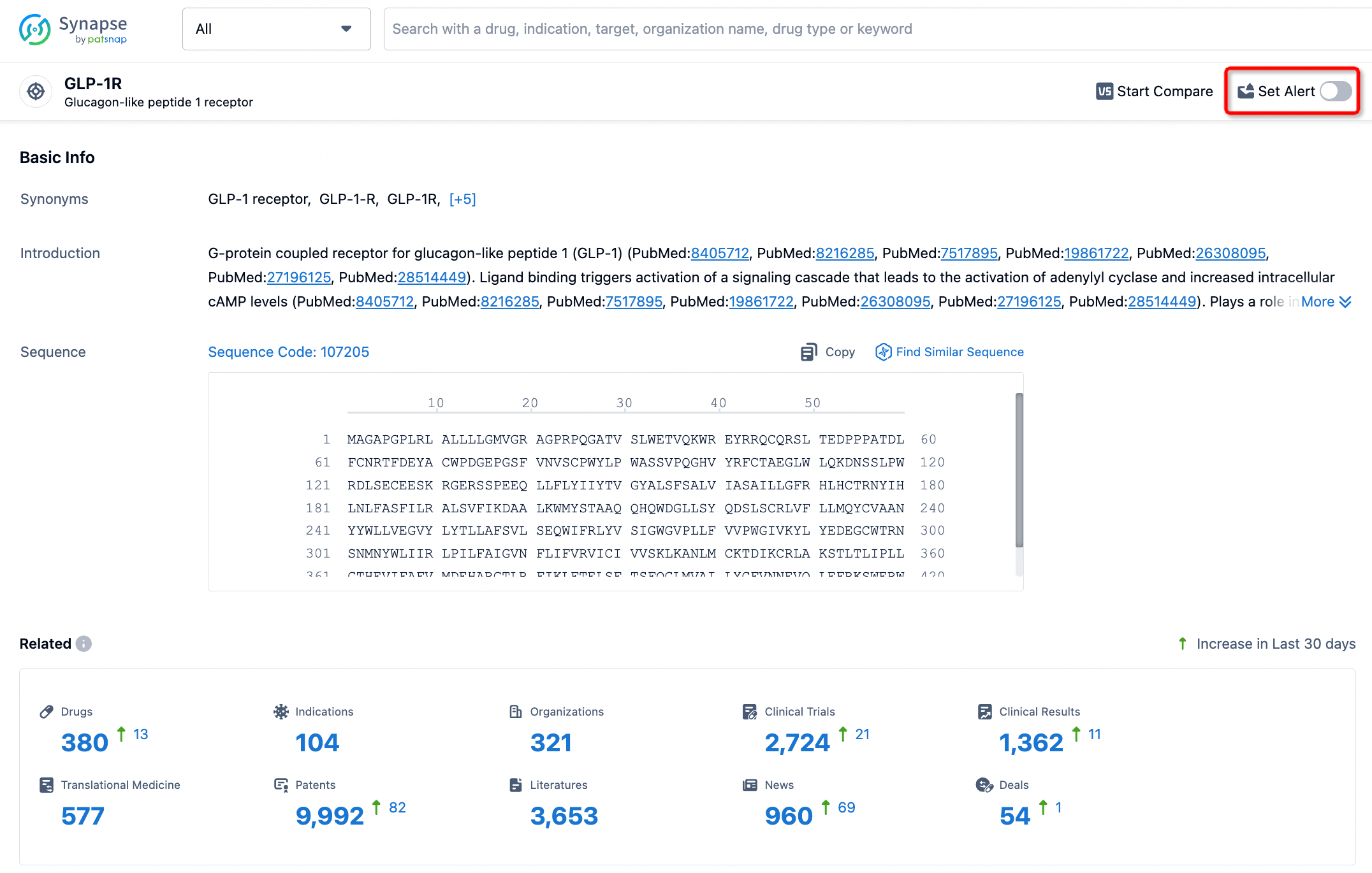
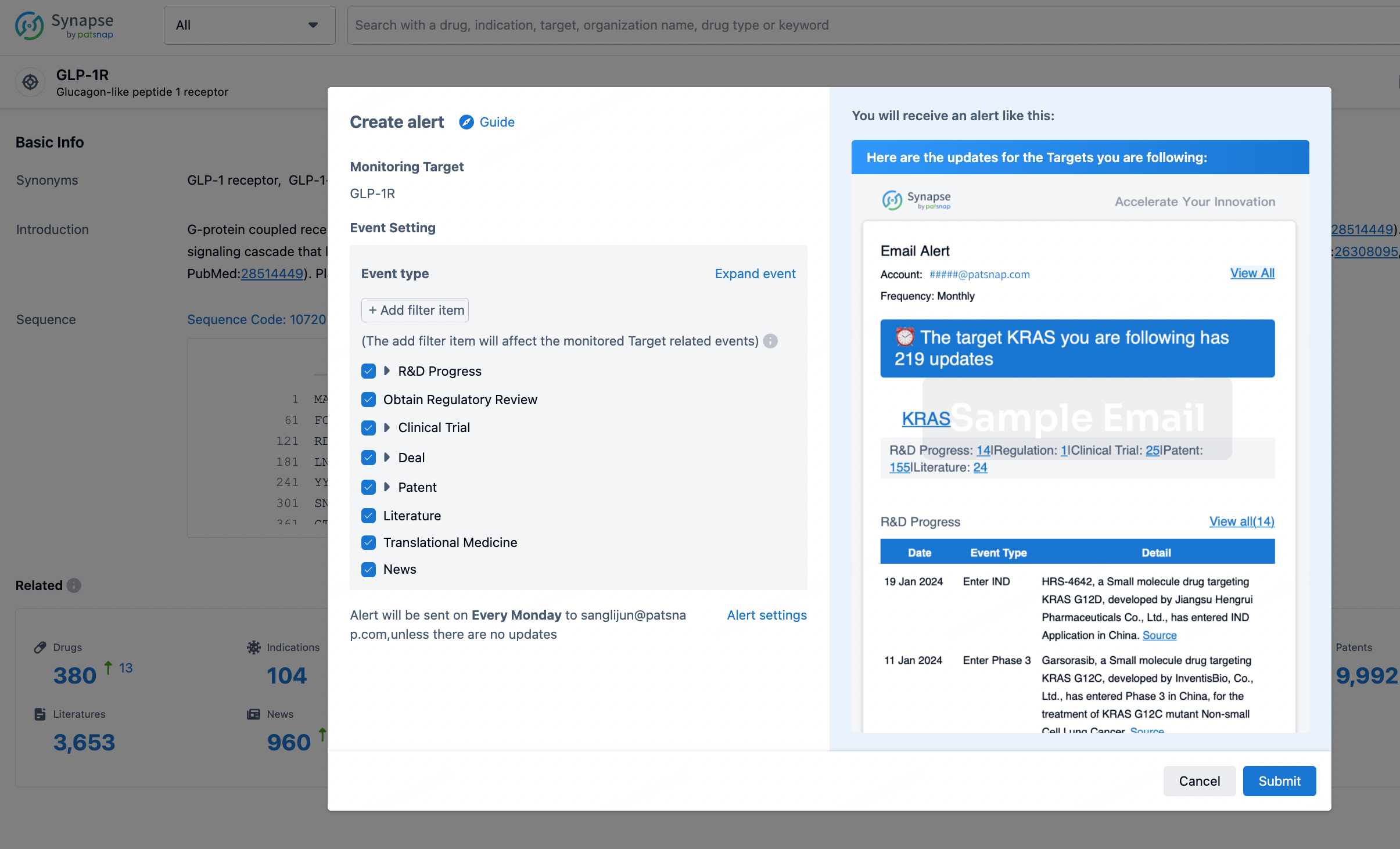
In the Synapse database, you can stay updated on the latest research and development advances of all targets. This service is accessible anytime and anywhere, with updates available daily or weekly. Use the "Set Alert" function to stay informed. Click on the image below to embark on a brand new journey of drug discovery!

AI Agents Built for Biopharma Breakthroughs
Accelerate discovery. Empower decisions. Transform outcomes.
Get started for free today!
Accelerate Strategic R&D decision making with Synapse, PatSnap’s AI-powered Connected Innovation Intelligence Platform Built for Life Sciences Professionals.
Start your data trial now!
Synapse data is also accessible to external entities via APIs or data packages. Empower better decisions with the latest in pharmaceutical intelligence.