Request Demo
What are α1B-AR agonists and how do they work?
21 June 2024
In recent years, the interest in α1B-adrenergic receptor (α1B-AR) agonists has surged, driven by their potential applications in various medical fields. α1B-ARs are a subtype of α1-adrenergic receptors, which are part of the G protein-coupled receptor family. These receptors play a crucial role in the body’s response to adrenaline and noradrenaline, affecting vascular tone, cardiac function, and several other physiological processes. Understanding how these agonists work and their potential therapeutic applications can provide valuable insights into their role in modern medicine.
Alpha1B-AR agonists exert their effects by binding to the α1B-adrenergic receptors, which are predominantly found in the smooth muscle cells of blood vessels and various other tissues. When these agonists bind to the receptor, they trigger a cascade of intracellular events. The binding activates the associated G protein, leading to the stimulation of phospholipase C (PLC). PLC subsequently catalyzes the hydrolysis of phosphatidylinositol 4,5-bisphosphate (PIP2) into two secondary messengers: inositol triphosphate (IP3) and diacylglycerol (DAG).
IP3 then interacts with its receptors on the endoplasmic reticulum, causing the release of calcium ions into the cytoplasm. The increase in intracellular calcium concentration results in the contraction of smooth muscle cells, leading to vasoconstriction. On the other hand, DAG activates protein kinase C (PKC), which phosphorylates various target proteins, causing multiple downstream effects that modulate cellular functions.
The physiological outcome of α1B-AR agonism is primarily an increase in vascular resistance and, consequently, blood pressure. However, the specific effects can vary depending on the tissue and the physiological context. For example, in the heart, α1B-AR activation can enhance contractility and increase cardiac output, whereas in other tissues, it might influence metabolic processes or cell proliferation.
α1B-AR agonists have been explored for several medical applications, owing to their ability to modulate vascular tone and influence various physiological processes. One of the most well-recognized uses of α1B-AR agonists is in the management of hypotension. In conditions where blood pressure drops significantly, such as in septic shock or orthostatic hypotension, α1B-AR agonists can help restore vascular tone and maintain adequate perfusion to vital organs by inducing vasoconstriction.
Another potential application for α1B-AR agonists is in the treatment of heart failure. The positive inotropic effect of these agonists can help improve cardiac output in patients with compromised heart function. By enhancing myocardial contractility, α1B-AR agonists can support the failing heart in pumping blood more effectively. However, the long-term use of these agents in heart failure remains a topic of ongoing research, as the balance between benefits and potential adverse effects needs careful consideration.
In addition to cardiovascular applications, α1B-AR agonists are being investigated for their potential in other medical fields. For example, they may have therapeutic roles in the treatment of nasal congestion, as their vasoconstrictive properties can reduce blood flow to nasal mucosa, alleviating symptoms. Moreover, emerging research suggests that α1B-ARs might be involved in the regulation of metabolic processes, opening new avenues for the development of treatments for metabolic disorders.
The exploration of α1B-AR agonists in oncology is another promising area of research. Some studies have indicated that these agonists might influence cell proliferation and apoptosis, suggesting a potential role in cancer therapy. By modulating specific signaling pathways, α1B-AR agonists could potentially inhibit tumor growth or enhance the effectiveness of existing cancer treatments.
In conclusion, α1B-AR agonists represent a fascinating area of medical research with diverse potential applications. Their ability to modulate vascular tone, enhance cardiac function, and influence various physiological processes makes them valuable tools in the treatment of conditions such as hypotension, heart failure, and nasal congestion. As research continues to uncover new roles for these agents, they may offer novel therapeutic options for a range of medical conditions, highlighting the importance of ongoing studies to fully understand their potential and ensure their safe and effective use in clinical practice.
Alpha1B-AR agonists exert their effects by binding to the α1B-adrenergic receptors, which are predominantly found in the smooth muscle cells of blood vessels and various other tissues. When these agonists bind to the receptor, they trigger a cascade of intracellular events. The binding activates the associated G protein, leading to the stimulation of phospholipase C (PLC). PLC subsequently catalyzes the hydrolysis of phosphatidylinositol 4,5-bisphosphate (PIP2) into two secondary messengers: inositol triphosphate (IP3) and diacylglycerol (DAG).
IP3 then interacts with its receptors on the endoplasmic reticulum, causing the release of calcium ions into the cytoplasm. The increase in intracellular calcium concentration results in the contraction of smooth muscle cells, leading to vasoconstriction. On the other hand, DAG activates protein kinase C (PKC), which phosphorylates various target proteins, causing multiple downstream effects that modulate cellular functions.
The physiological outcome of α1B-AR agonism is primarily an increase in vascular resistance and, consequently, blood pressure. However, the specific effects can vary depending on the tissue and the physiological context. For example, in the heart, α1B-AR activation can enhance contractility and increase cardiac output, whereas in other tissues, it might influence metabolic processes or cell proliferation.
α1B-AR agonists have been explored for several medical applications, owing to their ability to modulate vascular tone and influence various physiological processes. One of the most well-recognized uses of α1B-AR agonists is in the management of hypotension. In conditions where blood pressure drops significantly, such as in septic shock or orthostatic hypotension, α1B-AR agonists can help restore vascular tone and maintain adequate perfusion to vital organs by inducing vasoconstriction.
Another potential application for α1B-AR agonists is in the treatment of heart failure. The positive inotropic effect of these agonists can help improve cardiac output in patients with compromised heart function. By enhancing myocardial contractility, α1B-AR agonists can support the failing heart in pumping blood more effectively. However, the long-term use of these agents in heart failure remains a topic of ongoing research, as the balance between benefits and potential adverse effects needs careful consideration.
In addition to cardiovascular applications, α1B-AR agonists are being investigated for their potential in other medical fields. For example, they may have therapeutic roles in the treatment of nasal congestion, as their vasoconstrictive properties can reduce blood flow to nasal mucosa, alleviating symptoms. Moreover, emerging research suggests that α1B-ARs might be involved in the regulation of metabolic processes, opening new avenues for the development of treatments for metabolic disorders.
The exploration of α1B-AR agonists in oncology is another promising area of research. Some studies have indicated that these agonists might influence cell proliferation and apoptosis, suggesting a potential role in cancer therapy. By modulating specific signaling pathways, α1B-AR agonists could potentially inhibit tumor growth or enhance the effectiveness of existing cancer treatments.
In conclusion, α1B-AR agonists represent a fascinating area of medical research with diverse potential applications. Their ability to modulate vascular tone, enhance cardiac function, and influence various physiological processes makes them valuable tools in the treatment of conditions such as hypotension, heart failure, and nasal congestion. As research continues to uncover new roles for these agents, they may offer novel therapeutic options for a range of medical conditions, highlighting the importance of ongoing studies to fully understand their potential and ensure their safe and effective use in clinical practice.
How to obtain the latest development progress of all targets?
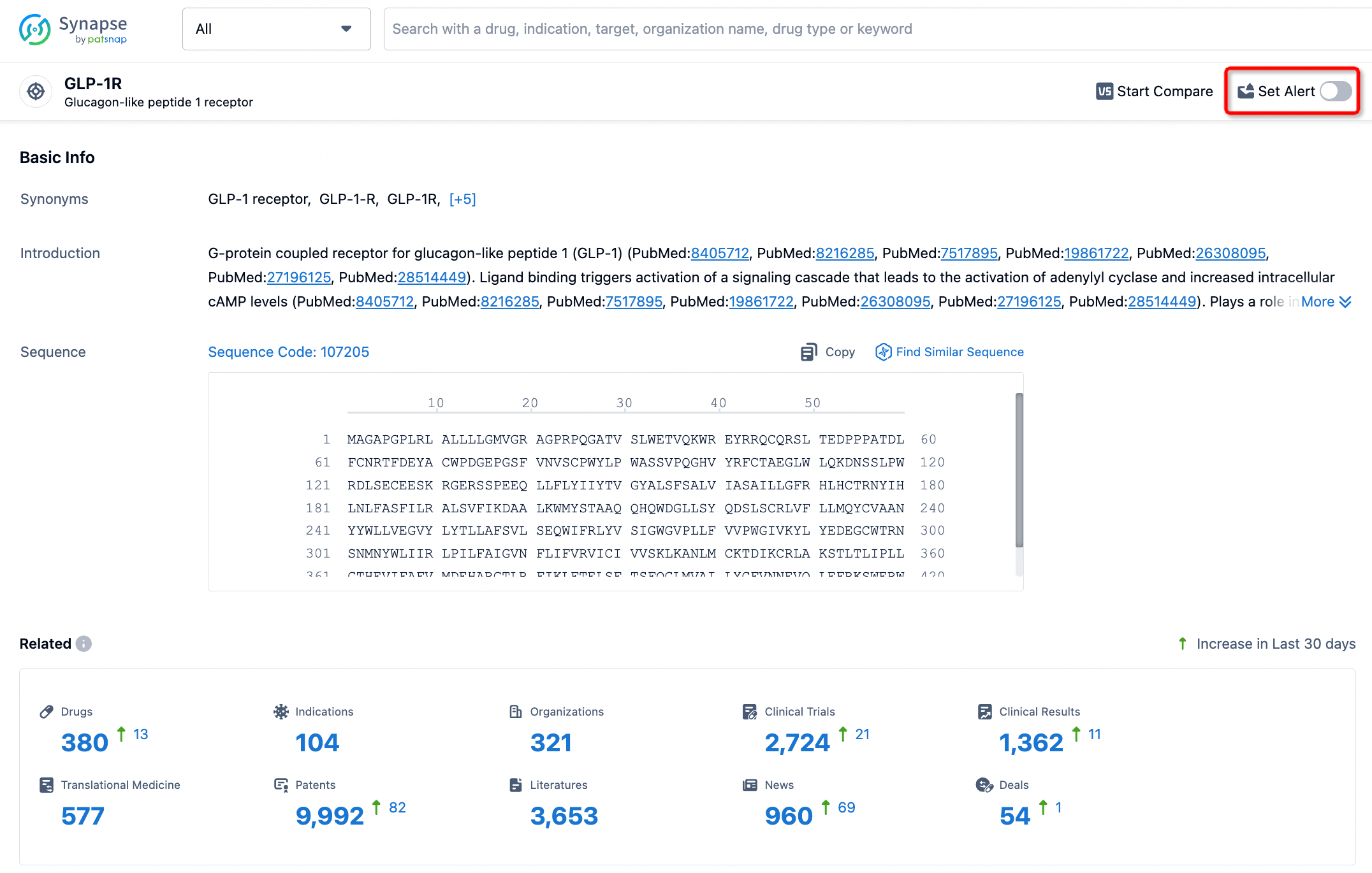
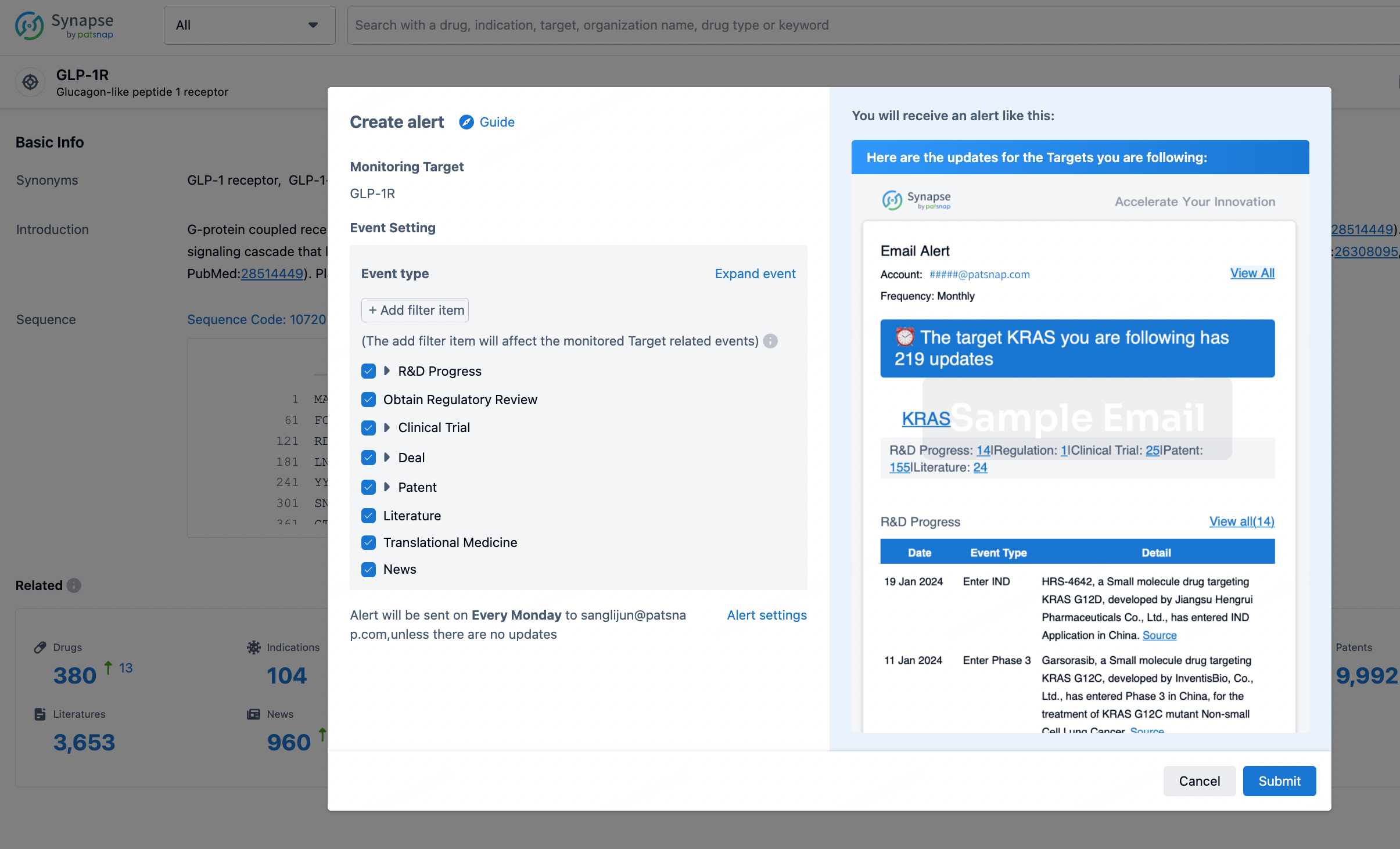
In the Synapse database, you can stay updated on the latest research and development advances of all targets. This service is accessible anytime and anywhere, with updates available daily or weekly. Use the "Set Alert" function to stay informed. Click on the image below to embark on a brand new journey of drug discovery!
Hiro LS Researcher
The AI Search Engine Built to Accelerate Biopharma Decisions
Search across billion-scale life sciences data to uncover signals, validate evidence, and act with confidence.
Ask any biopharma research question→
Get started for free today!
Accelerate Strategic R&D decision making with Synapse, Patsnap’s AI-powered Connected Innovation Intelligence Platform Built for Life Sciences Professionals.
Discover Synapse Data Servers
Synapse data is now integrated into the PatSnap LS Model Context Protocol (MCP) service. Customize your LLM agent now using our MCP server!