Request Demo
What are α1B-AR modulators and how do they work?
25 June 2024
Introduction to α1B-AR modulators
Alpha-1B adrenergic receptors (α1B-AR) are a subtype of adrenergic receptors that play a crucial role in the regulation of cardiovascular functions, including vasoconstriction and blood pressure regulation. These receptors are primarily found in smooth muscle tissues of blood vessels, and their activation leads to various physiological responses. α1B-AR modulators are compounds that can influence the activity of these receptors, either by enhancing or inhibiting their function. The therapeutic potential of α1B-AR modulators has garnered significant interest in the medical field, particularly in the treatment of cardiovascular diseases and other related conditions.
How do α1B-AR modulators work?
To understand how α1B-AR modulators work, it's essential to delve into the mechanism of action of α1B-adrenergic receptors. These receptors are part of the G protein-coupled receptor (GPCR) family, which transmits signals from extracellular stimuli to intracellular pathways. When an agonist, such as norepinephrine, binds to α1B-AR, it activates the receptor, leading to a conformational change. This change enables the receptor to interact with the Gq protein, which in turn activates phospholipase C (PLC). PLC then catalyzes the conversion of phosphatidylinositol 4,5-bisphosphate (PIP2) into inositol triphosphate (IP3) and diacylglycerol (DAG). IP3 triggers the release of calcium ions from intracellular stores, while DAG activates protein kinase C (PKC). The increase in intracellular calcium and PKC activity leads to smooth muscle contraction and vasoconstriction.
α1B-AR modulators exert their effects by either mimicking the action of natural agonists (agonists), blocking the receptor (antagonists), or modulating the receptor's activity in a more nuanced way (allosteric modulators). Agonists bind to the receptor and activate it, leading to enhanced vasoconstriction and increased blood pressure. Conversely, antagonists bind to the receptor but do not activate it, effectively blocking the action of natural agonists and leading to vasodilation and decreased blood pressure. Allosteric modulators bind to sites on the receptor distinct from the agonist binding site and can either enhance or inhibit the receptor's response to agonists.
What are α1B-AR modulators used for?
The therapeutic applications of α1B-AR modulators are diverse, given the receptor's role in various physiological processes. One of the primary uses of α1B-AR antagonists is in the treatment of hypertension (high blood pressure). By blocking the receptor, these antagonists prevent vasoconstriction, thereby reducing blood pressure and alleviating the strain on the cardiovascular system. This makes α1B-AR antagonists valuable in managing hypertension and preventing complications such as stroke, heart attack, and kidney damage.
Another significant application of α1B-AR modulators is in the treatment of benign prostatic hyperplasia (BPH), a condition characterized by the enlargement of the prostate gland, leading to urinary difficulties. α1B-AR antagonists can relax the smooth muscle in the prostate and bladder neck, improving urine flow and reducing the symptoms of BPH. This use highlights the modulators' ability to target smooth muscle tissues beyond just blood vessels.
In addition to these well-established applications, α1B-AR modulators are being investigated for their potential in treating other conditions. For instance, there is ongoing research into their role in managing certain types of heart failure, where regulating blood vessel tone and cardiac output can be beneficial. Moreover, the modulators' ability to influence calcium signaling pathways opens up possibilities for their use in neurological disorders, given the importance of calcium ions in neuronal function.
The development of more selective α1B-AR modulators also holds promise for reducing side effects associated with less selective adrenergic receptor drugs. By specifically targeting α1B-AR, these modulators can provide therapeutic benefits with fewer off-target effects, improving patient outcomes and adherence to treatment.
In conclusion, α1B-AR modulators represent a vital area of pharmacological research with significant implications for cardiovascular and urological health. Their ability to precisely modulate receptor activity offers a powerful tool for managing a range of conditions, from hypertension and BPH to potentially even neurological disorders. As research continues, the full therapeutic potential of these modulators will likely become even more apparent, paving the way for innovative treatments and improved patient care.
Alpha-1B adrenergic receptors (α1B-AR) are a subtype of adrenergic receptors that play a crucial role in the regulation of cardiovascular functions, including vasoconstriction and blood pressure regulation. These receptors are primarily found in smooth muscle tissues of blood vessels, and their activation leads to various physiological responses. α1B-AR modulators are compounds that can influence the activity of these receptors, either by enhancing or inhibiting their function. The therapeutic potential of α1B-AR modulators has garnered significant interest in the medical field, particularly in the treatment of cardiovascular diseases and other related conditions.
How do α1B-AR modulators work?
To understand how α1B-AR modulators work, it's essential to delve into the mechanism of action of α1B-adrenergic receptors. These receptors are part of the G protein-coupled receptor (GPCR) family, which transmits signals from extracellular stimuli to intracellular pathways. When an agonist, such as norepinephrine, binds to α1B-AR, it activates the receptor, leading to a conformational change. This change enables the receptor to interact with the Gq protein, which in turn activates phospholipase C (PLC). PLC then catalyzes the conversion of phosphatidylinositol 4,5-bisphosphate (PIP2) into inositol triphosphate (IP3) and diacylglycerol (DAG). IP3 triggers the release of calcium ions from intracellular stores, while DAG activates protein kinase C (PKC). The increase in intracellular calcium and PKC activity leads to smooth muscle contraction and vasoconstriction.
α1B-AR modulators exert their effects by either mimicking the action of natural agonists (agonists), blocking the receptor (antagonists), or modulating the receptor's activity in a more nuanced way (allosteric modulators). Agonists bind to the receptor and activate it, leading to enhanced vasoconstriction and increased blood pressure. Conversely, antagonists bind to the receptor but do not activate it, effectively blocking the action of natural agonists and leading to vasodilation and decreased blood pressure. Allosteric modulators bind to sites on the receptor distinct from the agonist binding site and can either enhance or inhibit the receptor's response to agonists.
What are α1B-AR modulators used for?
The therapeutic applications of α1B-AR modulators are diverse, given the receptor's role in various physiological processes. One of the primary uses of α1B-AR antagonists is in the treatment of hypertension (high blood pressure). By blocking the receptor, these antagonists prevent vasoconstriction, thereby reducing blood pressure and alleviating the strain on the cardiovascular system. This makes α1B-AR antagonists valuable in managing hypertension and preventing complications such as stroke, heart attack, and kidney damage.
Another significant application of α1B-AR modulators is in the treatment of benign prostatic hyperplasia (BPH), a condition characterized by the enlargement of the prostate gland, leading to urinary difficulties. α1B-AR antagonists can relax the smooth muscle in the prostate and bladder neck, improving urine flow and reducing the symptoms of BPH. This use highlights the modulators' ability to target smooth muscle tissues beyond just blood vessels.
In addition to these well-established applications, α1B-AR modulators are being investigated for their potential in treating other conditions. For instance, there is ongoing research into their role in managing certain types of heart failure, where regulating blood vessel tone and cardiac output can be beneficial. Moreover, the modulators' ability to influence calcium signaling pathways opens up possibilities for their use in neurological disorders, given the importance of calcium ions in neuronal function.
The development of more selective α1B-AR modulators also holds promise for reducing side effects associated with less selective adrenergic receptor drugs. By specifically targeting α1B-AR, these modulators can provide therapeutic benefits with fewer off-target effects, improving patient outcomes and adherence to treatment.
In conclusion, α1B-AR modulators represent a vital area of pharmacological research with significant implications for cardiovascular and urological health. Their ability to precisely modulate receptor activity offers a powerful tool for managing a range of conditions, from hypertension and BPH to potentially even neurological disorders. As research continues, the full therapeutic potential of these modulators will likely become even more apparent, paving the way for innovative treatments and improved patient care.
How to obtain the latest development progress of all targets?
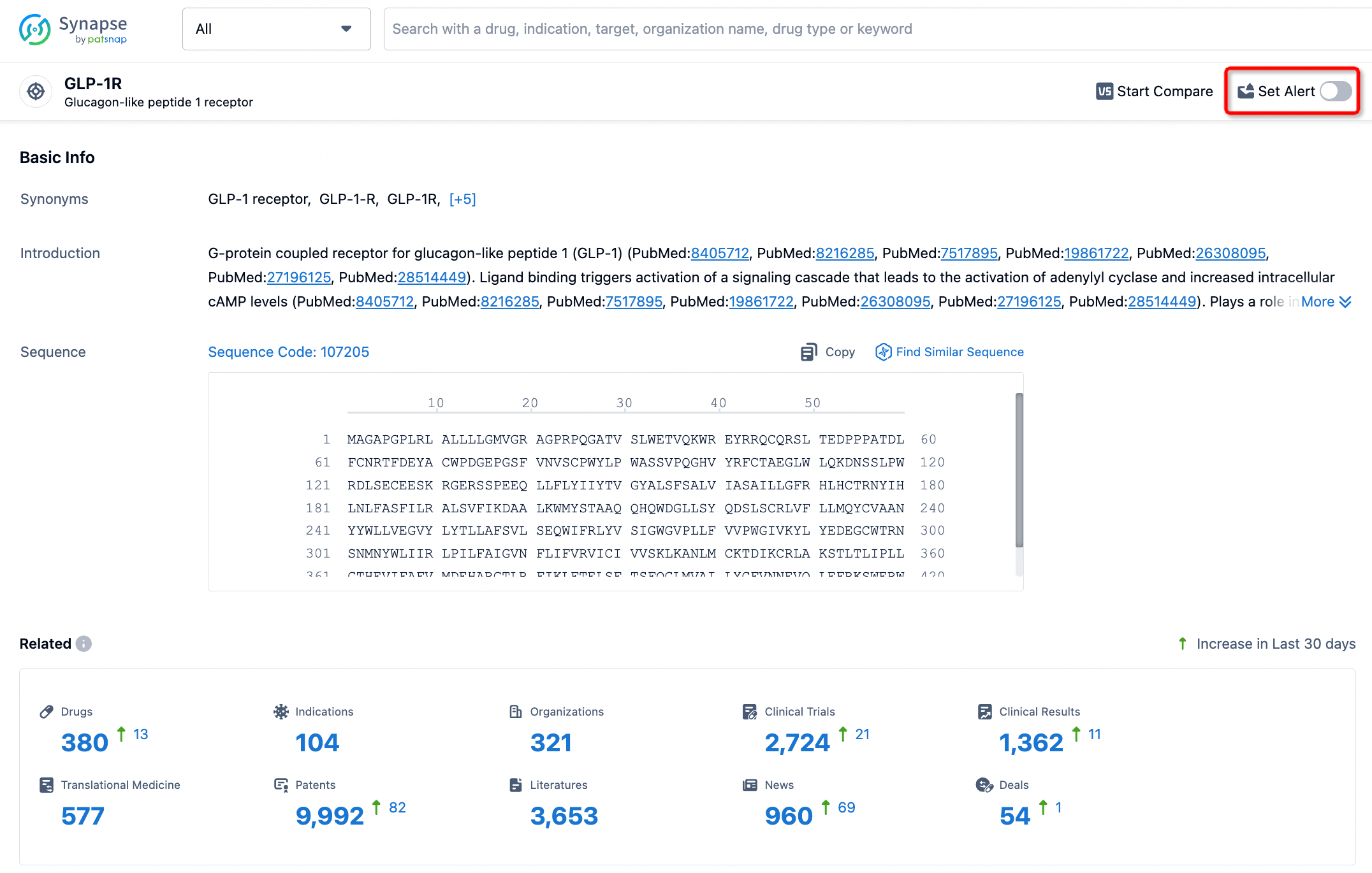
In the Synapse database, you can stay updated on the latest research and development advances of all targets. This service is accessible anytime and anywhere, with updates available daily or weekly. Use the "Set Alert" function to stay informed. Click on the image below to embark on a brand new journey of drug discovery!


Hiro LS Researcher
The AI Search Engine Built to Accelerate Biopharma Decisions
Search across billion-scale life sciences data to uncover signals, validate evidence, and act with confidence.
Ask any biopharma research question→
Get started for free today!
Accelerate Strategic R&D decision making with Synapse, Patsnap’s AI-powered Connected Innovation Intelligence Platform Built for Life Sciences Professionals.
Discover Synapse Data Servers
Synapse data is now integrated into the PatSnap LS Model Context Protocol (MCP) service. Customize your LLM agent now using our MCP server!