Request Demo
What are αvβ6 modulators and how do they work?
21 June 2024
In recent years, αvβ6 modulators have emerged as a promising area of research within the field of biomedical sciences. These modulators target the integrin αvβ6, a protein that plays a crucial role in various cellular processes, including cell adhesion, migration, and signal transduction. Understanding the mechanism of action and potential therapeutic applications of αvβ6 modulators is essential for appreciating their significance in modern medicine.
The integrin αvβ6 is a heterodimeric transmembrane receptor composed of the αv and β6 subunits. While integrins in general are known to mediate the interaction between cells and the extracellular matrix, αvβ6 is particularly unique due to its restricted expression pattern, being predominantly found in epithelial cells. Under normal physiological conditions, αvβ6 is expressed at low levels. However, its expression is significantly upregulated during tissue remodeling processes such as wound healing, fibrosis, and in certain types of cancer.
αvβ6 modulators work by specifically binding to the αvβ6 integrin, thereby inhibiting or altering its function. These modulators can be small molecules, peptides, or monoclonal antibodies designed to interfere with the ligand-binding capacity of αvβ6. By blocking the interaction between αvβ6 and its ligands, these modulators can prevent the downstream signaling pathways that contribute to disease progression.
One of the primary mechanisms by which αvβ6 integrin exerts its effects is through the activation of transforming growth factor-beta (TGF-β). TGF-β is a multifunctional cytokine that plays a crucial role in regulating immune responses, cellular proliferation, and differentiation. In its latent form, TGF-β is bound to a latency-associated peptide (LAP). The αvβ6 integrin facilitates the activation of TGF-β by binding to the LAP, which induces a conformational change that releases active TGF-β. This active form of TGF-β can then engage its receptors on the cell surface, initiating a cascade of signaling events. By inhibiting αvβ6, modulators can reduce the activation of TGF-β, thereby mitigating the downstream effects of this potent cytokine.
The therapeutic potential of αvβ6 modulators spans several disease areas. One of the most promising applications is in the treatment of fibrotic diseases. Organ fibrosis, characterized by excessive deposition of extracellular matrix components, can lead to organ dysfunction and failure. Idiopathic pulmonary fibrosis (IPF) is a particularly severe form of lung fibrosis with limited treatment options. Studies have shown that αvβ6 is highly expressed in the fibrotic lungs of IPF patients and contributes to TGF-β activation and fibrosis progression. αvβ6 modulators have demonstrated efficacy in preclinical models of IPF, suggesting that they may represent a viable therapeutic strategy for this debilitating disease.
In addition to fibrosis, αvβ6 modulators have shown potential in oncology. The expression of αvβ6 is upregulated in various cancers, including pancreatic, breast, and colorectal cancers. In these malignancies, αvβ6 promotes tumor cell invasion, metastasis, and resistance to chemotherapy. Targeting αvβ6 with specific modulators can inhibit tumor progression and enhance the efficacy of existing treatments. Moreover, αvβ6 expression is often associated with poor prognosis, making it a valuable biomarker for identifying patients who may benefit from targeted therapies.
Beyond fibrosis and cancer, αvβ6 modulators are being investigated for their potential in treating inflammatory diseases and certain autoimmune conditions. By modulating the activity of αvβ6 and TGF-β, these therapies may help to regulate immune responses and reduce chronic inflammation.
In conclusion, αvβ6 modulators represent a burgeoning area of therapeutic development, with significant implications for the treatment of fibrotic diseases, cancer, and beyond. By targeting the unique functions of the αvβ6 integrin, these modulators offer a novel approach to mitigating disease progression and improving patient outcomes. As research continues to advance, the clinical potential of αvβ6 modulators is becoming increasingly evident, heralding a new era of targeted therapies in medicine.
The integrin αvβ6 is a heterodimeric transmembrane receptor composed of the αv and β6 subunits. While integrins in general are known to mediate the interaction between cells and the extracellular matrix, αvβ6 is particularly unique due to its restricted expression pattern, being predominantly found in epithelial cells. Under normal physiological conditions, αvβ6 is expressed at low levels. However, its expression is significantly upregulated during tissue remodeling processes such as wound healing, fibrosis, and in certain types of cancer.
αvβ6 modulators work by specifically binding to the αvβ6 integrin, thereby inhibiting or altering its function. These modulators can be small molecules, peptides, or monoclonal antibodies designed to interfere with the ligand-binding capacity of αvβ6. By blocking the interaction between αvβ6 and its ligands, these modulators can prevent the downstream signaling pathways that contribute to disease progression.
One of the primary mechanisms by which αvβ6 integrin exerts its effects is through the activation of transforming growth factor-beta (TGF-β). TGF-β is a multifunctional cytokine that plays a crucial role in regulating immune responses, cellular proliferation, and differentiation. In its latent form, TGF-β is bound to a latency-associated peptide (LAP). The αvβ6 integrin facilitates the activation of TGF-β by binding to the LAP, which induces a conformational change that releases active TGF-β. This active form of TGF-β can then engage its receptors on the cell surface, initiating a cascade of signaling events. By inhibiting αvβ6, modulators can reduce the activation of TGF-β, thereby mitigating the downstream effects of this potent cytokine.
The therapeutic potential of αvβ6 modulators spans several disease areas. One of the most promising applications is in the treatment of fibrotic diseases. Organ fibrosis, characterized by excessive deposition of extracellular matrix components, can lead to organ dysfunction and failure. Idiopathic pulmonary fibrosis (IPF) is a particularly severe form of lung fibrosis with limited treatment options. Studies have shown that αvβ6 is highly expressed in the fibrotic lungs of IPF patients and contributes to TGF-β activation and fibrosis progression. αvβ6 modulators have demonstrated efficacy in preclinical models of IPF, suggesting that they may represent a viable therapeutic strategy for this debilitating disease.
In addition to fibrosis, αvβ6 modulators have shown potential in oncology. The expression of αvβ6 is upregulated in various cancers, including pancreatic, breast, and colorectal cancers. In these malignancies, αvβ6 promotes tumor cell invasion, metastasis, and resistance to chemotherapy. Targeting αvβ6 with specific modulators can inhibit tumor progression and enhance the efficacy of existing treatments. Moreover, αvβ6 expression is often associated with poor prognosis, making it a valuable biomarker for identifying patients who may benefit from targeted therapies.
Beyond fibrosis and cancer, αvβ6 modulators are being investigated for their potential in treating inflammatory diseases and certain autoimmune conditions. By modulating the activity of αvβ6 and TGF-β, these therapies may help to regulate immune responses and reduce chronic inflammation.
In conclusion, αvβ6 modulators represent a burgeoning area of therapeutic development, with significant implications for the treatment of fibrotic diseases, cancer, and beyond. By targeting the unique functions of the αvβ6 integrin, these modulators offer a novel approach to mitigating disease progression and improving patient outcomes. As research continues to advance, the clinical potential of αvβ6 modulators is becoming increasingly evident, heralding a new era of targeted therapies in medicine.
How to obtain the latest development progress of all targets?
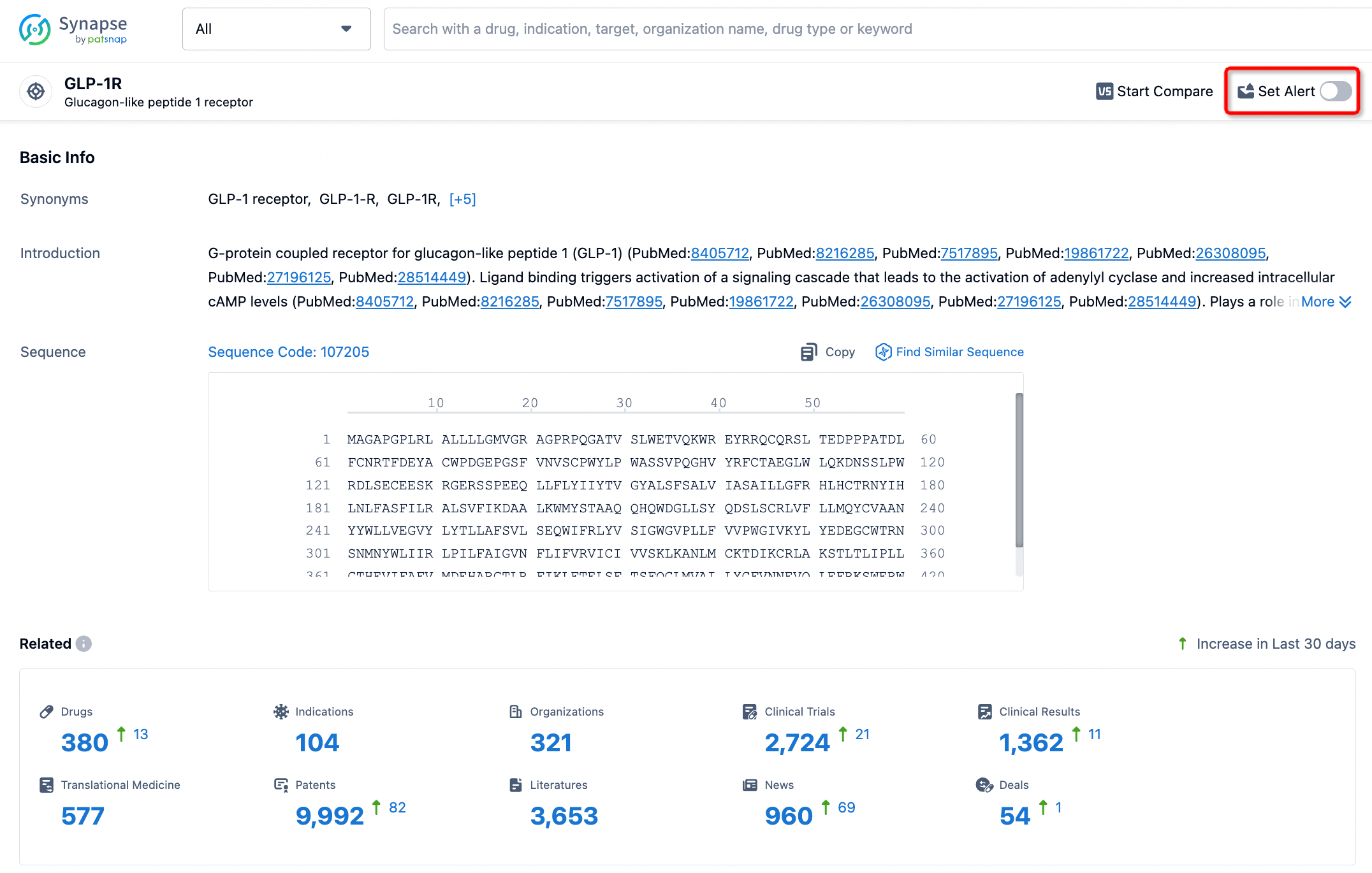
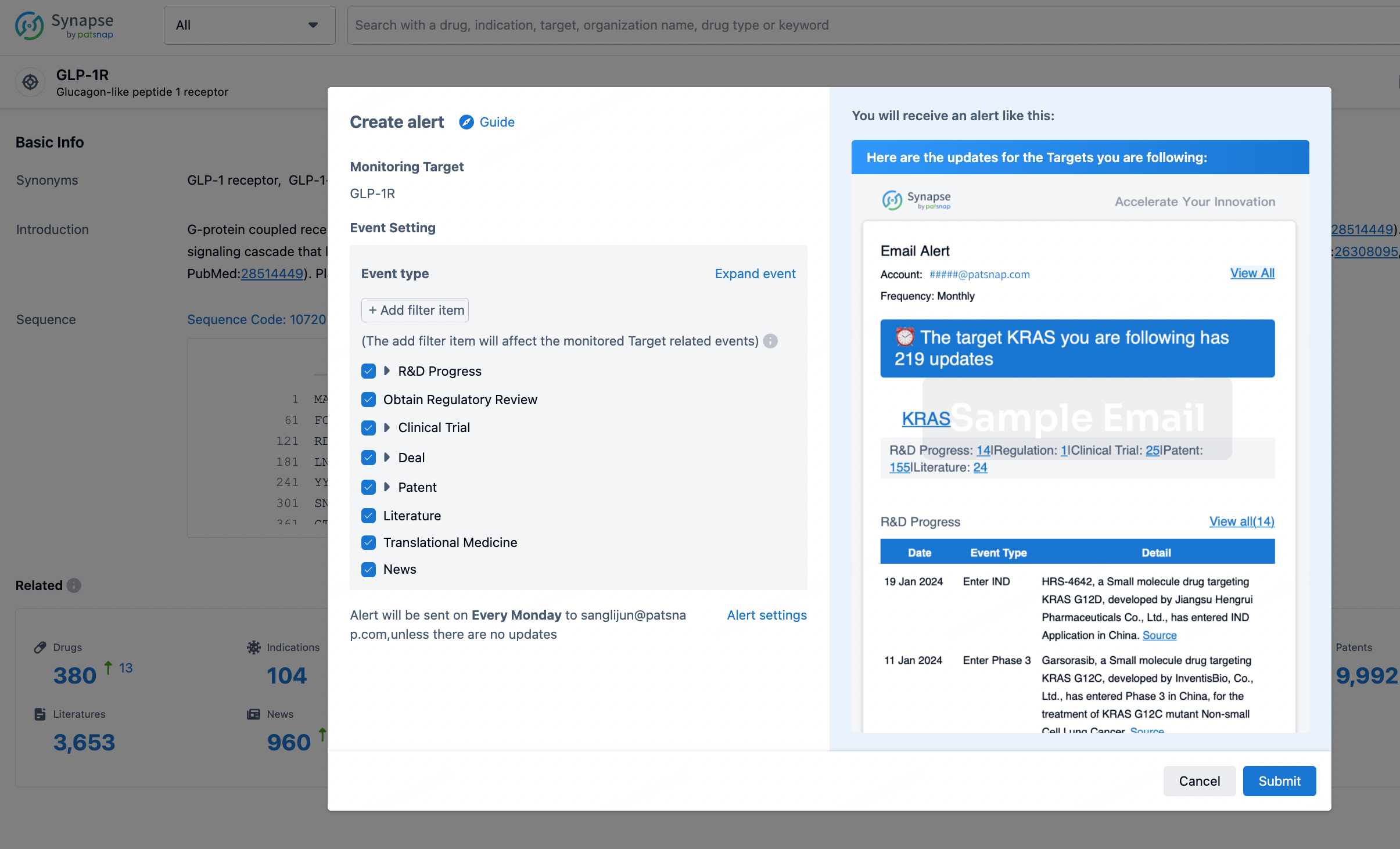
In the Synapse database, you can stay updated on the latest research and development advances of all targets. This service is accessible anytime and anywhere, with updates available daily or weekly. Use the "Set Alert" function to stay informed. Click on the image below to embark on a brand new journey of drug discovery!

AI Agents Built for Biopharma Breakthroughs
Accelerate discovery. Empower decisions. Transform outcomes.
Get started for free today!
Accelerate Strategic R&D decision making with Synapse, PatSnap’s AI-powered Connected Innovation Intelligence Platform Built for Life Sciences Professionals.
Start your data trial now!
Synapse data is also accessible to external entities via APIs or data packages. Empower better decisions with the latest in pharmaceutical intelligence.