Request Demo
What are κ opioid receptor agonists and how do they work?
21 June 2024
In recent years, κ opioid receptor agonists (KORAs) have garnered significant interest in the medical and scientific communities. These compounds interact with the κ opioid receptors (KORs) in the brain and other parts of the body, triggering a cascade of physiological responses. KORAs stand in contrast to their more well-known opioid counterparts that target the μ opioid receptors (MORs), often responsible for many of the adverse effects associated with opioids, such as addiction and respiratory depression. Understanding the workings of KORAs, their potential applications, and the implications for future medical treatments is crucial.
KORAs operate by selectively binding to and activating the κ opioid receptors, which are part of the extensive opioid receptor family that includes μ, δ, and nociceptin/orphanin FQ peptide receptors. The KORs are G protein-coupled receptors (GPCRs) located primarily in the central and peripheral nervous systems. Upon activation by an agonist, these receptors initiate signaling pathways that can lead to various physiological outcomes.
One primary pathway involves the inhibition of adenylate cyclase, an enzyme responsible for converting ATP to cyclic AMP (cAMP). Reduced levels of cAMP lead to decreased neuronal excitability and neurotransmitter release, contributing to the analgesic and sedative effects of KORAs. Additionally, KOR activation can modulate ion channels, including calcium and potassium channels, further influencing neuronal activity and contributing to the therapeutic effects.
Another significant aspect is the regulation of neurotransmitter systems, such as dopamine. Unlike MOR agonists, which typically increase dopamine levels in the brain's reward pathways and are associated with euphoria and addiction, KORAs often produce the opposite effect. Activation of KORs can reduce dopamine release, which has been linked to dysphoria and anti-reward effects. This unique mode of action has both advantageous and challenging implications for their use in clinical settings.
KORAs have been explored for a variety of medical applications, with analgesia being one of the most prominent. Given the ongoing opioid crisis and the need for effective pain management alternatives, KORAs present a promising avenue. Unlike MOR agonists, which carry a high risk of addiction and life-threatening side effects like respiratory depression, KORAs offer pain relief with a potentially lower risk profile. This makes them particularly appealing for chronic pain management where long-term opioid use is often problematic.
Beyond pain management, KORAs are being investigated for their potential in treating addiction. Their ability to counteract the rewarding effects of drugs like cocaine and alcohol opens the door to new addiction therapies. By dampening the dopamine-driven reward system, KORAs could help reduce cravings and prevent relapse, making them valuable adjuncts in addiction treatment programs.
The unique pharmacological profile of KORAs also lends itself to applications in mood disorders. While the dysphoric effects of KORAs might initially seem like a drawback, this property is being harnessed in the development of treatments for conditions such as depression and anxiety. Some research suggests that KOR antagonists (which block the receptor) rather than agonists might be more suitable for these conditions, as they could lift mood by preventing the receptor from producing dysphoria.
Furthermore, KORAs have shown potential in neuroprotection and the treatment of neurodegenerative diseases. Studies indicate that these compounds might help reduce inflammation and protect against neuronal damage, offering new therapeutic avenues for diseases like Alzheimer's and Parkinson's.
Despite the promising potential of KORAs, there are challenges and limitations to their use. The dysphoric and psychotomimetic effects, while beneficial in certain contexts, can be a significant drawback for patient compliance and overall treatment experience. Additionally, the precise mechanisms and long-term effects of KORAs require further investigation to ensure their safety and efficacy.
In conclusion, κ opioid receptor agonists represent a fascinating and promising class of compounds with diverse therapeutic potential. Their unique mode of action differentiates them from traditional opioids, offering new avenues for pain management, addiction treatment, and possibly even neuroprotection. As research continues to unravel their complexities, KORAs may become indispensable tools in modern medicine, providing safer and more effective treatments for a range of conditions.
KORAs operate by selectively binding to and activating the κ opioid receptors, which are part of the extensive opioid receptor family that includes μ, δ, and nociceptin/orphanin FQ peptide receptors. The KORs are G protein-coupled receptors (GPCRs) located primarily in the central and peripheral nervous systems. Upon activation by an agonist, these receptors initiate signaling pathways that can lead to various physiological outcomes.
One primary pathway involves the inhibition of adenylate cyclase, an enzyme responsible for converting ATP to cyclic AMP (cAMP). Reduced levels of cAMP lead to decreased neuronal excitability and neurotransmitter release, contributing to the analgesic and sedative effects of KORAs. Additionally, KOR activation can modulate ion channels, including calcium and potassium channels, further influencing neuronal activity and contributing to the therapeutic effects.
Another significant aspect is the regulation of neurotransmitter systems, such as dopamine. Unlike MOR agonists, which typically increase dopamine levels in the brain's reward pathways and are associated with euphoria and addiction, KORAs often produce the opposite effect. Activation of KORs can reduce dopamine release, which has been linked to dysphoria and anti-reward effects. This unique mode of action has both advantageous and challenging implications for their use in clinical settings.
KORAs have been explored for a variety of medical applications, with analgesia being one of the most prominent. Given the ongoing opioid crisis and the need for effective pain management alternatives, KORAs present a promising avenue. Unlike MOR agonists, which carry a high risk of addiction and life-threatening side effects like respiratory depression, KORAs offer pain relief with a potentially lower risk profile. This makes them particularly appealing for chronic pain management where long-term opioid use is often problematic.
Beyond pain management, KORAs are being investigated for their potential in treating addiction. Their ability to counteract the rewarding effects of drugs like cocaine and alcohol opens the door to new addiction therapies. By dampening the dopamine-driven reward system, KORAs could help reduce cravings and prevent relapse, making them valuable adjuncts in addiction treatment programs.
The unique pharmacological profile of KORAs also lends itself to applications in mood disorders. While the dysphoric effects of KORAs might initially seem like a drawback, this property is being harnessed in the development of treatments for conditions such as depression and anxiety. Some research suggests that KOR antagonists (which block the receptor) rather than agonists might be more suitable for these conditions, as they could lift mood by preventing the receptor from producing dysphoria.
Furthermore, KORAs have shown potential in neuroprotection and the treatment of neurodegenerative diseases. Studies indicate that these compounds might help reduce inflammation and protect against neuronal damage, offering new therapeutic avenues for diseases like Alzheimer's and Parkinson's.
Despite the promising potential of KORAs, there are challenges and limitations to their use. The dysphoric and psychotomimetic effects, while beneficial in certain contexts, can be a significant drawback for patient compliance and overall treatment experience. Additionally, the precise mechanisms and long-term effects of KORAs require further investigation to ensure their safety and efficacy.
In conclusion, κ opioid receptor agonists represent a fascinating and promising class of compounds with diverse therapeutic potential. Their unique mode of action differentiates them from traditional opioids, offering new avenues for pain management, addiction treatment, and possibly even neuroprotection. As research continues to unravel their complexities, KORAs may become indispensable tools in modern medicine, providing safer and more effective treatments for a range of conditions.
How to obtain the latest development progress of all targets?
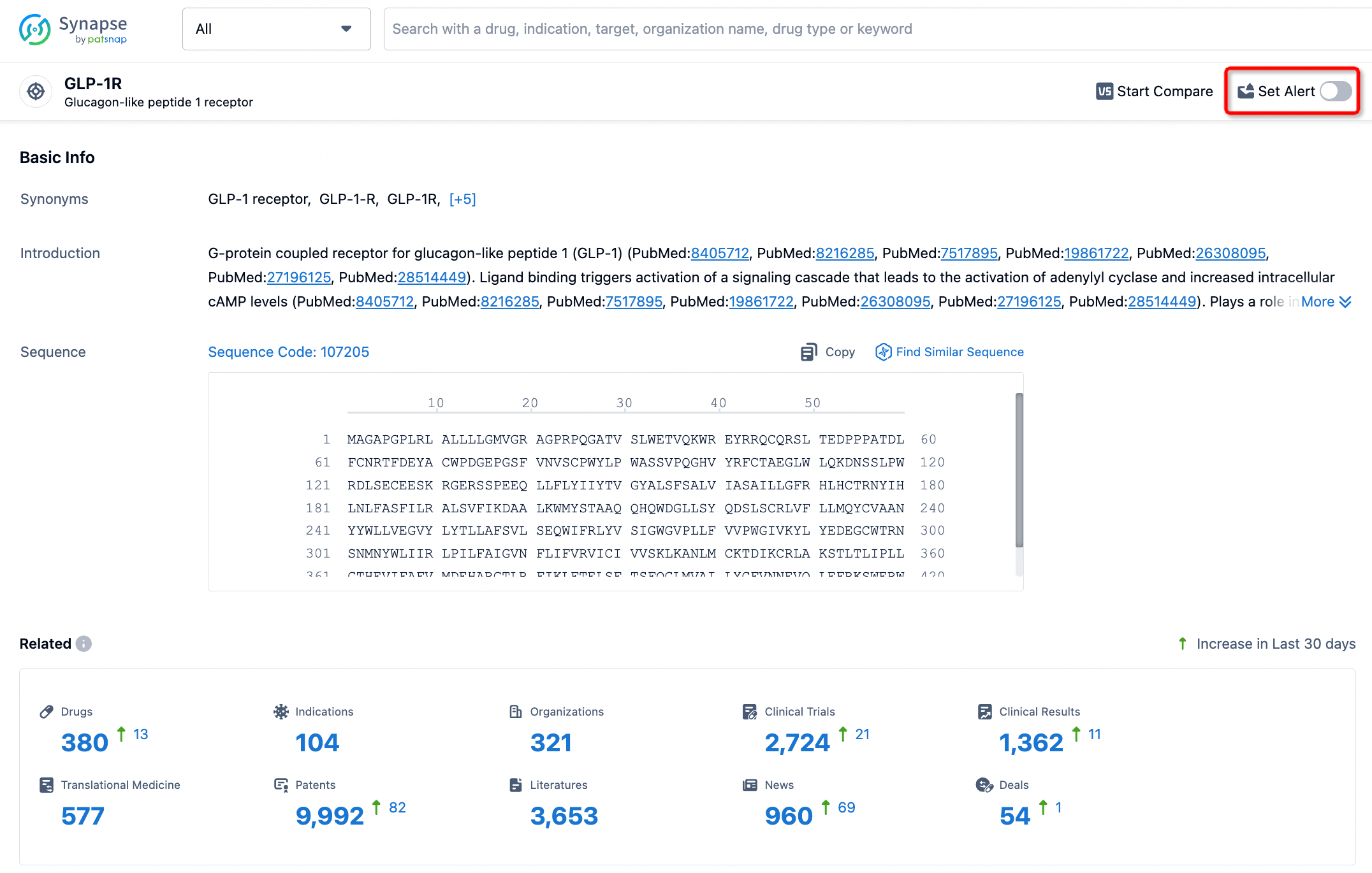
In the Synapse database, you can stay updated on the latest research and development advances of all targets. This service is accessible anytime and anywhere, with updates available daily or weekly. Use the "Set Alert" function to stay informed. Click on the image below to embark on a brand new journey of drug discovery!


AI Agents Built for Biopharma Breakthroughs
Accelerate discovery. Empower decisions. Transform outcomes.
Get started for free today!
Accelerate Strategic R&D decision making with Synapse, PatSnap’s AI-powered Connected Innovation Intelligence Platform Built for Life Sciences Professionals.
Start your data trial now!
Synapse data is also accessible to external entities via APIs or data packages. Empower better decisions with the latest in pharmaceutical intelligence.