Request Demo
What are APLNR modulators and how do they work?
25 June 2024
In the rapidly evolving world of medical science, understanding the intricate interactions between various receptors and their modulators is crucial for developing new therapeutic interventions. One receptor that has garnered significant interest is the Apelin Receptor, also known as APLNR. APLNR modulators are compounds that can influence the activity of this receptor, offering potential applications in treating a range of diseases. This post aims to provide an in-depth look at APLNR modulators, exploring how they work and their potential uses in medical science.
The Apelin Receptor (APLNR) is a G protein-coupled receptor (GPCR) that binds to the peptide ligand apelin. This receptor plays a critical role in numerous physiological processes, including cardiovascular function, fluid homeostasis, and energy metabolism. Because of its widespread influence, the modulation of APLNR activity has become a promising target for therapeutic interventions in various diseases.
APLNR modulators can either be agonists, which activate the receptor, or antagonists, which inhibit its activity. When apelin binds to APLNR, it triggers a cascade of intracellular signaling events that ultimately result in physiological responses. Agonists mimic the action of apelin, binding to the receptor and activating it, thereby enhancing its physiological effects. On the other hand, antagonists block the receptor, preventing apelin from binding and inhibiting its downstream signaling pathways.
The modulation of APLNR activity can be achieved through several mechanisms. Small molecule compounds that can either activate or inhibit the receptor are one approach. Another method involves using biologics, such as monoclonal antibodies, to target the receptor or its ligand. Peptide-based modulators, which can mimic or disrupt the interaction between apelin and APLNR, are also being explored. Each of these approaches has its advantages and challenges, but collectively they offer a versatile toolkit for modulating APLNR activity.
The therapeutic potential of APLNR modulators spans a broad spectrum of medical conditions. One of the most promising areas of research is in cardiovascular diseases. APLNR is heavily involved in regulating blood pressure and heart contractility. Agonists that enhance APLNR activity can help in managing conditions like hypertension and heart failure by promoting vasodilation and improving cardiac output. Conversely, antagonists might be useful in scenarios where inhibiting these effects is beneficial.
In the realm of metabolic disorders, APLNR modulators show promise in tackling issues like obesity and diabetes. APLNR influences energy metabolism and insulin sensitivity, making it a potential target for therapies aimed at improving metabolic health. Agonists could enhance insulin sensitivity and promote energy expenditure, while antagonists might help in conditions where reducing these effects is advantageous.
Another exciting application of APLNR modulators is in the field of oncology. Emerging evidence suggests that APLNR plays a role in tumor growth and metastasis. Modulating the activity of this receptor could potentially inhibit cancer progression. For instance, antagonists that block APLNR might prevent tumors from acquiring the blood supply they need to grow, a process known as angiogenesis. This could make APLNR modulators valuable additions to the arsenal of anti-cancer therapies.
Moreover, APLNR modulators are being investigated for their potential in treating central nervous system (CNS) disorders. The receptor is expressed in various brain regions, and its modulation could influence neuroprotective pathways. This opens the door for potential treatments for conditions like Alzheimer's disease, stroke, and even psychiatric disorders.
In conclusion, APLNR modulators represent a promising frontier in medical science, offering potential therapeutic strategies for a wide range of diseases. By understanding how these modulators work and exploring their diverse applications, researchers can develop more targeted and effective treatments. As our knowledge of APLNR continues to grow, so too will the opportunities to harness its therapeutic potential, paving the way for innovative medical breakthroughs.
The Apelin Receptor (APLNR) is a G protein-coupled receptor (GPCR) that binds to the peptide ligand apelin. This receptor plays a critical role in numerous physiological processes, including cardiovascular function, fluid homeostasis, and energy metabolism. Because of its widespread influence, the modulation of APLNR activity has become a promising target for therapeutic interventions in various diseases.
APLNR modulators can either be agonists, which activate the receptor, or antagonists, which inhibit its activity. When apelin binds to APLNR, it triggers a cascade of intracellular signaling events that ultimately result in physiological responses. Agonists mimic the action of apelin, binding to the receptor and activating it, thereby enhancing its physiological effects. On the other hand, antagonists block the receptor, preventing apelin from binding and inhibiting its downstream signaling pathways.
The modulation of APLNR activity can be achieved through several mechanisms. Small molecule compounds that can either activate or inhibit the receptor are one approach. Another method involves using biologics, such as monoclonal antibodies, to target the receptor or its ligand. Peptide-based modulators, which can mimic or disrupt the interaction between apelin and APLNR, are also being explored. Each of these approaches has its advantages and challenges, but collectively they offer a versatile toolkit for modulating APLNR activity.
The therapeutic potential of APLNR modulators spans a broad spectrum of medical conditions. One of the most promising areas of research is in cardiovascular diseases. APLNR is heavily involved in regulating blood pressure and heart contractility. Agonists that enhance APLNR activity can help in managing conditions like hypertension and heart failure by promoting vasodilation and improving cardiac output. Conversely, antagonists might be useful in scenarios where inhibiting these effects is beneficial.
In the realm of metabolic disorders, APLNR modulators show promise in tackling issues like obesity and diabetes. APLNR influences energy metabolism and insulin sensitivity, making it a potential target for therapies aimed at improving metabolic health. Agonists could enhance insulin sensitivity and promote energy expenditure, while antagonists might help in conditions where reducing these effects is advantageous.
Another exciting application of APLNR modulators is in the field of oncology. Emerging evidence suggests that APLNR plays a role in tumor growth and metastasis. Modulating the activity of this receptor could potentially inhibit cancer progression. For instance, antagonists that block APLNR might prevent tumors from acquiring the blood supply they need to grow, a process known as angiogenesis. This could make APLNR modulators valuable additions to the arsenal of anti-cancer therapies.
Moreover, APLNR modulators are being investigated for their potential in treating central nervous system (CNS) disorders. The receptor is expressed in various brain regions, and its modulation could influence neuroprotective pathways. This opens the door for potential treatments for conditions like Alzheimer's disease, stroke, and even psychiatric disorders.
In conclusion, APLNR modulators represent a promising frontier in medical science, offering potential therapeutic strategies for a wide range of diseases. By understanding how these modulators work and exploring their diverse applications, researchers can develop more targeted and effective treatments. As our knowledge of APLNR continues to grow, so too will the opportunities to harness its therapeutic potential, paving the way for innovative medical breakthroughs.
How to obtain the latest development progress of all targets?
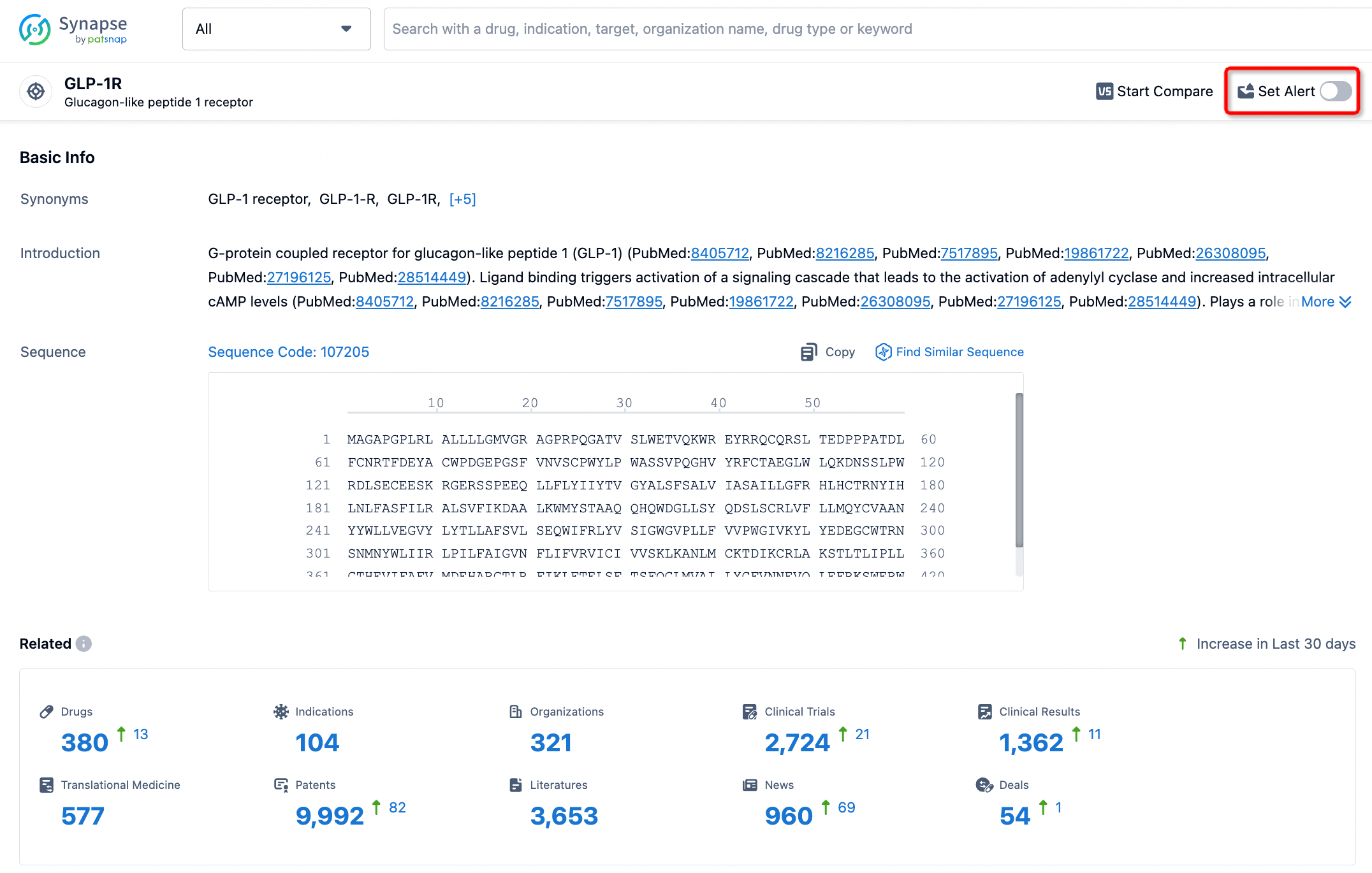
In the Synapse database, you can stay updated on the latest research and development advances of all targets. This service is accessible anytime and anywhere, with updates available daily or weekly. Use the "Set Alert" function to stay informed. Click on the image below to embark on a brand new journey of drug discovery!

AI Agents Built for Biopharma Breakthroughs
Accelerate discovery. Empower decisions. Transform outcomes.
Get started for free today!
Accelerate Strategic R&D decision making with Synapse, PatSnap’s AI-powered Connected Innovation Intelligence Platform Built for Life Sciences Professionals.
Start your data trial now!
Synapse data is also accessible to external entities via APIs or data packages. Empower better decisions with the latest in pharmaceutical intelligence.