Request Demo
What are ASIC3 inhibitors and how do they work?
25 June 2024
Acid-sensing ion channel 3 (ASIC3) is a member of a group of ion channels that are sensitive to changes in extracellular pH levels. These channels have been implicated in various physiological and pathological processes, particularly in the context of pain and mechanosensation. ASIC3 inhibitors are compounds designed to block the activity of these channels. By doing so, they offer potential therapeutic benefits for a range of conditions associated with pain and inflammation. This blog post will provide an overview of ASIC3 inhibitors, how they work, and what they are used for.
ASIC3 inhibitors are a subject of growing interest due to their potential applications in pain management. The acid-sensing ion channels, including ASIC3, are activated by protons, which are hydrogen ions released during tissue acidosis—a common feature in various pain conditions. When activated, these channels allow the flow of sodium ions into cells, which can lead to depolarization and the generation of action potentials, ultimately resulting in the sensation of pain. By inhibiting ASIC3, these drugs aim to prevent this sequence of events, thereby reducing pain.
The mechanism of action of ASIC3 inhibitors involves blocking the ability of protons to activate the channel. ASIC3 channels are composed of three subunits that form a trimeric structure. Protons bind to specific sites on these subunits, triggering a conformational change that opens the channel. ASIC3 inhibitors work by binding to these sites or to other regions of the channel, preventing protons from inducing this conformational change. As a result, the channel remains closed, and the influx of sodium ions is inhibited. This in turn reduces neuronal excitability and the transmission of pain signals to the central nervous system.
The specificity of ASIC3 inhibitors is another critical aspect of their function. While several types of acid-sensing ion channels exist, each with different tissue distributions and physiological roles, ASIC3 is predominantly expressed in sensory neurons. This selective expression makes ASIC3 a particularly attractive target for pain management, as inhibiting this specific channel type is less likely to produce widespread side effects compared to non-specific ion channel blockers.
ASIC3 inhibitors have been investigated for their potential use in a variety of conditions characterized by pain and inflammation. Chronic pain conditions, such as osteoarthritis, rheumatoid arthritis, and neuropathic pain, have been the primary focus of research. In preclinical studies, ASIC3 inhibitors have shown promise in reducing pain behaviors in animal models of these conditions. For example, in models of osteoarthritis, treatment with ASIC3 inhibitors has led to significant reductions in pain-related behaviors, suggesting potential benefits for human patients suffering from this debilitating condition.
In addition to chronic pain, ASIC3 inhibitors have also been explored for their potential in treating acute pain conditions. For instance, they may offer benefits in postoperative pain management or in managing pain associated with acute injuries. By targeting the specific pathways involved in pain sensation, ASIC3 inhibitors could provide effective pain relief with a reduced risk of side effects compared to traditional analgesics like opioids.
Beyond pain management, there is emerging interest in the role of ASIC3 in other physiological processes, such as inflammation and mechanotransduction—the process by which cells convert mechanical stimuli into biochemical signals. In inflammatory conditions, tissue acidosis is a common feature, and ASIC3 channels are thought to play a role in the inflammatory response. By inhibiting these channels, it may be possible to reduce inflammation and its associated pain.
In conclusion, ASIC3 inhibitors represent a promising avenue for the treatment of various pain and inflammatory conditions. By specifically targeting the acid-sensing ion channels involved in pain transmission, these compounds offer the potential for effective pain relief with a lower risk of side effects. As research continues, it is hoped that ASIC3 inhibitors will become a valuable addition to the arsenal of pain management therapies, providing new options for patients suffering from chronic and acute pain conditions.
ASIC3 inhibitors are a subject of growing interest due to their potential applications in pain management. The acid-sensing ion channels, including ASIC3, are activated by protons, which are hydrogen ions released during tissue acidosis—a common feature in various pain conditions. When activated, these channels allow the flow of sodium ions into cells, which can lead to depolarization and the generation of action potentials, ultimately resulting in the sensation of pain. By inhibiting ASIC3, these drugs aim to prevent this sequence of events, thereby reducing pain.
The mechanism of action of ASIC3 inhibitors involves blocking the ability of protons to activate the channel. ASIC3 channels are composed of three subunits that form a trimeric structure. Protons bind to specific sites on these subunits, triggering a conformational change that opens the channel. ASIC3 inhibitors work by binding to these sites or to other regions of the channel, preventing protons from inducing this conformational change. As a result, the channel remains closed, and the influx of sodium ions is inhibited. This in turn reduces neuronal excitability and the transmission of pain signals to the central nervous system.
The specificity of ASIC3 inhibitors is another critical aspect of their function. While several types of acid-sensing ion channels exist, each with different tissue distributions and physiological roles, ASIC3 is predominantly expressed in sensory neurons. This selective expression makes ASIC3 a particularly attractive target for pain management, as inhibiting this specific channel type is less likely to produce widespread side effects compared to non-specific ion channel blockers.
ASIC3 inhibitors have been investigated for their potential use in a variety of conditions characterized by pain and inflammation. Chronic pain conditions, such as osteoarthritis, rheumatoid arthritis, and neuropathic pain, have been the primary focus of research. In preclinical studies, ASIC3 inhibitors have shown promise in reducing pain behaviors in animal models of these conditions. For example, in models of osteoarthritis, treatment with ASIC3 inhibitors has led to significant reductions in pain-related behaviors, suggesting potential benefits for human patients suffering from this debilitating condition.
In addition to chronic pain, ASIC3 inhibitors have also been explored for their potential in treating acute pain conditions. For instance, they may offer benefits in postoperative pain management or in managing pain associated with acute injuries. By targeting the specific pathways involved in pain sensation, ASIC3 inhibitors could provide effective pain relief with a reduced risk of side effects compared to traditional analgesics like opioids.
Beyond pain management, there is emerging interest in the role of ASIC3 in other physiological processes, such as inflammation and mechanotransduction—the process by which cells convert mechanical stimuli into biochemical signals. In inflammatory conditions, tissue acidosis is a common feature, and ASIC3 channels are thought to play a role in the inflammatory response. By inhibiting these channels, it may be possible to reduce inflammation and its associated pain.
In conclusion, ASIC3 inhibitors represent a promising avenue for the treatment of various pain and inflammatory conditions. By specifically targeting the acid-sensing ion channels involved in pain transmission, these compounds offer the potential for effective pain relief with a lower risk of side effects. As research continues, it is hoped that ASIC3 inhibitors will become a valuable addition to the arsenal of pain management therapies, providing new options for patients suffering from chronic and acute pain conditions.
How to obtain the latest development progress of all targets?
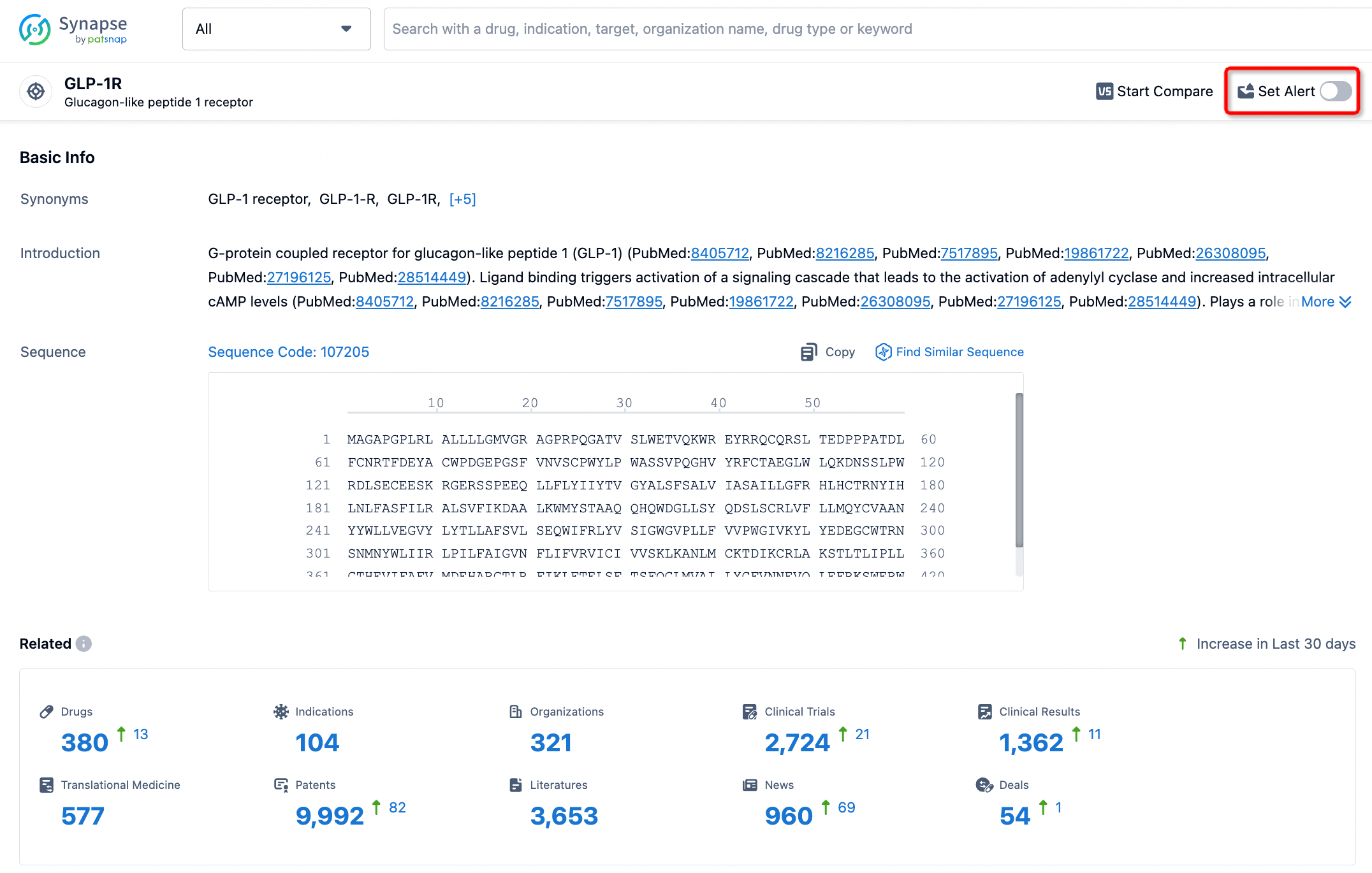
In the Synapse database, you can stay updated on the latest research and development advances of all targets. This service is accessible anytime and anywhere, with updates available daily or weekly. Use the "Set Alert" function to stay informed. Click on the image below to embark on a brand new journey of drug discovery!


AI Agents Built for Biopharma Breakthroughs
Accelerate discovery. Empower decisions. Transform outcomes.
Get started for free today!
Accelerate Strategic R&D decision making with Synapse, PatSnap’s AI-powered Connected Innovation Intelligence Platform Built for Life Sciences Professionals.
Start your data trial now!
Synapse data is also accessible to external entities via APIs or data packages. Empower better decisions with the latest in pharmaceutical intelligence.