Request Demo
What are AVPR1B agonists and how do they work?
25 June 2024
Introduction to AVPR1B Agonists
AVPR1B agonists represent a burgeoning area of interest in the field of pharmacology and medicine. The AVPR1B receptor, also known as the vasopressin V1b receptor, plays a crucial role in the function of the hypothalamic-pituitary-adrenal (HPA) axis, which is involved in the body's response to stress. This receptor is primarily located in the pituitary gland, where it influences the secretion of adrenocorticotropic hormone (ACTH). ACTH subsequently stimulates the adrenal glands to produce cortisol, a key hormone in managing stress responses. Given the pivotal role of the AVPR1B receptor in stress and anxiety, agonists targeting this receptor have emerged as potential therapeutic agents for a range of psychiatric and endocrine disorders.
How do AVPR1B Agonists Work?
To understand how AVPR1B agonists function, it is essential first to appreciate the role of the AVPR1B receptor within the HPA axis. The AVPR1B receptor, when activated by its natural ligand arginine vasopressin (AVP), triggers a series of intracellular signaling cascades. These cascades involve the activation of G-protein coupled receptors, which in turn stimulate phospholipase C (PLC). This enzyme facilitates the production of inositol triphosphate (IP3) and diacylglycerol (DAG), leading to an increase in intracellular calcium levels.
The rise in intracellular calcium is pivotal for the exocytosis of ACTH from pituitary corticotroph cells. ACTH is then released into the bloodstream, where it travels to the adrenal glands to promote the release of cortisol. Cortisol serves multiple functions, including modulation of metabolism, immune response, and, importantly, the regulation of stress. AVPR1B agonists mimic the action of AVP by binding to and activating the AVPR1B receptor, thereby amplifying the HPA axis activity and potentially enhancing the body's ability to manage stress.
What are AVPR1B Agonists Used For?
Given their role in modulating the HPA axis, AVPR1B agonists hold promise for several therapeutic applications. One of the primary areas of interest is their potential in treating stress-related disorders such as anxiety and depression. Dysregulation of the HPA axis is often observed in individuals with these conditions, and enhancing AVPR1B activity could help to restore balance and improve symptoms.
Another promising application of AVPR1B agonists is in the management of endocrine disorders, specifically those involving adrenal insufficiency. For patients with conditions like Addison's disease, where cortisol production is deficient, AVPR1B agonists could theoretically boost ACTH secretion and, consequently, cortisol levels. This could provide a more targeted approach compared to traditional hormone replacement therapies.
Furthermore, AVPR1B agonists are being explored in the context of cognitive and behavioral disorders. Stress and anxiety can significantly impact cognitive function and behavior, and by modulating the HPA axis, AVPR1B agonists may offer benefits in conditions such as post-traumatic stress disorder (PTSD) and generalized anxiety disorder (GAD).
Research is also ongoing into the potential anti-inflammatory effects of AVPR1B agonists. Cortisol has well-documented anti-inflammatory properties, and by enhancing cortisol production, AVPR1B agonists could help manage inflammatory conditions. This could have implications for autoimmune diseases and chronic inflammatory states.
In conclusion, AVPR1B agonists offer a promising avenue for therapeutic intervention in a variety of stress-related and endocrine disorders. By enhancing the activity of the AVPR1B receptor and subsequently the HPA axis, these agents can potentially improve the body's ability to manage stress, regulate cortisol levels, and address a range of psychiatric and physiological conditions. While still largely in the research phase, the future of AVPR1B agonists looks promising as we continue to unravel the complexities of the HPA axis and its role in health and disease.
AVPR1B agonists represent a burgeoning area of interest in the field of pharmacology and medicine. The AVPR1B receptor, also known as the vasopressin V1b receptor, plays a crucial role in the function of the hypothalamic-pituitary-adrenal (HPA) axis, which is involved in the body's response to stress. This receptor is primarily located in the pituitary gland, where it influences the secretion of adrenocorticotropic hormone (ACTH). ACTH subsequently stimulates the adrenal glands to produce cortisol, a key hormone in managing stress responses. Given the pivotal role of the AVPR1B receptor in stress and anxiety, agonists targeting this receptor have emerged as potential therapeutic agents for a range of psychiatric and endocrine disorders.
How do AVPR1B Agonists Work?
To understand how AVPR1B agonists function, it is essential first to appreciate the role of the AVPR1B receptor within the HPA axis. The AVPR1B receptor, when activated by its natural ligand arginine vasopressin (AVP), triggers a series of intracellular signaling cascades. These cascades involve the activation of G-protein coupled receptors, which in turn stimulate phospholipase C (PLC). This enzyme facilitates the production of inositol triphosphate (IP3) and diacylglycerol (DAG), leading to an increase in intracellular calcium levels.
The rise in intracellular calcium is pivotal for the exocytosis of ACTH from pituitary corticotroph cells. ACTH is then released into the bloodstream, where it travels to the adrenal glands to promote the release of cortisol. Cortisol serves multiple functions, including modulation of metabolism, immune response, and, importantly, the regulation of stress. AVPR1B agonists mimic the action of AVP by binding to and activating the AVPR1B receptor, thereby amplifying the HPA axis activity and potentially enhancing the body's ability to manage stress.
What are AVPR1B Agonists Used For?
Given their role in modulating the HPA axis, AVPR1B agonists hold promise for several therapeutic applications. One of the primary areas of interest is their potential in treating stress-related disorders such as anxiety and depression. Dysregulation of the HPA axis is often observed in individuals with these conditions, and enhancing AVPR1B activity could help to restore balance and improve symptoms.
Another promising application of AVPR1B agonists is in the management of endocrine disorders, specifically those involving adrenal insufficiency. For patients with conditions like Addison's disease, where cortisol production is deficient, AVPR1B agonists could theoretically boost ACTH secretion and, consequently, cortisol levels. This could provide a more targeted approach compared to traditional hormone replacement therapies.
Furthermore, AVPR1B agonists are being explored in the context of cognitive and behavioral disorders. Stress and anxiety can significantly impact cognitive function and behavior, and by modulating the HPA axis, AVPR1B agonists may offer benefits in conditions such as post-traumatic stress disorder (PTSD) and generalized anxiety disorder (GAD).
Research is also ongoing into the potential anti-inflammatory effects of AVPR1B agonists. Cortisol has well-documented anti-inflammatory properties, and by enhancing cortisol production, AVPR1B agonists could help manage inflammatory conditions. This could have implications for autoimmune diseases and chronic inflammatory states.
In conclusion, AVPR1B agonists offer a promising avenue for therapeutic intervention in a variety of stress-related and endocrine disorders. By enhancing the activity of the AVPR1B receptor and subsequently the HPA axis, these agents can potentially improve the body's ability to manage stress, regulate cortisol levels, and address a range of psychiatric and physiological conditions. While still largely in the research phase, the future of AVPR1B agonists looks promising as we continue to unravel the complexities of the HPA axis and its role in health and disease.
How to obtain the latest development progress of all targets?
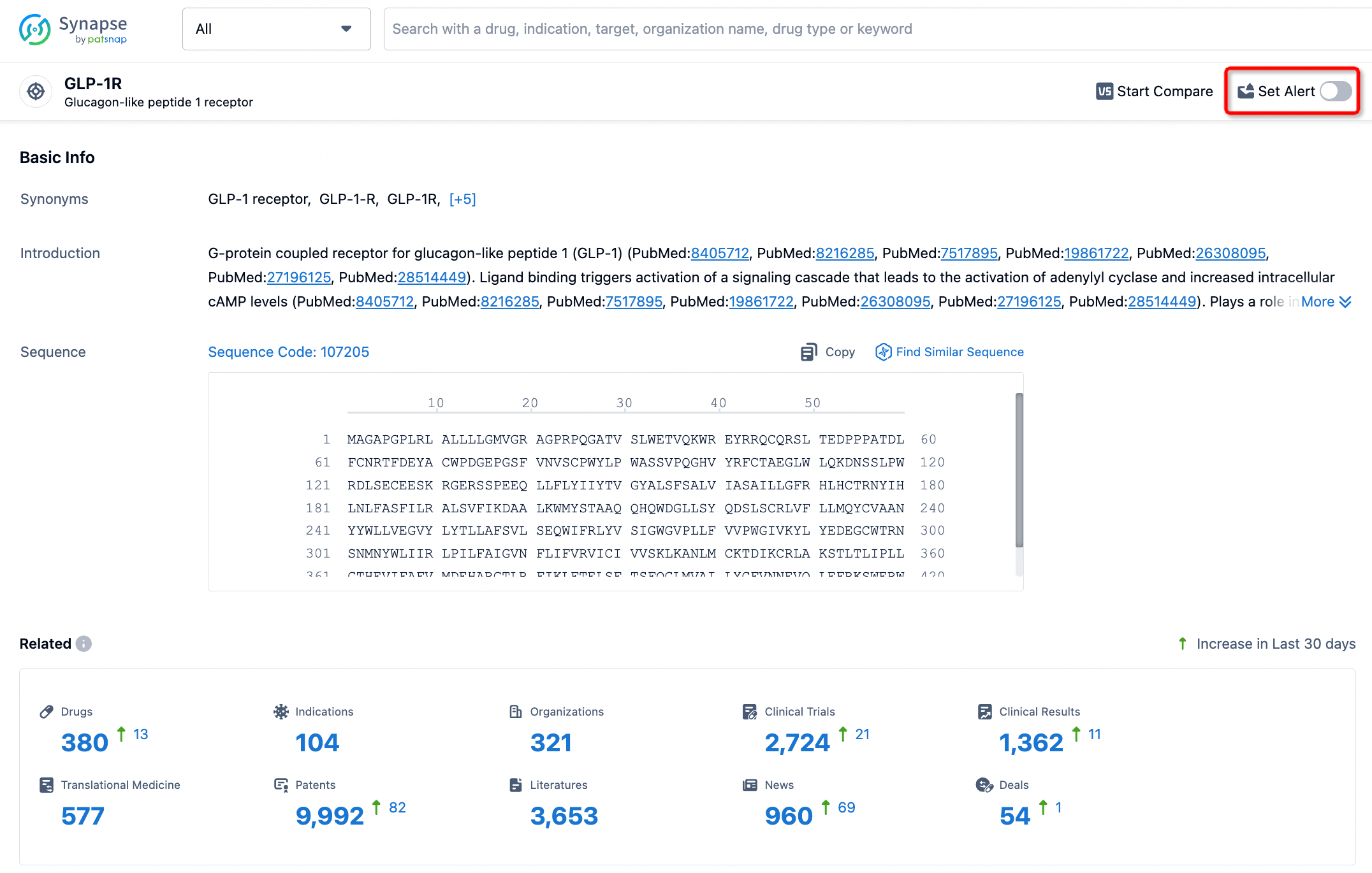
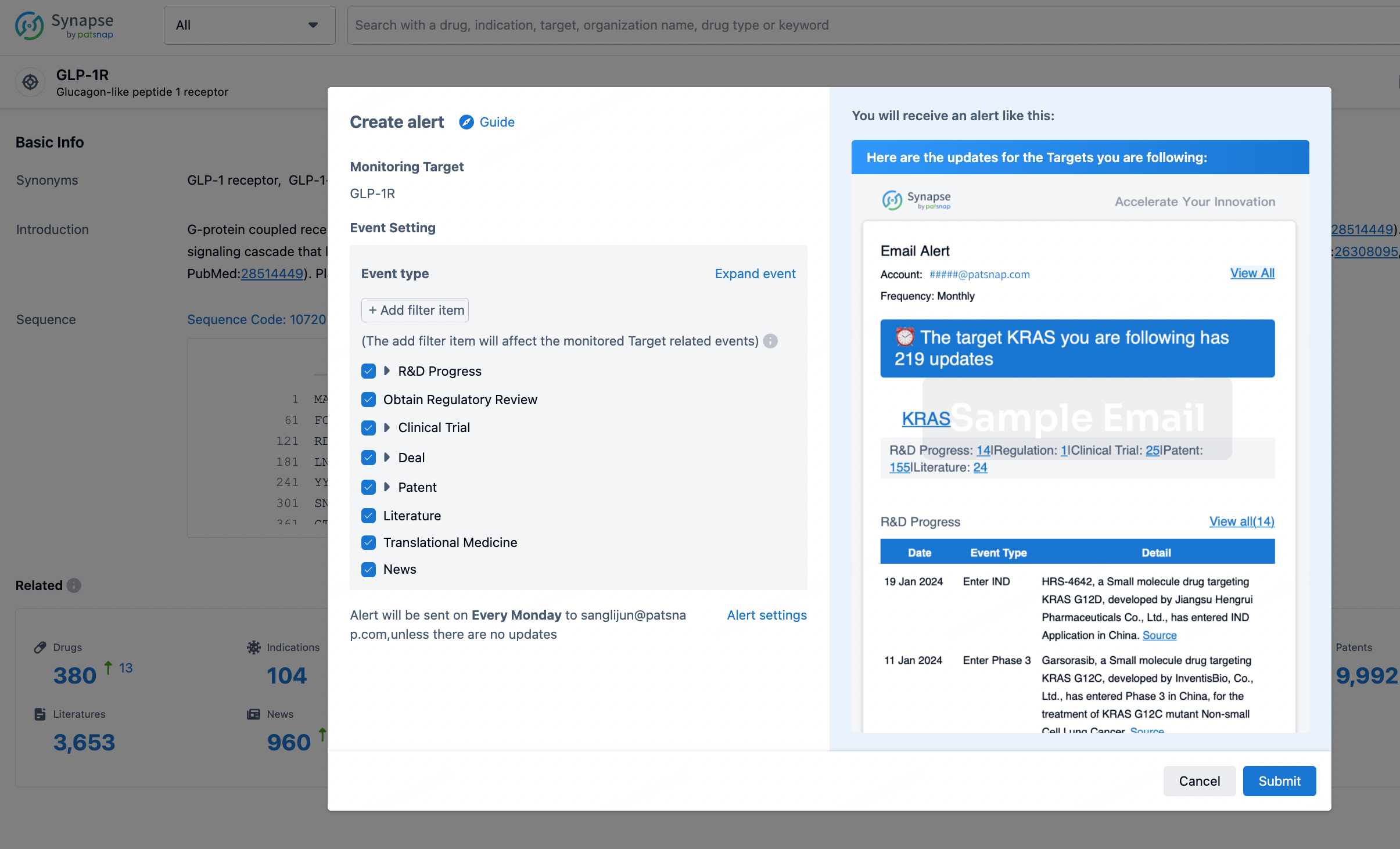
In the Synapse database, you can stay updated on the latest research and development advances of all targets. This service is accessible anytime and anywhere, with updates available daily or weekly. Use the "Set Alert" function to stay informed. Click on the image below to embark on a brand new journey of drug discovery!

AI Agents Built for Biopharma Breakthroughs
Accelerate discovery. Empower decisions. Transform outcomes.
Get started for free today!
Accelerate Strategic R&D decision making with Synapse, PatSnap’s AI-powered Connected Innovation Intelligence Platform Built for Life Sciences Professionals.
Start your data trial now!
Synapse data is also accessible to external entities via APIs or data packages. Empower better decisions with the latest in pharmaceutical intelligence.