Request Demo
What are Beta-1,3-glucuronyltransferase inhibitors and how do they work?
26 June 2024
Beta-1,3-glucuronyltransferase inhibitors represent a promising area of research in the field of biochemistry and medicine. These inhibitors target the enzyme Beta-1,3-glucuronyltransferase, which plays a crucial role in various biological processes. In this post, we will delve into what these inhibitors are, how they work, and their potential applications in medical science.
Beta-1,3-glucuronyltransferase (GlcAT-I) is an enzyme that catalyzes the transfer of glucuronic acid to various acceptor molecules. This enzymatic function is essential in the biosynthesis of glycosaminoglycans (GAGs), which are long, unbranched polysaccharides that play significant roles in cellular signaling, structural integrity, and the maintenance of the extracellular matrix. Given the enzyme's involvement in critical biological pathways, it is not surprising that its dysregulation is associated with several pathological conditions, including cancer, inflammation, and fibrosis.
The development of inhibitors targeting Beta-1,3-glucuronyltransferase aims to modulate the enzyme's activity, thereby impacting the downstream effects associated with its function. Understanding the mechanism of these inhibitors involves examining the enzyme's active site and the chemical interactions that facilitate the transfer of glucuronic acid. Typically, these inhibitors are designed to mimic the enzyme's natural substrates or transition states, thereby competitively binding to the enzyme and preventing it from catalyzing its usual reactions.
One of the primary mechanisms by which Beta-1,3-glucuronyltransferase inhibitors function is by occupying the active site of the enzyme, thus blocking access to natural substrates. This competitive inhibition decreases the enzyme's activity, leading to a reduction in the production of glycosaminoglycans. Another approach involves allosteric inhibitors, which bind to a different site on the enzyme, inducing conformational changes that reduce its activity. Both methods aim to decrease the enzyme's functionality, thereby altering the biological pathways dependent on its activity.
Beta-1,3-glucuronyltransferase inhibitors have the potential to be used in various therapeutic contexts. One of the most promising applications is in cancer treatment. Tumor cells often exhibit elevated levels of glycosaminoglycans, which contribute to tumor progression and metastasis. By inhibiting Beta-1,3-glucuronyltransferase, it may be possible to reduce the synthesis of these molecules, thereby slowing down or halting the spread of cancer cells. Preclinical studies have shown that these inhibitors can reduce tumor growth in animal models, paving the way for future clinical trials.
Another area where Beta-1,3-glucuronyltransferase inhibitors show promise is in the treatment of inflammatory diseases. Glycosaminoglycans play a vital role in the inflammatory response by modulating the activity of various cytokines and chemokines. By inhibiting the enzyme responsible for their synthesis, it may be possible to reduce inflammation and alleviate symptoms in conditions such as arthritis, asthma, and inflammatory bowel disease.
Fibrosis, characterized by the excessive deposition of extracellular matrix components, is another condition that could benefit from Beta-1,3-glucuronyltransferase inhibitors. Inhibiting this enzyme may help to prevent the excessive production of glycosaminoglycans, thereby mitigating the fibrotic process. This approach could be particularly beneficial in treating pulmonary fibrosis, liver cirrhosis, and other fibrotic disorders.
While the potential applications of Beta-1,3-glucuronyltransferase inhibitors are exciting, it is important to note that much of the research is still in its early stages. Further studies are needed to fully understand the enzyme's role in various diseases and to develop inhibitors that are both effective and safe for clinical use. As research progresses, it is likely that these inhibitors will become an important tool in the treatment of a range of medical conditions.
In conclusion, Beta-1,3-glucuronyltransferase inhibitors represent a burgeoning area of research with the potential to impact several pathological conditions. By targeting a key enzyme involved in the biosynthesis of glycosaminoglycans, these inhibitors hold promise for the treatment of cancer, inflammatory diseases, and fibrosis. Continued research and development in this area may lead to novel therapeutic options that can significantly improve patient outcomes.
Beta-1,3-glucuronyltransferase (GlcAT-I) is an enzyme that catalyzes the transfer of glucuronic acid to various acceptor molecules. This enzymatic function is essential in the biosynthesis of glycosaminoglycans (GAGs), which are long, unbranched polysaccharides that play significant roles in cellular signaling, structural integrity, and the maintenance of the extracellular matrix. Given the enzyme's involvement in critical biological pathways, it is not surprising that its dysregulation is associated with several pathological conditions, including cancer, inflammation, and fibrosis.
The development of inhibitors targeting Beta-1,3-glucuronyltransferase aims to modulate the enzyme's activity, thereby impacting the downstream effects associated with its function. Understanding the mechanism of these inhibitors involves examining the enzyme's active site and the chemical interactions that facilitate the transfer of glucuronic acid. Typically, these inhibitors are designed to mimic the enzyme's natural substrates or transition states, thereby competitively binding to the enzyme and preventing it from catalyzing its usual reactions.
One of the primary mechanisms by which Beta-1,3-glucuronyltransferase inhibitors function is by occupying the active site of the enzyme, thus blocking access to natural substrates. This competitive inhibition decreases the enzyme's activity, leading to a reduction in the production of glycosaminoglycans. Another approach involves allosteric inhibitors, which bind to a different site on the enzyme, inducing conformational changes that reduce its activity. Both methods aim to decrease the enzyme's functionality, thereby altering the biological pathways dependent on its activity.
Beta-1,3-glucuronyltransferase inhibitors have the potential to be used in various therapeutic contexts. One of the most promising applications is in cancer treatment. Tumor cells often exhibit elevated levels of glycosaminoglycans, which contribute to tumor progression and metastasis. By inhibiting Beta-1,3-glucuronyltransferase, it may be possible to reduce the synthesis of these molecules, thereby slowing down or halting the spread of cancer cells. Preclinical studies have shown that these inhibitors can reduce tumor growth in animal models, paving the way for future clinical trials.
Another area where Beta-1,3-glucuronyltransferase inhibitors show promise is in the treatment of inflammatory diseases. Glycosaminoglycans play a vital role in the inflammatory response by modulating the activity of various cytokines and chemokines. By inhibiting the enzyme responsible for their synthesis, it may be possible to reduce inflammation and alleviate symptoms in conditions such as arthritis, asthma, and inflammatory bowel disease.
Fibrosis, characterized by the excessive deposition of extracellular matrix components, is another condition that could benefit from Beta-1,3-glucuronyltransferase inhibitors. Inhibiting this enzyme may help to prevent the excessive production of glycosaminoglycans, thereby mitigating the fibrotic process. This approach could be particularly beneficial in treating pulmonary fibrosis, liver cirrhosis, and other fibrotic disorders.
While the potential applications of Beta-1,3-glucuronyltransferase inhibitors are exciting, it is important to note that much of the research is still in its early stages. Further studies are needed to fully understand the enzyme's role in various diseases and to develop inhibitors that are both effective and safe for clinical use. As research progresses, it is likely that these inhibitors will become an important tool in the treatment of a range of medical conditions.
In conclusion, Beta-1,3-glucuronyltransferase inhibitors represent a burgeoning area of research with the potential to impact several pathological conditions. By targeting a key enzyme involved in the biosynthesis of glycosaminoglycans, these inhibitors hold promise for the treatment of cancer, inflammatory diseases, and fibrosis. Continued research and development in this area may lead to novel therapeutic options that can significantly improve patient outcomes.
How to obtain the latest development progress of all targets?
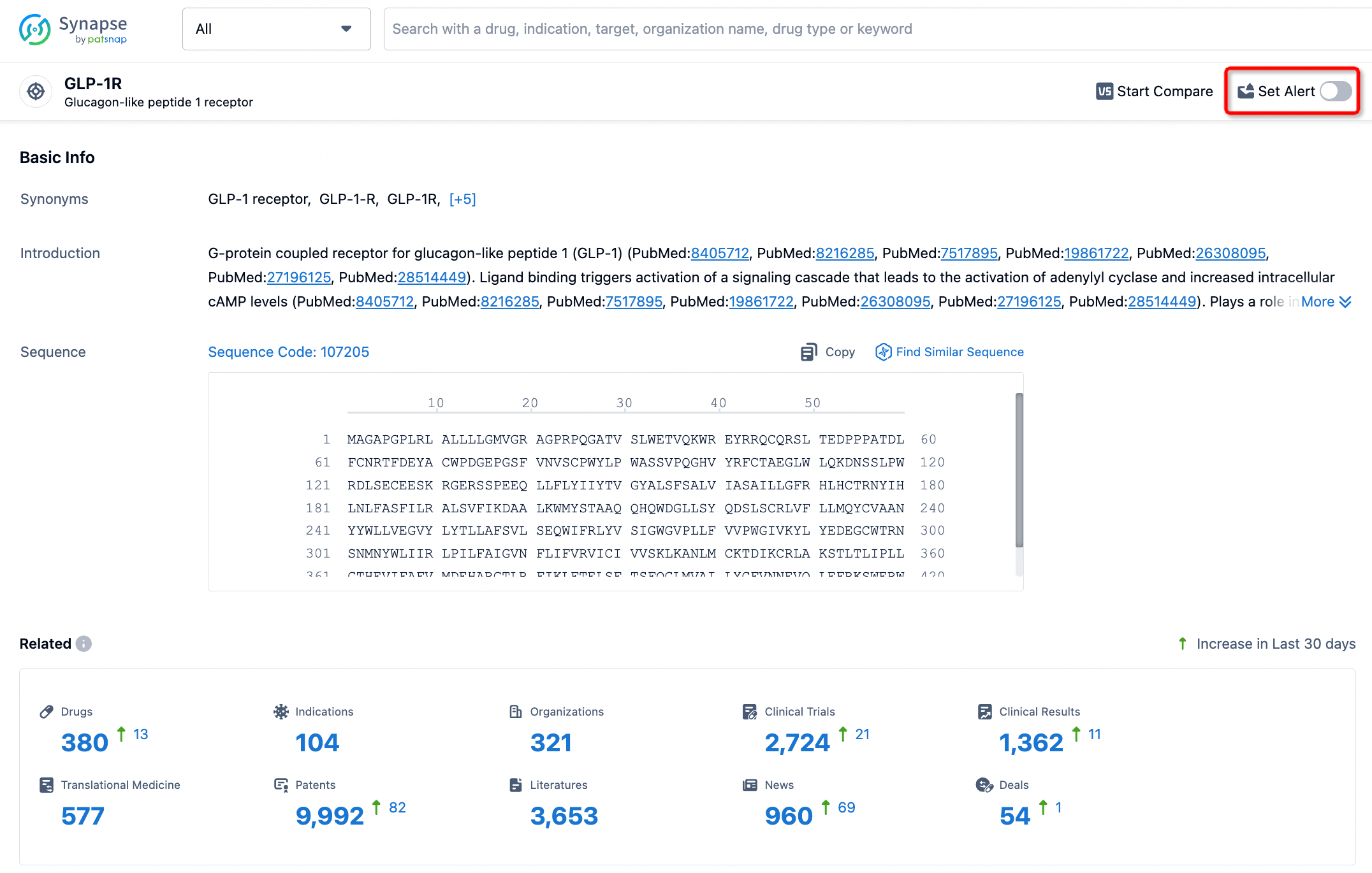
In the Synapse database, you can stay updated on the latest research and development advances of all targets. This service is accessible anytime and anywhere, with updates available daily or weekly. Use the "Set Alert" function to stay informed. Click on the image below to embark on a brand new journey of drug discovery!

AI Agents Built for Biopharma Breakthroughs
Accelerate discovery. Empower decisions. Transform outcomes.
Get started for free today!
Accelerate Strategic R&D decision making with Synapse, PatSnap’s AI-powered Connected Innovation Intelligence Platform Built for Life Sciences Professionals.
Start your data trial now!
Synapse data is also accessible to external entities via APIs or data packages. Empower better decisions with the latest in pharmaceutical intelligence.