Request Demo
What are CBX7 inhibitors and how do they work?
25 June 2024
The study of chromatin biology and its implications in various diseases has opened up new avenues for therapeutic interventions. Among the various targets within this field, CBX7 inhibitors have garnered significant interest. CBX7, or Chromobox protein homolog 7, is a member of the Polycomb group (PcG) proteins, which play a crucial role in maintaining the transcriptionally repressed state of genes over successive cell generations. In this blog post, we will delve into the world of CBX7 inhibitors, exploring their mechanisms of action and their potential applications in treating various diseases.
CBX7 is an essential part of the Polycomb Repressive Complex 1 (PRC1), a multi-protein complex that modifies chromatin to repress gene expression. CBX7 contains a chromodomain that binds to histone H3 when it is methylated at lysine 27 (H3K27me3), a marker associated with repressed chromatin. By anchoring PRC1 to these methylated histones, CBX7 helps maintain the silenced state of genes involved in processes such as differentiation, proliferation, and senescence.
Inhibition of CBX7 disrupts this repressive function, leading to the reactivation of previously silenced genes. Researchers have discovered that in certain cancers and other diseases, CBX7 is often overexpressed, contributing to an aberrant gene silencing landscape that supports disease progression. By inhibiting CBX7, it is possible to reverse these pathological states, making CBX7 inhibitors a promising therapeutic strategy.
CBX7 inhibitors operate by directly targeting the chromodomain of CBX7, preventing it from binding to the H3K27me3 mark on histones. This disruption of CBX7’s binding capability results in the detachment of PRC1 from chromatin, thereby alleviating the repressive pressure on genes that are otherwise kept in a silenced state. The increased gene expression that follows can lead to the reactivation of tumor suppressor genes in cancer cells, among other therapeutic effects.
The development of CBX7 inhibitors involves high-throughput screening of small molecule libraries to identify compounds that can selectively bind to the chromodomain of CBX7 with high affinity. Further optimization and validation through medicinal chemistry and in vitro assays refine these compounds to enhance their efficacy and specificity. Advanced techniques such as X-ray crystallography and NMR spectroscopy are often employed to understand the binding interactions at the molecular level, guiding the design of more potent inhibitors.
CBX7 inhibitors hold immense potential in the treatment of various cancers. Overexpression of CBX7 has been implicated in multiple types of cancer, including prostate, breast, and lung cancer. By inhibiting CBX7, these drugs can reactivate tumor suppressor genes that are otherwise silenced, leading to the suppression of cancer cell proliferation and induction of apoptosis. Preclinical studies have shown promising results, where CBX7 inhibitors have successfully reduced tumor growth in animal models.
Beyond oncology, CBX7 inhibitors are also being explored in the context of regenerative medicine and developmental disorders. Since CBX7 plays a role in stem cell differentiation, its inhibition can promote the reprogramming of differentiated cells back into a pluripotent state. This property is particularly valuable in regenerative therapies where the generation of stem cells from adult cells can pave the way for tissue repair and regeneration.
Another potential application lies in neurodegenerative diseases, where aberrant gene silencing contributes to disease progression. By modulating the epigenetic landscape, CBX7 inhibitors could offer a novel approach to restoring normal gene function and slowing the progression of diseases such as Alzheimer's and Parkinson's.
In conclusion, CBX7 inhibitors represent a fascinating and promising class of compounds with the potential to revolutionize the treatment of various diseases. By targeting a critical component of the epigenetic machinery, these inhibitors can reactivate silenced genes and restore normal cellular functions. While much work remains to be done to translate these findings into clinical therapies, the future looks bright for CBX7 inhibitors as a powerful tool in the fight against cancer, developmental disorders, and beyond.
CBX7 is an essential part of the Polycomb Repressive Complex 1 (PRC1), a multi-protein complex that modifies chromatin to repress gene expression. CBX7 contains a chromodomain that binds to histone H3 when it is methylated at lysine 27 (H3K27me3), a marker associated with repressed chromatin. By anchoring PRC1 to these methylated histones, CBX7 helps maintain the silenced state of genes involved in processes such as differentiation, proliferation, and senescence.
Inhibition of CBX7 disrupts this repressive function, leading to the reactivation of previously silenced genes. Researchers have discovered that in certain cancers and other diseases, CBX7 is often overexpressed, contributing to an aberrant gene silencing landscape that supports disease progression. By inhibiting CBX7, it is possible to reverse these pathological states, making CBX7 inhibitors a promising therapeutic strategy.
CBX7 inhibitors operate by directly targeting the chromodomain of CBX7, preventing it from binding to the H3K27me3 mark on histones. This disruption of CBX7’s binding capability results in the detachment of PRC1 from chromatin, thereby alleviating the repressive pressure on genes that are otherwise kept in a silenced state. The increased gene expression that follows can lead to the reactivation of tumor suppressor genes in cancer cells, among other therapeutic effects.
The development of CBX7 inhibitors involves high-throughput screening of small molecule libraries to identify compounds that can selectively bind to the chromodomain of CBX7 with high affinity. Further optimization and validation through medicinal chemistry and in vitro assays refine these compounds to enhance their efficacy and specificity. Advanced techniques such as X-ray crystallography and NMR spectroscopy are often employed to understand the binding interactions at the molecular level, guiding the design of more potent inhibitors.
CBX7 inhibitors hold immense potential in the treatment of various cancers. Overexpression of CBX7 has been implicated in multiple types of cancer, including prostate, breast, and lung cancer. By inhibiting CBX7, these drugs can reactivate tumor suppressor genes that are otherwise silenced, leading to the suppression of cancer cell proliferation and induction of apoptosis. Preclinical studies have shown promising results, where CBX7 inhibitors have successfully reduced tumor growth in animal models.
Beyond oncology, CBX7 inhibitors are also being explored in the context of regenerative medicine and developmental disorders. Since CBX7 plays a role in stem cell differentiation, its inhibition can promote the reprogramming of differentiated cells back into a pluripotent state. This property is particularly valuable in regenerative therapies where the generation of stem cells from adult cells can pave the way for tissue repair and regeneration.
Another potential application lies in neurodegenerative diseases, where aberrant gene silencing contributes to disease progression. By modulating the epigenetic landscape, CBX7 inhibitors could offer a novel approach to restoring normal gene function and slowing the progression of diseases such as Alzheimer's and Parkinson's.
In conclusion, CBX7 inhibitors represent a fascinating and promising class of compounds with the potential to revolutionize the treatment of various diseases. By targeting a critical component of the epigenetic machinery, these inhibitors can reactivate silenced genes and restore normal cellular functions. While much work remains to be done to translate these findings into clinical therapies, the future looks bright for CBX7 inhibitors as a powerful tool in the fight against cancer, developmental disorders, and beyond.
How to obtain the latest development progress of all targets?
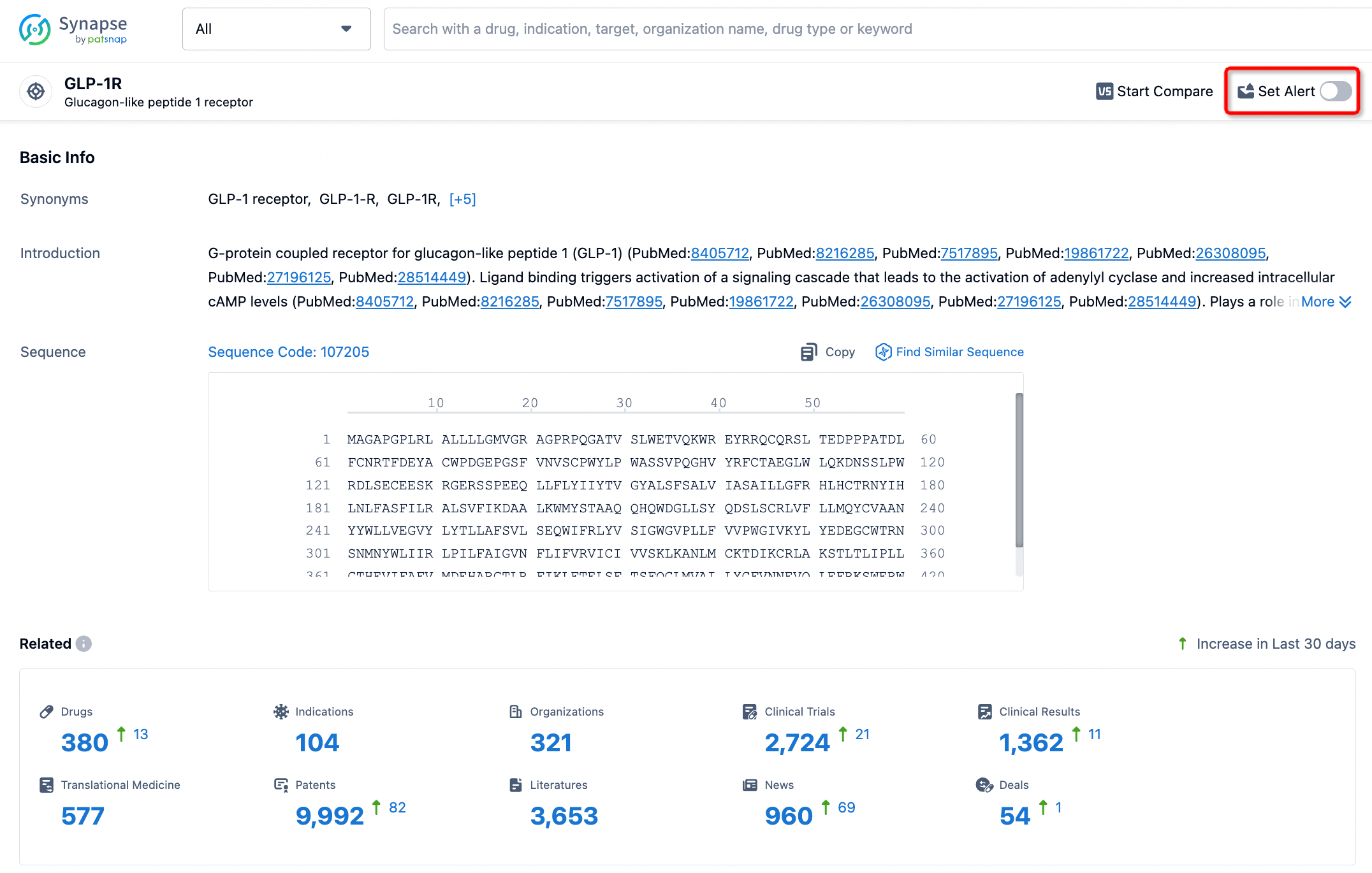
In the Synapse database, you can stay updated on the latest research and development advances of all targets. This service is accessible anytime and anywhere, with updates available daily or weekly. Use the "Set Alert" function to stay informed. Click on the image below to embark on a brand new journey of drug discovery!


AI Agents Built for Biopharma Breakthroughs
Accelerate discovery. Empower decisions. Transform outcomes.
Get started for free today!
Accelerate Strategic R&D decision making with Synapse, PatSnap’s AI-powered Connected Innovation Intelligence Platform Built for Life Sciences Professionals.
Start your data trial now!
Synapse data is also accessible to external entities via APIs or data packages. Empower better decisions with the latest in pharmaceutical intelligence.