Request Demo
What are CD11a modulators and how do they work?
21 June 2024
CD11a modulators represent a fascinating and rapidly evolving area of research in immunology and therapeutics. These agents target the CD11a protein, a component of the leukocyte function-associated antigen-1 (LFA-1), which plays a crucial role in the immune system. By modulating the function of CD11a, these compounds can potentially influence immune responses, making them valuable in treating various diseases. Let's delve deeper into what CD11a modulators are, how they work, and their potential therapeutic applications.
CD11a, also known as integrin alpha L, pairs with CD18 to form LFA-1, an integrin found on the surface of leukocytes. LFA-1 is essential for the adhesion of leukocytes to other cells, a critical step in the immune response. It mediates the interaction between T cells and antigen-presenting cells (APCs) and is involved in the migration of leukocytes to sites of inflammation. Because of these functions, LFA-1 is a key player in immune surveillance and the inflammatory response.
CD11a modulators are agents designed to alter the activity of CD11a/LFA-1. These can either be inhibitors or activators, though inhibitors are more commonly studied. By interfering with the normal function of CD11a, these modulators can prevent inappropriate or excessive immune responses. They do so by blocking the interaction between LFA-1 and its ligands, such as intercellular adhesion molecule-1 (ICAM-1), which is critical for the stable adhesion and subsequent transmigration of leukocytes through the endothelium.
The mechanism of action of CD11a modulators involves binding to the CD11a component of LFA-1, thereby preventing it from interacting with ICAM-1. This blockade inhibits the firm adhesion and extravasation of leukocytes, particularly T cells. Consequently, the inflammatory cascade is dampened as fewer immune cells reach the site of inflammation. Some CD11a modulators also affect the structural conformation of LFA-1, further reducing its binding affinity and functional capabilities.
The therapeutic potential of CD11a modulators is broad, spanning autoimmune diseases, transplant rejection, and certain inflammatory conditions. One of the most well-known CD11a modulators is efalizumab, a monoclonal antibody that was used to treat moderate to severe plaque psoriasis. Efalizumab works by blocking the interaction between LFA-1 and ICAM-1, thereby reducing T cell activation and migration into the skin. Although efalizumab was withdrawn from the market due to safety concerns, its efficacy in treating psoriasis highlighted the potential of CD11a modulation.
In addition to psoriasis, CD11a modulators are being explored for other autoimmune diseases such as rheumatoid arthritis, multiple sclerosis, and inflammatory bowel disease. In these conditions, the inappropriate activation and migration of T cells contribute to the pathology. By inhibiting LFA-1, CD11a modulators can reduce the inflammatory response and ameliorate disease symptoms.
Transplant rejection is another area where CD11a modulators show promise. In organ transplantation, the recipient's immune system often recognizes the transplanted organ as foreign and mounts an attack against it. CD11a modulators can help prevent this response by inhibiting the migration and activation of T cells, thus promoting graft survival and reducing the need for long-term immunosuppressive therapy.
In conclusion, CD11a modulators represent a novel class of therapeutic agents with the potential to modulate immune responses in a targeted manner. By interfering with the function of LFA-1, these modulators can prevent excessive or inappropriate immune activation, offering new treatment options for a variety of inflammatory and autoimmune diseases, as well as transplant rejection. While challenges remain, particularly in terms of safety and specificity, ongoing research continues to unveil the therapeutic potential of these agents, paving the way for innovative and effective treatments in the realm of immunotherapy.
CD11a, also known as integrin alpha L, pairs with CD18 to form LFA-1, an integrin found on the surface of leukocytes. LFA-1 is essential for the adhesion of leukocytes to other cells, a critical step in the immune response. It mediates the interaction between T cells and antigen-presenting cells (APCs) and is involved in the migration of leukocytes to sites of inflammation. Because of these functions, LFA-1 is a key player in immune surveillance and the inflammatory response.
CD11a modulators are agents designed to alter the activity of CD11a/LFA-1. These can either be inhibitors or activators, though inhibitors are more commonly studied. By interfering with the normal function of CD11a, these modulators can prevent inappropriate or excessive immune responses. They do so by blocking the interaction between LFA-1 and its ligands, such as intercellular adhesion molecule-1 (ICAM-1), which is critical for the stable adhesion and subsequent transmigration of leukocytes through the endothelium.
The mechanism of action of CD11a modulators involves binding to the CD11a component of LFA-1, thereby preventing it from interacting with ICAM-1. This blockade inhibits the firm adhesion and extravasation of leukocytes, particularly T cells. Consequently, the inflammatory cascade is dampened as fewer immune cells reach the site of inflammation. Some CD11a modulators also affect the structural conformation of LFA-1, further reducing its binding affinity and functional capabilities.
The therapeutic potential of CD11a modulators is broad, spanning autoimmune diseases, transplant rejection, and certain inflammatory conditions. One of the most well-known CD11a modulators is efalizumab, a monoclonal antibody that was used to treat moderate to severe plaque psoriasis. Efalizumab works by blocking the interaction between LFA-1 and ICAM-1, thereby reducing T cell activation and migration into the skin. Although efalizumab was withdrawn from the market due to safety concerns, its efficacy in treating psoriasis highlighted the potential of CD11a modulation.
In addition to psoriasis, CD11a modulators are being explored for other autoimmune diseases such as rheumatoid arthritis, multiple sclerosis, and inflammatory bowel disease. In these conditions, the inappropriate activation and migration of T cells contribute to the pathology. By inhibiting LFA-1, CD11a modulators can reduce the inflammatory response and ameliorate disease symptoms.
Transplant rejection is another area where CD11a modulators show promise. In organ transplantation, the recipient's immune system often recognizes the transplanted organ as foreign and mounts an attack against it. CD11a modulators can help prevent this response by inhibiting the migration and activation of T cells, thus promoting graft survival and reducing the need for long-term immunosuppressive therapy.
In conclusion, CD11a modulators represent a novel class of therapeutic agents with the potential to modulate immune responses in a targeted manner. By interfering with the function of LFA-1, these modulators can prevent excessive or inappropriate immune activation, offering new treatment options for a variety of inflammatory and autoimmune diseases, as well as transplant rejection. While challenges remain, particularly in terms of safety and specificity, ongoing research continues to unveil the therapeutic potential of these agents, paving the way for innovative and effective treatments in the realm of immunotherapy.
How to obtain the latest development progress of all targets?
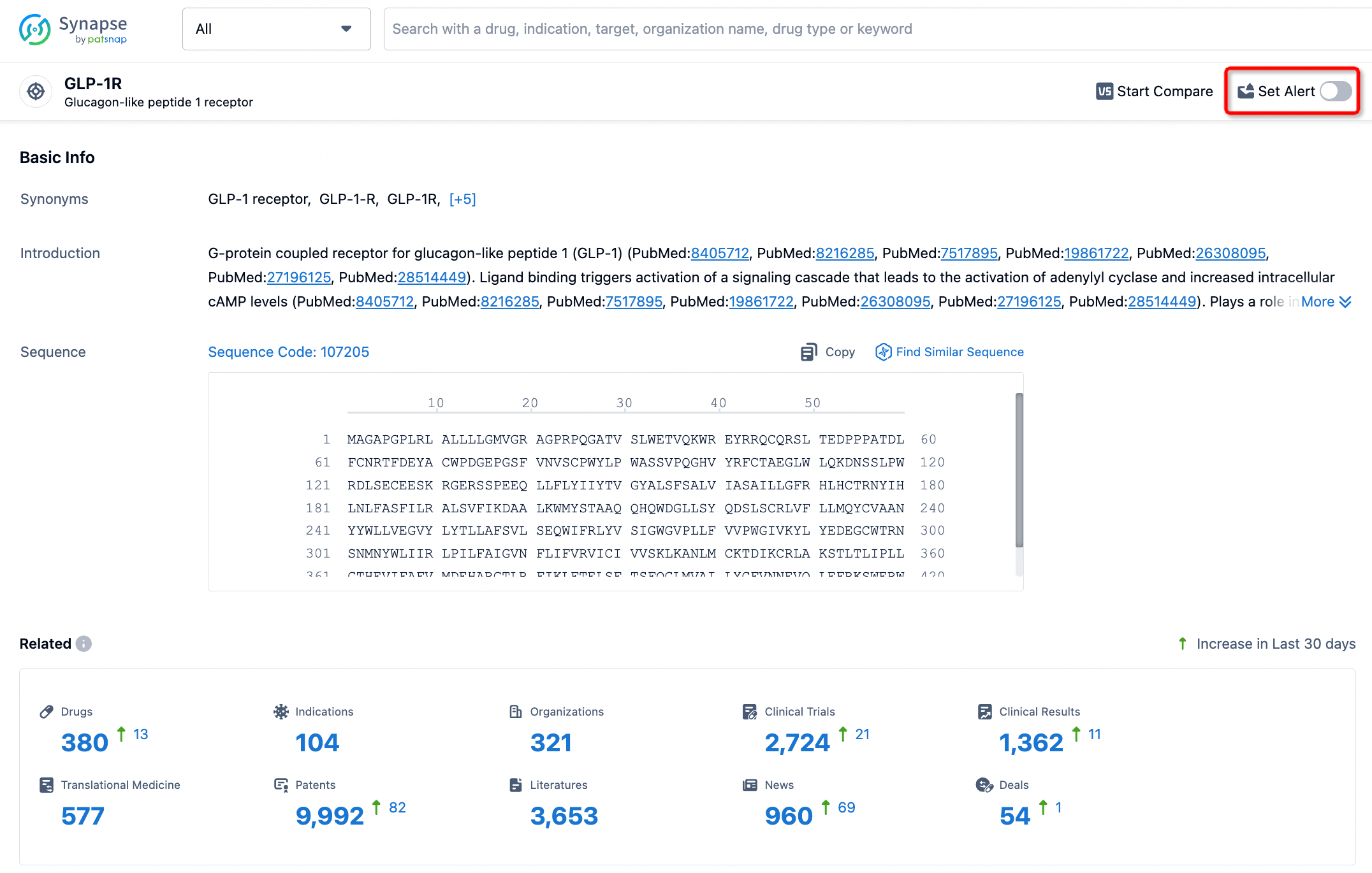
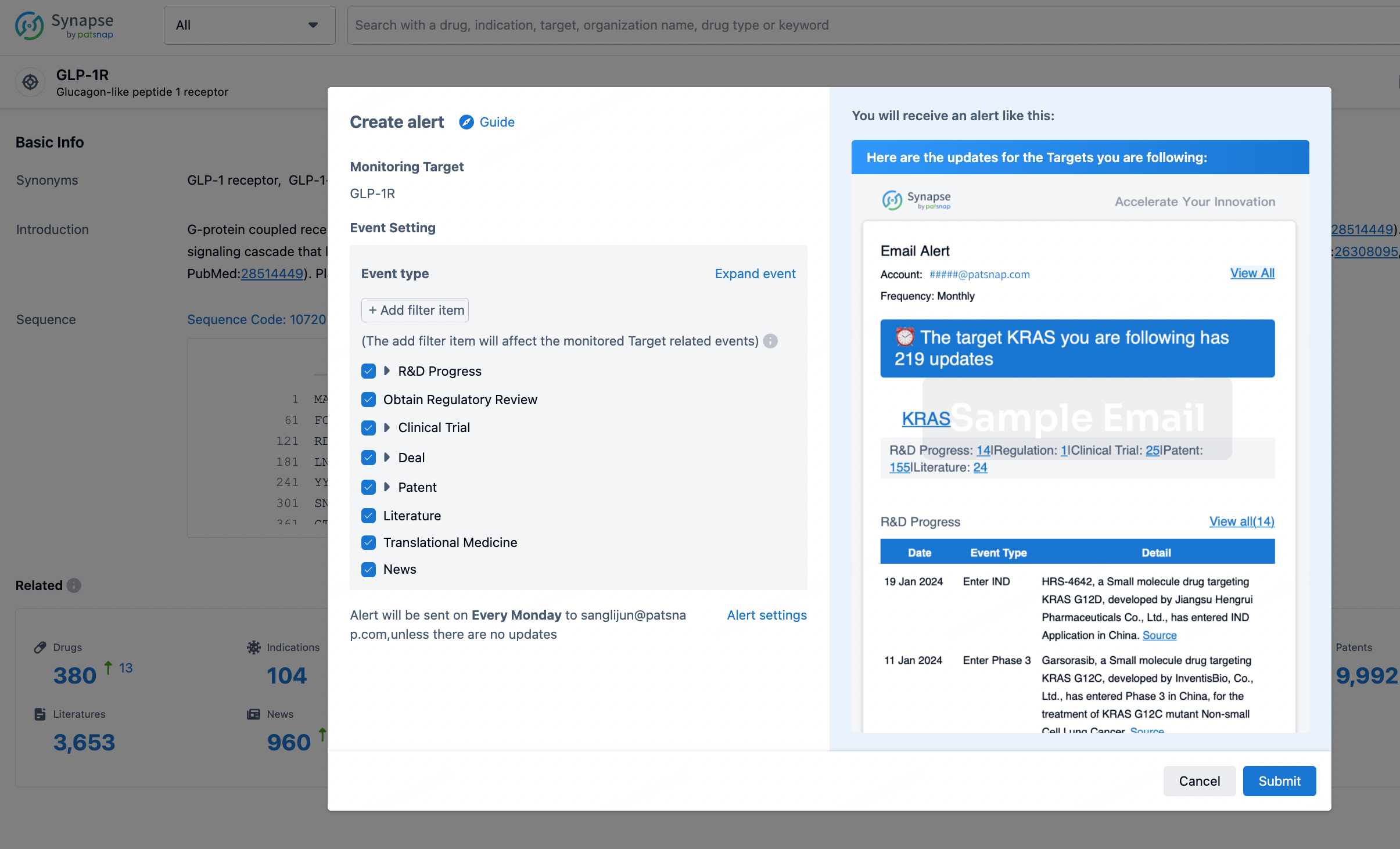
In the Synapse database, you can stay updated on the latest research and development advances of all targets. This service is accessible anytime and anywhere, with updates available daily or weekly. Use the "Set Alert" function to stay informed. Click on the image below to embark on a brand new journey of drug discovery!
AI Agents Built for Biopharma Breakthroughs
Accelerate discovery. Empower decisions. Transform outcomes.
Get started for free today!
Accelerate Strategic R&D decision making with Synapse, PatSnap’s AI-powered Connected Innovation Intelligence Platform Built for Life Sciences Professionals.
Start your data trial now!
Synapse data is also accessible to external entities via APIs or data packages. Empower better decisions with the latest in pharmaceutical intelligence.