Request Demo
What are CHRNA4 modulators and how do they work?
26 June 2024
In the realm of neuroscience and pharmacology, the quest to understand and manipulate the brain's intricate signaling pathways has led to remarkable discoveries. Among these, CHRNA4 modulators have emerged as a pivotal focus of research, promising new avenues for treating a variety of neurological and psychiatric disorders. This blog post aims to elucidate the role and potential applications of CHRNA4 modulators, shedding light on their mechanisms of action and therapeutic uses.
CHRNA4, known as the cholinergic receptor nicotinic alpha 4 subunit, is a critical component of the nicotinic acetylcholine receptors (nAChRs) in the brain. These receptors are ion channels that, when activated by the neurotransmitter acetylcholine or other agonists like nicotine, allow the flow of positively charged ions across the cell membrane. This ion flow triggers a cascade of intracellular events that ultimately influence neuronal excitability and neurotransmitter release.
CHRNA4 is particularly significant because it pairs with the beta 2 subunit (CHRNB2) to form the most prevalent type of nAChR in the central nervous system. This specific receptor subtype is involved in various cognitive processes, including attention, learning, and memory, as well as in the modulation of mood and perception of pain. Malfunctions or alterations in CHRNA4 function have been implicated in a range of conditions, from Alzheimer's disease to schizophrenia, making it a compelling target for therapeutic intervention.
CHRNA4 modulators work by either enhancing or inhibiting the function of the CHRNA4-containing nAChRs. These modulators can be broadly classified into agonists, antagonists, and allosteric modulators.
Agonists bind to the same site as acetylcholine, mimicking its effects and activating the receptor. By doing so, they can enhance cholinergic signaling, potentially compensating for deficits observed in various neurological conditions. For instance, nicotine is a well-known agonist that can transiently improve cognitive performance by stimulating nAChRs.
Antagonists, on the other hand, bind to the receptor but do not activate it. Instead, they block the binding of acetylcholine or other agonists, thereby inhibiting cholinergic signaling. This can be useful in cases where excessive cholinergic activity contributes to disease pathology.
Allosteric modulators represent a more nuanced approach. These compounds bind to a different site on the receptor, distinct from the acetylcholine binding site, and modulate the receptor's activity indirectly. Positive allosteric modulators (PAMs) enhance the receptor's response to acetylcholine, while negative allosteric modulators (NAMs) diminish it. This method allows for a more fine-tuned regulation of receptor activity, potentially offering a better side effect profile compared to direct agonists or antagonists.
Given their role in cognitive and mood regulation, CHRNA4 modulators have been explored for various therapeutic applications. One of the most prominent areas of research is in the treatment of cognitive deficits associated with neurodegenerative diseases such as Alzheimer's. By enhancing cholinergic signaling, CHRNA4 agonists or PAMs may help ameliorate the cognitive decline seen in these conditions.
Schizophrenia is another area where CHRNA4 modulators show promise. Studies have indicated that patients with schizophrenia often exhibit altered nAChR function. Modulating CHRNA4 activity could potentially address some of the cognitive and sensory processing deficits characteristic of this disorder.
Attention-Deficit/Hyperactivity Disorder (ADHD) is yet another condition where CHRNA4 modulators could be beneficial. Given the role of nAChRs in attention and executive function, targeting these receptors might offer a novel approach to managing ADHD symptoms.
Furthermore, CHRNA4 modulators are being investigated for their potential in treating addiction. Nicotine addiction, in particular, is closely linked to nAChR activity. By modulating CHRNA4 receptors, it may be possible to influence the brain's reward pathways and reduce dependence on nicotine.
Pain management is another intriguing application. Since nAChRs are involved in the perception of pain, CHRNA4 modulators could offer a new strategy for treating chronic pain conditions.
In conclusion, CHRNA4 modulators represent a fascinating and promising area of research with broad therapeutic potential. By understanding and manipulating the function of CHRNA4-containing nAChRs, scientists hope to develop new treatments for a variety of challenging neurological and psychiatric disorders. As research progresses, the full therapeutic potential of these modulators will become increasingly apparent, offering hope for improved outcomes in conditions that currently have limited treatment options.
CHRNA4, known as the cholinergic receptor nicotinic alpha 4 subunit, is a critical component of the nicotinic acetylcholine receptors (nAChRs) in the brain. These receptors are ion channels that, when activated by the neurotransmitter acetylcholine or other agonists like nicotine, allow the flow of positively charged ions across the cell membrane. This ion flow triggers a cascade of intracellular events that ultimately influence neuronal excitability and neurotransmitter release.
CHRNA4 is particularly significant because it pairs with the beta 2 subunit (CHRNB2) to form the most prevalent type of nAChR in the central nervous system. This specific receptor subtype is involved in various cognitive processes, including attention, learning, and memory, as well as in the modulation of mood and perception of pain. Malfunctions or alterations in CHRNA4 function have been implicated in a range of conditions, from Alzheimer's disease to schizophrenia, making it a compelling target for therapeutic intervention.
CHRNA4 modulators work by either enhancing or inhibiting the function of the CHRNA4-containing nAChRs. These modulators can be broadly classified into agonists, antagonists, and allosteric modulators.
Agonists bind to the same site as acetylcholine, mimicking its effects and activating the receptor. By doing so, they can enhance cholinergic signaling, potentially compensating for deficits observed in various neurological conditions. For instance, nicotine is a well-known agonist that can transiently improve cognitive performance by stimulating nAChRs.
Antagonists, on the other hand, bind to the receptor but do not activate it. Instead, they block the binding of acetylcholine or other agonists, thereby inhibiting cholinergic signaling. This can be useful in cases where excessive cholinergic activity contributes to disease pathology.
Allosteric modulators represent a more nuanced approach. These compounds bind to a different site on the receptor, distinct from the acetylcholine binding site, and modulate the receptor's activity indirectly. Positive allosteric modulators (PAMs) enhance the receptor's response to acetylcholine, while negative allosteric modulators (NAMs) diminish it. This method allows for a more fine-tuned regulation of receptor activity, potentially offering a better side effect profile compared to direct agonists or antagonists.
Given their role in cognitive and mood regulation, CHRNA4 modulators have been explored for various therapeutic applications. One of the most prominent areas of research is in the treatment of cognitive deficits associated with neurodegenerative diseases such as Alzheimer's. By enhancing cholinergic signaling, CHRNA4 agonists or PAMs may help ameliorate the cognitive decline seen in these conditions.
Schizophrenia is another area where CHRNA4 modulators show promise. Studies have indicated that patients with schizophrenia often exhibit altered nAChR function. Modulating CHRNA4 activity could potentially address some of the cognitive and sensory processing deficits characteristic of this disorder.
Attention-Deficit/Hyperactivity Disorder (ADHD) is yet another condition where CHRNA4 modulators could be beneficial. Given the role of nAChRs in attention and executive function, targeting these receptors might offer a novel approach to managing ADHD symptoms.
Furthermore, CHRNA4 modulators are being investigated for their potential in treating addiction. Nicotine addiction, in particular, is closely linked to nAChR activity. By modulating CHRNA4 receptors, it may be possible to influence the brain's reward pathways and reduce dependence on nicotine.
Pain management is another intriguing application. Since nAChRs are involved in the perception of pain, CHRNA4 modulators could offer a new strategy for treating chronic pain conditions.
In conclusion, CHRNA4 modulators represent a fascinating and promising area of research with broad therapeutic potential. By understanding and manipulating the function of CHRNA4-containing nAChRs, scientists hope to develop new treatments for a variety of challenging neurological and psychiatric disorders. As research progresses, the full therapeutic potential of these modulators will become increasingly apparent, offering hope for improved outcomes in conditions that currently have limited treatment options.
How to obtain the latest development progress of all targets?
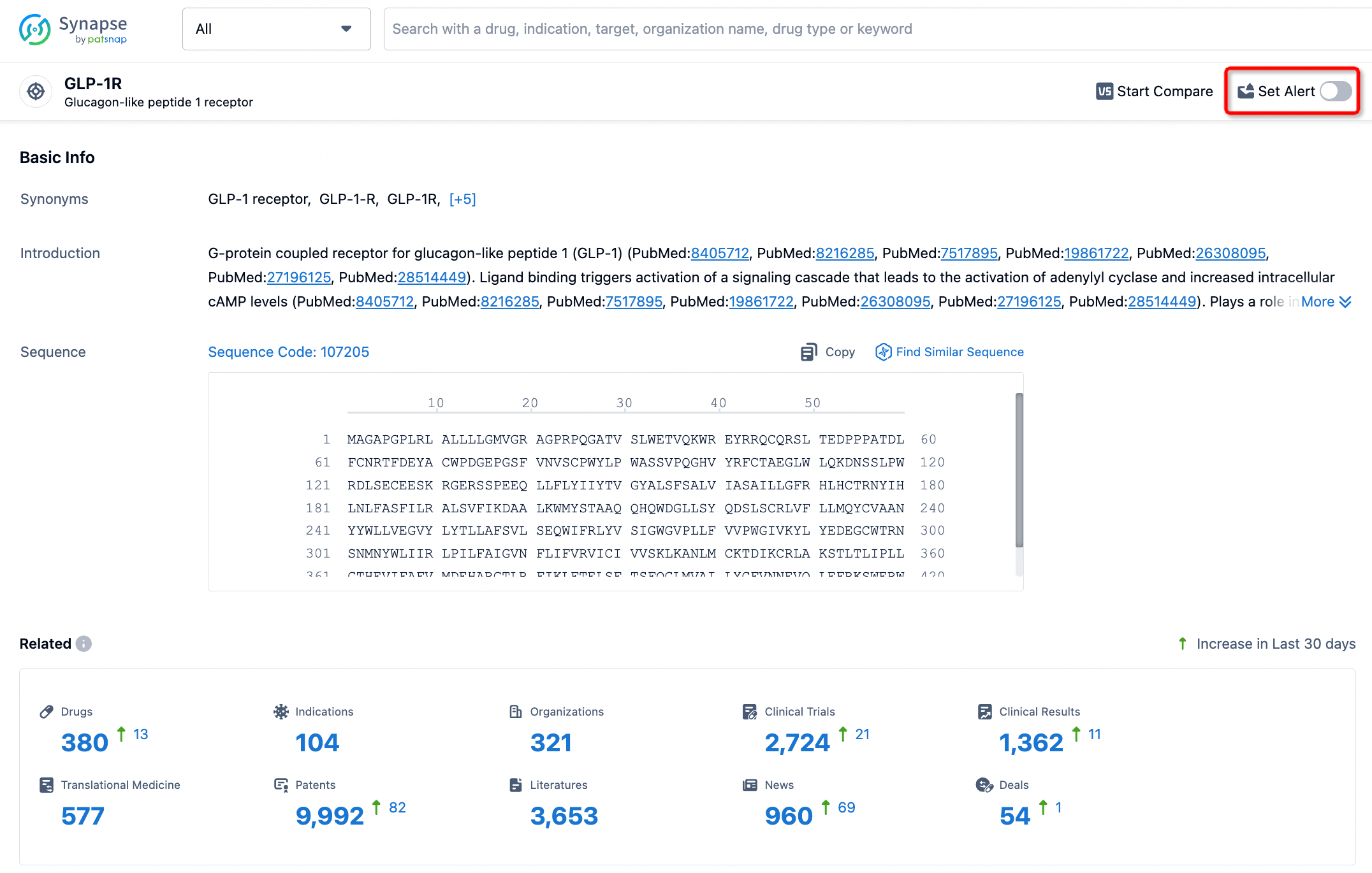
In the Synapse database, you can stay updated on the latest research and development advances of all targets. This service is accessible anytime and anywhere, with updates available daily or weekly. Use the "Set Alert" function to stay informed. Click on the image below to embark on a brand new journey of drug discovery!


AI Agents Built for Biopharma Breakthroughs
Accelerate discovery. Empower decisions. Transform outcomes.
Get started for free today!
Accelerate Strategic R&D decision making with Synapse, PatSnap’s AI-powered Connected Innovation Intelligence Platform Built for Life Sciences Professionals.
Start your data trial now!
Synapse data is also accessible to external entities via APIs or data packages. Empower better decisions with the latest in pharmaceutical intelligence.