Request Demo
What are CHRNB4 inhibitors and how do they work?
25 June 2024
In the realm of medical science, the study of specific protein subunits and their inhibitors plays a crucial role in understanding and potentially treating various conditions. One such protein subunit is CHRNB4, a part of the nicotinic acetylcholine receptors found in the nervous system. This blog post delves into the world of CHRNB4 inhibitors, exploring their function and potential therapeutic applications.
CHRNB4, or the Beta-4 subunit of the nicotinic acetylcholine receptor, is a component of the neuronal nicotinic acetylcholine receptors (nAChRs). These receptors are ion channels that mediate fast synaptic transmission in the central and peripheral nervous systems. The nAChRs are pentameric structures composed of various combinations of alpha and beta subunits, with CHRNB4 being a significant beta subunit involved in the receptor's function.
CHRNB4 inhibitors are compounds designed to specifically target and inhibit the activity of the CHRNB4 subunit within these receptors. By modulating the activity of CHRNB4-containing nAChRs, these inhibitors can influence the flow of ions across the cell membrane, thereby affecting neuronal excitability and neurotransmission.
The mechanism of action of CHRNB4 inhibitors revolves around their ability to bind to the CHRNB4 subunit of the nicotinic acetylcholine receptors and prevent the normal action of acetylcholine, which is a neurotransmitter. When acetylcholine binds to nAChRs, it usually triggers the opening of the ion channel, allowing ions such as sodium and calcium to flow into the neuron. This influx of ions leads to neuronal excitation and the propagation of electrical signals.
However, when a CHRNB4 inhibitor is present, it binds to the receptor in such a way that it prevents acetylcholine from activating the receptor. This blockage results in reduced ion flow through the channel, thereby dampening neuronal excitability. Depending on the specific inhibitor and its binding characteristics, the degree of inhibition can vary, offering a range of potential outcomes in terms of neuronal modulation.
The therapeutic potential of CHRNB4 inhibitors is vast, given the central role of nicotinic acetylcholine receptors in various physiological processes. One of the most promising areas of research is in the treatment of addiction. Nicotine addiction, for example, is heavily mediated by nAChRs, including those containing the CHRNB4 subunit. By inhibiting these receptors, CHRNB4 inhibitors could potentially reduce the reinforcing effects of nicotine, thereby aiding in smoking cessation efforts.
Another significant application lies in the realm of neurological disorders. Certain conditions, such as epilepsy, involve abnormal neuronal excitability and excessive neurotransmission. CHRNB4 inhibitors, by dampening the activity of nAChRs, could help normalize neuronal activity and offer a new avenue for seizure control. Similarly, these inhibitors might also find use in neurodegenerative diseases where cholinergic systems are dysregulated, potentially offering neuroprotective effects.
In addition to addiction and neurological disorders, CHRNB4 inhibitors may also have implications in the treatment of pain. Chronic pain conditions often involve complex interactions between various neurotransmitter systems. By modulating nAChRs, CHRNB4 inhibitors could alter pain signaling pathways, providing relief for individuals suffering from persistent pain.
While the potential applications of CHRNB4 inhibitors are exciting, it is essential to note that research in this area is still in its early stages. Much remains to be understood about the precise roles of CHRNB4-containing receptors in different tissues and conditions. Moreover, the development of specific and selective inhibitors poses significant challenges, given the complexity of nAChRs and their widespread distribution in the body.
In conclusion, CHRNB4 inhibitors represent a promising frontier in medical research, offering potential new treatments for addiction, neurological disorders, and pain management. As our understanding of the nicotinic acetylcholine receptors and their subunits deepens, so too will the possibilities for innovative therapies that harness the power of these critical components of the nervous system. The journey of CHRNB4 inhibitors from the laboratory to the clinic will undoubtedly be one to watch in the coming years.
CHRNB4, or the Beta-4 subunit of the nicotinic acetylcholine receptor, is a component of the neuronal nicotinic acetylcholine receptors (nAChRs). These receptors are ion channels that mediate fast synaptic transmission in the central and peripheral nervous systems. The nAChRs are pentameric structures composed of various combinations of alpha and beta subunits, with CHRNB4 being a significant beta subunit involved in the receptor's function.
CHRNB4 inhibitors are compounds designed to specifically target and inhibit the activity of the CHRNB4 subunit within these receptors. By modulating the activity of CHRNB4-containing nAChRs, these inhibitors can influence the flow of ions across the cell membrane, thereby affecting neuronal excitability and neurotransmission.
The mechanism of action of CHRNB4 inhibitors revolves around their ability to bind to the CHRNB4 subunit of the nicotinic acetylcholine receptors and prevent the normal action of acetylcholine, which is a neurotransmitter. When acetylcholine binds to nAChRs, it usually triggers the opening of the ion channel, allowing ions such as sodium and calcium to flow into the neuron. This influx of ions leads to neuronal excitation and the propagation of electrical signals.
However, when a CHRNB4 inhibitor is present, it binds to the receptor in such a way that it prevents acetylcholine from activating the receptor. This blockage results in reduced ion flow through the channel, thereby dampening neuronal excitability. Depending on the specific inhibitor and its binding characteristics, the degree of inhibition can vary, offering a range of potential outcomes in terms of neuronal modulation.
The therapeutic potential of CHRNB4 inhibitors is vast, given the central role of nicotinic acetylcholine receptors in various physiological processes. One of the most promising areas of research is in the treatment of addiction. Nicotine addiction, for example, is heavily mediated by nAChRs, including those containing the CHRNB4 subunit. By inhibiting these receptors, CHRNB4 inhibitors could potentially reduce the reinforcing effects of nicotine, thereby aiding in smoking cessation efforts.
Another significant application lies in the realm of neurological disorders. Certain conditions, such as epilepsy, involve abnormal neuronal excitability and excessive neurotransmission. CHRNB4 inhibitors, by dampening the activity of nAChRs, could help normalize neuronal activity and offer a new avenue for seizure control. Similarly, these inhibitors might also find use in neurodegenerative diseases where cholinergic systems are dysregulated, potentially offering neuroprotective effects.
In addition to addiction and neurological disorders, CHRNB4 inhibitors may also have implications in the treatment of pain. Chronic pain conditions often involve complex interactions between various neurotransmitter systems. By modulating nAChRs, CHRNB4 inhibitors could alter pain signaling pathways, providing relief for individuals suffering from persistent pain.
While the potential applications of CHRNB4 inhibitors are exciting, it is essential to note that research in this area is still in its early stages. Much remains to be understood about the precise roles of CHRNB4-containing receptors in different tissues and conditions. Moreover, the development of specific and selective inhibitors poses significant challenges, given the complexity of nAChRs and their widespread distribution in the body.
In conclusion, CHRNB4 inhibitors represent a promising frontier in medical research, offering potential new treatments for addiction, neurological disorders, and pain management. As our understanding of the nicotinic acetylcholine receptors and their subunits deepens, so too will the possibilities for innovative therapies that harness the power of these critical components of the nervous system. The journey of CHRNB4 inhibitors from the laboratory to the clinic will undoubtedly be one to watch in the coming years.
How to obtain the latest development progress of all targets?
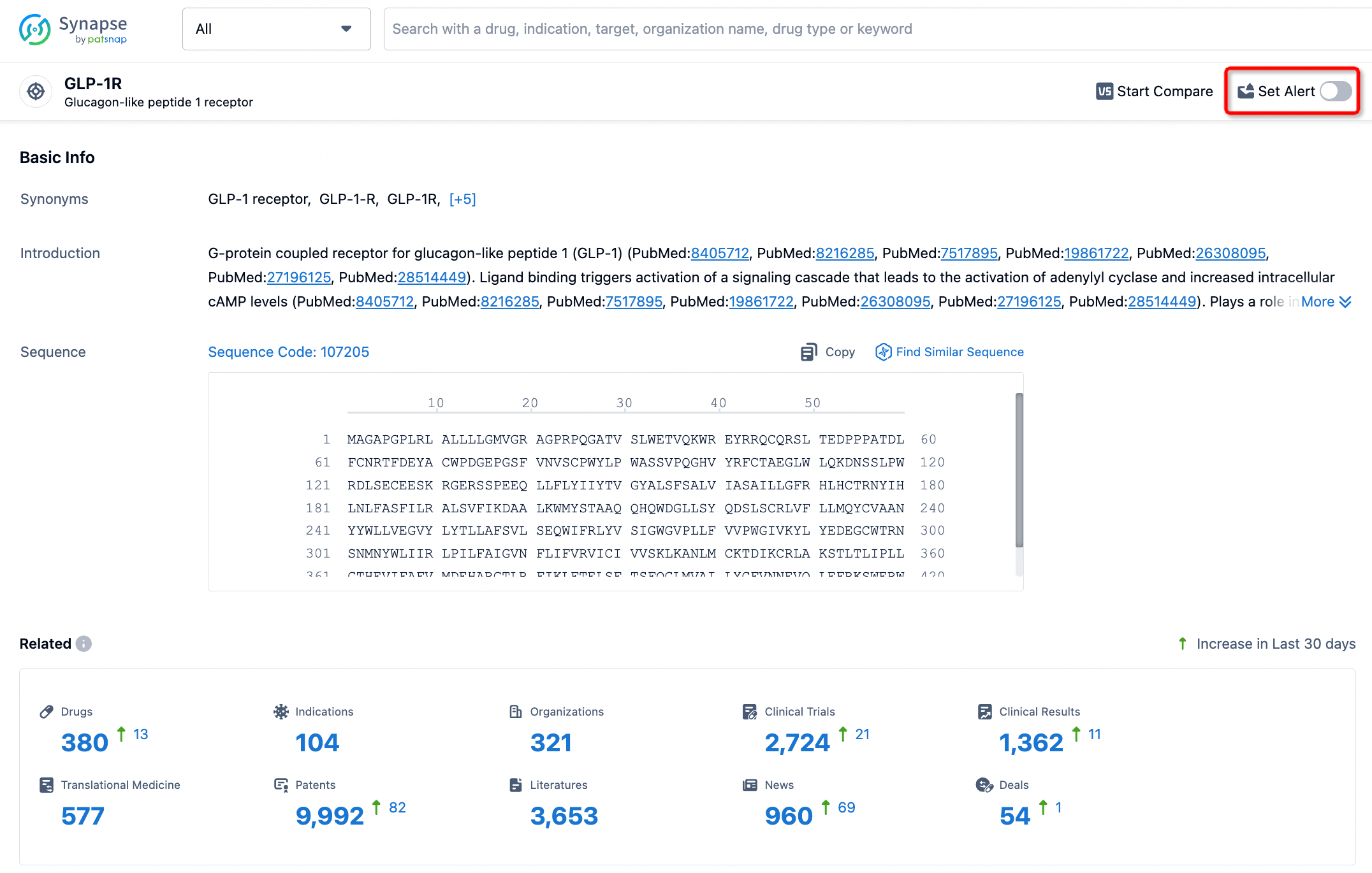
In the Synapse database, you can stay updated on the latest research and development advances of all targets. This service is accessible anytime and anywhere, with updates available daily or weekly. Use the "Set Alert" function to stay informed. Click on the image below to embark on a brand new journey of drug discovery!


AI Agents Built for Biopharma Breakthroughs
Accelerate discovery. Empower decisions. Transform outcomes.
Get started for free today!
Accelerate Strategic R&D decision making with Synapse, PatSnap’s AI-powered Connected Innovation Intelligence Platform Built for Life Sciences Professionals.
Start your data trial now!
Synapse data is also accessible to external entities via APIs or data packages. Empower better decisions with the latest in pharmaceutical intelligence.