Request Demo
What are CK1α agonists and how do they work?
25 June 2024
Casein kinase 1 alpha (CK1α) agonists represent a promising frontier in the realm of therapeutic agents. As a member of the CK1 family, CK1α plays an integral role in various cellular processes, including signal transduction, cell division, and circadian rhythms. Over the past few years, the scientific community has shown increasing interest in CK1α agonists due to their potential to address a range of health conditions, from cancer to neurodegenerative diseases. In this blog post, we'll delve into the mechanisms by which these agonists operate and explore their current and potential therapeutic applications.
CK1α agonists function by modulating the activity of the CK1α enzyme, which is involved in numerous intracellular signaling pathways. The CK1α enzyme is a serine/threonine-specific protein kinase that phosphorylates a variety of substrates, thereby influencing many cellular activities. In particular, CK1α is known to regulate the Wnt/β-catenin pathway, a crucial signaling mechanism that affects cell proliferation and differentiation.
By activating CK1α, these agonists can enhance the phosphorylation of β-catenin, leading to its degradation. This action subsequently inhibits the Wnt/β-catenin pathway, which is often dysregulated in various cancers. Additionally, CK1α agonists can impact other signaling pathways, such as the NF-κB pathway, which is implicated in inflammatory responses and immune regulation. In essence, CK1α agonists fine-tune cellular processes by amplifying the natural actions of CK1α, thereby restoring balance in signaling pathways that may be disrupted in disease states.
The therapeutic potential of CK1α agonists is both broad and profound. One of the key areas of research has been their application in oncology. Due to their ability to suppress the Wnt/β-catenin pathway, CK1α agonists show promise in treating cancers where this pathway is abnormally active. Studies have demonstrated that CK1α agonists can inhibit tumor growth and induce cancer cell apoptosis in preclinical models of colorectal cancer, melanoma, and other malignancies. These findings suggest that CK1α agonists could become a valuable addition to the arsenal of targeted cancer therapies.
Beyond oncology, CK1α agonists hold potential for treating neurodegenerative diseases such as Alzheimer's and Parkinson's. In these conditions, the dysregulation of cellular signaling and protein aggregation lead to neuronal damage and cognitive decline. By modulating key pathways involved in neuroinflammation and protein homeostasis, CK1α agonists could help alleviate some of the pathological processes driving these diseases. Preliminary research indicates that CK1α agonists can reduce neuroinflammation and enhance autophagy, the cell's natural mechanism for clearing damaged proteins, thereby offering a multi-faceted approach to neuroprotection.
In addition to cancer and neurodegenerative diseases, CK1α agonists are being investigated for their potential in treating inflammatory and autoimmune conditions. Given the role of CK1α in modulating the NF-κB pathway, which is central to the body's inflammatory response, these agonists could help control chronic inflammation and autoimmune activity. For instance, in diseases like rheumatoid arthritis and inflammatory bowel disease, where overactive immune responses cause tissue damage, CK1α agonists could provide a means to mitigate inflammation and promote tissue healing.
Despite the promising preclinical data, the journey of CK1α agonists from the laboratory to the clinic is still in its early stages. Several challenges need to be addressed, including the optimization of drug formulations, the determination of appropriate dosing regimens, and the assessment of long-term safety and efficacy in humans. Clinical trials will be crucial in answering these questions and establishing the full therapeutic potential of CK1α agonists.
In conclusion, CK1α agonists represent a novel class of therapeutic agents with the potential to address a wide range of diseases, from cancer to neurodegenerative and inflammatory conditions. By harnessing the power of CK1α to modulate critical signaling pathways, these agonists offer new hope for patients with conditions that currently have limited treatment options. As research progresses, we may soon witness the emergence of CK1α agonists as a key component of modern medicine, offering targeted and effective therapies for some of the most challenging diseases of our time.
CK1α agonists function by modulating the activity of the CK1α enzyme, which is involved in numerous intracellular signaling pathways. The CK1α enzyme is a serine/threonine-specific protein kinase that phosphorylates a variety of substrates, thereby influencing many cellular activities. In particular, CK1α is known to regulate the Wnt/β-catenin pathway, a crucial signaling mechanism that affects cell proliferation and differentiation.
By activating CK1α, these agonists can enhance the phosphorylation of β-catenin, leading to its degradation. This action subsequently inhibits the Wnt/β-catenin pathway, which is often dysregulated in various cancers. Additionally, CK1α agonists can impact other signaling pathways, such as the NF-κB pathway, which is implicated in inflammatory responses and immune regulation. In essence, CK1α agonists fine-tune cellular processes by amplifying the natural actions of CK1α, thereby restoring balance in signaling pathways that may be disrupted in disease states.
The therapeutic potential of CK1α agonists is both broad and profound. One of the key areas of research has been their application in oncology. Due to their ability to suppress the Wnt/β-catenin pathway, CK1α agonists show promise in treating cancers where this pathway is abnormally active. Studies have demonstrated that CK1α agonists can inhibit tumor growth and induce cancer cell apoptosis in preclinical models of colorectal cancer, melanoma, and other malignancies. These findings suggest that CK1α agonists could become a valuable addition to the arsenal of targeted cancer therapies.
Beyond oncology, CK1α agonists hold potential for treating neurodegenerative diseases such as Alzheimer's and Parkinson's. In these conditions, the dysregulation of cellular signaling and protein aggregation lead to neuronal damage and cognitive decline. By modulating key pathways involved in neuroinflammation and protein homeostasis, CK1α agonists could help alleviate some of the pathological processes driving these diseases. Preliminary research indicates that CK1α agonists can reduce neuroinflammation and enhance autophagy, the cell's natural mechanism for clearing damaged proteins, thereby offering a multi-faceted approach to neuroprotection.
In addition to cancer and neurodegenerative diseases, CK1α agonists are being investigated for their potential in treating inflammatory and autoimmune conditions. Given the role of CK1α in modulating the NF-κB pathway, which is central to the body's inflammatory response, these agonists could help control chronic inflammation and autoimmune activity. For instance, in diseases like rheumatoid arthritis and inflammatory bowel disease, where overactive immune responses cause tissue damage, CK1α agonists could provide a means to mitigate inflammation and promote tissue healing.
Despite the promising preclinical data, the journey of CK1α agonists from the laboratory to the clinic is still in its early stages. Several challenges need to be addressed, including the optimization of drug formulations, the determination of appropriate dosing regimens, and the assessment of long-term safety and efficacy in humans. Clinical trials will be crucial in answering these questions and establishing the full therapeutic potential of CK1α agonists.
In conclusion, CK1α agonists represent a novel class of therapeutic agents with the potential to address a wide range of diseases, from cancer to neurodegenerative and inflammatory conditions. By harnessing the power of CK1α to modulate critical signaling pathways, these agonists offer new hope for patients with conditions that currently have limited treatment options. As research progresses, we may soon witness the emergence of CK1α agonists as a key component of modern medicine, offering targeted and effective therapies for some of the most challenging diseases of our time.
How to obtain the latest development progress of all targets?
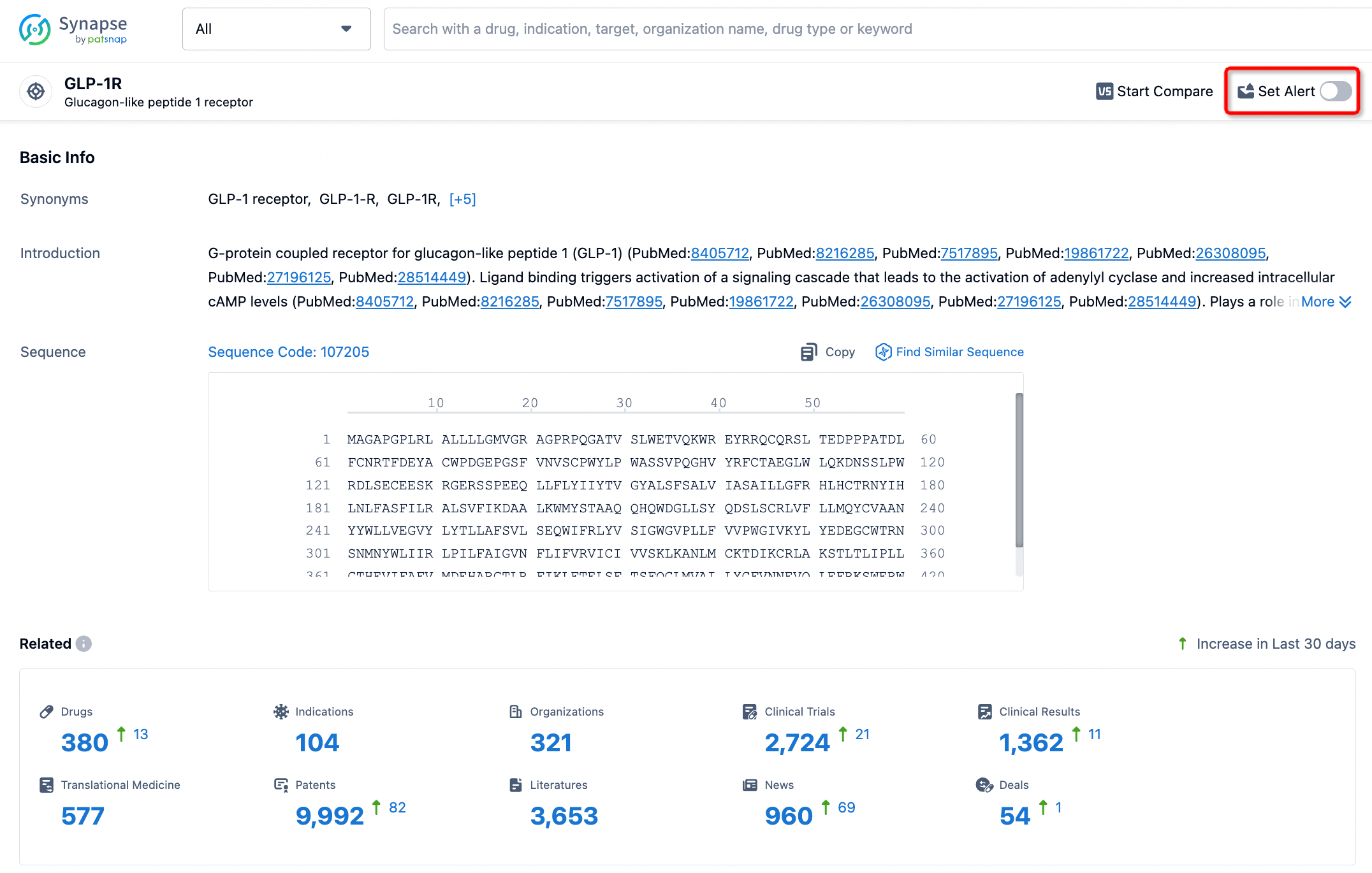
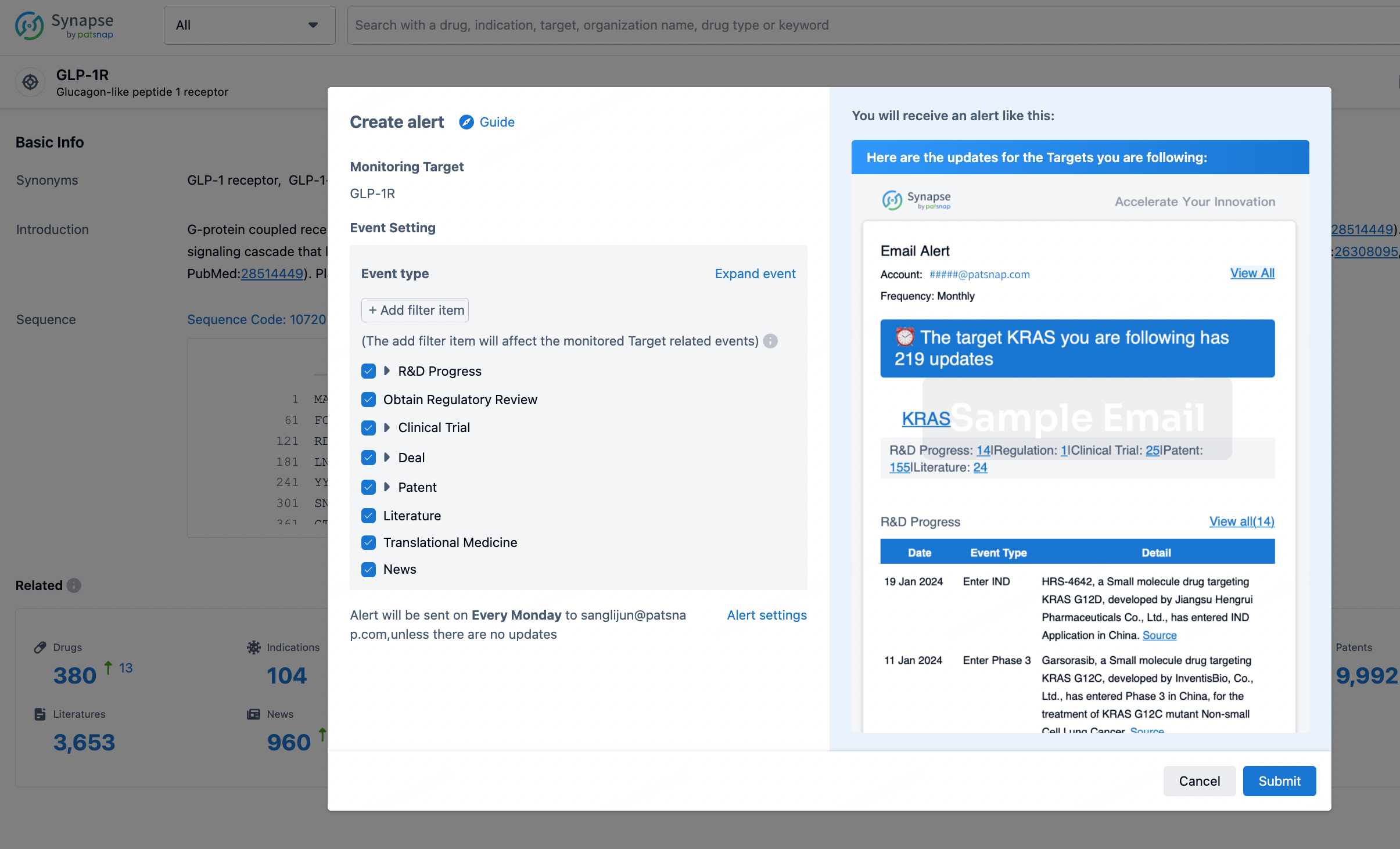
In the Synapse database, you can stay updated on the latest research and development advances of all targets. This service is accessible anytime and anywhere, with updates available daily or weekly. Use the "Set Alert" function to stay informed. Click on the image below to embark on a brand new journey of drug discovery!
AI Agents Built for Biopharma Breakthroughs
Accelerate discovery. Empower decisions. Transform outcomes.
Get started for free today!
Accelerate Strategic R&D decision making with Synapse, PatSnap’s AI-powered Connected Innovation Intelligence Platform Built for Life Sciences Professionals.
Start your data trial now!
Synapse data is also accessible to external entities via APIs or data packages. Empower better decisions with the latest in pharmaceutical intelligence.