Request Demo
What are CK1α inhibitors and how do they work?
21 June 2024
CK1α inhibitors have emerged as a significant area of interest in the realm of medical research and drug development. CK1α, or Casein Kinase 1 alpha, is an enzyme that plays a crucial role in various cellular processes, including cell division, DNA repair, and metabolic regulation. The inhibition of CK1α has shown promise in treating a variety of diseases, particularly cancer, due to its regulatory influence on several signaling pathways. This article delves into the mechanics of CK1α inhibitors, their mechanisms of action, and their potential therapeutic applications.
CK1α inhibitors work by targeting the enzymatic activity of CK1α, effectively modulating its function within the cell. CK1α is part of the Casein Kinase 1 family, a group of serine/threonine kinases involved in phosphorylating a wide array of substrates. This phosphorylation plays a pivotal role in cellular signaling pathways that control numerous essential functions. By inhibiting CK1α, these inhibitors can disrupt these pathways, leading to alterations in cell behavior.
One of the primary mechanisms by which CK1α inhibitors exert their effects is through the Wnt/β-catenin signaling pathway. This pathway is crucial for regulating cell proliferation, differentiation, and apoptosis. In many cancers, the Wnt/β-catenin pathway is aberrantly activated, leading to uncontrolled cell growth and tumor progression. CK1α inhibitors can suppress this pathway, thereby inhibiting cancer cell growth and inducing apoptosis. Additionally, CK1α inhibitors have been found to influence other pathways such as the p53 pathway, which is involved in DNA damage response and tumor suppression. By targeting these pathways, CK1α inhibitors can potentially enhance the efficacy of existing cancer therapies.
The therapeutic potential of CK1α inhibitors is vast, with their primary application being in oncology. Cancer remains one of the leading causes of death worldwide, and the search for effective treatments is ongoing. CK1α inhibitors have shown promise in preclinical studies for various cancers, including colorectal cancer, breast cancer, and leukemia. In colorectal cancer, for instance, CK1α inhibitors can reduce the survival of cancer stem cells, which are often resistant to conventional treatments and are responsible for disease relapse. In breast cancer, these inhibitors can sensitize cancer cells to chemotherapy, making the treatment more effective.
Beyond oncology, CK1α inhibitors are being explored for their potential in treating other diseases. Neurodegenerative disorders such as Alzheimer's and Parkinson's disease are characterized by abnormal protein aggregation and neuronal cell death. CK1α inhibitors may help modulate protein phosphorylation processes, potentially reducing the toxic protein aggregates seen in these conditions. Furthermore, CK1α inhibitors' ability to influence inflammatory signaling pathways opens the possibility of their use in treating inflammatory and autoimmune diseases.
However, while the promise of CK1α inhibitors is substantial, several challenges remain. Ensuring the specificity of these inhibitors is critical to minimize off-target effects and reduce potential toxicity. The development of resistance to CK1α inhibitors is another concern, as is the case with many targeted therapies. Ongoing research aims to address these issues by developing more selective inhibitors and combination therapies that can overcome resistance mechanisms.
In conclusion, CK1α inhibitors represent a burgeoning field in medical research with the potential to revolutionize the treatment of various diseases. By targeting key signaling pathways involved in cell growth, differentiation, and apoptosis, these inhibitors hold promise for improving outcomes in cancer therapy and beyond. Continued research and clinical trials will be essential to fully realize the therapeutic potential of CK1α inhibitors and to address the challenges that lie ahead. As our understanding of CK1α and its role in disease pathology deepens, so too will our ability to harness these inhibitors for the benefit of patients worldwide.
CK1α inhibitors work by targeting the enzymatic activity of CK1α, effectively modulating its function within the cell. CK1α is part of the Casein Kinase 1 family, a group of serine/threonine kinases involved in phosphorylating a wide array of substrates. This phosphorylation plays a pivotal role in cellular signaling pathways that control numerous essential functions. By inhibiting CK1α, these inhibitors can disrupt these pathways, leading to alterations in cell behavior.
One of the primary mechanisms by which CK1α inhibitors exert their effects is through the Wnt/β-catenin signaling pathway. This pathway is crucial for regulating cell proliferation, differentiation, and apoptosis. In many cancers, the Wnt/β-catenin pathway is aberrantly activated, leading to uncontrolled cell growth and tumor progression. CK1α inhibitors can suppress this pathway, thereby inhibiting cancer cell growth and inducing apoptosis. Additionally, CK1α inhibitors have been found to influence other pathways such as the p53 pathway, which is involved in DNA damage response and tumor suppression. By targeting these pathways, CK1α inhibitors can potentially enhance the efficacy of existing cancer therapies.
The therapeutic potential of CK1α inhibitors is vast, with their primary application being in oncology. Cancer remains one of the leading causes of death worldwide, and the search for effective treatments is ongoing. CK1α inhibitors have shown promise in preclinical studies for various cancers, including colorectal cancer, breast cancer, and leukemia. In colorectal cancer, for instance, CK1α inhibitors can reduce the survival of cancer stem cells, which are often resistant to conventional treatments and are responsible for disease relapse. In breast cancer, these inhibitors can sensitize cancer cells to chemotherapy, making the treatment more effective.
Beyond oncology, CK1α inhibitors are being explored for their potential in treating other diseases. Neurodegenerative disorders such as Alzheimer's and Parkinson's disease are characterized by abnormal protein aggregation and neuronal cell death. CK1α inhibitors may help modulate protein phosphorylation processes, potentially reducing the toxic protein aggregates seen in these conditions. Furthermore, CK1α inhibitors' ability to influence inflammatory signaling pathways opens the possibility of their use in treating inflammatory and autoimmune diseases.
However, while the promise of CK1α inhibitors is substantial, several challenges remain. Ensuring the specificity of these inhibitors is critical to minimize off-target effects and reduce potential toxicity. The development of resistance to CK1α inhibitors is another concern, as is the case with many targeted therapies. Ongoing research aims to address these issues by developing more selective inhibitors and combination therapies that can overcome resistance mechanisms.
In conclusion, CK1α inhibitors represent a burgeoning field in medical research with the potential to revolutionize the treatment of various diseases. By targeting key signaling pathways involved in cell growth, differentiation, and apoptosis, these inhibitors hold promise for improving outcomes in cancer therapy and beyond. Continued research and clinical trials will be essential to fully realize the therapeutic potential of CK1α inhibitors and to address the challenges that lie ahead. As our understanding of CK1α and its role in disease pathology deepens, so too will our ability to harness these inhibitors for the benefit of patients worldwide.
How to obtain the latest development progress of all targets?
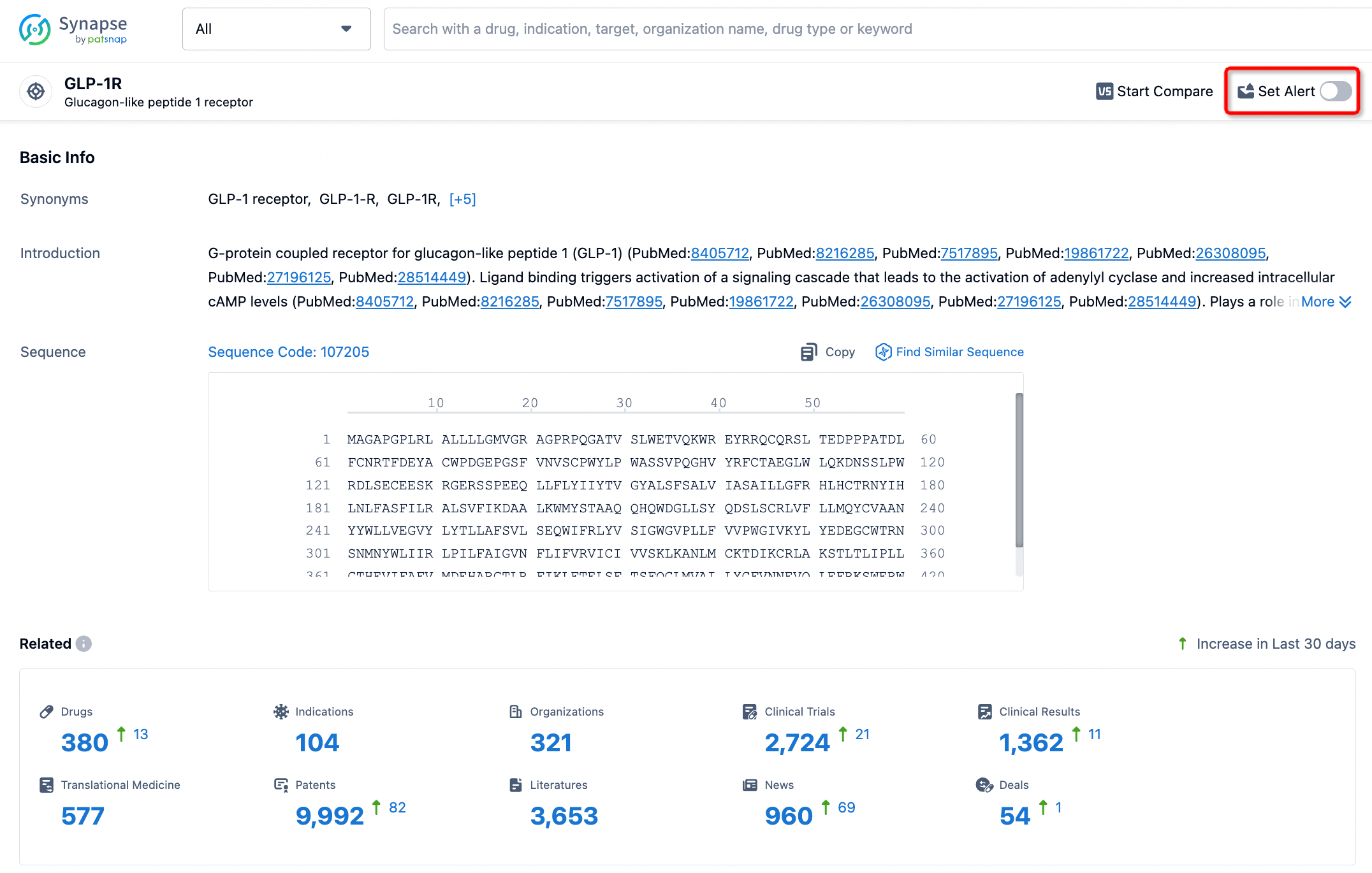
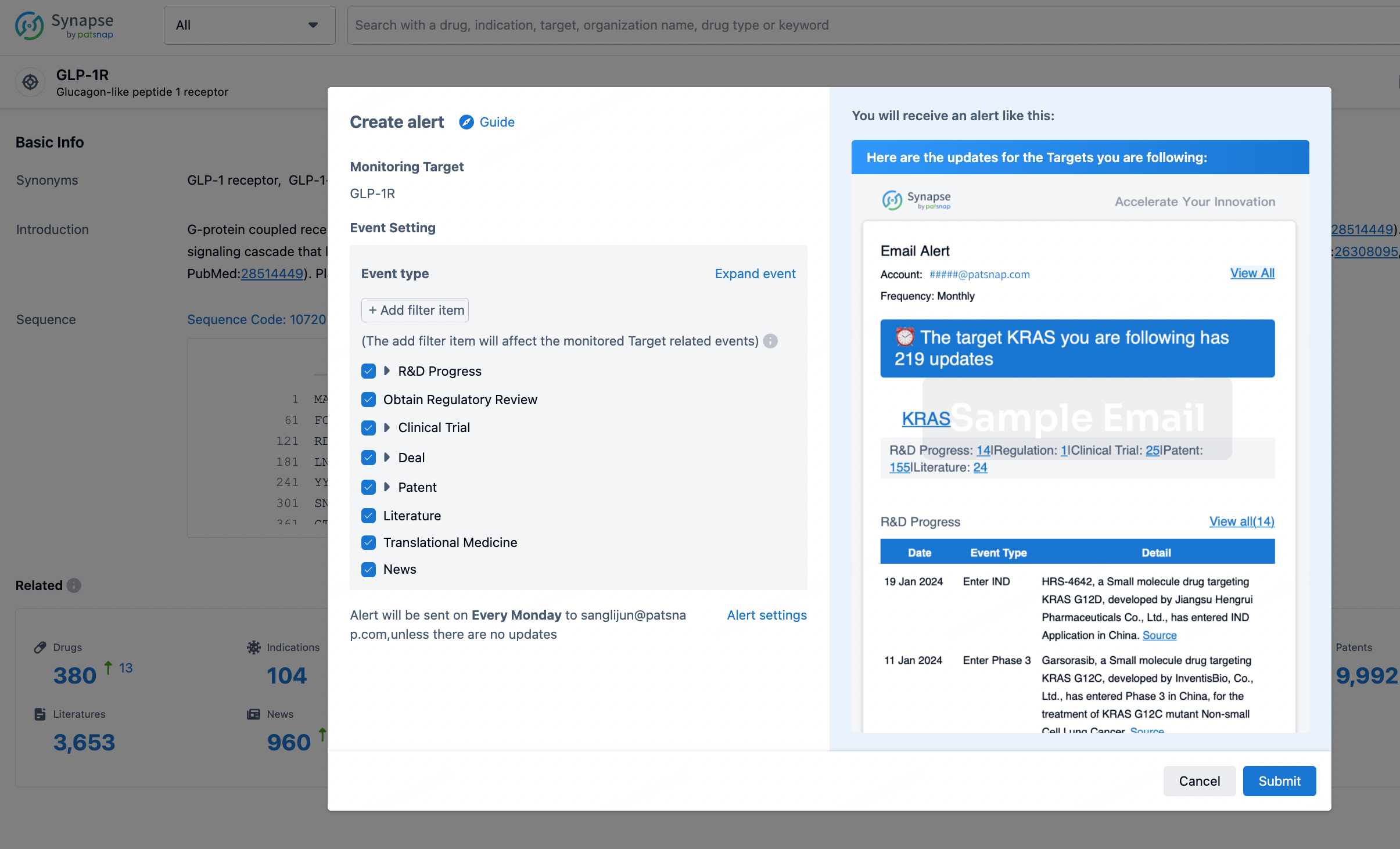
In the Synapse database, you can stay updated on the latest research and development advances of all targets. This service is accessible anytime and anywhere, with updates available daily or weekly. Use the "Set Alert" function to stay informed. Click on the image below to embark on a brand new journey of drug discovery!
AI Agents Built for Biopharma Breakthroughs
Accelerate discovery. Empower decisions. Transform outcomes.
Get started for free today!
Accelerate Strategic R&D decision making with Synapse, PatSnap’s AI-powered Connected Innovation Intelligence Platform Built for Life Sciences Professionals.
Start your data trial now!
Synapse data is also accessible to external entities via APIs or data packages. Empower better decisions with the latest in pharmaceutical intelligence.