Request Demo
What are CLCA1 modulators and how do they work?
25 June 2024
The landscape of therapeutic development is continuously evolving, with scientists exploring various avenues to address diseases that currently have limited treatment options. One of the emerging areas of interest involves CLCA1 modulators. CLCA1, short for calcium-activated chloride channel regulator 1, is a protein that has been found to play a significant role in several physiological processes, particularly in the respiratory and gastrointestinal systems. Modulating this protein's function offers a promising therapeutic strategy for a range of conditions.
CLCA1 is primarily known for its role in regulating chloride ion transport across cell membranes. This regulation is crucial for maintaining proper fluid balance and mucus production, especially in mucosal tissues such as those in the lungs and intestines. Given its involvement in these critical functions, any dysregulation of CLCA1 activity can contribute to disease states. For instance, abnormal CLCA1 activity has been implicated in chronic respiratory diseases like asthma and chronic obstructive pulmonary disease (COPD), as well as in certain gastrointestinal disorders.
Understanding how CLCA1 modulators work requires a dive into the molecular mechanisms governing chloride ion transport. CLCA1 is not a channel itself but rather a regulator of other chloride channels, such as the TMEM16A channel. By influencing these channels, CLCA1 can alter the flow of chloride ions into and out of cells, thereby impacting fluid secretion and mucus viscosity. CLCA1 modulators are compounds designed to enhance or inhibit this regulatory function.
Agonists that enhance CLCA1 activity can increase chloride ion transport, which may be beneficial in conditions where mucus viscosity needs to be reduced. For example, in diseases like cystic fibrosis or chronic bronchitis, where thick mucus obstructs airways, promoting chloride ion transport could help to thin the mucus, making it easier to expel. Conversely, antagonists that inhibit CLCA1 activity are being studied for their potential use in conditions where excessive chloride secretion contributes to disease pathology, such as certain types of diarrhea.
The therapeutic applications of CLCA1 modulators span a variety of medical fields. In respiratory medicine, these compounds hold promise for treating diseases characterized by mucus hypersecretion and airway obstruction. Asthma and COPD are prime examples where excessive mucus production leads to significant morbidity. By modulating CLCA1 activity, it may be possible to reduce mucus viscosity and improve airway clearance, thereby alleviating symptoms and improving the quality of life for patients.
In the gastrointestinal tract, CLCA1 modulators offer a novel approach to managing diseases characterized by abnormal fluid and electrolyte transport. For instance, secretory diarrhea, a condition where excessive chloride ion secretion leads to significant fluid loss, could potentially be treated with CLCA1 antagonists. By inhibiting the regulatory function of CLCA1, these modulators could reduce chloride secretion and help control diarrhea.
Beyond these primary applications, research is also exploring the role of CLCA1 in other conditions, such as cancer. Some studies suggest that CLCA1 expression may be linked to tumor progression in certain cancers, indicating that modulators of this protein could have potential as anticancer agents. However, this is a relatively nascent area of research, and more studies are needed to fully understand the therapeutic potential and safety of targeting CLCA1 in oncology.
Overall, CLCA1 modulators represent a promising and versatile tool in the therapeutic arsenal. By targeting the regulatory functions of CLCA1, these compounds offer novel mechanisms to treat a variety of conditions, particularly those involving abnormal mucus production and chloride ion transport. As research continues to unveil the complexities of CLCA1 function and its role in disease, the development of effective CLCA1 modulators could pave the way for new, more effective treatments for a range of challenging medical conditions.
CLCA1 is primarily known for its role in regulating chloride ion transport across cell membranes. This regulation is crucial for maintaining proper fluid balance and mucus production, especially in mucosal tissues such as those in the lungs and intestines. Given its involvement in these critical functions, any dysregulation of CLCA1 activity can contribute to disease states. For instance, abnormal CLCA1 activity has been implicated in chronic respiratory diseases like asthma and chronic obstructive pulmonary disease (COPD), as well as in certain gastrointestinal disorders.
Understanding how CLCA1 modulators work requires a dive into the molecular mechanisms governing chloride ion transport. CLCA1 is not a channel itself but rather a regulator of other chloride channels, such as the TMEM16A channel. By influencing these channels, CLCA1 can alter the flow of chloride ions into and out of cells, thereby impacting fluid secretion and mucus viscosity. CLCA1 modulators are compounds designed to enhance or inhibit this regulatory function.
Agonists that enhance CLCA1 activity can increase chloride ion transport, which may be beneficial in conditions where mucus viscosity needs to be reduced. For example, in diseases like cystic fibrosis or chronic bronchitis, where thick mucus obstructs airways, promoting chloride ion transport could help to thin the mucus, making it easier to expel. Conversely, antagonists that inhibit CLCA1 activity are being studied for their potential use in conditions where excessive chloride secretion contributes to disease pathology, such as certain types of diarrhea.
The therapeutic applications of CLCA1 modulators span a variety of medical fields. In respiratory medicine, these compounds hold promise for treating diseases characterized by mucus hypersecretion and airway obstruction. Asthma and COPD are prime examples where excessive mucus production leads to significant morbidity. By modulating CLCA1 activity, it may be possible to reduce mucus viscosity and improve airway clearance, thereby alleviating symptoms and improving the quality of life for patients.
In the gastrointestinal tract, CLCA1 modulators offer a novel approach to managing diseases characterized by abnormal fluid and electrolyte transport. For instance, secretory diarrhea, a condition where excessive chloride ion secretion leads to significant fluid loss, could potentially be treated with CLCA1 antagonists. By inhibiting the regulatory function of CLCA1, these modulators could reduce chloride secretion and help control diarrhea.
Beyond these primary applications, research is also exploring the role of CLCA1 in other conditions, such as cancer. Some studies suggest that CLCA1 expression may be linked to tumor progression in certain cancers, indicating that modulators of this protein could have potential as anticancer agents. However, this is a relatively nascent area of research, and more studies are needed to fully understand the therapeutic potential and safety of targeting CLCA1 in oncology.
Overall, CLCA1 modulators represent a promising and versatile tool in the therapeutic arsenal. By targeting the regulatory functions of CLCA1, these compounds offer novel mechanisms to treat a variety of conditions, particularly those involving abnormal mucus production and chloride ion transport. As research continues to unveil the complexities of CLCA1 function and its role in disease, the development of effective CLCA1 modulators could pave the way for new, more effective treatments for a range of challenging medical conditions.
How to obtain the latest development progress of all targets?
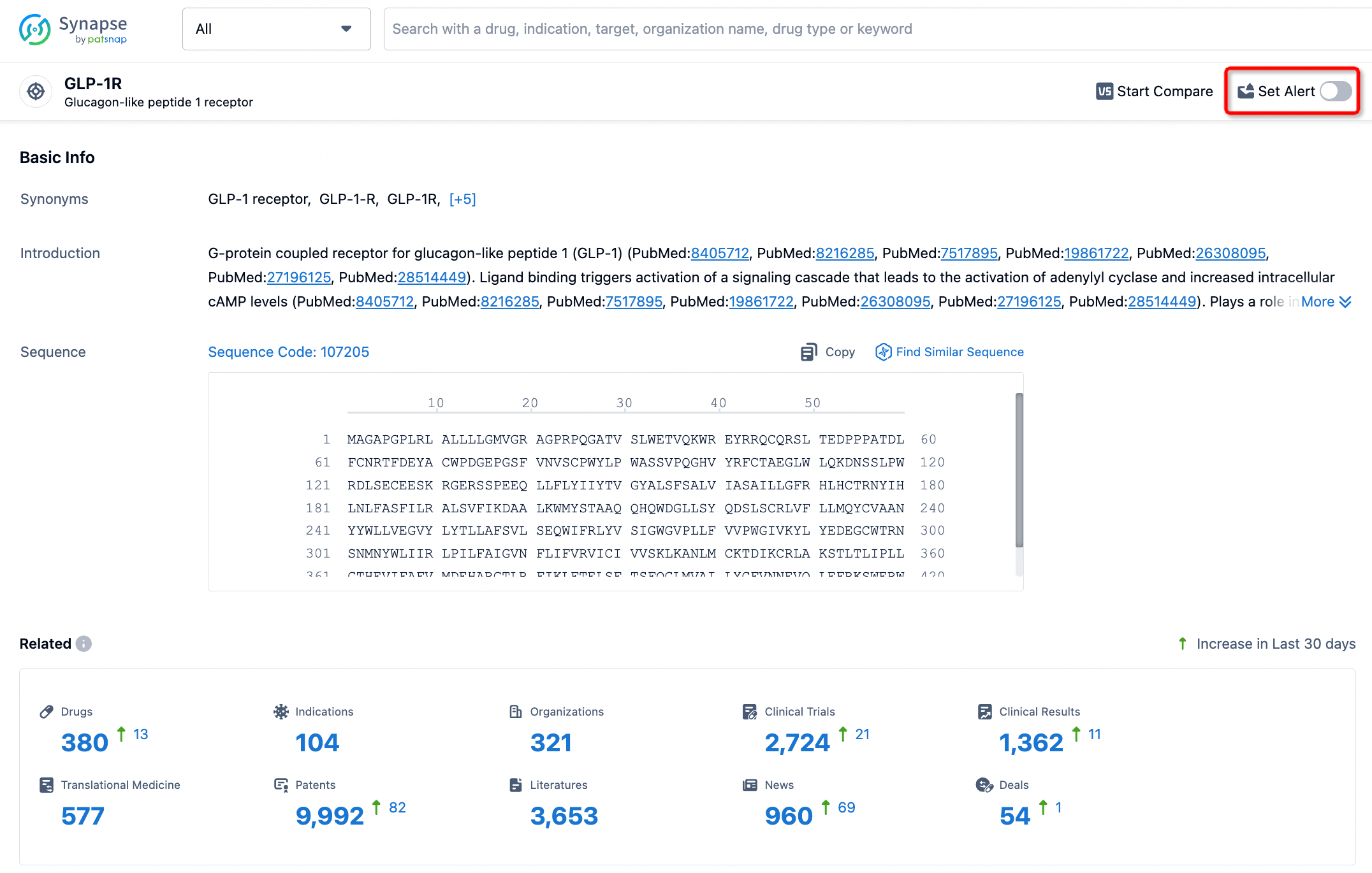
In the Synapse database, you can stay updated on the latest research and development advances of all targets. This service is accessible anytime and anywhere, with updates available daily or weekly. Use the "Set Alert" function to stay informed. Click on the image below to embark on a brand new journey of drug discovery!


AI Agents Built for Biopharma Breakthroughs
Accelerate discovery. Empower decisions. Transform outcomes.
Get started for free today!
Accelerate Strategic R&D decision making with Synapse, PatSnap’s AI-powered Connected Innovation Intelligence Platform Built for Life Sciences Professionals.
Start your data trial now!
Synapse data is also accessible to external entities via APIs or data packages. Empower better decisions with the latest in pharmaceutical intelligence.