Request Demo
What are Collagen II antagonists and how do they work?
26 June 2024
Collagen II is a crucial component of cartilage, playing an essential role in maintaining its structure and function. However, recent advancements in medical research have highlighted the significance of Collagen II antagonists in treating various health conditions, particularly those involving inflammatory and degenerative joint diseases. This blog post explores the fundamentals of Collagen II antagonists, delving into their mechanisms of action and the therapeutic applications they offer.
Collagen II antagonists are a class of substances that specifically target and inhibit the activity of type II collagen. This type of collagen is predominantly found in hyaline cartilage and vitreous humor, contributing to the structural integrity and elasticity of these tissues. Researchers have identified and developed Collagen II antagonists to manage conditions resulting from excessive collagen activity or autoimmune responses against collagen. By inhibiting Collagen II, these antagonists can reduce inflammation, slow down tissue degradation, and promote the regeneration of healthy cartilage.
The core mechanism by which Collagen II antagonists function involves binding to collagen molecules or collagen receptors on cells, thereby preventing the interaction between type II collagen and its corresponding receptors or immune cells. This interaction blockade helps mitigate the autoimmune response often seen in diseases like rheumatoid arthritis. In rheumatoid arthritis, for example, the immune system mistakenly identifies type II collagen as a foreign invader, leading to chronic inflammation and joint damage. By impeding this erroneous immune recognition, Collagen II antagonists can significantly reduce inflammation and prevent further tissue damage.
Furthermore, some Collagen II antagonists work by inhibiting the synthesis or secretion of type II collagen. This approach is particularly useful in cases where excessive collagen production contributes to pathological conditions, such as fibrosis or hypertrophic scars. By downregulating collagen production, these antagonists help maintain a balance between collagen synthesis and degradation, facilitating better tissue repair and regeneration.
Collagen II antagonists have shown promising potential in the management of various musculoskeletal and autoimmune disorders. One of the primary applications is in the treatment of rheumatoid arthritis (RA). RA is a chronic inflammatory disorder characterized by joint pain, swelling, and stiffness, leading to progressive joint destruction. Traditional treatments for RA involve nonsteroidal anti-inflammatory drugs (NSAIDs), corticosteroids, and disease-modifying antirheumatic drugs (DMARDs). However, these treatments often come with significant side effects and may not be effective for all patients. Collagen II antagonists offer a novel therapeutic approach by targeting the underlying cause of the disease – the autoimmune response against type II collagen. Clinical trials have demonstrated that these antagonists can effectively reduce inflammation, alleviate pain, and improve joint function in RA patients.
Another significant application of Collagen II antagonists is in the treatment of osteoarthritis (OA). OA is a degenerative joint disease marked by the breakdown of cartilage and the subsequent formation of bone spurs. This condition leads to pain, stiffness, and decreased mobility. While the exact cause of OA remains unclear, it is known that excessive collagen degradation plays a crucial role in disease progression. By inhibiting the activity of collagen-degrading enzymes or blocking collagen-receptor interactions, Collagen II antagonists can help preserve cartilage, reduce pain, and enhance joint function in OA patients.
Moreover, Collagen II antagonists are being explored for their potential in treating other conditions, such as intervertebral disc degeneration, spondyloarthritis, and certain types of eye diseases like keratoconus and vitreoretinal disorders. These antagonists' ability to modulate collagen activity and immune responses makes them versatile tools in the management of various collagen-related pathologies.
In conclusion, Collagen II antagonists represent a promising frontier in medical research and therapy. By targeting the specific mechanisms involving type II collagen, these antagonists offer a novel approach to managing inflammatory and degenerative joint diseases. As research progresses, it is likely that the therapeutic applications of Collagen II antagonists will continue to expand, providing new hope for patients suffering from a range of collagen-related disorders.
Collagen II antagonists are a class of substances that specifically target and inhibit the activity of type II collagen. This type of collagen is predominantly found in hyaline cartilage and vitreous humor, contributing to the structural integrity and elasticity of these tissues. Researchers have identified and developed Collagen II antagonists to manage conditions resulting from excessive collagen activity or autoimmune responses against collagen. By inhibiting Collagen II, these antagonists can reduce inflammation, slow down tissue degradation, and promote the regeneration of healthy cartilage.
The core mechanism by which Collagen II antagonists function involves binding to collagen molecules or collagen receptors on cells, thereby preventing the interaction between type II collagen and its corresponding receptors or immune cells. This interaction blockade helps mitigate the autoimmune response often seen in diseases like rheumatoid arthritis. In rheumatoid arthritis, for example, the immune system mistakenly identifies type II collagen as a foreign invader, leading to chronic inflammation and joint damage. By impeding this erroneous immune recognition, Collagen II antagonists can significantly reduce inflammation and prevent further tissue damage.
Furthermore, some Collagen II antagonists work by inhibiting the synthesis or secretion of type II collagen. This approach is particularly useful in cases where excessive collagen production contributes to pathological conditions, such as fibrosis or hypertrophic scars. By downregulating collagen production, these antagonists help maintain a balance between collagen synthesis and degradation, facilitating better tissue repair and regeneration.
Collagen II antagonists have shown promising potential in the management of various musculoskeletal and autoimmune disorders. One of the primary applications is in the treatment of rheumatoid arthritis (RA). RA is a chronic inflammatory disorder characterized by joint pain, swelling, and stiffness, leading to progressive joint destruction. Traditional treatments for RA involve nonsteroidal anti-inflammatory drugs (NSAIDs), corticosteroids, and disease-modifying antirheumatic drugs (DMARDs). However, these treatments often come with significant side effects and may not be effective for all patients. Collagen II antagonists offer a novel therapeutic approach by targeting the underlying cause of the disease – the autoimmune response against type II collagen. Clinical trials have demonstrated that these antagonists can effectively reduce inflammation, alleviate pain, and improve joint function in RA patients.
Another significant application of Collagen II antagonists is in the treatment of osteoarthritis (OA). OA is a degenerative joint disease marked by the breakdown of cartilage and the subsequent formation of bone spurs. This condition leads to pain, stiffness, and decreased mobility. While the exact cause of OA remains unclear, it is known that excessive collagen degradation plays a crucial role in disease progression. By inhibiting the activity of collagen-degrading enzymes or blocking collagen-receptor interactions, Collagen II antagonists can help preserve cartilage, reduce pain, and enhance joint function in OA patients.
Moreover, Collagen II antagonists are being explored for their potential in treating other conditions, such as intervertebral disc degeneration, spondyloarthritis, and certain types of eye diseases like keratoconus and vitreoretinal disorders. These antagonists' ability to modulate collagen activity and immune responses makes them versatile tools in the management of various collagen-related pathologies.
In conclusion, Collagen II antagonists represent a promising frontier in medical research and therapy. By targeting the specific mechanisms involving type II collagen, these antagonists offer a novel approach to managing inflammatory and degenerative joint diseases. As research progresses, it is likely that the therapeutic applications of Collagen II antagonists will continue to expand, providing new hope for patients suffering from a range of collagen-related disorders.
How to obtain the latest development progress of all targets?
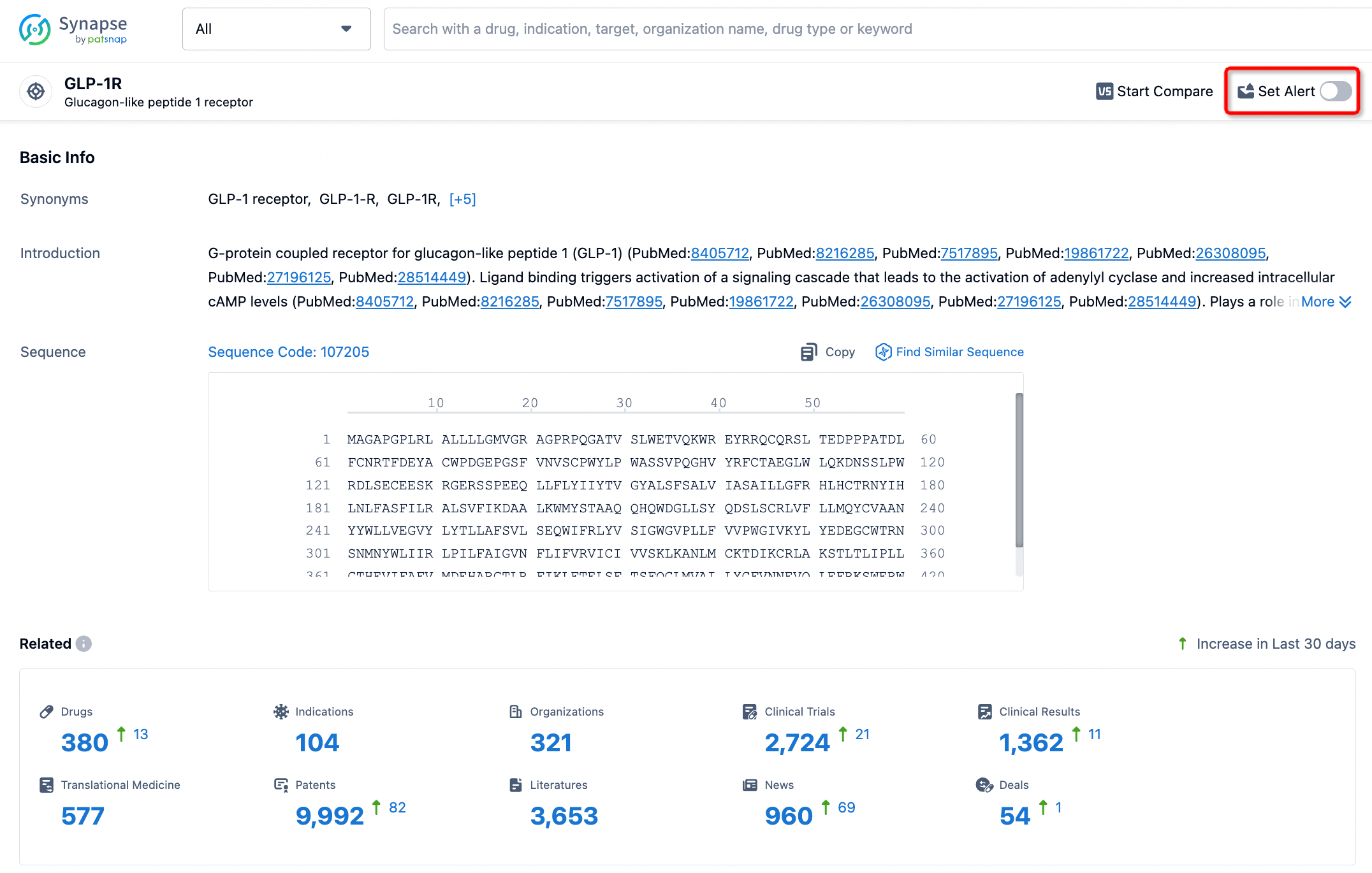
In the Synapse database, you can stay updated on the latest research and development advances of all targets. This service is accessible anytime and anywhere, with updates available daily or weekly. Use the "Set Alert" function to stay informed. Click on the image below to embark on a brand new journey of drug discovery!


AI Agents Built for Biopharma Breakthroughs
Accelerate discovery. Empower decisions. Transform outcomes.
Get started for free today!
Accelerate Strategic R&D decision making with Synapse, PatSnap’s AI-powered Connected Innovation Intelligence Platform Built for Life Sciences Professionals.
Start your data trial now!
Synapse data is also accessible to external entities via APIs or data packages. Empower better decisions with the latest in pharmaceutical intelligence.