Request Demo
What are cPLA2α agonists and how do they work?
21 June 2024
Cytosolic phospholipase A2 alpha (cPLA2α) is an enzyme that plays a crucial role in the regulation of the inflammatory response and the release of arachidonic acid, which is a precursor for various bioactive lipids including prostaglandins and leukotrienes. Understanding and manipulating the activity of cPLA2α through agonists can have significant therapeutic implications. In this blog post, we will delve into the functional mechanisms of cPLA2α agonists, explore how they work, and discuss their potential applications in medicine.
cPLA2α agonists are compounds that specifically enhance the activity of the cPLA2α enzyme. These agonists bind to the enzyme and induce a conformational change that increases its catalytic efficiency. This results in the accelerated hydrolysis of membrane phospholipids to release arachidonic acid. Arachidonic acid is then metabolized by cyclooxygenases (COX) and lipoxygenases (LOX) to produce various eicosanoids, which are signaling molecules that play critical roles in inflammation, immune responses, and other physiological processes.
The mechanism of action of cPLA2α agonists involves several steps. First, the agonist binds to the cPLA2α enzyme at specific binding sites. This binding enhances the enzyme's affinity for its phospholipid substrates. Upon binding, the enzyme undergoes a conformational change that exposes its active site, allowing it to more effectively interact with and cleave the phospholipids in the cell membrane. The hydrolysis of these phospholipids results in the release of arachidonic acid, which serves as a substrate for downstream enzymes involved in the biosynthesis of eicosanoids.
One of the key features of cPLA2α is its calcium-dependent activation. The enzyme contains a C2 domain that binds calcium ions, which is essential for its translocation to the membrane and subsequent enzymatic activity. cPLA2α agonists can modulate this calcium binding and enhance the enzyme's activity even at lower intracellular calcium concentrations, thus potentiating its effects.
cPLA2α agonists have a wide range of potential therapeutic applications due to their ability to modulate the production of eicosanoids. Eicosanoids are involved in numerous physiological and pathological processes, including inflammation, pain, immune responses, and cancer. By enhancing the production of specific eicosanoids, cPLA2α agonists can be used to treat various inflammatory and autoimmune diseases, such as rheumatoid arthritis, asthma, and inflammatory bowel disease.
In addition to their role in inflammation, cPLA2α agonists have shown promise in the treatment of certain types of cancer. Eicosanoids can influence tumor growth, angiogenesis, and metastasis. By modulating the levels of specific eicosanoids, cPLA2α agonists may help to inhibit tumor progression and improve the efficacy of existing cancer therapies. For example, increased production of anti-inflammatory eicosanoids can create a tumor microenvironment that is less conducive to cancer cell survival and proliferation.
Moreover, cPLA2α agonists may have neuroprotective effects. Eicosanoids play a role in the regulation of neuronal survival, synaptic plasticity, and neuroinflammation. Enhancing the production of specific eicosanoids through cPLA2α activation could potentially ameliorate neurodegenerative conditions such as Alzheimer's disease and Parkinson's disease. Research in this area is still in its early stages, but the potential for cPLA2α agonists to provide therapeutic benefits in neurodegenerative diseases is promising.
In conclusion, cPLA2α agonists represent a novel and promising approach to modulating the production of bioactive lipids involved in inflammation, cancer, and neurodegeneration. By enhancing the activity of the cPLA2α enzyme, these agonists can increase the production of specific eicosanoids, offering potential therapeutic benefits in a wide range of diseases. Continued research in this area is essential to fully understand the therapeutic potential of cPLA2α agonists and to develop effective treatments for various inflammatory, autoimmune, and neurodegenerative conditions.
cPLA2α agonists are compounds that specifically enhance the activity of the cPLA2α enzyme. These agonists bind to the enzyme and induce a conformational change that increases its catalytic efficiency. This results in the accelerated hydrolysis of membrane phospholipids to release arachidonic acid. Arachidonic acid is then metabolized by cyclooxygenases (COX) and lipoxygenases (LOX) to produce various eicosanoids, which are signaling molecules that play critical roles in inflammation, immune responses, and other physiological processes.
The mechanism of action of cPLA2α agonists involves several steps. First, the agonist binds to the cPLA2α enzyme at specific binding sites. This binding enhances the enzyme's affinity for its phospholipid substrates. Upon binding, the enzyme undergoes a conformational change that exposes its active site, allowing it to more effectively interact with and cleave the phospholipids in the cell membrane. The hydrolysis of these phospholipids results in the release of arachidonic acid, which serves as a substrate for downstream enzymes involved in the biosynthesis of eicosanoids.
One of the key features of cPLA2α is its calcium-dependent activation. The enzyme contains a C2 domain that binds calcium ions, which is essential for its translocation to the membrane and subsequent enzymatic activity. cPLA2α agonists can modulate this calcium binding and enhance the enzyme's activity even at lower intracellular calcium concentrations, thus potentiating its effects.
cPLA2α agonists have a wide range of potential therapeutic applications due to their ability to modulate the production of eicosanoids. Eicosanoids are involved in numerous physiological and pathological processes, including inflammation, pain, immune responses, and cancer. By enhancing the production of specific eicosanoids, cPLA2α agonists can be used to treat various inflammatory and autoimmune diseases, such as rheumatoid arthritis, asthma, and inflammatory bowel disease.
In addition to their role in inflammation, cPLA2α agonists have shown promise in the treatment of certain types of cancer. Eicosanoids can influence tumor growth, angiogenesis, and metastasis. By modulating the levels of specific eicosanoids, cPLA2α agonists may help to inhibit tumor progression and improve the efficacy of existing cancer therapies. For example, increased production of anti-inflammatory eicosanoids can create a tumor microenvironment that is less conducive to cancer cell survival and proliferation.
Moreover, cPLA2α agonists may have neuroprotective effects. Eicosanoids play a role in the regulation of neuronal survival, synaptic plasticity, and neuroinflammation. Enhancing the production of specific eicosanoids through cPLA2α activation could potentially ameliorate neurodegenerative conditions such as Alzheimer's disease and Parkinson's disease. Research in this area is still in its early stages, but the potential for cPLA2α agonists to provide therapeutic benefits in neurodegenerative diseases is promising.
In conclusion, cPLA2α agonists represent a novel and promising approach to modulating the production of bioactive lipids involved in inflammation, cancer, and neurodegeneration. By enhancing the activity of the cPLA2α enzyme, these agonists can increase the production of specific eicosanoids, offering potential therapeutic benefits in a wide range of diseases. Continued research in this area is essential to fully understand the therapeutic potential of cPLA2α agonists and to develop effective treatments for various inflammatory, autoimmune, and neurodegenerative conditions.
How to obtain the latest development progress of all targets?
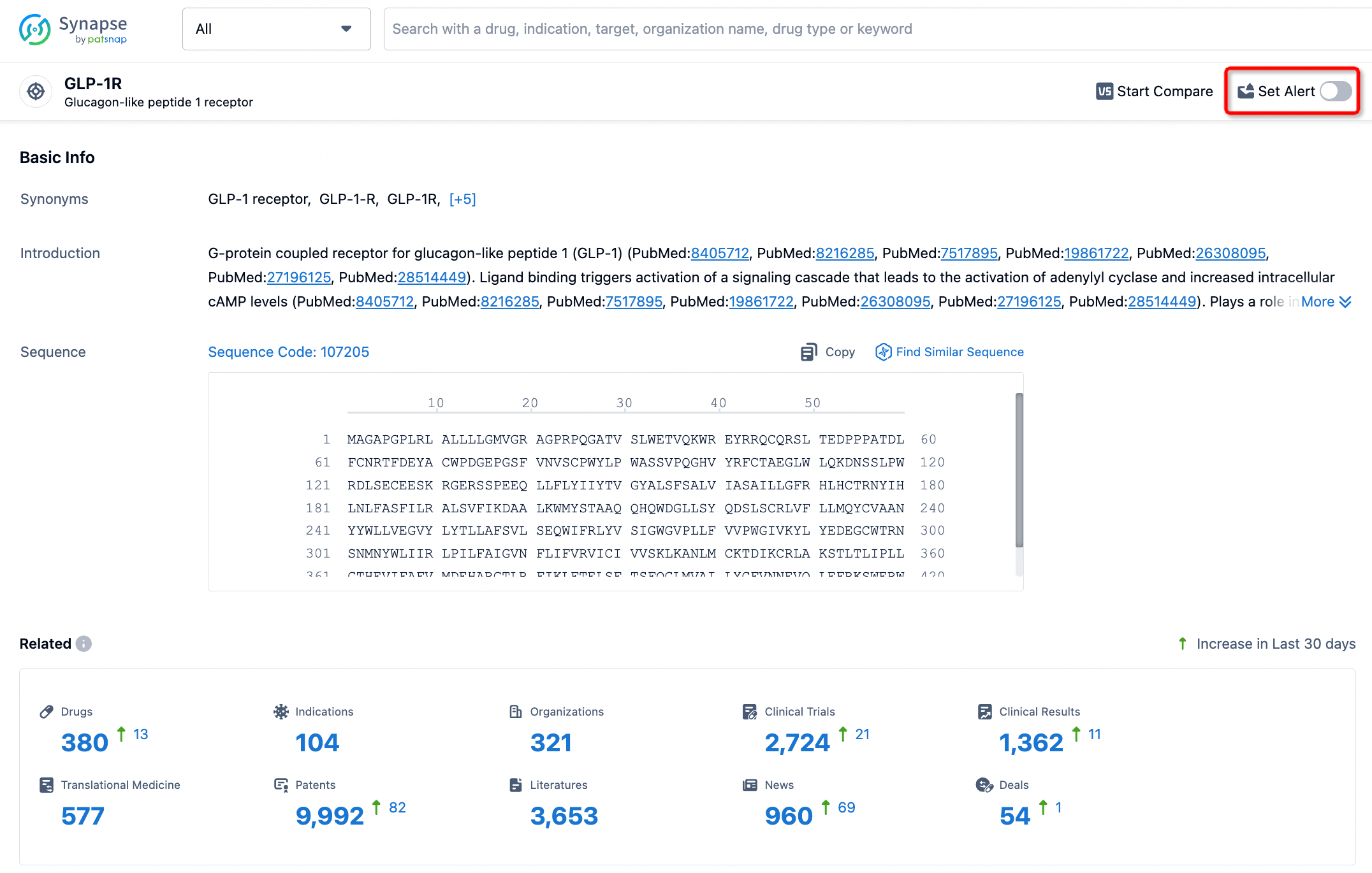
In the Synapse database, you can stay updated on the latest research and development advances of all targets. This service is accessible anytime and anywhere, with updates available daily or weekly. Use the "Set Alert" function to stay informed. Click on the image below to embark on a brand new journey of drug discovery!


Hiro LS Researcher
The AI Search Engine Built to Accelerate Biopharma Decisions
Search across billion-scale life sciences data to uncover signals, validate evidence, and act with confidence.
Ask any biopharma research question→
Get started for free today!
Accelerate Strategic R&D decision making with Synapse, Patsnap’s AI-powered Connected Innovation Intelligence Platform Built for Life Sciences Professionals.
Discover Synapse Data Servers
Synapse data is now integrated into the PatSnap LS Model Context Protocol (MCP) service. Customize your LLM agent now using our MCP server!