Request Demo
What are DGKζ inhibitors and how do they work?
21 June 2024
Diacylglycerol kinase zeta (DGKζ) is an enzyme that plays a pivotal role in cellular signaling by converting diacylglycerol (DAG) into phosphatidic acid (PA). This conversion is crucial for regulating various cellular processes, including cell growth, differentiation, and apoptosis. DGKζ has garnered significant attention in the scientific community, primarily due to its implications in various diseases and its potential as a therapeutic target. DGKζ inhibitors, which are designed to block the activity of this enzyme, are therefore emerging as promising tools in medical research and treatment.
DGKζ inhibitors function by specifically binding to DGKζ and impeding its enzymatic activity. By blocking the conversion of DAG to PA, these inhibitors effectively increase the intracellular levels of DAG while decreasing PA levels. This shift in the balance of these lipid signaling molecules can have profound effects on various signaling pathways within the cell.
DAG itself is a well-known secondary messenger involved in the activation of protein kinase C (PKC) and other signaling proteins. By inhibiting DGKζ, the elevated levels of DAG can sustain the activation of PKC and potentially other downstream targets. This sustained activation can lead to altered cellular responses, which might be harnessed therapeutically. On the other hand, the reduction in PA levels can affect pathways where PA acts as a signaling lipid, leading to further modulation of cellular activities.
One of the most promising applications of DGKζ inhibitors is in the field of cancer treatment. DGKζ has been implicated in the regulation of cell proliferation and survival, processes that are often dysregulated in cancerous cells. By inhibiting DGKζ, researchers aim to disrupt these pathways, potentially leading to the suppression of tumor growth and the induction of cancer cell death. Preclinical studies have shown that DGKζ inhibitors can reduce tumor growth in various cancer models, thus providing a compelling rationale for their further development and clinical testing.
Beyond oncology, DGKζ inhibitors are also being explored for their potential in treating neurological disorders. DGKζ is expressed in the brain, where it is involved in synaptic signaling and plasticity. Dysregulation of DGKζ activity has been linked to conditions such as epilepsy and neurodegenerative diseases. By modulating DGKζ activity with specific inhibitors, there is potential to restore normal signaling and improve neurological outcomes. Animal models have demonstrated some promising results, but more research is needed to fully understand the therapeutic potential in humans.
Cardiovascular diseases represent another area where DGKζ inhibitors might prove beneficial. DGKζ plays a role in vascular smooth muscle cell function and the inflammatory response, both of which are critical in the pathogenesis of cardiovascular diseases such as atherosclerosis and hypertension. Inhibitors of DGKζ could potentially ameliorate these conditions by modulating the signaling pathways involved in vascular inflammation and smooth muscle cell proliferation. Preliminary studies suggest that DGKζ inhibitors may help reduce vascular inflammation and prevent the progression of atherosclerotic plaques, although clinical evidence is still forthcoming.
Additionally, DGKζ inhibitors are being investigated for their potential in immune modulation. The enzyme is involved in the signaling pathways that regulate immune cell activation and function. By targeting DGKζ, it may be possible to develop new treatments for autoimmune diseases, where the immune system attacks the body's own tissues, or to enhance immune responses against infections. Research in this area is still in its early stages, but the potential applications are vast and varied.
In conclusion, DGKζ inhibitors represent a burgeoning area of research with the potential to impact a wide range of diseases. By specifically targeting and modulating the activity of DGKζ, these inhibitors offer new avenues for therapeutic intervention in cancer, neurological disorders, cardiovascular diseases, and immune-related conditions. While much work remains to be done to translate these findings into clinical practice, the initial results are promising and underscore the importance of continued research in this exciting field.
DGKζ inhibitors function by specifically binding to DGKζ and impeding its enzymatic activity. By blocking the conversion of DAG to PA, these inhibitors effectively increase the intracellular levels of DAG while decreasing PA levels. This shift in the balance of these lipid signaling molecules can have profound effects on various signaling pathways within the cell.
DAG itself is a well-known secondary messenger involved in the activation of protein kinase C (PKC) and other signaling proteins. By inhibiting DGKζ, the elevated levels of DAG can sustain the activation of PKC and potentially other downstream targets. This sustained activation can lead to altered cellular responses, which might be harnessed therapeutically. On the other hand, the reduction in PA levels can affect pathways where PA acts as a signaling lipid, leading to further modulation of cellular activities.
One of the most promising applications of DGKζ inhibitors is in the field of cancer treatment. DGKζ has been implicated in the regulation of cell proliferation and survival, processes that are often dysregulated in cancerous cells. By inhibiting DGKζ, researchers aim to disrupt these pathways, potentially leading to the suppression of tumor growth and the induction of cancer cell death. Preclinical studies have shown that DGKζ inhibitors can reduce tumor growth in various cancer models, thus providing a compelling rationale for their further development and clinical testing.
Beyond oncology, DGKζ inhibitors are also being explored for their potential in treating neurological disorders. DGKζ is expressed in the brain, where it is involved in synaptic signaling and plasticity. Dysregulation of DGKζ activity has been linked to conditions such as epilepsy and neurodegenerative diseases. By modulating DGKζ activity with specific inhibitors, there is potential to restore normal signaling and improve neurological outcomes. Animal models have demonstrated some promising results, but more research is needed to fully understand the therapeutic potential in humans.
Cardiovascular diseases represent another area where DGKζ inhibitors might prove beneficial. DGKζ plays a role in vascular smooth muscle cell function and the inflammatory response, both of which are critical in the pathogenesis of cardiovascular diseases such as atherosclerosis and hypertension. Inhibitors of DGKζ could potentially ameliorate these conditions by modulating the signaling pathways involved in vascular inflammation and smooth muscle cell proliferation. Preliminary studies suggest that DGKζ inhibitors may help reduce vascular inflammation and prevent the progression of atherosclerotic plaques, although clinical evidence is still forthcoming.
Additionally, DGKζ inhibitors are being investigated for their potential in immune modulation. The enzyme is involved in the signaling pathways that regulate immune cell activation and function. By targeting DGKζ, it may be possible to develop new treatments for autoimmune diseases, where the immune system attacks the body's own tissues, or to enhance immune responses against infections. Research in this area is still in its early stages, but the potential applications are vast and varied.
In conclusion, DGKζ inhibitors represent a burgeoning area of research with the potential to impact a wide range of diseases. By specifically targeting and modulating the activity of DGKζ, these inhibitors offer new avenues for therapeutic intervention in cancer, neurological disorders, cardiovascular diseases, and immune-related conditions. While much work remains to be done to translate these findings into clinical practice, the initial results are promising and underscore the importance of continued research in this exciting field.
How to obtain the latest development progress of all targets?
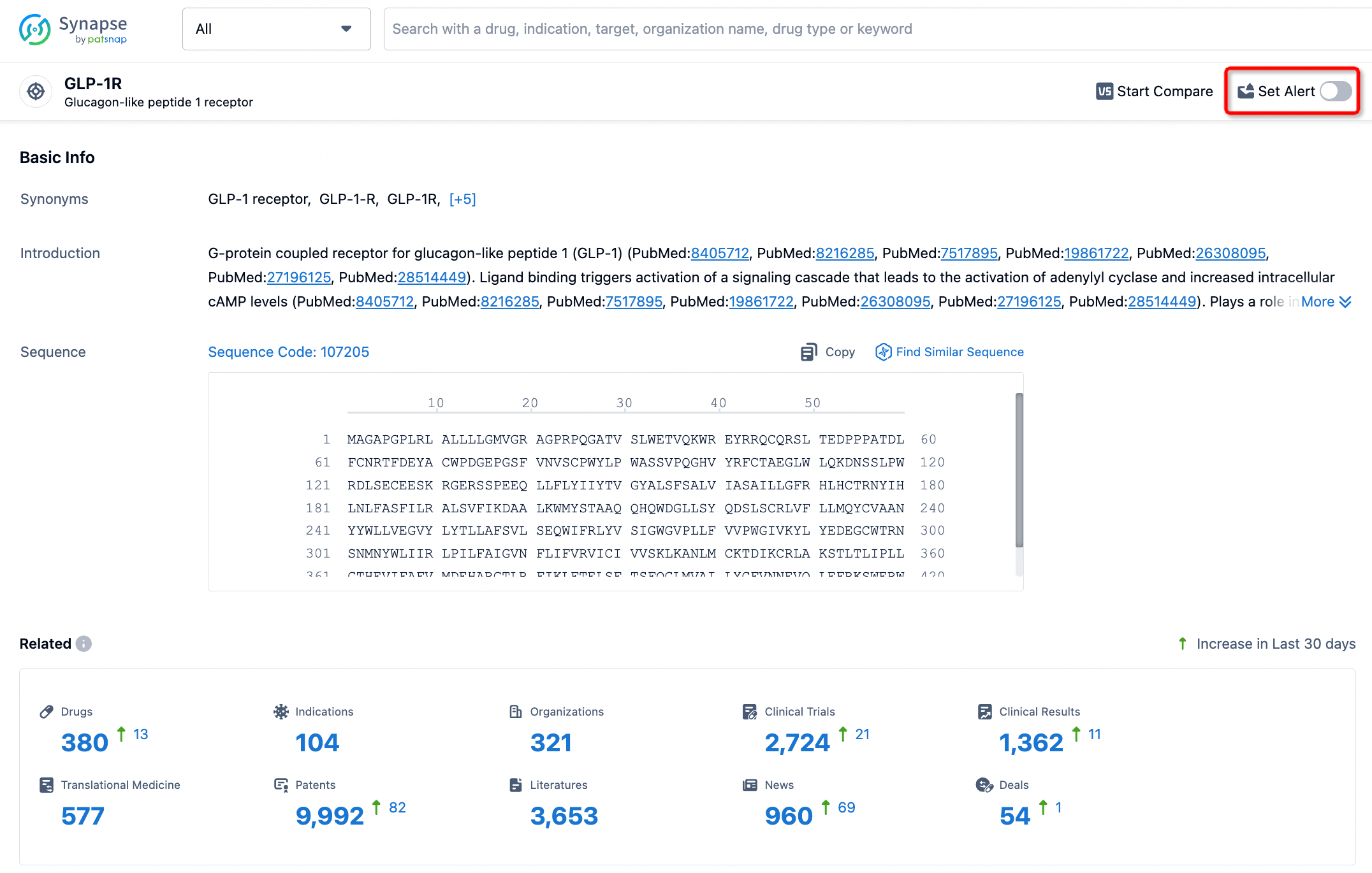
In the Synapse database, you can stay updated on the latest research and development advances of all targets. This service is accessible anytime and anywhere, with updates available daily or weekly. Use the "Set Alert" function to stay informed. Click on the image below to embark on a brand new journey of drug discovery!


AI Agents Built for Biopharma Breakthroughs
Accelerate discovery. Empower decisions. Transform outcomes.
Get started for free today!
Accelerate Strategic R&D decision making with Synapse, PatSnap’s AI-powered Connected Innovation Intelligence Platform Built for Life Sciences Professionals.
Start your data trial now!
Synapse data is also accessible to external entities via APIs or data packages. Empower better decisions with the latest in pharmaceutical intelligence.