Request Demo
What are Dystroglycan stimulants and how do they work?
21 June 2024
Dystroglycan stimulants represent a burgeoning area of research within the fields of molecular biology and medical science. These compounds interact with dystroglycan, a critical protein that plays an indispensable role in the structure and function of various tissues, particularly muscle tissues. The importance of dystroglycan lies in its ability to act as a bridge between the extracellular matrix and the cytoskeleton, supporting cellular stability and integrity. In recent years, scientists have been keenly exploring ways to stimulate dystroglycan activity to potentially treat a variety of muscular and neurological disorders.
Dystroglycan is a complex protein composed of two subunits: alpha-dystroglycan and beta-dystroglycan. The alpha subunit is located on the cell surface and interacts with components of the extracellular matrix, such as laminin. The beta subunit, on the other hand, is embedded in the cell membrane and forms a connection with the cytoskeleton. This structure is particularly vital in muscle cells, where it helps maintain the integrity and functionality of the muscle fiber during contractions and relaxations. In conditions where dystroglycan is malfunctioning or deficient, such as in some forms of muscular dystrophy, this critical link is disrupted, leading to weakened muscle fibers and progressive muscular degeneration.
So, how do dystroglycan stimulants come into play? The working principle of dystroglycan stimulants revolves around enhancing the interaction between dystroglycan and its binding partners in the extracellular matrix. These stimulants can be small molecules, peptides, or even gene therapies that either increase the expression of dystroglycan or enhance its binding affinity. By doing so, dystroglycan stimulants aim to restore or augment the functionality of the dystroglycan complex, thereby stabilizing the muscle fibers and counteracting the deleterious effects seen in dystroglycanopathies.
In essence, dystroglycan stimulants work by either upregulating the production of dystroglycan or enhancing its functional interactions with extracellular matrix components. This upregulation can be achieved through various mechanisms, such as activating specific signaling pathways that promote dystroglycan synthesis or employing gene editing technologies to correct genetic mutations responsible for dystroglycan deficiencies. Another approach involves the use of pharmacological agents that can mimic or potentiate the binding of dystroglycan to its extracellular partners, thereby compensating for any inherent deficiencies.
The therapeutic potential of dystroglycan stimulants is vast, and they are being investigated for a range of medical applications. Perhaps the most prominent use is in the treatment of muscular dystrophies, particularly those classified under dystroglycanopathies. These are a subset of muscular dystrophies characterized by defects in the glycosylation of dystroglycan, which impairs its ability to bind to the extracellular matrix. In conditions like congenital muscular dystrophy and certain limb-girdle muscular dystrophies, enhancing dystroglycan function through stimulants could significantly ameliorate muscle weakness and degeneration.
Moreover, dystroglycan stimulants have potential applications in the context of neurological disorders. Dystroglycan is also expressed in neurons and plays a role in synapse stability and function. Enhancing dystroglycan activity could, therefore, have neuroprotective effects and may be beneficial in conditions such as epilepsy, where synaptic dysfunction is a hallmark.
Beyond muscular and neurological disorders, dystroglycan stimulants might also find uses in regenerative medicine. By promoting the stability and function of dystroglycan, these stimulants could potentially aid in tissue repair and regeneration, making them valuable in treating injuries or degenerative conditions.
In summary, dystroglycan stimulants represent a promising avenue of research with the potential to address a variety of debilitating conditions. By enhancing the function of the dystroglycan complex, these stimulants could offer new hope for patients suffering from muscular dystrophies, neurological disorders, and beyond. As research progresses, the full spectrum of their therapeutic applications will undoubtedly continue to unfold, offering new possibilities for treatment and improved quality of life for many individuals.
Dystroglycan is a complex protein composed of two subunits: alpha-dystroglycan and beta-dystroglycan. The alpha subunit is located on the cell surface and interacts with components of the extracellular matrix, such as laminin. The beta subunit, on the other hand, is embedded in the cell membrane and forms a connection with the cytoskeleton. This structure is particularly vital in muscle cells, where it helps maintain the integrity and functionality of the muscle fiber during contractions and relaxations. In conditions where dystroglycan is malfunctioning or deficient, such as in some forms of muscular dystrophy, this critical link is disrupted, leading to weakened muscle fibers and progressive muscular degeneration.
So, how do dystroglycan stimulants come into play? The working principle of dystroglycan stimulants revolves around enhancing the interaction between dystroglycan and its binding partners in the extracellular matrix. These stimulants can be small molecules, peptides, or even gene therapies that either increase the expression of dystroglycan or enhance its binding affinity. By doing so, dystroglycan stimulants aim to restore or augment the functionality of the dystroglycan complex, thereby stabilizing the muscle fibers and counteracting the deleterious effects seen in dystroglycanopathies.
In essence, dystroglycan stimulants work by either upregulating the production of dystroglycan or enhancing its functional interactions with extracellular matrix components. This upregulation can be achieved through various mechanisms, such as activating specific signaling pathways that promote dystroglycan synthesis or employing gene editing technologies to correct genetic mutations responsible for dystroglycan deficiencies. Another approach involves the use of pharmacological agents that can mimic or potentiate the binding of dystroglycan to its extracellular partners, thereby compensating for any inherent deficiencies.
The therapeutic potential of dystroglycan stimulants is vast, and they are being investigated for a range of medical applications. Perhaps the most prominent use is in the treatment of muscular dystrophies, particularly those classified under dystroglycanopathies. These are a subset of muscular dystrophies characterized by defects in the glycosylation of dystroglycan, which impairs its ability to bind to the extracellular matrix. In conditions like congenital muscular dystrophy and certain limb-girdle muscular dystrophies, enhancing dystroglycan function through stimulants could significantly ameliorate muscle weakness and degeneration.
Moreover, dystroglycan stimulants have potential applications in the context of neurological disorders. Dystroglycan is also expressed in neurons and plays a role in synapse stability and function. Enhancing dystroglycan activity could, therefore, have neuroprotective effects and may be beneficial in conditions such as epilepsy, where synaptic dysfunction is a hallmark.
Beyond muscular and neurological disorders, dystroglycan stimulants might also find uses in regenerative medicine. By promoting the stability and function of dystroglycan, these stimulants could potentially aid in tissue repair and regeneration, making them valuable in treating injuries or degenerative conditions.
In summary, dystroglycan stimulants represent a promising avenue of research with the potential to address a variety of debilitating conditions. By enhancing the function of the dystroglycan complex, these stimulants could offer new hope for patients suffering from muscular dystrophies, neurological disorders, and beyond. As research progresses, the full spectrum of their therapeutic applications will undoubtedly continue to unfold, offering new possibilities for treatment and improved quality of life for many individuals.
How to obtain the latest development progress of all targets?
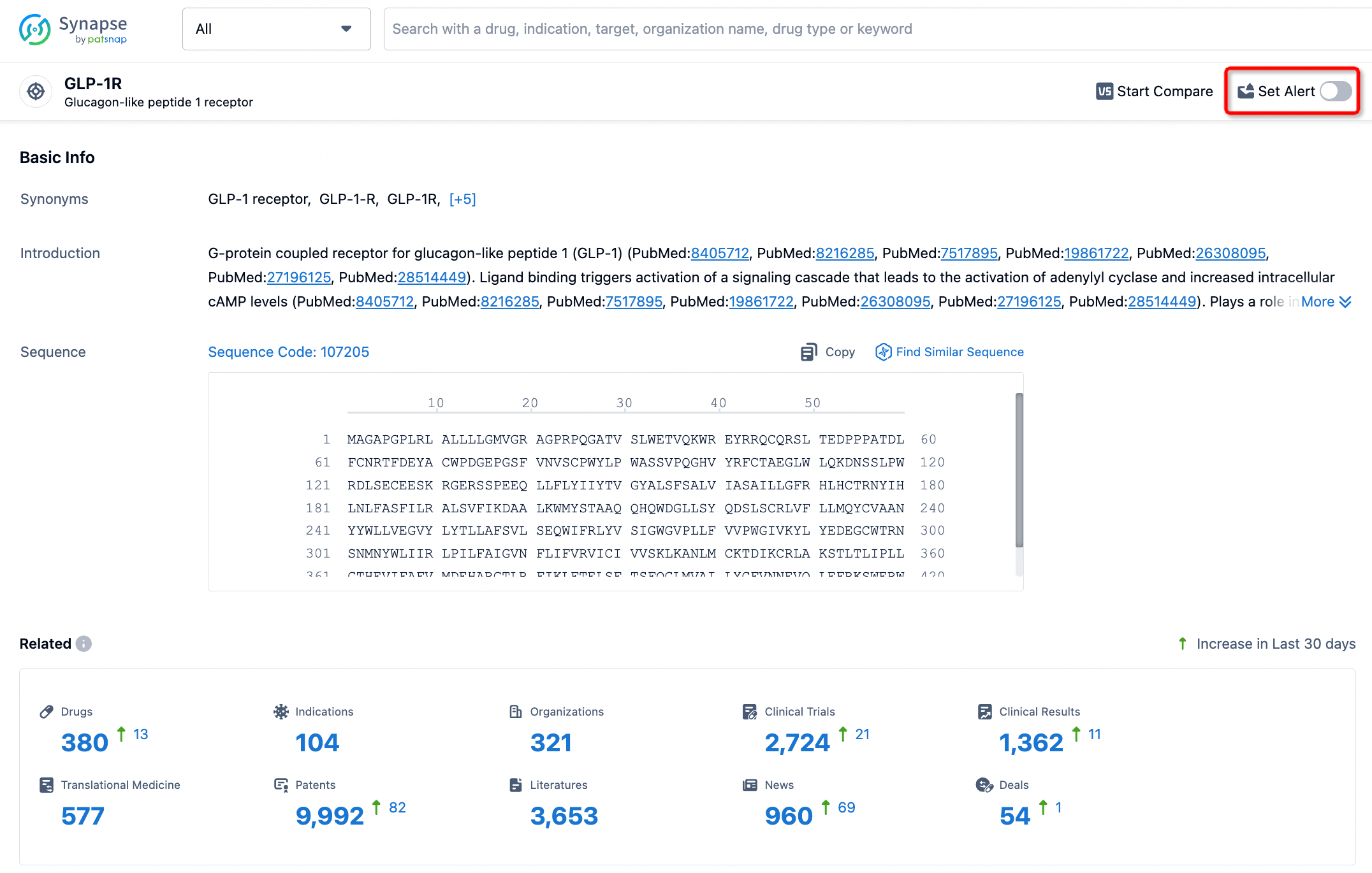
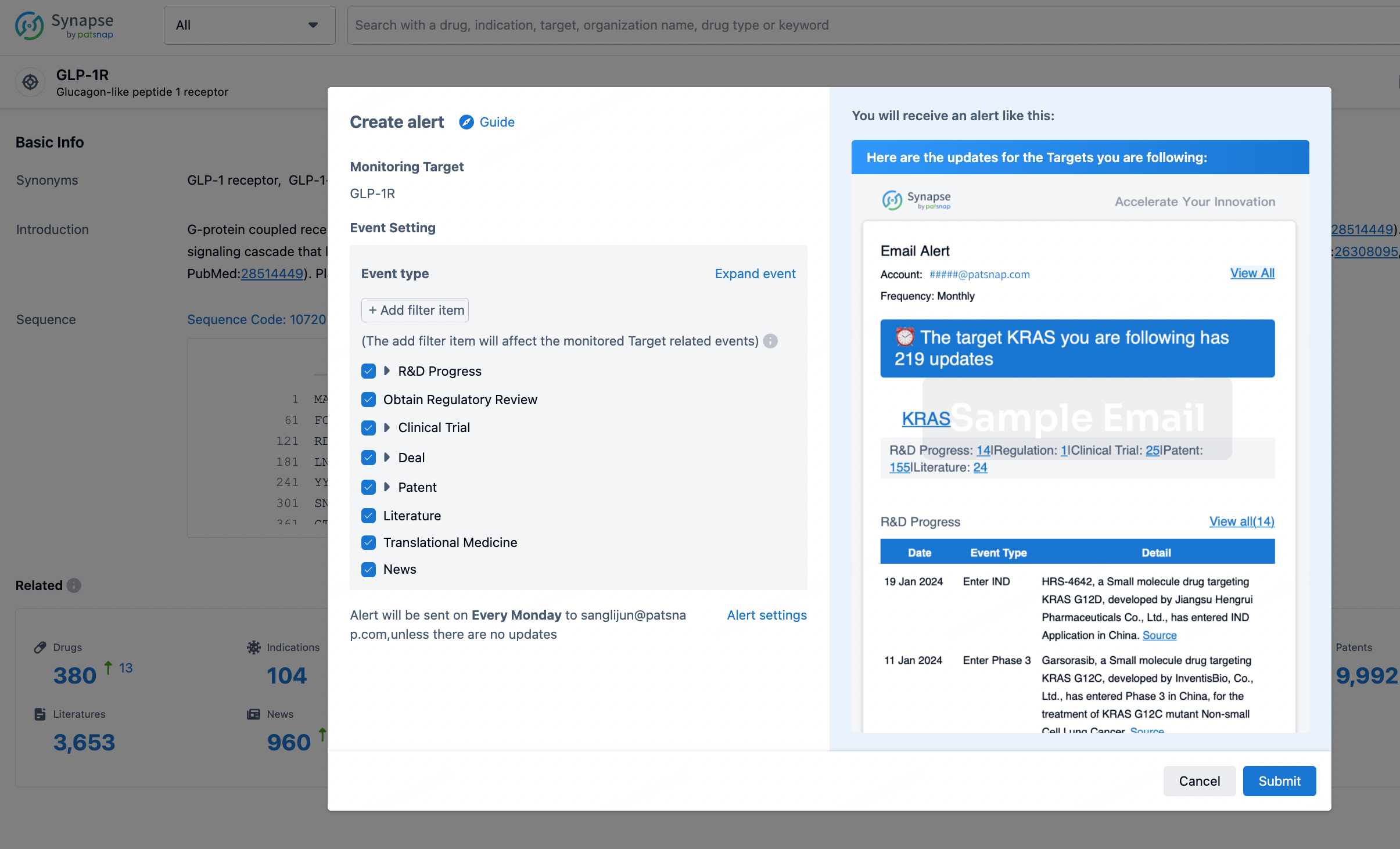
In the Synapse database, you can stay updated on the latest research and development advances of all targets. This service is accessible anytime and anywhere, with updates available daily or weekly. Use the "Set Alert" function to stay informed. Click on the image below to embark on a brand new journey of drug discovery!
AI Agents Built for Biopharma Breakthroughs
Accelerate discovery. Empower decisions. Transform outcomes.
Get started for free today!
Accelerate Strategic R&D decision making with Synapse, PatSnap’s AI-powered Connected Innovation Intelligence Platform Built for Life Sciences Professionals.
Start your data trial now!
Synapse data is also accessible to external entities via APIs or data packages. Empower better decisions with the latest in pharmaceutical intelligence.