Request Demo
What are Falcipain 2 inhibitors and how do they work?
26 June 2024
Falcipain 2 inhibitors have emerged as a promising area of study in the fight against malaria, a mosquito-borne disease that continues to pose a significant global health challenge. Malaria, caused by the Plasmodium genus of parasites, leads to millions of cases and hundreds of thousands of deaths annually, predominantly affecting children in sub-Saharan Africa. Among the proteases utilized by Plasmodium falciparum—the most lethal of the malaria parasites—Falcipain 2 stands out as a critical enzyme in the parasite's lifecycle. By targeting this enzyme, researchers hope to develop novel therapeutic agents that can effectively combat malaria.
Falcipain 2 inhibitors work by disrupting the proteolytic processes essential for the survival and proliferation of P. falciparum within red blood cells. To understand their mechanism of action, it's important to delve into the role of Falcipain 2 in the parasite's biology. Falcipain 2 is a cysteine protease that participates in the degradation of hemoglobin, a vital process for the parasite as it provides essential amino acids required for growth and development. The enzyme is located in the digestive vacuole of the parasite, where it cleaves hemoglobin into smaller peptides that can be further broken down.
When a Falcipain 2 inhibitor is introduced, it binds to the active site of the enzyme, preventing it from cleaving hemoglobin. This inhibition halts the generation of necessary peptides, effectively starving the parasite of the nutrients it needs. Furthermore, the accumulation of undigested hemoglobin and toxic intermediates within the parasite leads to cellular stress and death. By specifically targeting Falcipain 2, these inhibitors ensure minimal impact on the host's own cellular processes, thereby reducing potential side effects.
Falcipain 2 inhibitors are primarily used in the context of anti-malarial drug development. The search for new malaria therapies has become increasingly urgent due to the growing issue of resistance to existing treatments such as chloroquine and artemisinin-based combination therapies (ACTs). Drug resistance is a significant obstacle in malaria control and eradication efforts, necessitating the development of novel compounds with unique mechanisms of action.
In preclinical studies, several classes of Falcipain 2 inhibitors have shown potent anti-malarial activity. These include peptidomimetics, non-peptidic small molecules, and natural product derivatives. Each class offers unique advantages and challenges. For instance, peptidomimetics closely mimic the natural substrates of Falcipain 2, allowing for high specificity and potency. However, their peptide-based nature can sometimes limit their bioavailability and stability. Non-peptidic small molecules, on the other hand, often have better pharmacokinetic properties and can be more easily optimized for oral administration. Natural product derivatives provide a diverse chemical space for drug discovery and often exhibit multi-target activity, which can be advantageous in overcoming resistance.
In addition to their role in drug development, Falcipain 2 inhibitors serve as valuable tools in basic research. By inhibiting Falcipain 2, scientists can study the enzyme's function in greater detail and gain deeper insights into the biology of the malaria parasite. This knowledge can inform the design of new therapeutic strategies and identify potential biomarkers for drug resistance.
Moreover, the success of Falcipain 2 inhibitors could extend beyond malaria. Given that other parasitic diseases are also caused by pathogens that rely on cysteine proteases for survival, these inhibitors may have broader applications. For example, they could be adapted to target proteases in parasites responsible for diseases such as leishmaniasis and Chagas disease, potentially offering new treatment options for these neglected tropical diseases.
In conclusion, Falcipain 2 inhibitors represent a promising frontier in the fight against malaria. By specifically targeting a critical enzyme in the malaria parasite, these inhibitors offer a novel mechanism of action that could help overcome current challenges in malaria treatment, such as drug resistance. As research progresses, the development of Falcipain 2 inhibitors may not only lead to effective new therapies for malaria but also provide insights and tools applicable to a range of parasitic diseases.
Falcipain 2 inhibitors work by disrupting the proteolytic processes essential for the survival and proliferation of P. falciparum within red blood cells. To understand their mechanism of action, it's important to delve into the role of Falcipain 2 in the parasite's biology. Falcipain 2 is a cysteine protease that participates in the degradation of hemoglobin, a vital process for the parasite as it provides essential amino acids required for growth and development. The enzyme is located in the digestive vacuole of the parasite, where it cleaves hemoglobin into smaller peptides that can be further broken down.
When a Falcipain 2 inhibitor is introduced, it binds to the active site of the enzyme, preventing it from cleaving hemoglobin. This inhibition halts the generation of necessary peptides, effectively starving the parasite of the nutrients it needs. Furthermore, the accumulation of undigested hemoglobin and toxic intermediates within the parasite leads to cellular stress and death. By specifically targeting Falcipain 2, these inhibitors ensure minimal impact on the host's own cellular processes, thereby reducing potential side effects.
Falcipain 2 inhibitors are primarily used in the context of anti-malarial drug development. The search for new malaria therapies has become increasingly urgent due to the growing issue of resistance to existing treatments such as chloroquine and artemisinin-based combination therapies (ACTs). Drug resistance is a significant obstacle in malaria control and eradication efforts, necessitating the development of novel compounds with unique mechanisms of action.
In preclinical studies, several classes of Falcipain 2 inhibitors have shown potent anti-malarial activity. These include peptidomimetics, non-peptidic small molecules, and natural product derivatives. Each class offers unique advantages and challenges. For instance, peptidomimetics closely mimic the natural substrates of Falcipain 2, allowing for high specificity and potency. However, their peptide-based nature can sometimes limit their bioavailability and stability. Non-peptidic small molecules, on the other hand, often have better pharmacokinetic properties and can be more easily optimized for oral administration. Natural product derivatives provide a diverse chemical space for drug discovery and often exhibit multi-target activity, which can be advantageous in overcoming resistance.
In addition to their role in drug development, Falcipain 2 inhibitors serve as valuable tools in basic research. By inhibiting Falcipain 2, scientists can study the enzyme's function in greater detail and gain deeper insights into the biology of the malaria parasite. This knowledge can inform the design of new therapeutic strategies and identify potential biomarkers for drug resistance.
Moreover, the success of Falcipain 2 inhibitors could extend beyond malaria. Given that other parasitic diseases are also caused by pathogens that rely on cysteine proteases for survival, these inhibitors may have broader applications. For example, they could be adapted to target proteases in parasites responsible for diseases such as leishmaniasis and Chagas disease, potentially offering new treatment options for these neglected tropical diseases.
In conclusion, Falcipain 2 inhibitors represent a promising frontier in the fight against malaria. By specifically targeting a critical enzyme in the malaria parasite, these inhibitors offer a novel mechanism of action that could help overcome current challenges in malaria treatment, such as drug resistance. As research progresses, the development of Falcipain 2 inhibitors may not only lead to effective new therapies for malaria but also provide insights and tools applicable to a range of parasitic diseases.
How to obtain the latest development progress of all targets?
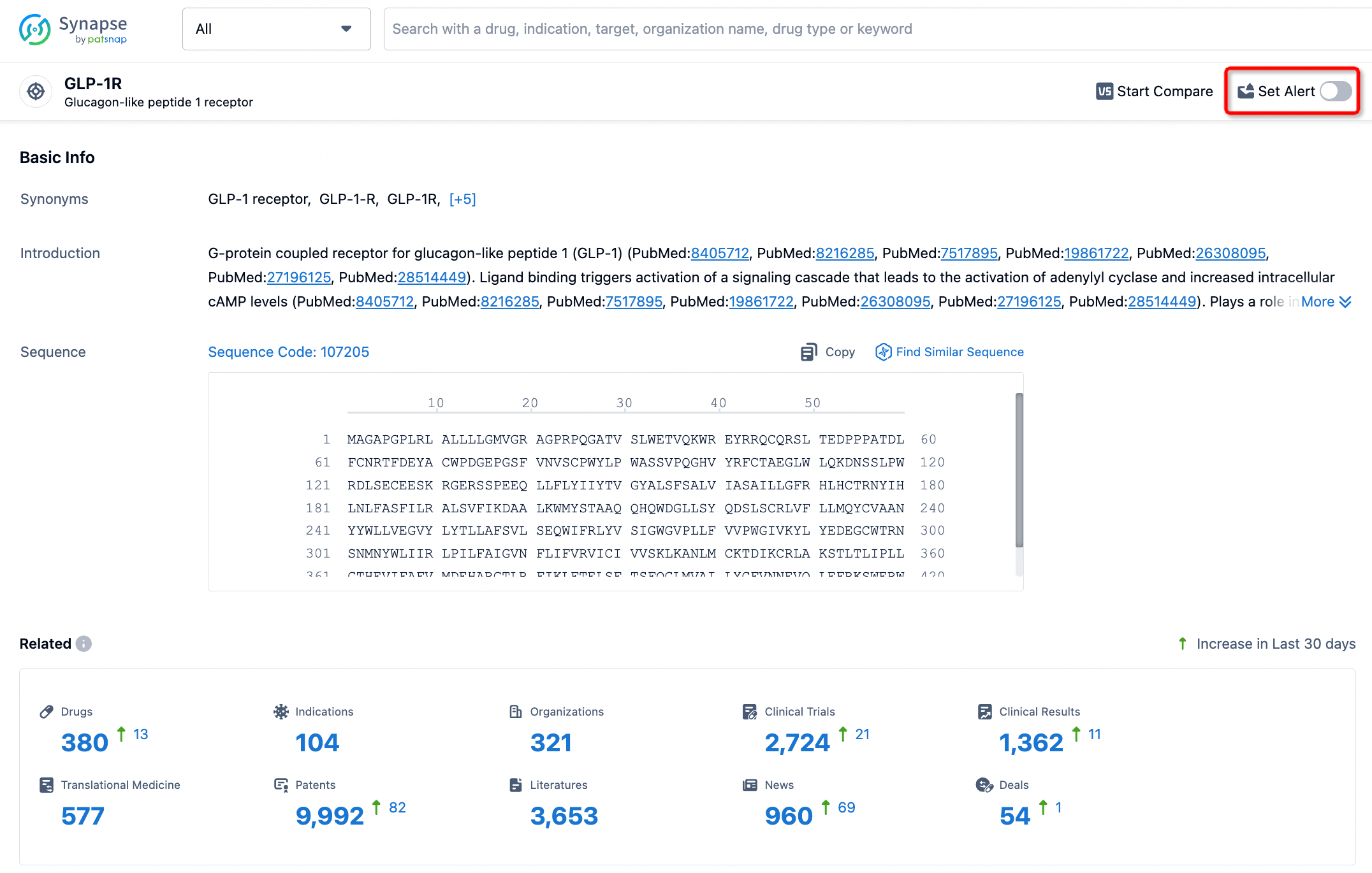
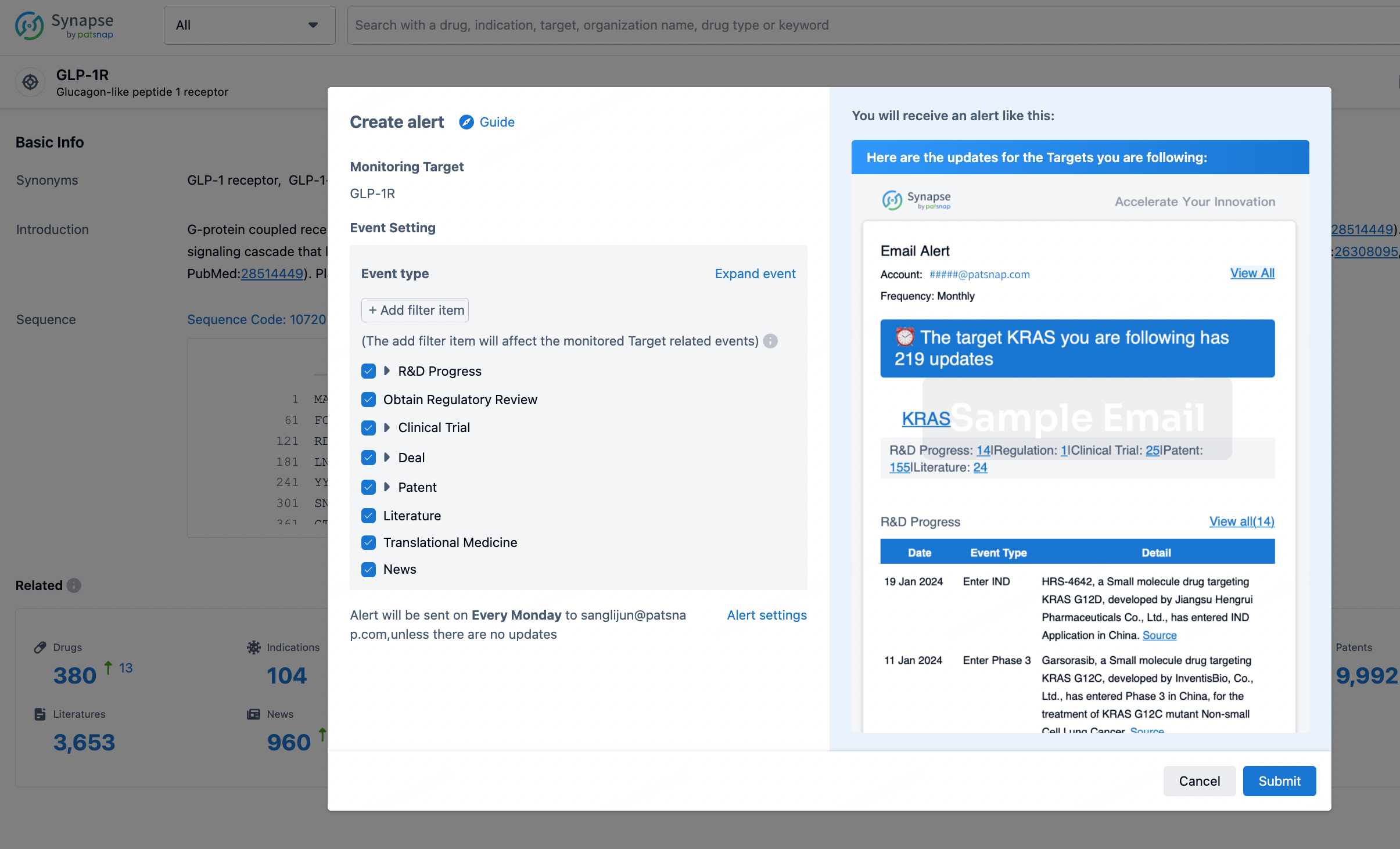
In the Synapse database, you can stay updated on the latest research and development advances of all targets. This service is accessible anytime and anywhere, with updates available daily or weekly. Use the "Set Alert" function to stay informed. Click on the image below to embark on a brand new journey of drug discovery!

AI Agents Built for Biopharma Breakthroughs
Accelerate discovery. Empower decisions. Transform outcomes.
Get started for free today!
Accelerate Strategic R&D decision making with Synapse, PatSnap’s AI-powered Connected Innovation Intelligence Platform Built for Life Sciences Professionals.
Start your data trial now!
Synapse data is also accessible to external entities via APIs or data packages. Empower better decisions with the latest in pharmaceutical intelligence.