Request Demo
What are FGF13 modulators and how do they work?
25 June 2024
Fibroblast Growth Factor 13 (FGF13) is a member of the fibroblast growth factor (FGF) family, which plays a crucial role in various cellular processes, including proliferation, differentiation, and survival. FGF13 is particularly significant in the context of neural development and function. Modulators of FGF13, which can either inhibit or enhance its activity, have emerged as potential therapeutic agents for a variety of medical conditions. In this blog post, we will delve into the world of FGF13 modulators, exploring their mechanisms of action and potential therapeutic applications.
FGF13 modulators are agents or compounds that can influence the activity of FGF13. These modulators can be small molecules, peptides, or other forms of biologics designed to either inhibit or enhance the function of FGF13. The ability to modulate FGF13 activity opens up new avenues for treating diseases where FGF13 is implicated, including neurodevelopmental disorders, neurodegenerative diseases, and certain forms of cancer.
FGF13 modulators operate by interacting with the signaling pathways and cellular mechanisms that FGF13 is involved in. FGF13 typically binds to specific receptors on the cell surface, initiating a cascade of intracellular events that influence gene expression, cell cycle progression, and other cellular activities. Modulators can affect this process in several ways:
1. **Receptor Interaction**: Some FGF13 modulators work by directly binding to FGF13 receptors, either blocking or mimicking the natural ligand's effect. By preventing FGF13 from interacting with its receptor, inhibitors can reduce downstream signaling. Conversely, agonists can enhance receptor activation, amplifying the signaling pathways.
2. **Ligand Binding**: Other modulators may bind to FGF13 itself, preventing it from interacting with its receptor or altering its conformation to either inhibit or stimulate its activity.
3. **Downstream Signaling Pathways**: Some modulators target the intracellular signaling pathways activated by FGF13-receptor binding. By influencing these pathways, modulators can fine-tune the cellular responses to FGF13.
4. **Gene Expression**: Certain modulators work at the genetic level, influencing the expression of FGF13 or its receptors. By upregulating or downregulating these genes, they can alter the overall activity of the FGF13 signaling axis.
The therapeutic potential of FGF13 modulators is vast, given the critical roles that FGF13 plays in various biological processes. Here are some of the key areas where FGF13 modulators are showing promise:
1. **Neurodevelopmental Disorders**: FGF13 is vital for proper neural development and function. Modulating its activity could offer new treatment options for neurodevelopmental disorders such as autism spectrum disorders (ASD) and intellectual disabilities. By enhancing FGF13 activity, it may be possible to support neuronal growth and connectivity, potentially improving cognitive and behavioral outcomes.
2. **Neurodegenerative Diseases**: Conditions like Alzheimer's disease, Parkinson's disease, and amyotrophic lateral sclerosis (ALS) are characterized by the progressive loss of neurons. FGF13 modulators could help protect neurons and promote their survival, potentially slowing disease progression and alleviating symptoms.
3. **Cardiovascular Diseases**: FGF13 is also involved in cardiac development and function. Modulators of FGF13 may have potential in treating heart diseases, particularly those involving cardiac fibrosis or ischemic damage. By promoting cardiac cell survival and regeneration, these modulators could aid in heart tissue repair and recovery.
4. **Cancer**: Aberrant FGF signaling is implicated in various cancers. FGF13 modulators could be utilized to inhibit cancer cell proliferation and survival. By targeting the FGF13 pathway, these modulators might offer a new approach to cancer therapy, particularly for tumors that are resistant to conventional treatments.
5. **Pain Management**: FGF13 has been shown to play a role in pain perception. Modulating its activity could provide a novel approach to pain management, potentially offering relief for chronic pain conditions that are difficult to treat with existing medications.
In conclusion, FGF13 modulators represent a burgeoning field of research with significant therapeutic potential. By understanding and manipulating the activity of FGF13, scientists and clinicians can explore new treatment options for a wide range of diseases, from neurodevelopmental and neurodegenerative disorders to cardiovascular diseases and cancer. As research continues to unravel the complexities of FGF13 signaling, the development of effective modulators could pave the way for innovative and targeted therapies.
FGF13 modulators are agents or compounds that can influence the activity of FGF13. These modulators can be small molecules, peptides, or other forms of biologics designed to either inhibit or enhance the function of FGF13. The ability to modulate FGF13 activity opens up new avenues for treating diseases where FGF13 is implicated, including neurodevelopmental disorders, neurodegenerative diseases, and certain forms of cancer.
FGF13 modulators operate by interacting with the signaling pathways and cellular mechanisms that FGF13 is involved in. FGF13 typically binds to specific receptors on the cell surface, initiating a cascade of intracellular events that influence gene expression, cell cycle progression, and other cellular activities. Modulators can affect this process in several ways:
1. **Receptor Interaction**: Some FGF13 modulators work by directly binding to FGF13 receptors, either blocking or mimicking the natural ligand's effect. By preventing FGF13 from interacting with its receptor, inhibitors can reduce downstream signaling. Conversely, agonists can enhance receptor activation, amplifying the signaling pathways.
2. **Ligand Binding**: Other modulators may bind to FGF13 itself, preventing it from interacting with its receptor or altering its conformation to either inhibit or stimulate its activity.
3. **Downstream Signaling Pathways**: Some modulators target the intracellular signaling pathways activated by FGF13-receptor binding. By influencing these pathways, modulators can fine-tune the cellular responses to FGF13.
4. **Gene Expression**: Certain modulators work at the genetic level, influencing the expression of FGF13 or its receptors. By upregulating or downregulating these genes, they can alter the overall activity of the FGF13 signaling axis.
The therapeutic potential of FGF13 modulators is vast, given the critical roles that FGF13 plays in various biological processes. Here are some of the key areas where FGF13 modulators are showing promise:
1. **Neurodevelopmental Disorders**: FGF13 is vital for proper neural development and function. Modulating its activity could offer new treatment options for neurodevelopmental disorders such as autism spectrum disorders (ASD) and intellectual disabilities. By enhancing FGF13 activity, it may be possible to support neuronal growth and connectivity, potentially improving cognitive and behavioral outcomes.
2. **Neurodegenerative Diseases**: Conditions like Alzheimer's disease, Parkinson's disease, and amyotrophic lateral sclerosis (ALS) are characterized by the progressive loss of neurons. FGF13 modulators could help protect neurons and promote their survival, potentially slowing disease progression and alleviating symptoms.
3. **Cardiovascular Diseases**: FGF13 is also involved in cardiac development and function. Modulators of FGF13 may have potential in treating heart diseases, particularly those involving cardiac fibrosis or ischemic damage. By promoting cardiac cell survival and regeneration, these modulators could aid in heart tissue repair and recovery.
4. **Cancer**: Aberrant FGF signaling is implicated in various cancers. FGF13 modulators could be utilized to inhibit cancer cell proliferation and survival. By targeting the FGF13 pathway, these modulators might offer a new approach to cancer therapy, particularly for tumors that are resistant to conventional treatments.
5. **Pain Management**: FGF13 has been shown to play a role in pain perception. Modulating its activity could provide a novel approach to pain management, potentially offering relief for chronic pain conditions that are difficult to treat with existing medications.
In conclusion, FGF13 modulators represent a burgeoning field of research with significant therapeutic potential. By understanding and manipulating the activity of FGF13, scientists and clinicians can explore new treatment options for a wide range of diseases, from neurodevelopmental and neurodegenerative disorders to cardiovascular diseases and cancer. As research continues to unravel the complexities of FGF13 signaling, the development of effective modulators could pave the way for innovative and targeted therapies.
How to obtain the latest development progress of all targets?
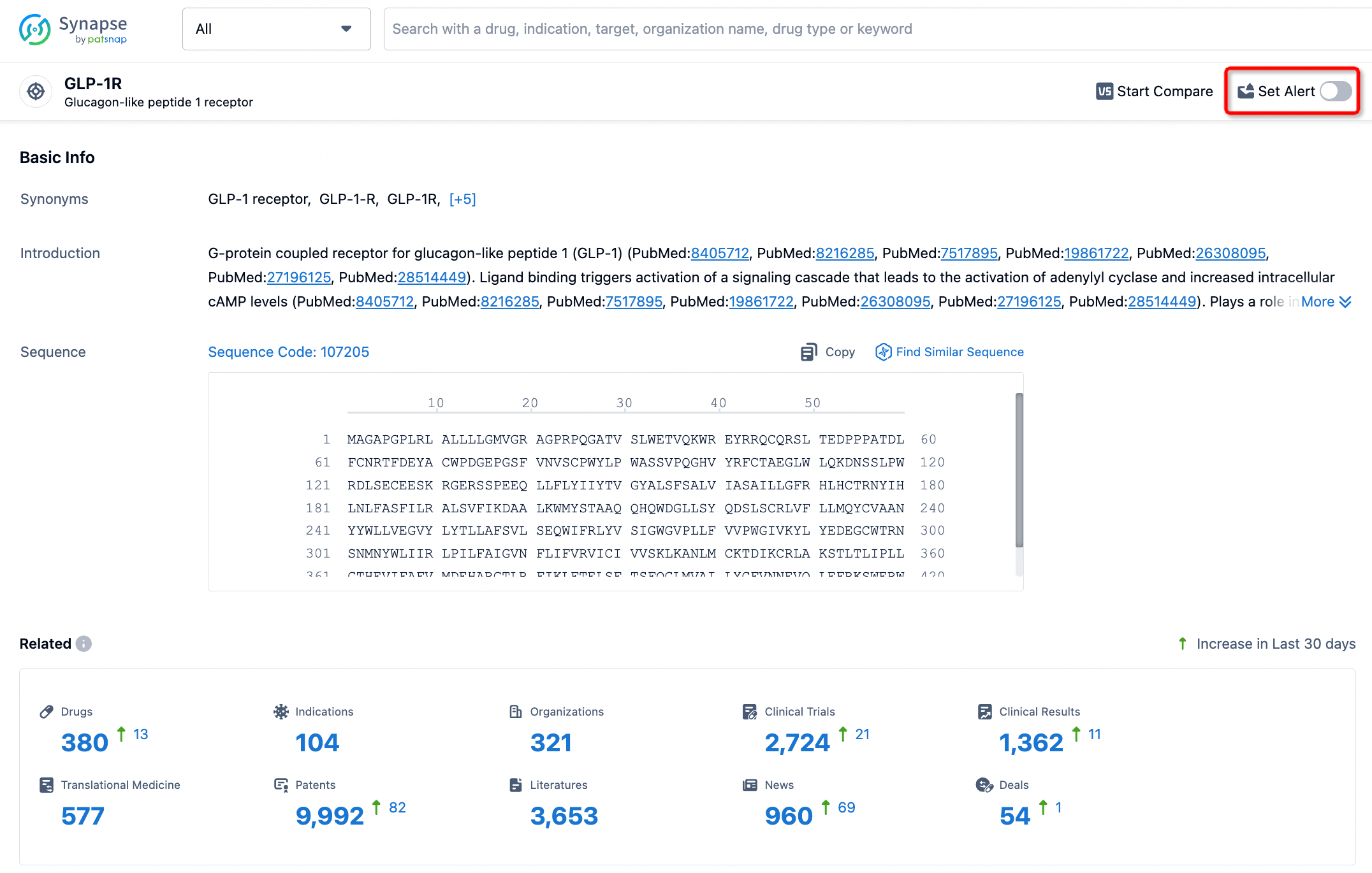
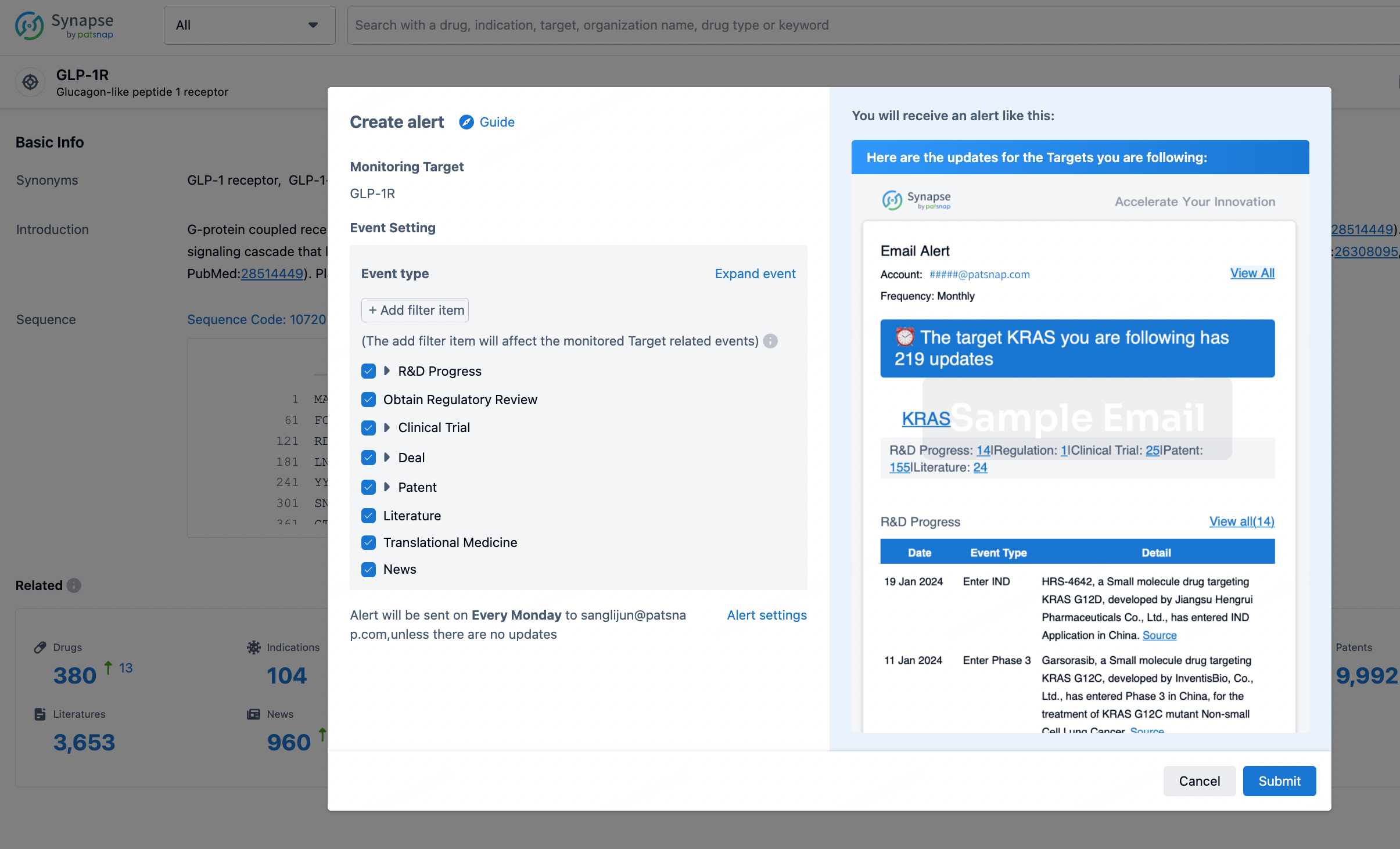
In the Synapse database, you can stay updated on the latest research and development advances of all targets. This service is accessible anytime and anywhere, with updates available daily or weekly. Use the "Set Alert" function to stay informed. Click on the image below to embark on a brand new journey of drug discovery!
AI Agents Built for Biopharma Breakthroughs
Accelerate discovery. Empower decisions. Transform outcomes.
Get started for free today!
Accelerate Strategic R&D decision making with Synapse, PatSnap’s AI-powered Connected Innovation Intelligence Platform Built for Life Sciences Professionals.
Start your data trial now!
Synapse data is also accessible to external entities via APIs or data packages. Empower better decisions with the latest in pharmaceutical intelligence.