Request Demo
What are GABRA5 agonists and how do they work?
25 June 2024
In recent years, the field of neuroscience has witnessed significant breakthroughs in our understanding of brain function and its modulation through pharmacological agents. Among these advances, GABRA5 agonists have emerged as a compelling area of research due to their potential therapeutic applications. These compounds are designed to target the GABRA5 receptor, a subtype of the GABA-A receptor complex, which plays a crucial role in regulating neuronal excitability. In this article, we will delve into the intricacies of GABRA5 agonists, their mechanisms of action, and their potential uses in medical treatment.
GABRA5 agonists are a class of drugs that specifically activate the alpha-5 subunit-containing GABA-A receptors in the brain. The GABA-A receptor is a ligand-gated ion channel that mediates the inhibitory effects of gamma-aminobutyric acid (GABA), the primary inhibitory neurotransmitter in the central nervous system. The receptor is a pentameric complex composed of various subunits, and the specific composition of these subunits determines the receptor's pharmacological properties. The alpha-5 subunit is predominantly expressed in the hippocampus, a brain region critically involved in learning and memory processes.
By selectively targeting the GABRA5 subunit, these agonists can modulate the inhibitory signaling in specific neuronal circuits without broadly affecting the entire GABAergic system. This specificity is advantageous because it allows for the fine-tuning of neural activity, potentially reducing the risk of side effects commonly associated with non-selective GABAergic drugs. For instance, non-specific GABA-A receptor agonists like benzodiazepines are effective anxiolytics but come with drawbacks such as sedation, tolerance, and dependence. GABRA5 agonists, on the other hand, offer the possibility of achieving therapeutic effects with a more favorable side-effect profile.
The principal mechanism of action of GABRA5 agonists involves enhancing the inhibitory neurotransmission mediated by GABA-A receptors containing the alpha-5 subunit. When these agonists bind to the receptor, they increase the receptor's affinity for GABA, thereby potentiating its inhibitory effects. This results in a hyperpolarization of the neuronal membrane, making it less likely for the neuron to fire action potentials. In other words, GABRA5 agonists amplify the natural "braking" system of the brain, helping to dampen excessive neuronal activity.
Research has shown that the alpha-5 subunit-containing GABA-A receptors are disproportionately involved in hippocampal function. The hippocampus is essential for various cognitive tasks, including the formation and retrieval of memories. By modulating the activity of these receptors, GABRA5 agonists can influence cognitive processes, particularly those related to learning and memory. Additionally, these receptors have been implicated in the regulation of anxiety and emotional responses, suggesting that GABRA5 agonists might also affect mood and emotional states.
Given their unique mechanism of action, GABRA5 agonists have been explored for a variety of therapeutic applications. One of the most promising areas of research is the treatment of cognitive disorders, such as Alzheimer's disease and other forms of dementia. Cognitive decline in these conditions is often associated with disrupted hippocampal function, and by enhancing inhibitory signaling in this brain region, GABRA5 agonists may help to mitigate memory deficits and improve cognitive performance.
In addition to their potential in treating cognitive disorders, GABRA5 agonists are being investigated for their anxiolytic properties. Unlike traditional anti-anxiety medications, which can produce sedation and impair cognitive function, GABRA5 agonists are hypothesized to reduce anxiety without these undesirable effects. This makes them an attractive alternative for patients who require anxiety relief but need to maintain cognitive clarity and alertness.
Moreover, preliminary studies suggest that GABRA5 agonists could have a role in managing conditions like epilepsy and chronic pain. In epilepsy, aberrant neuronal excitability leads to seizures, and enhancing inhibitory control through GABRA5 receptors could help to stabilize neuronal firing patterns. Similarly, in chronic pain conditions, these agonists might modulate pain perception by influencing the inhibitory pathways in the central nervous system.
In conclusion, GABRA5 agonists represent a promising frontier in neuropharmacology, offering the potential for targeted therapeutic interventions with fewer side effects compared to traditional GABAergic drugs. As research continues to unravel their full therapeutic potential, these compounds may become invaluable tools in the treatment of cognitive disorders, anxiety, epilepsy, and chronic pain, providing hope for improved quality of life for many patients.
GABRA5 agonists are a class of drugs that specifically activate the alpha-5 subunit-containing GABA-A receptors in the brain. The GABA-A receptor is a ligand-gated ion channel that mediates the inhibitory effects of gamma-aminobutyric acid (GABA), the primary inhibitory neurotransmitter in the central nervous system. The receptor is a pentameric complex composed of various subunits, and the specific composition of these subunits determines the receptor's pharmacological properties. The alpha-5 subunit is predominantly expressed in the hippocampus, a brain region critically involved in learning and memory processes.
By selectively targeting the GABRA5 subunit, these agonists can modulate the inhibitory signaling in specific neuronal circuits without broadly affecting the entire GABAergic system. This specificity is advantageous because it allows for the fine-tuning of neural activity, potentially reducing the risk of side effects commonly associated with non-selective GABAergic drugs. For instance, non-specific GABA-A receptor agonists like benzodiazepines are effective anxiolytics but come with drawbacks such as sedation, tolerance, and dependence. GABRA5 agonists, on the other hand, offer the possibility of achieving therapeutic effects with a more favorable side-effect profile.
The principal mechanism of action of GABRA5 agonists involves enhancing the inhibitory neurotransmission mediated by GABA-A receptors containing the alpha-5 subunit. When these agonists bind to the receptor, they increase the receptor's affinity for GABA, thereby potentiating its inhibitory effects. This results in a hyperpolarization of the neuronal membrane, making it less likely for the neuron to fire action potentials. In other words, GABRA5 agonists amplify the natural "braking" system of the brain, helping to dampen excessive neuronal activity.
Research has shown that the alpha-5 subunit-containing GABA-A receptors are disproportionately involved in hippocampal function. The hippocampus is essential for various cognitive tasks, including the formation and retrieval of memories. By modulating the activity of these receptors, GABRA5 agonists can influence cognitive processes, particularly those related to learning and memory. Additionally, these receptors have been implicated in the regulation of anxiety and emotional responses, suggesting that GABRA5 agonists might also affect mood and emotional states.
Given their unique mechanism of action, GABRA5 agonists have been explored for a variety of therapeutic applications. One of the most promising areas of research is the treatment of cognitive disorders, such as Alzheimer's disease and other forms of dementia. Cognitive decline in these conditions is often associated with disrupted hippocampal function, and by enhancing inhibitory signaling in this brain region, GABRA5 agonists may help to mitigate memory deficits and improve cognitive performance.
In addition to their potential in treating cognitive disorders, GABRA5 agonists are being investigated for their anxiolytic properties. Unlike traditional anti-anxiety medications, which can produce sedation and impair cognitive function, GABRA5 agonists are hypothesized to reduce anxiety without these undesirable effects. This makes them an attractive alternative for patients who require anxiety relief but need to maintain cognitive clarity and alertness.
Moreover, preliminary studies suggest that GABRA5 agonists could have a role in managing conditions like epilepsy and chronic pain. In epilepsy, aberrant neuronal excitability leads to seizures, and enhancing inhibitory control through GABRA5 receptors could help to stabilize neuronal firing patterns. Similarly, in chronic pain conditions, these agonists might modulate pain perception by influencing the inhibitory pathways in the central nervous system.
In conclusion, GABRA5 agonists represent a promising frontier in neuropharmacology, offering the potential for targeted therapeutic interventions with fewer side effects compared to traditional GABAergic drugs. As research continues to unravel their full therapeutic potential, these compounds may become invaluable tools in the treatment of cognitive disorders, anxiety, epilepsy, and chronic pain, providing hope for improved quality of life for many patients.
How to obtain the latest development progress of all targets?
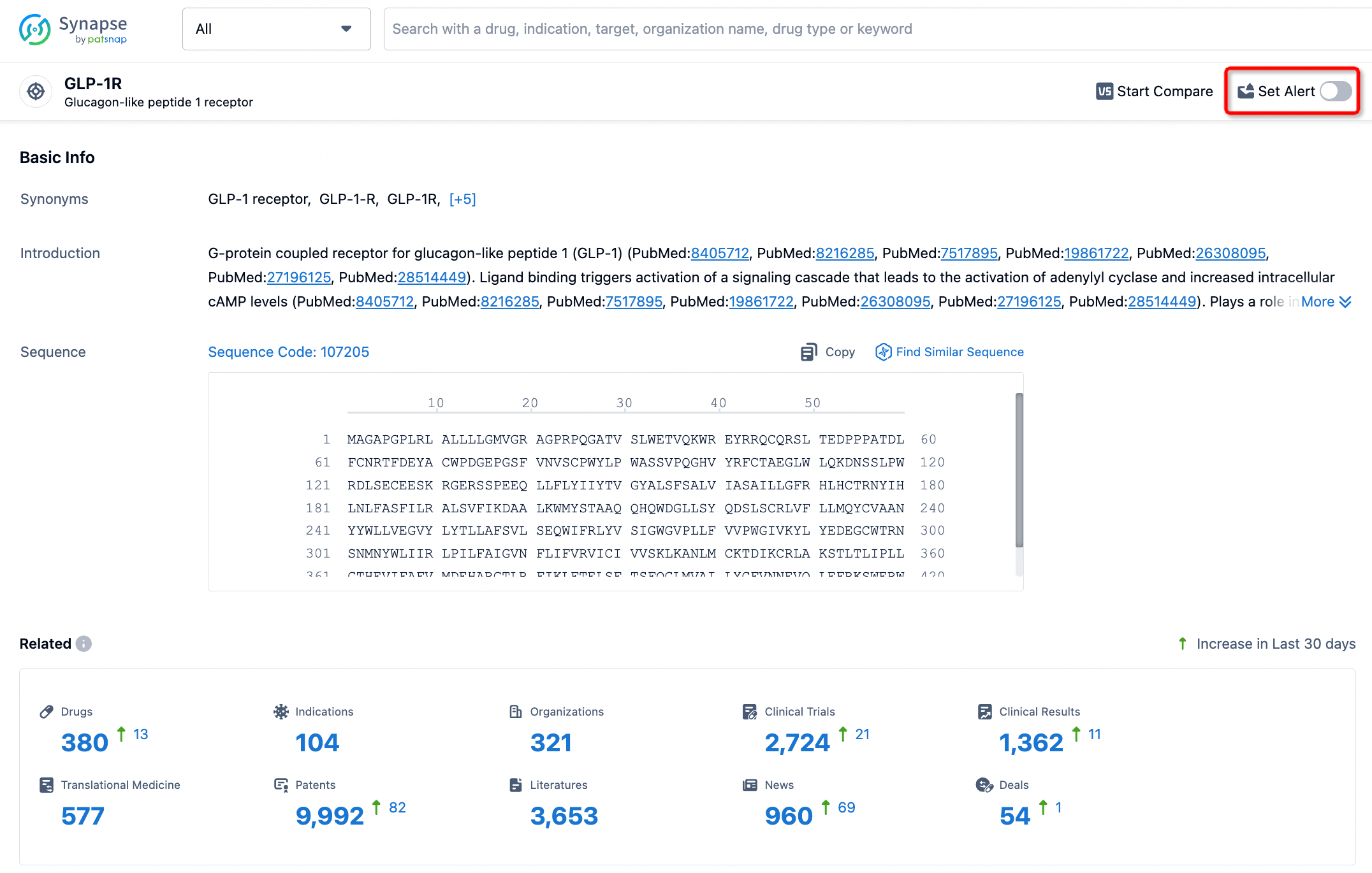
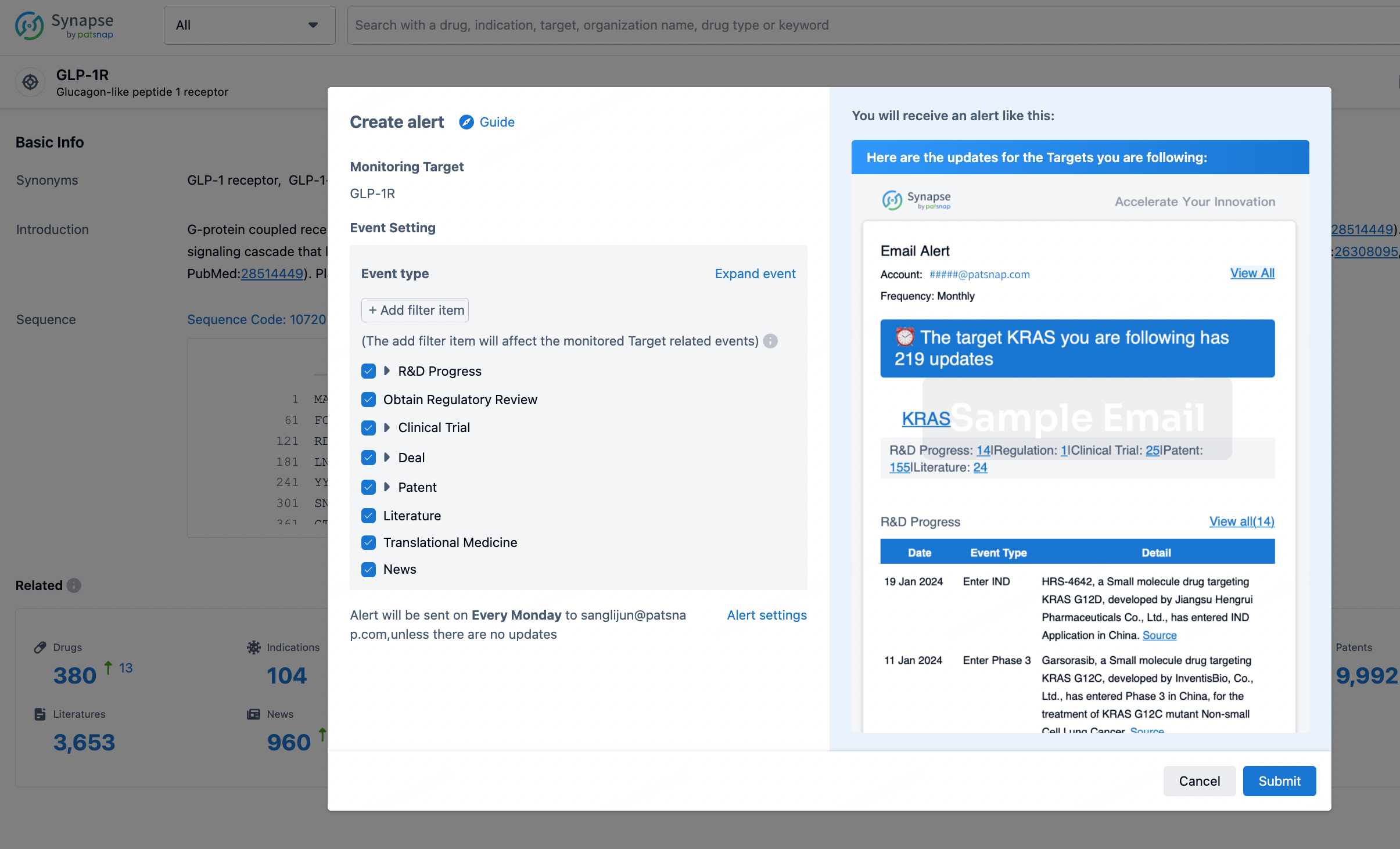
In the Synapse database, you can stay updated on the latest research and development advances of all targets. This service is accessible anytime and anywhere, with updates available daily or weekly. Use the "Set Alert" function to stay informed. Click on the image below to embark on a brand new journey of drug discovery!
AI Agents Built for Biopharma Breakthroughs
Accelerate discovery. Empower decisions. Transform outcomes.
Get started for free today!
Accelerate Strategic R&D decision making with Synapse, PatSnap’s AI-powered Connected Innovation Intelligence Platform Built for Life Sciences Professionals.
Start your data trial now!
Synapse data is also accessible to external entities via APIs or data packages. Empower better decisions with the latest in pharmaceutical intelligence.