Request Demo
What are GluK2 modulators and how do they work?
25 June 2024
In the realm of neuroscience and pharmacology, the study of glutamate receptors has always been a focal point due to their critical role in synaptic transmission and plasticity. Among these receptors, the kainate subtype has gained considerable attention, particularly the GluK2 subunit. GluK2 modulators, which selectively bind to and influence the behavior of these receptors, represent a fascinating and promising area of research that could lead to novel therapeutic applications.
GluK2, a subunit of kainate receptors, is integral to mediating excitatory neurotransmission in the brain. These receptors are ionotropic, meaning they form ion channels that open in response to the binding of the neurotransmitter glutamate. The modulation of GluK2 receptors can alter neuronal excitability and synaptic plasticity, which are foundational processes for learning, memory, and overall brain function. By either enhancing or inhibiting the activity of these receptors, GluK2 modulators can fine-tune synaptic responses and potentially rectify dysregulated neurotransmission observed in various neurological disorders.
GluK2 modulators operate through a variety of mechanisms, depending on their nature as either agonists, antagonists, or allosteric modulators. Agonists bind to the same site as glutamate, activating the receptor and amplifying its response. Antagonists, on the other hand, block the receptor's active site, preventing glutamate from binding and thereby inhibiting its activity. Allosteric modulators bind to a different site on the receptor, inducing a conformational change that either enhances (positive allosteric modulators) or diminishes (negative allosteric modulators) the receptor's response to glutamate.
These modulators can be highly selective, targeting GluK2 specifically without affecting other kainate receptor subunits or glutamate receptor families. This selectivity is critical for minimizing side effects and maximizing therapeutic efficacy. For instance, positive allosteric modulators of GluK2 can enhance synaptic strength and plasticity, potentially improving cognitive functions. Conversely, negative allosteric modulators can dampen excessive excitatory signaling, which is beneficial in conditions where glutamate-induced excitotoxicity is a concern.
The therapeutic potential of GluK2 modulators spans a broad range of neurological and psychiatric disorders. One of the most promising applications is in the treatment of epilepsy. Epileptic seizures are often the result of hyperexcitable neuronal circuits, and by modulating GluK2 receptors, it may be possible to restore a more balanced excitatory-inhibitory dynamic, thereby reducing seizure frequency and severity. Studies have shown that certain GluK2 antagonists can effectively diminish seizure activity in animal models, paving the way for potential clinical applications.
In addition to epilepsy, GluK2 modulators hold promise for neurodegenerative diseases such as Alzheimer's and Huntington's disease. In these conditions, excitotoxicity, which is the pathological process by which neurons are damaged and killed by excessive stimulation by neurotransmitters such as glutamate, plays a crucial role. By attenuating GluK2 receptor activity, negative allosteric modulators could mitigate excitotoxic damage, potentially slowing disease progression and preserving cognitive function.
Psychiatric disorders, including depression and schizophrenia, also stand to benefit from GluK2 modulation. Emerging research suggests that imbalances in glutamatergic signaling contribute to the pathophysiology of these conditions. Modulating GluK2 receptors might help to recalibrate these signaling pathways, offering a novel approach to treatment. For example, enhancing GluK2 activity could promote synaptic plasticity and resilience, which are often impaired in depression, while reducing excessive GluK2 activity might alleviate symptoms of schizophrenia linked to glutamate dysregulation.
In summary, GluK2 modulators represent a cutting-edge frontier in neuroscience and pharmacology with the potential to transform the treatment landscape for a variety of neurological and psychiatric disorders. By intricately modulating glutamatergic signaling through selective interaction with GluK2 receptors, these compounds offer a targeted approach to restoring neural balance and function. As research progresses, it is hoped that GluK2 modulators will transition from promising experimental tools to effective clinical therapies, offering new hope for patients affected by debilitating brain conditions.
GluK2, a subunit of kainate receptors, is integral to mediating excitatory neurotransmission in the brain. These receptors are ionotropic, meaning they form ion channels that open in response to the binding of the neurotransmitter glutamate. The modulation of GluK2 receptors can alter neuronal excitability and synaptic plasticity, which are foundational processes for learning, memory, and overall brain function. By either enhancing or inhibiting the activity of these receptors, GluK2 modulators can fine-tune synaptic responses and potentially rectify dysregulated neurotransmission observed in various neurological disorders.
GluK2 modulators operate through a variety of mechanisms, depending on their nature as either agonists, antagonists, or allosteric modulators. Agonists bind to the same site as glutamate, activating the receptor and amplifying its response. Antagonists, on the other hand, block the receptor's active site, preventing glutamate from binding and thereby inhibiting its activity. Allosteric modulators bind to a different site on the receptor, inducing a conformational change that either enhances (positive allosteric modulators) or diminishes (negative allosteric modulators) the receptor's response to glutamate.
These modulators can be highly selective, targeting GluK2 specifically without affecting other kainate receptor subunits or glutamate receptor families. This selectivity is critical for minimizing side effects and maximizing therapeutic efficacy. For instance, positive allosteric modulators of GluK2 can enhance synaptic strength and plasticity, potentially improving cognitive functions. Conversely, negative allosteric modulators can dampen excessive excitatory signaling, which is beneficial in conditions where glutamate-induced excitotoxicity is a concern.
The therapeutic potential of GluK2 modulators spans a broad range of neurological and psychiatric disorders. One of the most promising applications is in the treatment of epilepsy. Epileptic seizures are often the result of hyperexcitable neuronal circuits, and by modulating GluK2 receptors, it may be possible to restore a more balanced excitatory-inhibitory dynamic, thereby reducing seizure frequency and severity. Studies have shown that certain GluK2 antagonists can effectively diminish seizure activity in animal models, paving the way for potential clinical applications.
In addition to epilepsy, GluK2 modulators hold promise for neurodegenerative diseases such as Alzheimer's and Huntington's disease. In these conditions, excitotoxicity, which is the pathological process by which neurons are damaged and killed by excessive stimulation by neurotransmitters such as glutamate, plays a crucial role. By attenuating GluK2 receptor activity, negative allosteric modulators could mitigate excitotoxic damage, potentially slowing disease progression and preserving cognitive function.
Psychiatric disorders, including depression and schizophrenia, also stand to benefit from GluK2 modulation. Emerging research suggests that imbalances in glutamatergic signaling contribute to the pathophysiology of these conditions. Modulating GluK2 receptors might help to recalibrate these signaling pathways, offering a novel approach to treatment. For example, enhancing GluK2 activity could promote synaptic plasticity and resilience, which are often impaired in depression, while reducing excessive GluK2 activity might alleviate symptoms of schizophrenia linked to glutamate dysregulation.
In summary, GluK2 modulators represent a cutting-edge frontier in neuroscience and pharmacology with the potential to transform the treatment landscape for a variety of neurological and psychiatric disorders. By intricately modulating glutamatergic signaling through selective interaction with GluK2 receptors, these compounds offer a targeted approach to restoring neural balance and function. As research progresses, it is hoped that GluK2 modulators will transition from promising experimental tools to effective clinical therapies, offering new hope for patients affected by debilitating brain conditions.
How to obtain the latest development progress of all targets?
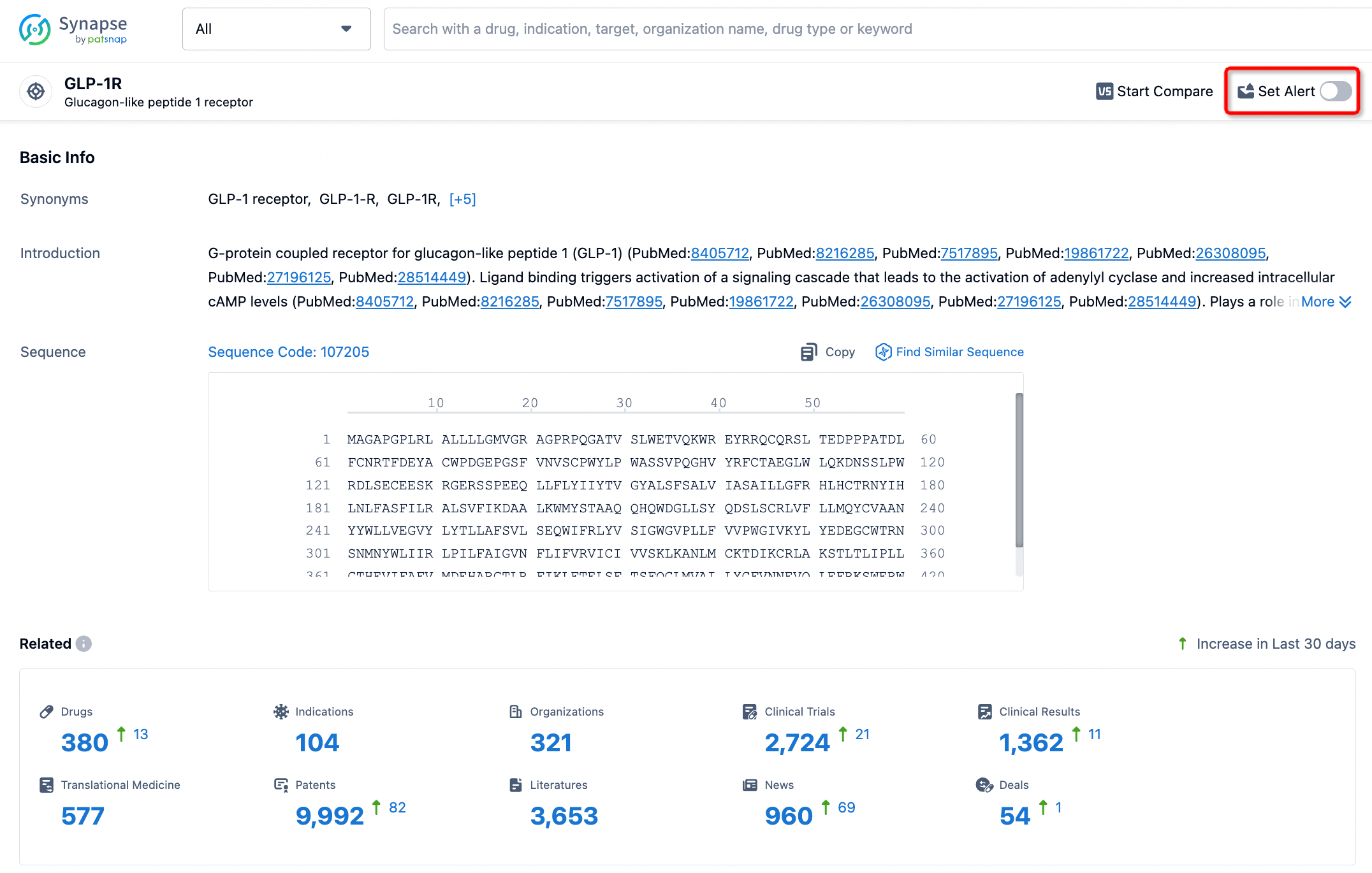
In the Synapse database, you can stay updated on the latest research and development advances of all targets. This service is accessible anytime and anywhere, with updates available daily or weekly. Use the "Set Alert" function to stay informed. Click on the image below to embark on a brand new journey of drug discovery!


AI Agents Built for Biopharma Breakthroughs
Accelerate discovery. Empower decisions. Transform outcomes.
Get started for free today!
Accelerate Strategic R&D decision making with Synapse, PatSnap’s AI-powered Connected Innovation Intelligence Platform Built for Life Sciences Professionals.
Start your data trial now!
Synapse data is also accessible to external entities via APIs or data packages. Empower better decisions with the latest in pharmaceutical intelligence.