Request Demo
What are GRIA4 agonists and how do they work?
25 June 2024
Introduction to GRIA4 agonists
The world of neuroscience is constantly evolving, revealing new targets and mechanisms that could potentially revolutionize the treatment of neurological disorders. One such promising target is the GRIA4 receptor, part of the AMPA receptor family, which plays a critical role in synaptic transmission and plasticity in the central nervous system. GRIA4 agonists are compounds that specifically bind to and activate the GRIA4 receptors, leading to increased excitatory neurotransmission. Understanding how these agonists work and their potential applications could pave the way for novel therapies for a variety of neurological conditions.
How do GRIA4 agonists work?
To appreciate the function of GRIA4 agonists, it is essential to first understand the role of AMPA receptors in the brain. AMPA receptors are ionotropic receptors for glutamate, the main excitatory neurotransmitter in the central nervous system. When glutamate binds to these receptors, it causes the receptor channels to open, allowing the flow of sodium (Na+) ions into the neuron and potassium (K+) ions out. This ionic exchange depolarizes the postsynaptic membrane, generating an excitatory postsynaptic potential (EPSP) that can lead to neuronal firing if the threshold is reached.
The GRIA4 receptor is one of the four subunits that make up AMPA receptors, and each subunit confers different properties to the receptor. GRIA4-containing AMPA receptors are particularly important in areas of the brain involved in learning and memory, such as the hippocampus. GRIA4 agonists work by specifically targeting these receptors, binding to the receptor sites, and mimicking the action of glutamate. This binding results in the activation of the receptor, promoting the influx of Na+ ions and the efflux of K+ ions, thereby enhancing synaptic transmission and neuronal communication.
What are GRIA4 agonists used for?
The potential therapeutic applications for GRIA4 agonists are numerous, given their central role in modulating synaptic transmission. Researchers are investigating these compounds for their use in treating a range of neurological and psychiatric conditions.
1. Cognitive Enhancement: Since GRIA4 receptors are heavily involved in cognitive processes, such as learning and memory, GRIA4 agonists could be used as cognitive enhancers. These agents might improve cognitive functions in conditions like Alzheimer’s disease or age-related cognitive decline, offering a new avenue for treatment where current options are limited.
2. Depression: Major depressive disorder (MDD) is a debilitating condition that is often resistant to traditional antidepressants. Recent studies suggest that dysregulation of glutamatergic transmission may play a role in depression. By enhancing synaptic transmission, GRIA4 agonists could offer a rapid and effective treatment for patients with MDD, particularly those who do not respond to conventional therapies.
3. Schizophrenia: Schizophrenia is another psychiatric disorder where glutamatergic dysfunction is thought to contribute to its pathophysiology. GRIA4 agonists might help to restore normal synaptic function, potentially alleviating some of the cognitive and negative symptoms associated with the disorder.
4. Neuroprotection: In conditions such as stroke or traumatic brain injury, the excitotoxicity resulting from excessive glutamate release can cause significant neuronal damage. Interestingly, some data suggest that controlled activation of AMPA receptors, including GRIA4, could promote neuroprotection and aid in the recovery of neuronal function after such events. While this area of research is still in its infancy, GRIA4 agonists could potentially be used to mitigate the damage caused by acute neural injuries.
5. Epilepsy: Epilepsy is characterized by abnormal, excessive neuronal activity. Modulating excitatory neurotransmission through GRIA4 agonists could help stabilize neural circuits and reduce seizure frequency, offering an adjunctive treatment option for patients with refractory epilepsy.
In conclusion, GRIA4 agonists represent a promising area of research with the potential to impact a wide range of neurological and psychiatric disorders. By enhancing excitatory neurotransmission through targeted activation of the GRIA4 receptor, these compounds could offer innovative therapies for conditions that currently have limited treatment options. As our understanding of GRIA4 receptors and their agonists continues to grow, so too does the potential for groundbreaking advancements in the field of neuroscience.
The world of neuroscience is constantly evolving, revealing new targets and mechanisms that could potentially revolutionize the treatment of neurological disorders. One such promising target is the GRIA4 receptor, part of the AMPA receptor family, which plays a critical role in synaptic transmission and plasticity in the central nervous system. GRIA4 agonists are compounds that specifically bind to and activate the GRIA4 receptors, leading to increased excitatory neurotransmission. Understanding how these agonists work and their potential applications could pave the way for novel therapies for a variety of neurological conditions.
How do GRIA4 agonists work?
To appreciate the function of GRIA4 agonists, it is essential to first understand the role of AMPA receptors in the brain. AMPA receptors are ionotropic receptors for glutamate, the main excitatory neurotransmitter in the central nervous system. When glutamate binds to these receptors, it causes the receptor channels to open, allowing the flow of sodium (Na+) ions into the neuron and potassium (K+) ions out. This ionic exchange depolarizes the postsynaptic membrane, generating an excitatory postsynaptic potential (EPSP) that can lead to neuronal firing if the threshold is reached.
The GRIA4 receptor is one of the four subunits that make up AMPA receptors, and each subunit confers different properties to the receptor. GRIA4-containing AMPA receptors are particularly important in areas of the brain involved in learning and memory, such as the hippocampus. GRIA4 agonists work by specifically targeting these receptors, binding to the receptor sites, and mimicking the action of glutamate. This binding results in the activation of the receptor, promoting the influx of Na+ ions and the efflux of K+ ions, thereby enhancing synaptic transmission and neuronal communication.
What are GRIA4 agonists used for?
The potential therapeutic applications for GRIA4 agonists are numerous, given their central role in modulating synaptic transmission. Researchers are investigating these compounds for their use in treating a range of neurological and psychiatric conditions.
1. Cognitive Enhancement: Since GRIA4 receptors are heavily involved in cognitive processes, such as learning and memory, GRIA4 agonists could be used as cognitive enhancers. These agents might improve cognitive functions in conditions like Alzheimer’s disease or age-related cognitive decline, offering a new avenue for treatment where current options are limited.
2. Depression: Major depressive disorder (MDD) is a debilitating condition that is often resistant to traditional antidepressants. Recent studies suggest that dysregulation of glutamatergic transmission may play a role in depression. By enhancing synaptic transmission, GRIA4 agonists could offer a rapid and effective treatment for patients with MDD, particularly those who do not respond to conventional therapies.
3. Schizophrenia: Schizophrenia is another psychiatric disorder where glutamatergic dysfunction is thought to contribute to its pathophysiology. GRIA4 agonists might help to restore normal synaptic function, potentially alleviating some of the cognitive and negative symptoms associated with the disorder.
4. Neuroprotection: In conditions such as stroke or traumatic brain injury, the excitotoxicity resulting from excessive glutamate release can cause significant neuronal damage. Interestingly, some data suggest that controlled activation of AMPA receptors, including GRIA4, could promote neuroprotection and aid in the recovery of neuronal function after such events. While this area of research is still in its infancy, GRIA4 agonists could potentially be used to mitigate the damage caused by acute neural injuries.
5. Epilepsy: Epilepsy is characterized by abnormal, excessive neuronal activity. Modulating excitatory neurotransmission through GRIA4 agonists could help stabilize neural circuits and reduce seizure frequency, offering an adjunctive treatment option for patients with refractory epilepsy.
In conclusion, GRIA4 agonists represent a promising area of research with the potential to impact a wide range of neurological and psychiatric disorders. By enhancing excitatory neurotransmission through targeted activation of the GRIA4 receptor, these compounds could offer innovative therapies for conditions that currently have limited treatment options. As our understanding of GRIA4 receptors and their agonists continues to grow, so too does the potential for groundbreaking advancements in the field of neuroscience.
How to obtain the latest development progress of all targets?
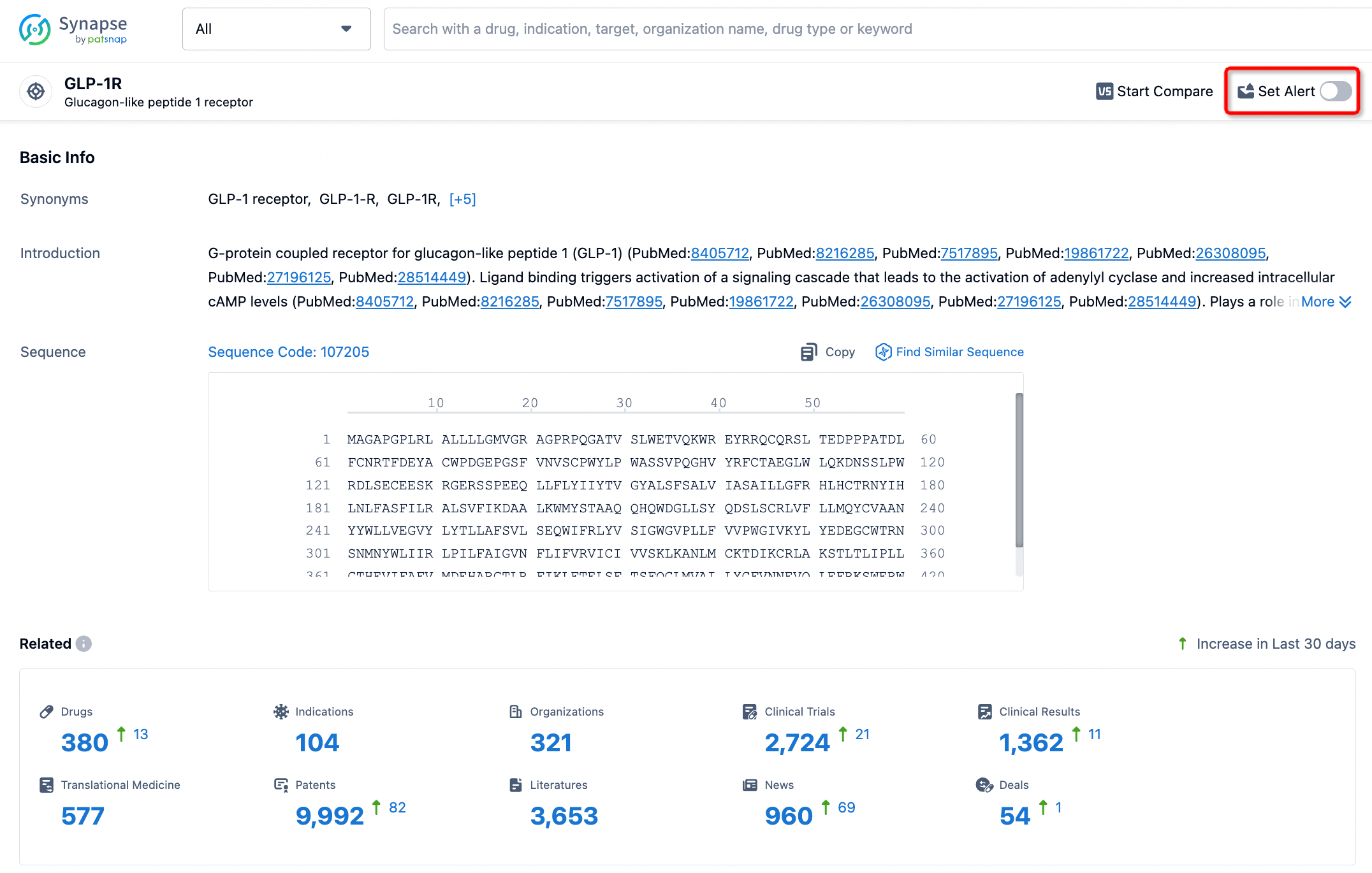
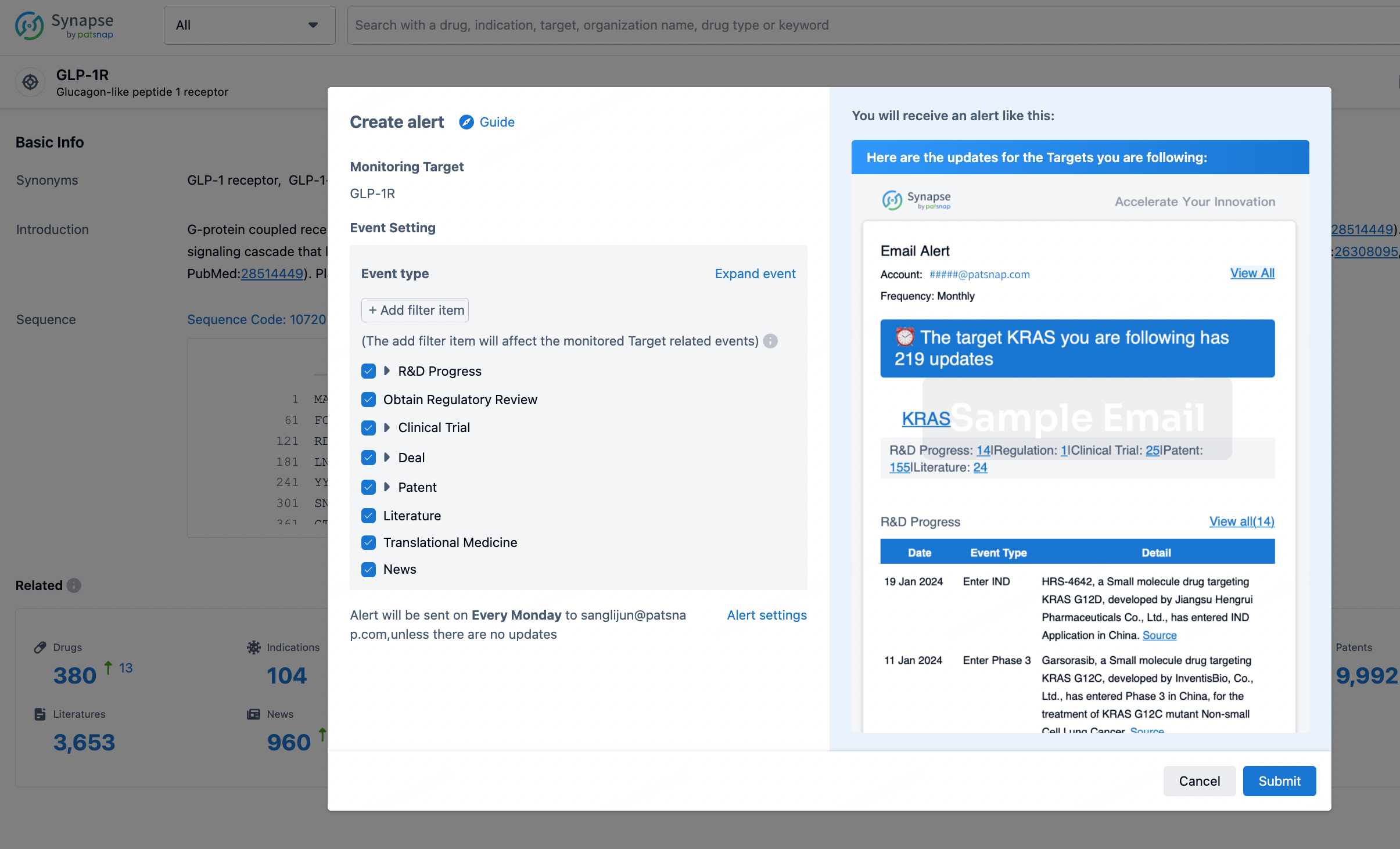
In the Synapse database, you can stay updated on the latest research and development advances of all targets. This service is accessible anytime and anywhere, with updates available daily or weekly. Use the "Set Alert" function to stay informed. Click on the image below to embark on a brand new journey of drug discovery!

AI Agents Built for Biopharma Breakthroughs
Accelerate discovery. Empower decisions. Transform outcomes.
Get started for free today!
Accelerate Strategic R&D decision making with Synapse, PatSnap’s AI-powered Connected Innovation Intelligence Platform Built for Life Sciences Professionals.
Start your data trial now!
Synapse data is also accessible to external entities via APIs or data packages. Empower better decisions with the latest in pharmaceutical intelligence.