Request Demo
What are HBA1 inhibitors and how do they work?
25 June 2024
In the realm of modern pharmacology, the development of selective inhibitors has revolutionized the treatment of various diseases. Hemoglobin A1 (HBA1) inhibitors are one such class of drugs that have garnered significant attention for their potential therapeutic benefits. In this blog post, we'll delve into what HBA1 inhibitors are, how they work, and their primary applications in medical treatments.
HBA1 inhibitors serve as a fascinating area of study in the biochemistry and medical fields due to their potential to manage hemoglobinopathies and other related disorders. Hemoglobinopathies are genetic disorders affecting the structure or production of hemoglobin, the protein in red blood cells responsible for carrying oxygen throughout the body. By targeting specific biochemical pathways, HBA1 inhibitors offer promising therapeutic avenues for conditions that currently have limited treatment options.
The working mechanism of HBA1 inhibitors is intricate and relies on a detailed understanding of hemoglobin's biochemistry. Hemoglobin is composed of four subunits: two alpha and two beta chains. Abnormalities in these chains can lead to diseases such as sickle cell anemia and thalassemia. HBA1 inhibitors function by selectively targeting and modulating the activity of hemoglobin's subunits to stabilize them and improve their functionality.
One primary method through which HBA1 inhibitors operate is by binding to specific sites on the hemoglobin molecule, thereby preventing the polymerization of sickle hemoglobin (HbS) and allowing red blood cells to maintain their normal, flexible shape. This process is crucial for preventing the vaso-occlusive episodes that characterize sickle cell disease, where rigid, sickle-shaped red blood cells obstruct blood flow and cause severe pain and organ damage. By stabilizing the hemoglobin structure, HBA1 inhibitors help to alleviate these symptoms, offering patients a significant improvement in their quality of life.
Moreover, HBA1 inhibitors can enhance the production of fetal hemoglobin (HbF), which has a higher affinity for oxygen and can compensate for the malfunctioning adult hemoglobin in patients with hemoglobinopathies. HbF production is typically silenced after birth, but reactivating its production can ameliorate the symptoms of diseases like sickle cell anemia and beta-thalassemia. HBA1 inhibitors achieve this by interfering with the regulatory mechanisms that suppress HbF production, thereby increasing its levels in red blood cells.
The use of HBA1 inhibitors spans a variety of hemoglobinopathies and related disorders. As previously mentioned, one of the primary applications is in the treatment of sickle cell disease. This genetic disorder affects millions of people worldwide, particularly those of African descent. Traditional treatments such as hydroxyurea and blood transfusions have shown some efficacy, but HBA1 inhibitors offer a novel approach by directly targeting the underlying cause of the disease. Clinical trials have demonstrated that these inhibitors can significantly reduce the frequency and severity of vaso-occlusive crises, leading to fewer hospitalizations and a better overall prognosis for patients.
Another vital application of HBA1 inhibitors lies in the management of beta-thalassemia, a genetic disorder characterized by reduced or absent production of beta-globin chains in hemoglobin. Patients with beta-thalassemia often require regular blood transfusions and iron chelation therapy, which can be burdensome and carry long-term risks. HBA1 inhibitors present an alternative by promoting the production of fetal hemoglobin, which can effectively substitute for the deficient beta-globin chains. This therapeutic strategy can reduce the need for frequent transfusions and improve the long-term health outcomes for patients.
In addition to these primary applications, ongoing research is exploring the potential of HBA1 inhibitors in treating other hemoglobin-related disorders and even some non-hematological conditions. For instance, their role in managing oxidative stress and inflammation is being investigated, given their ability to modulate hemoglobin's function and interactions with other cellular components.
In conclusion, HBA1 inhibitors represent a promising frontier in the treatment of hemoglobinopathies and related disorders. By understanding their mechanism of action and exploring their various applications, we can appreciate the potential these drugs hold for revolutionizing patient care. As research progresses, HBA1 inhibitors may become a cornerstone of therapy for many individuals suffering from these challenging conditions, offering hope for improved treatments and better quality of life.
HBA1 inhibitors serve as a fascinating area of study in the biochemistry and medical fields due to their potential to manage hemoglobinopathies and other related disorders. Hemoglobinopathies are genetic disorders affecting the structure or production of hemoglobin, the protein in red blood cells responsible for carrying oxygen throughout the body. By targeting specific biochemical pathways, HBA1 inhibitors offer promising therapeutic avenues for conditions that currently have limited treatment options.
The working mechanism of HBA1 inhibitors is intricate and relies on a detailed understanding of hemoglobin's biochemistry. Hemoglobin is composed of four subunits: two alpha and two beta chains. Abnormalities in these chains can lead to diseases such as sickle cell anemia and thalassemia. HBA1 inhibitors function by selectively targeting and modulating the activity of hemoglobin's subunits to stabilize them and improve their functionality.
One primary method through which HBA1 inhibitors operate is by binding to specific sites on the hemoglobin molecule, thereby preventing the polymerization of sickle hemoglobin (HbS) and allowing red blood cells to maintain their normal, flexible shape. This process is crucial for preventing the vaso-occlusive episodes that characterize sickle cell disease, where rigid, sickle-shaped red blood cells obstruct blood flow and cause severe pain and organ damage. By stabilizing the hemoglobin structure, HBA1 inhibitors help to alleviate these symptoms, offering patients a significant improvement in their quality of life.
Moreover, HBA1 inhibitors can enhance the production of fetal hemoglobin (HbF), which has a higher affinity for oxygen and can compensate for the malfunctioning adult hemoglobin in patients with hemoglobinopathies. HbF production is typically silenced after birth, but reactivating its production can ameliorate the symptoms of diseases like sickle cell anemia and beta-thalassemia. HBA1 inhibitors achieve this by interfering with the regulatory mechanisms that suppress HbF production, thereby increasing its levels in red blood cells.
The use of HBA1 inhibitors spans a variety of hemoglobinopathies and related disorders. As previously mentioned, one of the primary applications is in the treatment of sickle cell disease. This genetic disorder affects millions of people worldwide, particularly those of African descent. Traditional treatments such as hydroxyurea and blood transfusions have shown some efficacy, but HBA1 inhibitors offer a novel approach by directly targeting the underlying cause of the disease. Clinical trials have demonstrated that these inhibitors can significantly reduce the frequency and severity of vaso-occlusive crises, leading to fewer hospitalizations and a better overall prognosis for patients.
Another vital application of HBA1 inhibitors lies in the management of beta-thalassemia, a genetic disorder characterized by reduced or absent production of beta-globin chains in hemoglobin. Patients with beta-thalassemia often require regular blood transfusions and iron chelation therapy, which can be burdensome and carry long-term risks. HBA1 inhibitors present an alternative by promoting the production of fetal hemoglobin, which can effectively substitute for the deficient beta-globin chains. This therapeutic strategy can reduce the need for frequent transfusions and improve the long-term health outcomes for patients.
In addition to these primary applications, ongoing research is exploring the potential of HBA1 inhibitors in treating other hemoglobin-related disorders and even some non-hematological conditions. For instance, their role in managing oxidative stress and inflammation is being investigated, given their ability to modulate hemoglobin's function and interactions with other cellular components.
In conclusion, HBA1 inhibitors represent a promising frontier in the treatment of hemoglobinopathies and related disorders. By understanding their mechanism of action and exploring their various applications, we can appreciate the potential these drugs hold for revolutionizing patient care. As research progresses, HBA1 inhibitors may become a cornerstone of therapy for many individuals suffering from these challenging conditions, offering hope for improved treatments and better quality of life.
How to obtain the latest development progress of all targets?
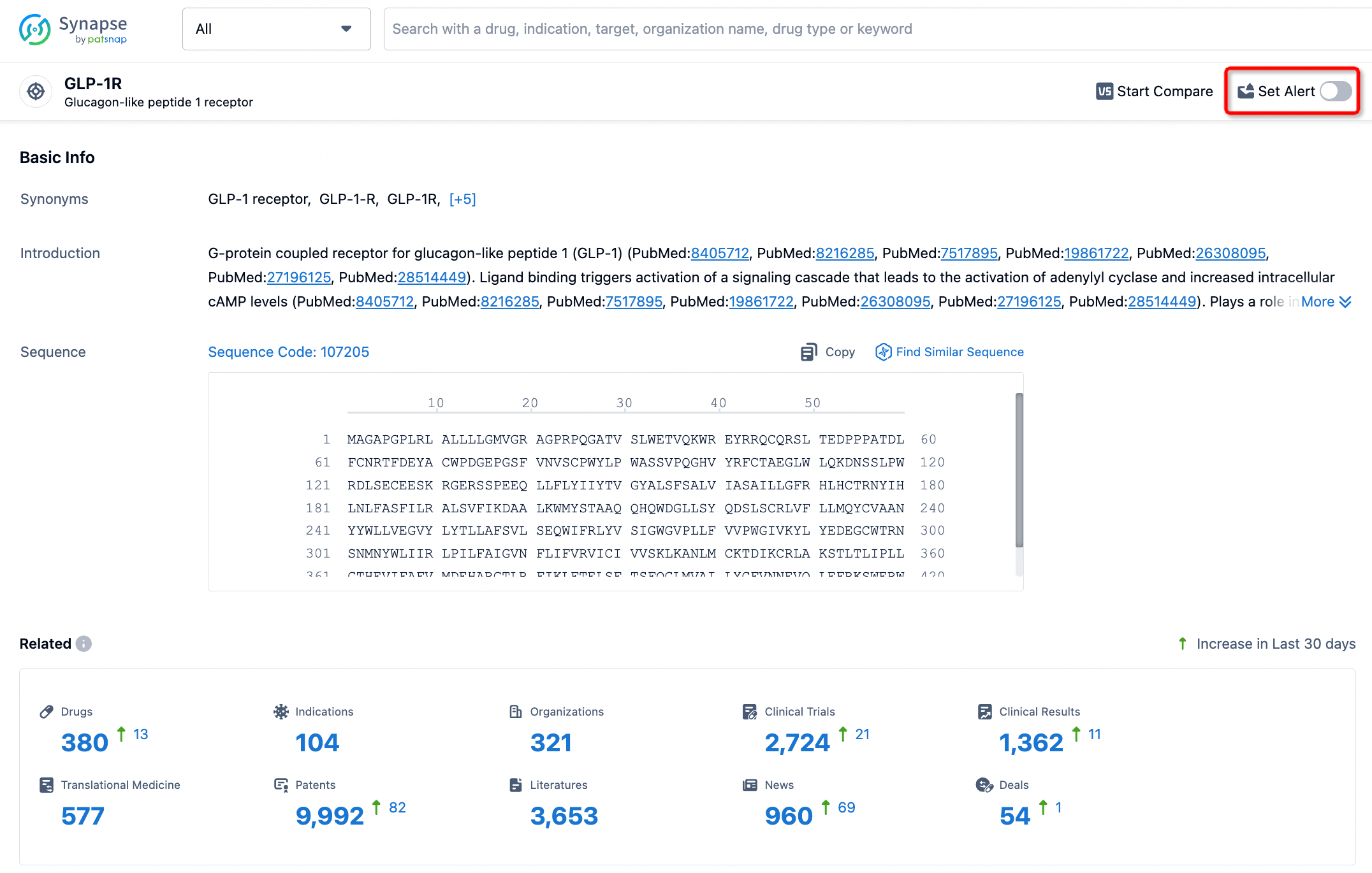
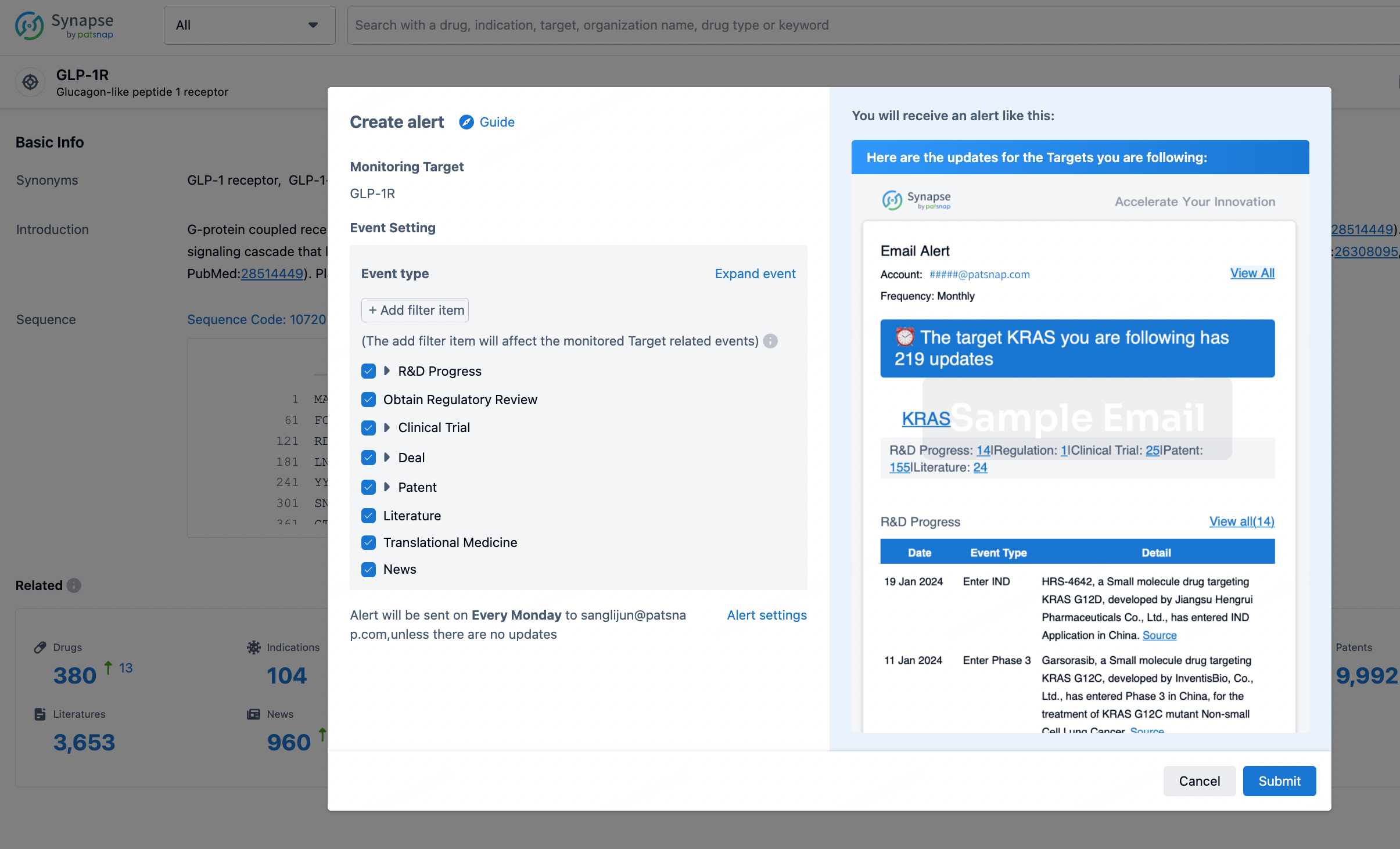
In the Synapse database, you can stay updated on the latest research and development advances of all targets. This service is accessible anytime and anywhere, with updates available daily or weekly. Use the "Set Alert" function to stay informed. Click on the image below to embark on a brand new journey of drug discovery!
AI Agents Built for Biopharma Breakthroughs
Accelerate discovery. Empower decisions. Transform outcomes.
Get started for free today!
Accelerate Strategic R&D decision making with Synapse, PatSnap’s AI-powered Connected Innovation Intelligence Platform Built for Life Sciences Professionals.
Start your data trial now!
Synapse data is also accessible to external entities via APIs or data packages. Empower better decisions with the latest in pharmaceutical intelligence.