Request Demo
What are IFNγ stimulants and how do they work?
21 June 2024
Interferon-gamma (IFNγ) is a critical cytokine in the immune system that plays a pivotal role in mediating and regulating various immune responses. As an essential part of the body's defense mechanism, IFNγ helps activate macrophages, enhances antigen presentation, and promotes the differentiation of T-helper cells. Given its significant role, IFNγ stimulants have garnered attention in both research and clinical settings for their potential therapeutic applications. This post will delve into the mechanisms, functions, and clinical uses of IFNγ stimulants.
**How do IFNγ stimulants work?**
IFNγ stimulants function by increasing the production or mimicking the action of IFNγ. This cytokine is primarily produced by natural killer (NK) cells and T lymphocytes, particularly CD4+ T helper 1 (Th1) and CD8+ cytotoxic T lymphocytes. Upon stimulation, these immune cells release IFNγ, which then binds to its specific receptor, IFNGR, on various target cells. This binding initiates a cascade of intracellular events via the JAK-STAT signaling pathway.
The JAK-STAT pathway involves the phosphorylation of Janus kinases (JAKs) and subsequent phosphorylation of Signal Transducer and Activator of Transcription (STAT) proteins. Once phosphorylated, STAT proteins dimerize and translocate to the nucleus, where they induce the expression of IFNγ-responsive genes. These genes encode proteins involved in antigen processing and presentation, cell growth inhibition, and the activation of other immune cells. Consequently, the overall immune response is amplified, aiding in the clearance of pathogens and malignant cells.
Different types of IFNγ stimulants include recombinant IFNγ, synthetic compounds, and biologics like monoclonal antibodies that enhance IFNγ production. Each type operates through slightly different mechanisms but ultimately aims to boost the IFNγ levels in the body to harness its immune-stimulatory effects.
**What are IFNγ stimulants used for?**
The therapeutic applications of IFNγ stimulants are diverse, ranging from infectious diseases to cancer and autoimmune disorders. Below are some of the primary uses:
1. **Infectious Diseases:** IFNγ stimulants have shown promise in treating chronic infectious diseases like tuberculosis and leishmaniasis. By enhancing the immune response, these stimulants aid in the clearance of intracellular pathogens that are typically difficult to eradicate. For instance, in tuberculosis, IFNγ can activate macrophages to kill Mycobacterium tuberculosis more effectively.
2. **Cancer Therapy:** Cancer cells often evade the immune system, and IFNγ can help in overcoming this immune evasion. IFNγ stimulants can enhance the antigen-presenting capacity of dendritic cells and macrophages, making tumor antigens more recognizable to cytotoxic T cells. Additionally, IFNγ can inhibit tumor cell proliferation directly and induce apoptosis. It is being explored as a treatment for various cancers, including melanoma, renal cell carcinoma, and ovarian cancer.
3. **Autoimmune Diseases:** While IFNγ is generally seen as a pro-inflammatory cytokine, its role in autoimmune diseases is complex. In some cases, IFNγ has been found to have a regulatory role, dampening excessive immune responses. For example, IFNγ stimulants are being investigated for their potential to modulate immune responses in diseases like multiple sclerosis and rheumatoid arthritis. However, this area requires cautious exploration due to the potential for exacerbating inflammation.
4. **Chronic Granulomatous Disease (CGD):** IFNγ is approved for use in managing CGD, a genetic disorder that impairs the ability of phagocytes to kill certain bacteria and fungi. By enhancing the microbicidal activity of phagocytes, IFNγ helps in reducing the frequency and severity of infections in CGD patients.
5. **Idiopathic Pulmonary Fibrosis (IPF):** Although the efficacy of IFNγ in IPF has been debated, some studies suggest that it may help in reducing lung inflammation and fibrosis. Ongoing research aims to clarify its benefits and optimize its use in such fibrotic conditions.
In summary, IFNγ stimulants represent a promising class of therapeutic agents with applications across a wide spectrum of diseases. By leveraging the body's natural immune mechanisms, these stimulants offer a multifaceted approach to enhancing immune function and combating disease. Ongoing research continues to reveal new insights and potential uses for these powerful immunomodulatory agents.
**How do IFNγ stimulants work?**
IFNγ stimulants function by increasing the production or mimicking the action of IFNγ. This cytokine is primarily produced by natural killer (NK) cells and T lymphocytes, particularly CD4+ T helper 1 (Th1) and CD8+ cytotoxic T lymphocytes. Upon stimulation, these immune cells release IFNγ, which then binds to its specific receptor, IFNGR, on various target cells. This binding initiates a cascade of intracellular events via the JAK-STAT signaling pathway.
The JAK-STAT pathway involves the phosphorylation of Janus kinases (JAKs) and subsequent phosphorylation of Signal Transducer and Activator of Transcription (STAT) proteins. Once phosphorylated, STAT proteins dimerize and translocate to the nucleus, where they induce the expression of IFNγ-responsive genes. These genes encode proteins involved in antigen processing and presentation, cell growth inhibition, and the activation of other immune cells. Consequently, the overall immune response is amplified, aiding in the clearance of pathogens and malignant cells.
Different types of IFNγ stimulants include recombinant IFNγ, synthetic compounds, and biologics like monoclonal antibodies that enhance IFNγ production. Each type operates through slightly different mechanisms but ultimately aims to boost the IFNγ levels in the body to harness its immune-stimulatory effects.
**What are IFNγ stimulants used for?**
The therapeutic applications of IFNγ stimulants are diverse, ranging from infectious diseases to cancer and autoimmune disorders. Below are some of the primary uses:
1. **Infectious Diseases:** IFNγ stimulants have shown promise in treating chronic infectious diseases like tuberculosis and leishmaniasis. By enhancing the immune response, these stimulants aid in the clearance of intracellular pathogens that are typically difficult to eradicate. For instance, in tuberculosis, IFNγ can activate macrophages to kill Mycobacterium tuberculosis more effectively.
2. **Cancer Therapy:** Cancer cells often evade the immune system, and IFNγ can help in overcoming this immune evasion. IFNγ stimulants can enhance the antigen-presenting capacity of dendritic cells and macrophages, making tumor antigens more recognizable to cytotoxic T cells. Additionally, IFNγ can inhibit tumor cell proliferation directly and induce apoptosis. It is being explored as a treatment for various cancers, including melanoma, renal cell carcinoma, and ovarian cancer.
3. **Autoimmune Diseases:** While IFNγ is generally seen as a pro-inflammatory cytokine, its role in autoimmune diseases is complex. In some cases, IFNγ has been found to have a regulatory role, dampening excessive immune responses. For example, IFNγ stimulants are being investigated for their potential to modulate immune responses in diseases like multiple sclerosis and rheumatoid arthritis. However, this area requires cautious exploration due to the potential for exacerbating inflammation.
4. **Chronic Granulomatous Disease (CGD):** IFNγ is approved for use in managing CGD, a genetic disorder that impairs the ability of phagocytes to kill certain bacteria and fungi. By enhancing the microbicidal activity of phagocytes, IFNγ helps in reducing the frequency and severity of infections in CGD patients.
5. **Idiopathic Pulmonary Fibrosis (IPF):** Although the efficacy of IFNγ in IPF has been debated, some studies suggest that it may help in reducing lung inflammation and fibrosis. Ongoing research aims to clarify its benefits and optimize its use in such fibrotic conditions.
In summary, IFNγ stimulants represent a promising class of therapeutic agents with applications across a wide spectrum of diseases. By leveraging the body's natural immune mechanisms, these stimulants offer a multifaceted approach to enhancing immune function and combating disease. Ongoing research continues to reveal new insights and potential uses for these powerful immunomodulatory agents.
How to obtain the latest development progress of all targets?
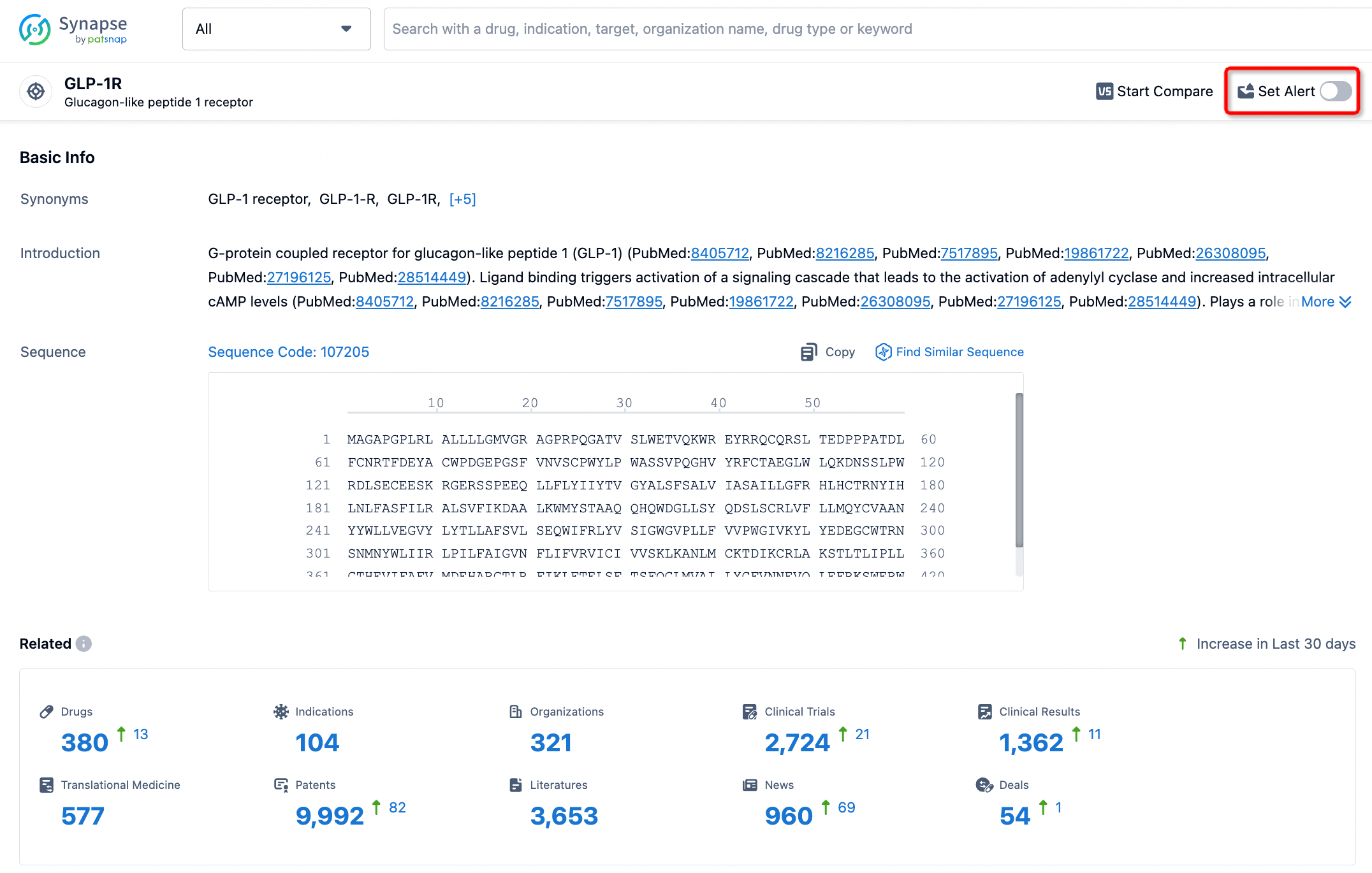
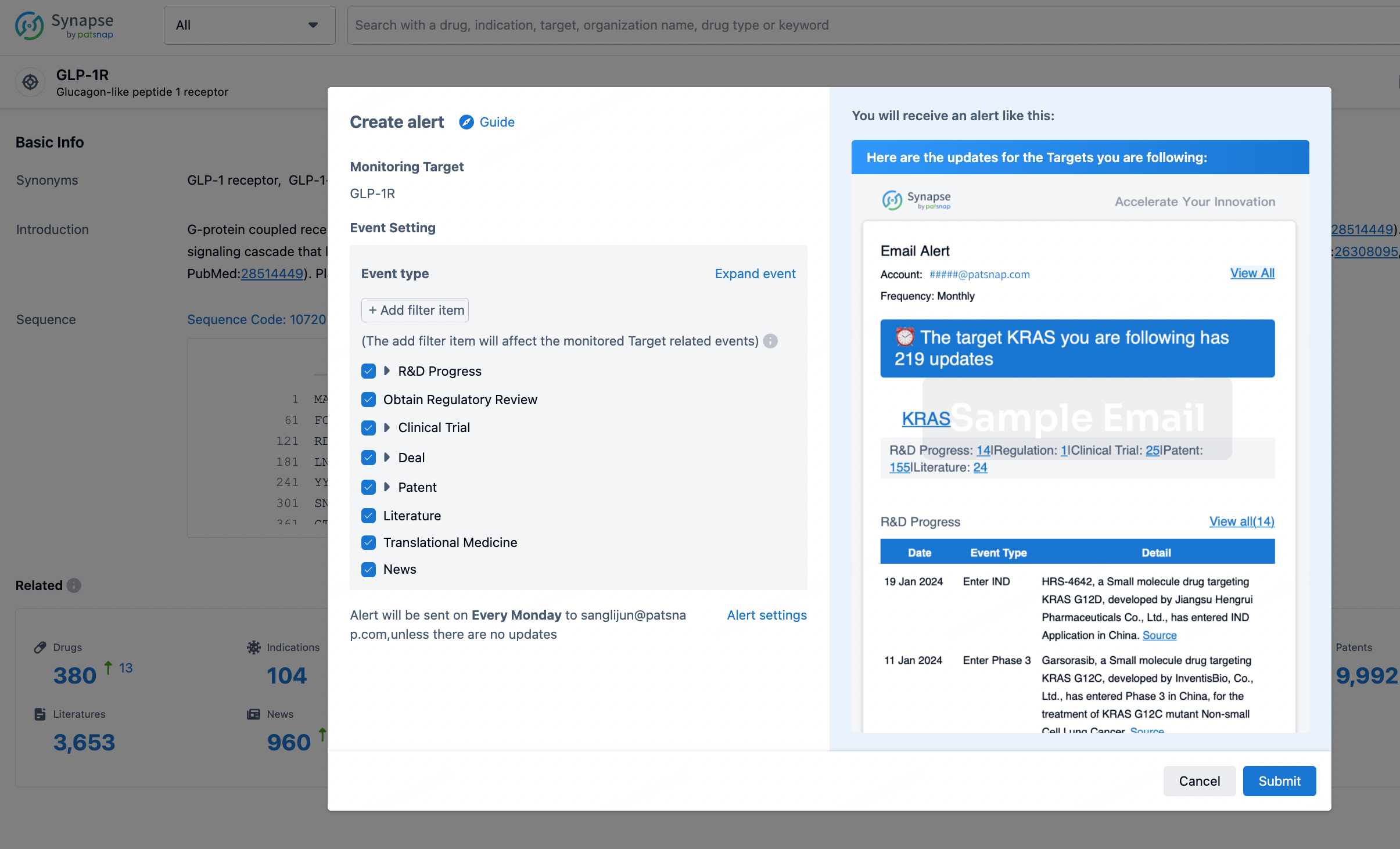
In the Synapse database, you can stay updated on the latest research and development advances of all targets. This service is accessible anytime and anywhere, with updates available daily or weekly. Use the "Set Alert" function to stay informed. Click on the image below to embark on a brand new journey of drug discovery!
AI Agents Built for Biopharma Breakthroughs
Accelerate discovery. Empower decisions. Transform outcomes.
Get started for free today!
Accelerate Strategic R&D decision making with Synapse, PatSnap’s AI-powered Connected Innovation Intelligence Platform Built for Life Sciences Professionals.
Start your data trial now!
Synapse data is also accessible to external entities via APIs or data packages. Empower better decisions with the latest in pharmaceutical intelligence.