Request Demo
What are IKKγ inhibitors and how do they work?
21 June 2024
Introduction to IKKγ inhibitors
IKKγ inhibitors represent a promising area of pharmacological research with significant potential for treating a variety of diseases. IKKγ, also known as NEMO (NF-kappa-B essential modulator), is a critical regulatory component of the IKK complex, which plays a key role in the activation of NF-κB, a transcription factor involved in immune and inflammatory responses. Dysregulation of the NF-κB pathway is implicated in numerous pathological conditions, including cancer, autoimmune diseases, and chronic inflammatory disorders. As such, developing inhibitors that can specifically target IKKγ is an attractive strategy for modulating NF-κB activity and managing these diseases.
How do IKKγ inhibitors work?
To understand how IKKγ inhibitors work, it is essential to grasp the basics of the NF-κB signaling pathway. Under normal physiological conditions, NF-κB is sequestered in the cytoplasm by IκB proteins. Upon receiving a stimulus (like infection, stress, or cytokines), the IKK complex—composed of IKKα, IKKβ, and IKKγ—gets activated. IKKγ functions as a regulatory subunit that is essential for the activation of IKKα and IKKβ, which then phosphorylate IκB proteins. Phosphorylated IκB undergoes ubiquitination and subsequent proteasomal degradation, freeing NF-κB to translocate to the nucleus and induce the transcription of target genes involved in immune and inflammatory responses.
IKKγ inhibitors function by disrupting the activity of the IKK complex. These inhibitors can either directly bind to IKKγ, preventing it from interacting with other subunits of the IKK complex, or they can indirectly inhibit its regulation through other molecular mechanisms. By inhibiting IKKγ, these compounds effectively hinder the phosphorylation and degradation of IκB proteins. Consequently, NF-κB remains sequestered in the cytoplasm, unable to access the nucleus and activate its target genes. This inhibition results in the downregulation of various pro-inflammatory and anti-apoptotic genes, thereby exerting therapeutic effects in conditions characterized by excessive or inappropriate NF-κB activation.
What are IKKγ inhibitors used for?
The therapeutic potential of IKKγ inhibitors spans multiple medical fields due to the central role of NF-κB in various cellular processes and diseases. One of the most promising applications is in the treatment of cancer. Many tumors exhibit constitutive activation of NF-κB, which promotes cell proliferation, survival, and metastasis while inhibiting apoptosis. By targeting IKKγ, and consequently NF-κB, IKKγ inhibitors can reduce tumor growth, enhance the efficacy of chemotherapeutic agents, and overcome resistance to apoptosis. Preclinical and clinical studies are currently exploring the effectiveness of IKKγ inhibitors in various types of cancer, including lymphoma, breast cancer, and colorectal cancer.
Autoimmune and inflammatory diseases are another critical area where IKKγ inhibitors show promise. Conditions such as rheumatoid arthritis, inflammatory bowel disease, and psoriasis involve chronic inflammation driven by persistent NF-κB activation. Inhibiting IKKγ can help reduce inflammation and alleviate symptoms by downregulating the expression of pro-inflammatory cytokines and enzymes like TNF-α, IL-6, and COX-2. Moreover, IKKγ inhibitors can potentially be used in combination with existing anti-inflammatory drugs to enhance therapeutic outcomes and reduce side effects.
In addition to cancer and inflammatory diseases, IKKγ inhibitors are being investigated for their role in treating viral infections. Certain viruses, such as HIV and hepatitis B and C, exploit the NF-κB pathway to enhance their replication and evade the host immune response. By inhibiting IKKγ, it may be possible to limit viral replication and improve antiviral therapies. Another emerging area of interest is neurodegenerative diseases, where chronic inflammation mediated by NF-κB is thought to contribute to neuronal damage. Early research suggests that IKKγ inhibitors could offer neuroprotective effects and slow the progression of diseases like Alzheimer's and Parkinson's.
In conclusion, IKKγ inhibitors hold considerable promise for a range of therapeutic applications due to their ability to modulate the NF-κB pathway. Continued research and development of these inhibitors could lead to new, more effective treatments for cancer, autoimmune and inflammatory diseases, viral infections, and possibly even neurodegenerative disorders, offering hope for improved patient outcomes across multiple medical domains.
IKKγ inhibitors represent a promising area of pharmacological research with significant potential for treating a variety of diseases. IKKγ, also known as NEMO (NF-kappa-B essential modulator), is a critical regulatory component of the IKK complex, which plays a key role in the activation of NF-κB, a transcription factor involved in immune and inflammatory responses. Dysregulation of the NF-κB pathway is implicated in numerous pathological conditions, including cancer, autoimmune diseases, and chronic inflammatory disorders. As such, developing inhibitors that can specifically target IKKγ is an attractive strategy for modulating NF-κB activity and managing these diseases.
How do IKKγ inhibitors work?
To understand how IKKγ inhibitors work, it is essential to grasp the basics of the NF-κB signaling pathway. Under normal physiological conditions, NF-κB is sequestered in the cytoplasm by IκB proteins. Upon receiving a stimulus (like infection, stress, or cytokines), the IKK complex—composed of IKKα, IKKβ, and IKKγ—gets activated. IKKγ functions as a regulatory subunit that is essential for the activation of IKKα and IKKβ, which then phosphorylate IκB proteins. Phosphorylated IκB undergoes ubiquitination and subsequent proteasomal degradation, freeing NF-κB to translocate to the nucleus and induce the transcription of target genes involved in immune and inflammatory responses.
IKKγ inhibitors function by disrupting the activity of the IKK complex. These inhibitors can either directly bind to IKKγ, preventing it from interacting with other subunits of the IKK complex, or they can indirectly inhibit its regulation through other molecular mechanisms. By inhibiting IKKγ, these compounds effectively hinder the phosphorylation and degradation of IκB proteins. Consequently, NF-κB remains sequestered in the cytoplasm, unable to access the nucleus and activate its target genes. This inhibition results in the downregulation of various pro-inflammatory and anti-apoptotic genes, thereby exerting therapeutic effects in conditions characterized by excessive or inappropriate NF-κB activation.
What are IKKγ inhibitors used for?
The therapeutic potential of IKKγ inhibitors spans multiple medical fields due to the central role of NF-κB in various cellular processes and diseases. One of the most promising applications is in the treatment of cancer. Many tumors exhibit constitutive activation of NF-κB, which promotes cell proliferation, survival, and metastasis while inhibiting apoptosis. By targeting IKKγ, and consequently NF-κB, IKKγ inhibitors can reduce tumor growth, enhance the efficacy of chemotherapeutic agents, and overcome resistance to apoptosis. Preclinical and clinical studies are currently exploring the effectiveness of IKKγ inhibitors in various types of cancer, including lymphoma, breast cancer, and colorectal cancer.
Autoimmune and inflammatory diseases are another critical area where IKKγ inhibitors show promise. Conditions such as rheumatoid arthritis, inflammatory bowel disease, and psoriasis involve chronic inflammation driven by persistent NF-κB activation. Inhibiting IKKγ can help reduce inflammation and alleviate symptoms by downregulating the expression of pro-inflammatory cytokines and enzymes like TNF-α, IL-6, and COX-2. Moreover, IKKγ inhibitors can potentially be used in combination with existing anti-inflammatory drugs to enhance therapeutic outcomes and reduce side effects.
In addition to cancer and inflammatory diseases, IKKγ inhibitors are being investigated for their role in treating viral infections. Certain viruses, such as HIV and hepatitis B and C, exploit the NF-κB pathway to enhance their replication and evade the host immune response. By inhibiting IKKγ, it may be possible to limit viral replication and improve antiviral therapies. Another emerging area of interest is neurodegenerative diseases, where chronic inflammation mediated by NF-κB is thought to contribute to neuronal damage. Early research suggests that IKKγ inhibitors could offer neuroprotective effects and slow the progression of diseases like Alzheimer's and Parkinson's.
In conclusion, IKKγ inhibitors hold considerable promise for a range of therapeutic applications due to their ability to modulate the NF-κB pathway. Continued research and development of these inhibitors could lead to new, more effective treatments for cancer, autoimmune and inflammatory diseases, viral infections, and possibly even neurodegenerative disorders, offering hope for improved patient outcomes across multiple medical domains.
How to obtain the latest development progress of all targets?
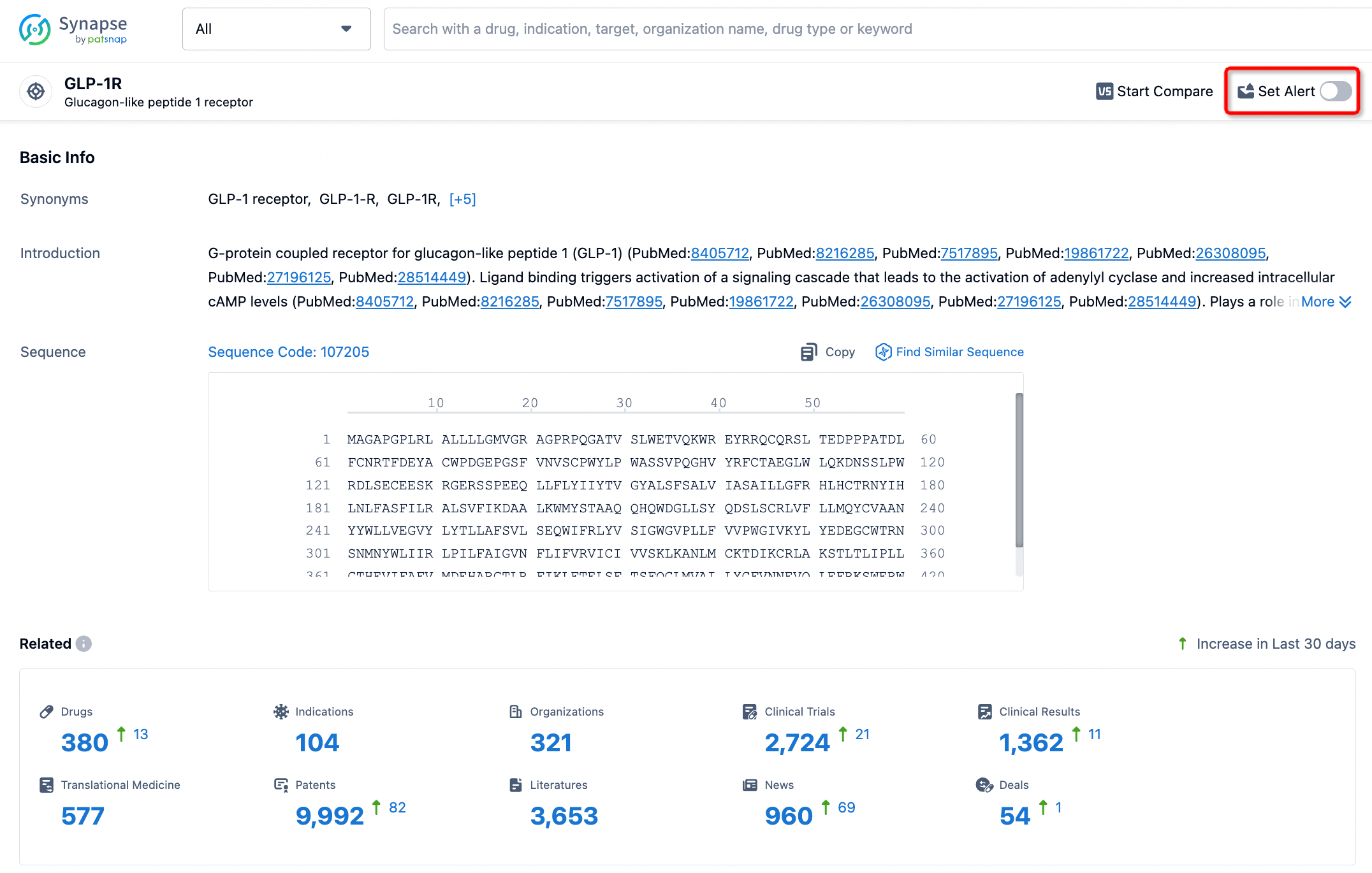
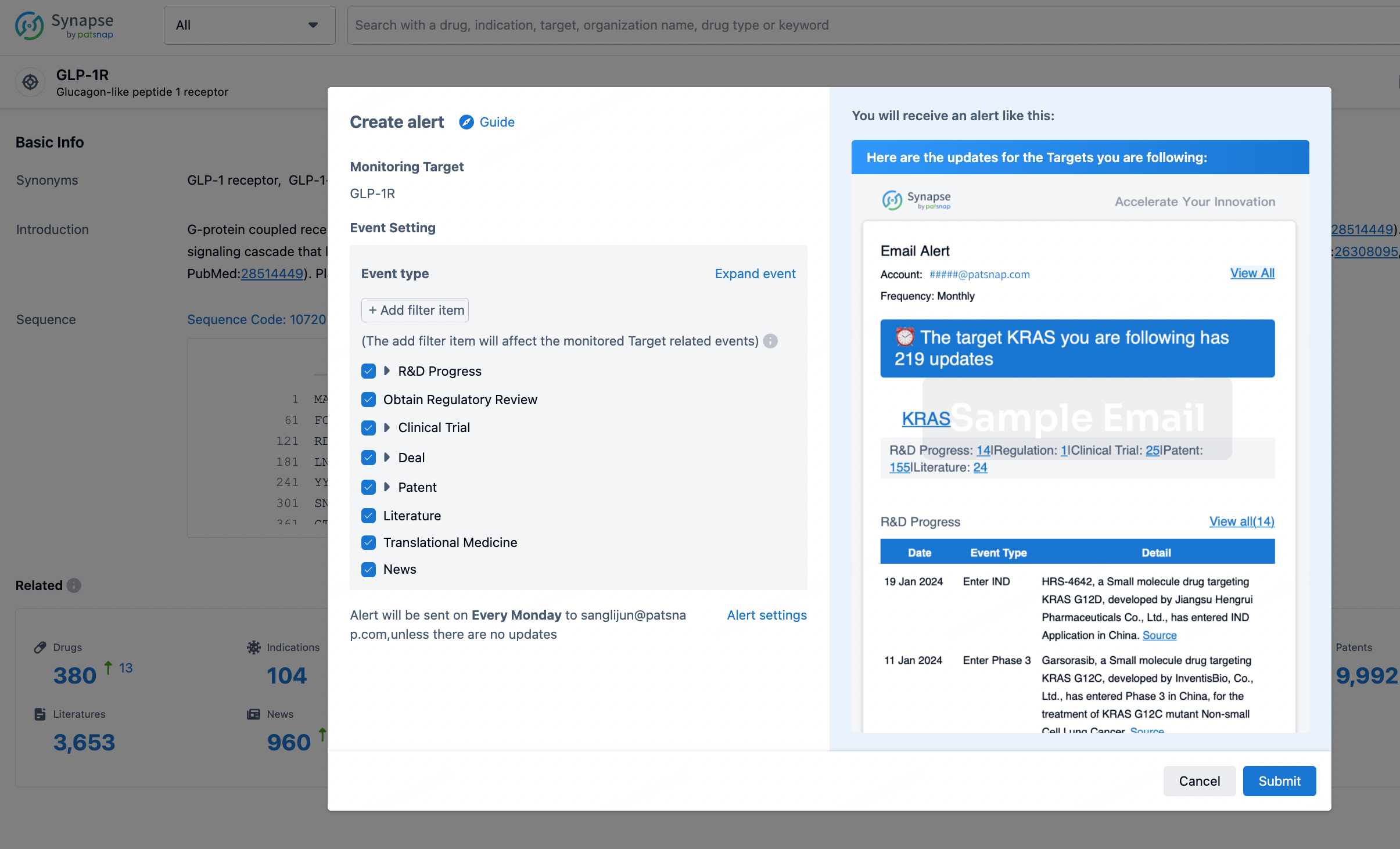
In the Synapse database, you can stay updated on the latest research and development advances of all targets. This service is accessible anytime and anywhere, with updates available daily or weekly. Use the "Set Alert" function to stay informed. Click on the image below to embark on a brand new journey of drug discovery!

AI Agents Built for Biopharma Breakthroughs
Accelerate discovery. Empower decisions. Transform outcomes.
Get started for free today!
Accelerate Strategic R&D decision making with Synapse, PatSnap’s AI-powered Connected Innovation Intelligence Platform Built for Life Sciences Professionals.
Start your data trial now!
Synapse data is also accessible to external entities via APIs or data packages. Empower better decisions with the latest in pharmaceutical intelligence.