Request Demo
What are IL-20 receptor modulators and how do they work?
26 June 2024
Interleukin-20 (IL-20) receptor modulators represent a fascinating and rapidly evolving area of therapeutic research, particularly within the fields of immunology and inflammatory diseases. These modulators have shown significant potential in treating a variety of conditions by targeting the pathways influenced by IL-20 and its receptors. This post aims to provide a comprehensive understanding of IL-20 receptor modulators, explaining their mechanisms of action and highlighting their current and potential clinical applications.
Interleukin-20 is a cytokine, a type of protein important in cell signaling, which is primarily involved in the regulation of immune responses and inflammation. IL-20 exerts its effects by binding to specific receptors on the surface of cells, known as IL-20 receptors. There are two main types of IL-20 receptors: IL-20R1/IL-20R2 and IL-22R1/IL-20R2, each consisting of different subunits that facilitate the transmission of signals inside the cell. The binding of IL-20 to these receptors activates various intracellular signaling pathways, particularly the JAK-STAT pathway, which in turn induces the expression of certain genes involved in inflammation and immune responses.
IL-20 receptor modulators work by influencing the interaction between IL-20 and its receptors. These modulators can be either agonists, which enhance the activity of IL-20, or antagonists, which inhibit its activity. Most of the current research and therapeutic interest focuses on antagonists, given their potential to mitigate undesired inflammatory responses. By blocking the binding of IL-20 to its receptors, these antagonists can effectively reduce the activation of pro-inflammatory signaling pathways. This reduction can help control inflammatory processes and provide relief in diseases characterized by excessive inflammation.
There are several methods by which IL-20 receptor modulators can achieve their effects. Monoclonal antibodies are among the most common approaches. These antibodies are designed to specifically bind to IL-20 or its receptors, thereby preventing IL-20 from initiating its signaling cascade. Another approach involves small molecule inhibitors that can interfere with the receptor's function. Additionally, soluble receptor decoys can be used, which are modified versions of the receptors that can bind to IL-20 without triggering a signaling response, effectively sequestering IL-20 and preventing it from interacting with its natural receptors.
IL-20 receptor modulators hold promise in the treatment of a variety of inflammatory and autoimmune diseases. One of the most extensively researched applications is in the management of psoriasis, a chronic skin condition characterized by excessive inflammation and rapid skin cell proliferation. IL-20 levels are elevated in psoriatic lesions, and blocking its activity has been shown to reduce inflammation and improve skin appearance in clinical trials.
Another area where IL-20 receptor modulators are being investigated is in rheumatoid arthritis (RA), an autoimmune disorder that causes chronic inflammation of the joints. By inhibiting the activity of IL-20, these modulators can potentially reduce joint inflammation and damage, offering a new avenue of treatment for patients who do not respond adequately to existing therapies.
Beyond psoriasis and RA, IL-20 receptor modulators are also being explored for their potential in treating other inflammatory conditions such as inflammatory bowel disease (IBD), a group of disorders characterized by chronic inflammation of the gastrointestinal tract. Preclinical studies have shown that targeting IL-20 signaling can reduce intestinal inflammation, suggesting that these modulators could provide a new therapeutic option for IBD patients.
In addition to these applications, researchers are also investigating the role of IL-20 receptor modulators in other diseases, including chronic obstructive pulmonary disease (COPD) and certain types of cancer. While these investigations are still in the early stages, the initial findings are promising and suggest that IL-20 receptor modulators could have broad therapeutic potential.
In summary, IL-20 receptor modulators represent an exciting area of research with significant potential for treating a variety of inflammatory and autoimmune diseases. By targeting the pathways influenced by IL-20, these modulators can help to control excessive inflammatory responses and provide relief for patients suffering from chronic inflammatory conditions. As research continues to advance, we can expect to see further developments in this field, potentially leading to new and effective treatments for a range of diseases.
Interleukin-20 is a cytokine, a type of protein important in cell signaling, which is primarily involved in the regulation of immune responses and inflammation. IL-20 exerts its effects by binding to specific receptors on the surface of cells, known as IL-20 receptors. There are two main types of IL-20 receptors: IL-20R1/IL-20R2 and IL-22R1/IL-20R2, each consisting of different subunits that facilitate the transmission of signals inside the cell. The binding of IL-20 to these receptors activates various intracellular signaling pathways, particularly the JAK-STAT pathway, which in turn induces the expression of certain genes involved in inflammation and immune responses.
IL-20 receptor modulators work by influencing the interaction between IL-20 and its receptors. These modulators can be either agonists, which enhance the activity of IL-20, or antagonists, which inhibit its activity. Most of the current research and therapeutic interest focuses on antagonists, given their potential to mitigate undesired inflammatory responses. By blocking the binding of IL-20 to its receptors, these antagonists can effectively reduce the activation of pro-inflammatory signaling pathways. This reduction can help control inflammatory processes and provide relief in diseases characterized by excessive inflammation.
There are several methods by which IL-20 receptor modulators can achieve their effects. Monoclonal antibodies are among the most common approaches. These antibodies are designed to specifically bind to IL-20 or its receptors, thereby preventing IL-20 from initiating its signaling cascade. Another approach involves small molecule inhibitors that can interfere with the receptor's function. Additionally, soluble receptor decoys can be used, which are modified versions of the receptors that can bind to IL-20 without triggering a signaling response, effectively sequestering IL-20 and preventing it from interacting with its natural receptors.
IL-20 receptor modulators hold promise in the treatment of a variety of inflammatory and autoimmune diseases. One of the most extensively researched applications is in the management of psoriasis, a chronic skin condition characterized by excessive inflammation and rapid skin cell proliferation. IL-20 levels are elevated in psoriatic lesions, and blocking its activity has been shown to reduce inflammation and improve skin appearance in clinical trials.
Another area where IL-20 receptor modulators are being investigated is in rheumatoid arthritis (RA), an autoimmune disorder that causes chronic inflammation of the joints. By inhibiting the activity of IL-20, these modulators can potentially reduce joint inflammation and damage, offering a new avenue of treatment for patients who do not respond adequately to existing therapies.
Beyond psoriasis and RA, IL-20 receptor modulators are also being explored for their potential in treating other inflammatory conditions such as inflammatory bowel disease (IBD), a group of disorders characterized by chronic inflammation of the gastrointestinal tract. Preclinical studies have shown that targeting IL-20 signaling can reduce intestinal inflammation, suggesting that these modulators could provide a new therapeutic option for IBD patients.
In addition to these applications, researchers are also investigating the role of IL-20 receptor modulators in other diseases, including chronic obstructive pulmonary disease (COPD) and certain types of cancer. While these investigations are still in the early stages, the initial findings are promising and suggest that IL-20 receptor modulators could have broad therapeutic potential.
In summary, IL-20 receptor modulators represent an exciting area of research with significant potential for treating a variety of inflammatory and autoimmune diseases. By targeting the pathways influenced by IL-20, these modulators can help to control excessive inflammatory responses and provide relief for patients suffering from chronic inflammatory conditions. As research continues to advance, we can expect to see further developments in this field, potentially leading to new and effective treatments for a range of diseases.
How to obtain the latest development progress of all targets?
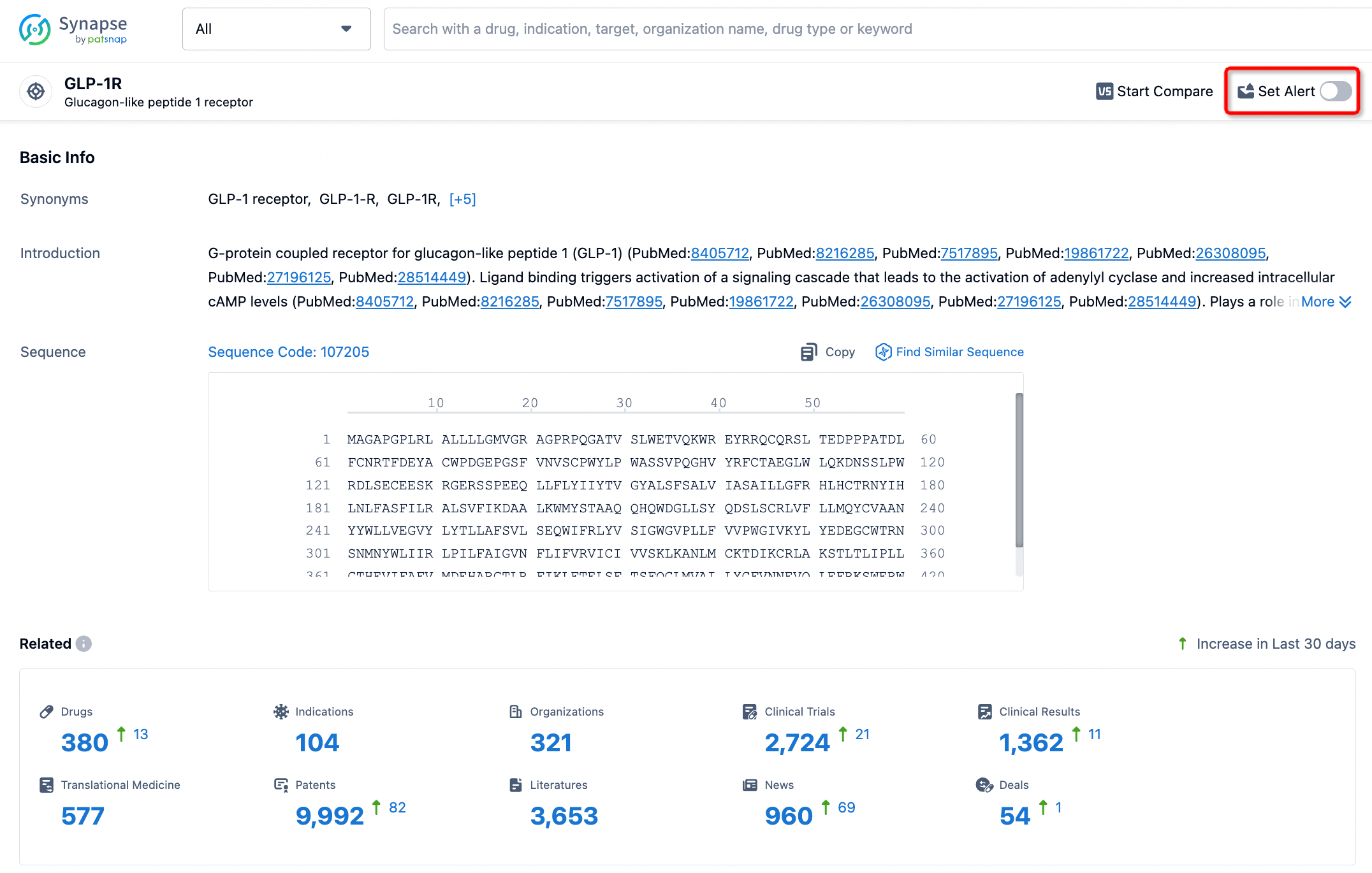
In the Synapse database, you can stay updated on the latest research and development advances of all targets. This service is accessible anytime and anywhere, with updates available daily or weekly. Use the "Set Alert" function to stay informed. Click on the image below to embark on a brand new journey of drug discovery!


AI Agents Built for Biopharma Breakthroughs
Accelerate discovery. Empower decisions. Transform outcomes.
Get started for free today!
Accelerate Strategic R&D decision making with Synapse, PatSnap’s AI-powered Connected Innovation Intelligence Platform Built for Life Sciences Professionals.
Start your data trial now!
Synapse data is also accessible to external entities via APIs or data packages. Empower better decisions with the latest in pharmaceutical intelligence.