Request Demo
What are IL-22R antagonists and how do they work?
21 June 2024
Interleukin-22 (IL-22) is a cytokine that plays a crucial role in immune regulation and inflammatory responses. It exerts its effects predominantly through the IL-22 receptor (IL-22R), which is expressed on the surface of various target cells, including epithelial cells and certain types of immune cells. While IL-22 is essential for maintaining mucosal barriers and tissue repair, its dysregulation has been implicated in several chronic inflammatory and autoimmune diseases. This has led to the development of IL-22R antagonists, a class of therapeutic agents designed to inhibit the activity of IL-22 by blocking its interaction with its receptor.
IL-22R antagonists work by binding to the IL-22 receptor, thereby preventing IL-22 from exerting its biological effects. The IL-22 receptor is a heterodimer composed of IL-22R1 and IL-10R2 subunits. When IL-22 binds to this receptor complex, it triggers a cascade of intracellular signaling that leads to the activation of various downstream pathways, including the STAT3 (Signal Transducer and Activator of Transcription 3) pathway, which is involved in cell survival, proliferation, and inflammation. By blocking this interaction, IL-22R antagonists effectively prevent the pro-inflammatory and tissue-damaging effects of IL-22, offering a promising therapeutic strategy for conditions where IL-22 is pathologically overactive.
The mechanism of action of IL-22R antagonists is relatively straightforward but highly targeted. These antagonists can be monoclonal antibodies, small molecules, or engineered proteins designed to specifically bind to either the IL-22 ligand or the IL-22 receptor. By doing so, they block the formation of the IL-22/IL-22R complex, thereby inhibiting downstream signaling pathways that lead to inflammation and tissue damage. This targeted approach not only reduces the pathogenic effects of IL-22 but also preserves the beneficial aspects of other cytokines and immune responses, minimizing the potential for broad immunosuppression.
IL-22R antagonists have shown promise in the treatment of various diseases, particularly those characterized by chronic inflammation and autoimmunity. One of the primary areas of interest is inflammatory bowel disease (IBD), which includes conditions like Crohn's disease and ulcerative colitis. In these diseases, IL-22 contributes to the inflammatory milieu that damages the intestinal lining, leading to symptoms such as abdominal pain, diarrhea, and weight loss. Clinical trials have demonstrated that IL-22R antagonists can reduce inflammation and promote mucosal healing in patients with IBD, offering a new avenue for treatment beyond traditional immunosuppressive therapies.
Another significant application of IL-22R antagonists is in the management of psoriasis, a chronic skin condition characterized by red, scaly patches that result from excessive proliferation of skin cells and inflammation. Studies have shown that IL-22 is upregulated in psoriatic lesions and contributes to the pathological changes seen in the skin. By blocking IL-22 signaling, IL-22R antagonists can reduce skin inflammation and normalize skin cell proliferation, leading to significant improvements in the severity of psoriasis.
IL-22R antagonists are also being investigated for their potential in treating respiratory diseases such as chronic obstructive pulmonary disease (COPD) and asthma. In these conditions, IL-22 contributes to airway inflammation and remodeling, exacerbating symptoms like shortness of breath, wheezing, and coughing. Preliminary research suggests that IL-22R antagonists can attenuate these inflammatory processes, thereby improving lung function and reducing the frequency and severity of exacerbations.
Beyond these applications, ongoing research is exploring the potential of IL-22R antagonists in a variety of other conditions, including rheumatoid arthritis, multiple sclerosis, and certain types of cancer. While the therapeutic potential of IL-22R antagonists is still being fully elucidated, the early results are promising and suggest that these agents could become valuable tools in the management of a wide range of inflammatory and autoimmune diseases.
In conclusion, IL-22R antagonists represent a novel and targeted approach to modulating the immune system. By specifically inhibiting the activity of IL-22, these agents offer a promising new treatment strategy for diseases characterized by chronic inflammation and tissue damage. As research progresses, it is likely that the clinical applications of IL-22R antagonists will continue to expand, providing new hope for patients with these challenging conditions.
IL-22R antagonists work by binding to the IL-22 receptor, thereby preventing IL-22 from exerting its biological effects. The IL-22 receptor is a heterodimer composed of IL-22R1 and IL-10R2 subunits. When IL-22 binds to this receptor complex, it triggers a cascade of intracellular signaling that leads to the activation of various downstream pathways, including the STAT3 (Signal Transducer and Activator of Transcription 3) pathway, which is involved in cell survival, proliferation, and inflammation. By blocking this interaction, IL-22R antagonists effectively prevent the pro-inflammatory and tissue-damaging effects of IL-22, offering a promising therapeutic strategy for conditions where IL-22 is pathologically overactive.
The mechanism of action of IL-22R antagonists is relatively straightforward but highly targeted. These antagonists can be monoclonal antibodies, small molecules, or engineered proteins designed to specifically bind to either the IL-22 ligand or the IL-22 receptor. By doing so, they block the formation of the IL-22/IL-22R complex, thereby inhibiting downstream signaling pathways that lead to inflammation and tissue damage. This targeted approach not only reduces the pathogenic effects of IL-22 but also preserves the beneficial aspects of other cytokines and immune responses, minimizing the potential for broad immunosuppression.
IL-22R antagonists have shown promise in the treatment of various diseases, particularly those characterized by chronic inflammation and autoimmunity. One of the primary areas of interest is inflammatory bowel disease (IBD), which includes conditions like Crohn's disease and ulcerative colitis. In these diseases, IL-22 contributes to the inflammatory milieu that damages the intestinal lining, leading to symptoms such as abdominal pain, diarrhea, and weight loss. Clinical trials have demonstrated that IL-22R antagonists can reduce inflammation and promote mucosal healing in patients with IBD, offering a new avenue for treatment beyond traditional immunosuppressive therapies.
Another significant application of IL-22R antagonists is in the management of psoriasis, a chronic skin condition characterized by red, scaly patches that result from excessive proliferation of skin cells and inflammation. Studies have shown that IL-22 is upregulated in psoriatic lesions and contributes to the pathological changes seen in the skin. By blocking IL-22 signaling, IL-22R antagonists can reduce skin inflammation and normalize skin cell proliferation, leading to significant improvements in the severity of psoriasis.
IL-22R antagonists are also being investigated for their potential in treating respiratory diseases such as chronic obstructive pulmonary disease (COPD) and asthma. In these conditions, IL-22 contributes to airway inflammation and remodeling, exacerbating symptoms like shortness of breath, wheezing, and coughing. Preliminary research suggests that IL-22R antagonists can attenuate these inflammatory processes, thereby improving lung function and reducing the frequency and severity of exacerbations.
Beyond these applications, ongoing research is exploring the potential of IL-22R antagonists in a variety of other conditions, including rheumatoid arthritis, multiple sclerosis, and certain types of cancer. While the therapeutic potential of IL-22R antagonists is still being fully elucidated, the early results are promising and suggest that these agents could become valuable tools in the management of a wide range of inflammatory and autoimmune diseases.
In conclusion, IL-22R antagonists represent a novel and targeted approach to modulating the immune system. By specifically inhibiting the activity of IL-22, these agents offer a promising new treatment strategy for diseases characterized by chronic inflammation and tissue damage. As research progresses, it is likely that the clinical applications of IL-22R antagonists will continue to expand, providing new hope for patients with these challenging conditions.
How to obtain the latest development progress of all targets?
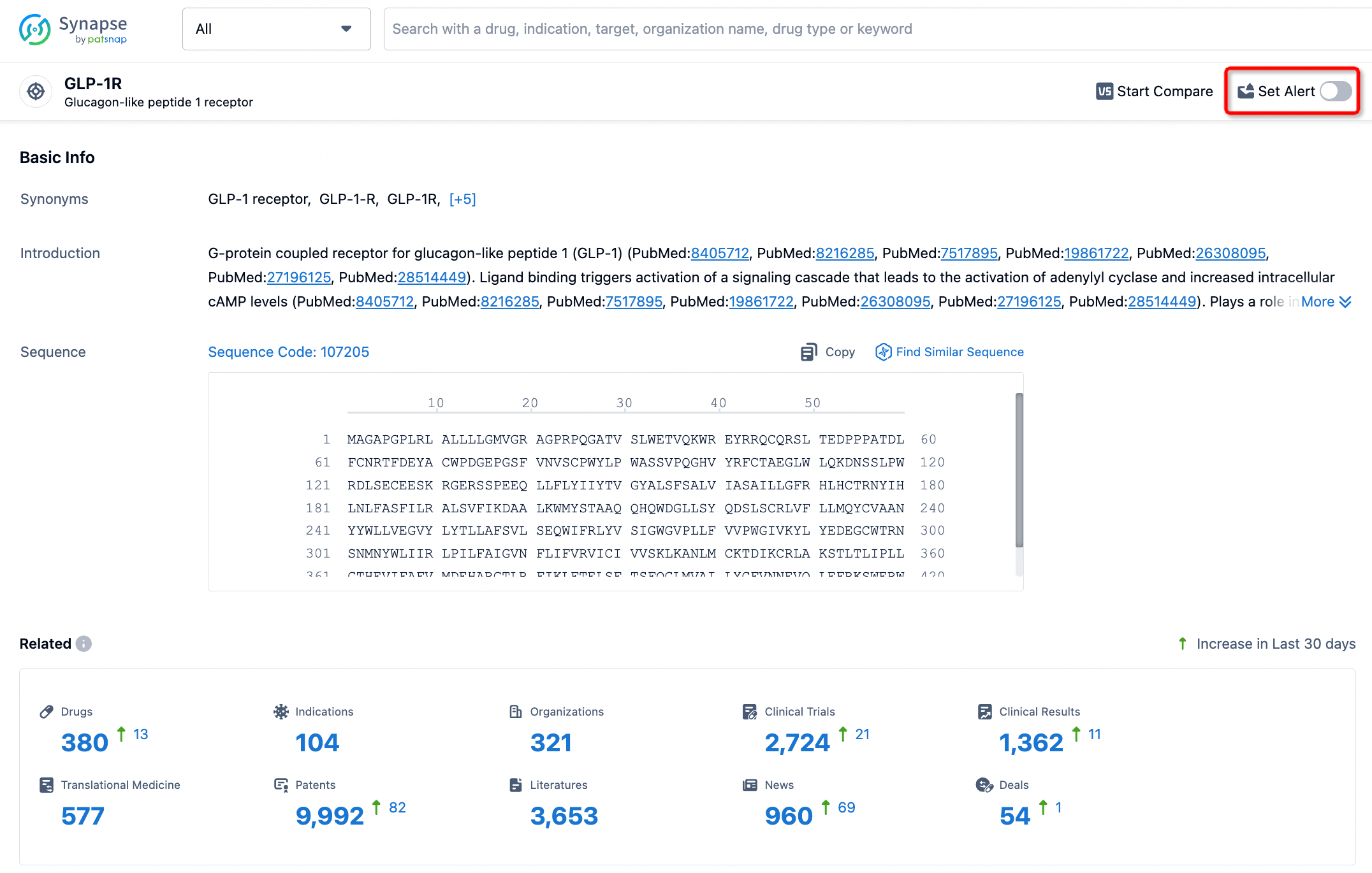
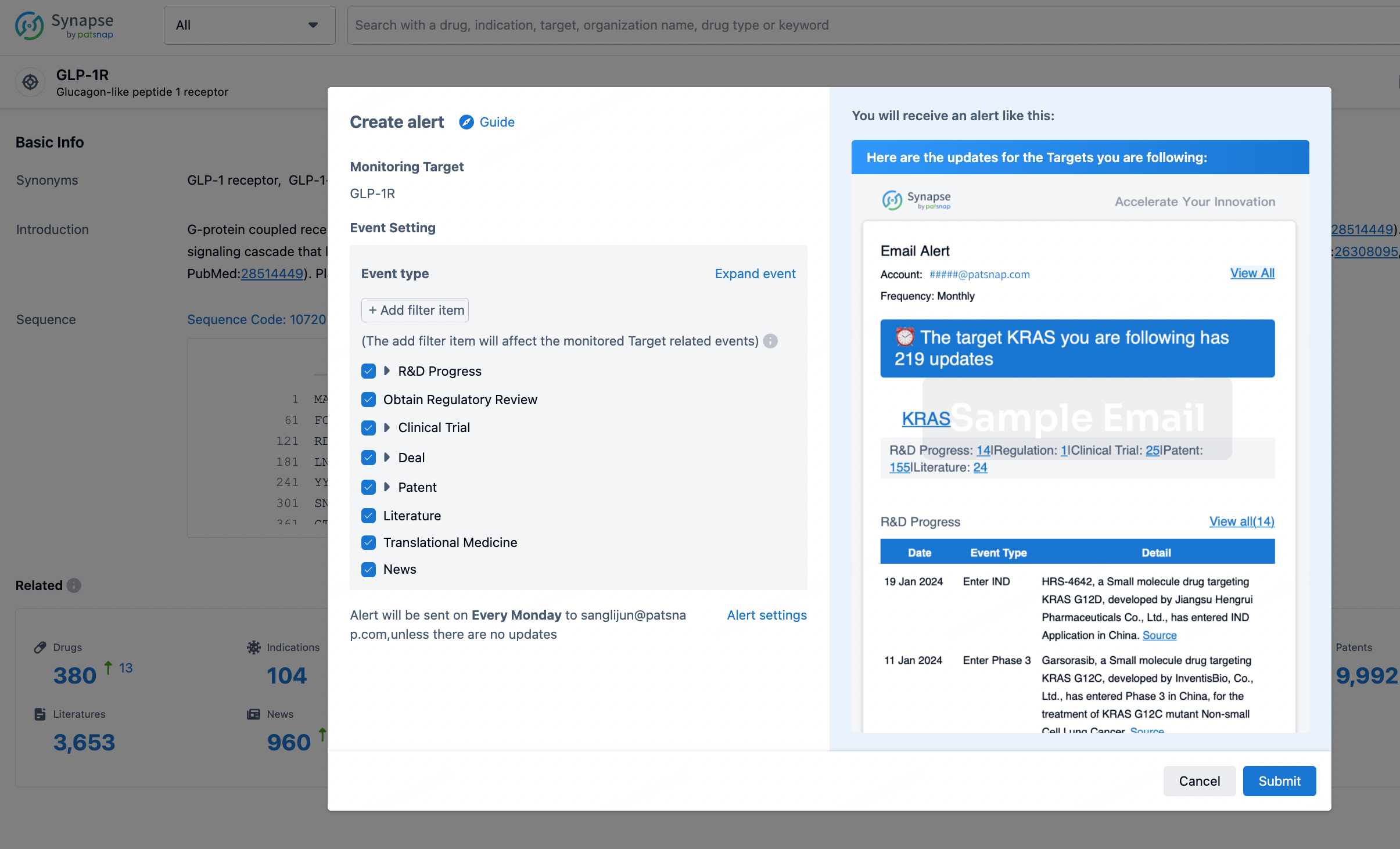
In the Synapse database, you can stay updated on the latest research and development advances of all targets. This service is accessible anytime and anywhere, with updates available daily or weekly. Use the "Set Alert" function to stay informed. Click on the image below to embark on a brand new journey of drug discovery!

AI Agents Built for Biopharma Breakthroughs
Accelerate discovery. Empower decisions. Transform outcomes.
Get started for free today!
Accelerate Strategic R&D decision making with Synapse, PatSnap’s AI-powered Connected Innovation Intelligence Platform Built for Life Sciences Professionals.
Start your data trial now!
Synapse data is also accessible to external entities via APIs or data packages. Empower better decisions with the latest in pharmaceutical intelligence.