Request Demo
What are IL-2R modulators and how do they work?
21 June 2024
Introduction to IL-2R modulators
Interleukin-2 receptor (IL-2R) modulators represent a crucial category of therapeutic agents in immunology and oncology. These modulators target the interleukin-2 receptor, which plays a vital role in the regulation of the immune system. IL-2R is a complex composed of three subunits: alpha (IL-2Rα, also known as CD25), beta (IL-2Rβ), and gamma (IL-2Rγ). The high-affinity receptor complex formed by these subunits is essential for the binding of IL-2, a cytokine that acts as a powerful growth factor for T-cells. By modulating the activity of IL-2R, these therapeutic agents can either enhance or suppress the immune response, making them highly versatile for various medical applications.
How do IL-2R modulators work?
IL-2R modulators function by influencing the interaction between IL-2 and its receptor. This interaction is pivotal for T-cell proliferation, differentiation, and survival. There are two primary types of IL-2R modulators: agonists and antagonists.
Agonists are designed to enhance IL-2 signaling. They bind to the IL-2 receptor and mimic the activity of IL-2, promoting T-cell growth and activation. This enhancement is particularly beneficial in scenarios where a robust immune response is required, such as in cancer immunotherapy. By boosting the proliferation and activity of cytotoxic T-cells, IL-2R agonists can help the immune system to more effectively target and destroy cancer cells.
On the other hand, antagonists inhibit IL-2 signaling. They block the binding of IL-2 to its receptor, thereby preventing the activation and proliferation of T-cells. This suppression of the immune response is useful in conditions where the immune system is overactive, such as in autoimmune diseases or in preventing transplant rejection. By curbing the activity of T-cells, IL-2R antagonists help to mitigate the damage caused by an overactive immune system.
In addition to these direct modulators, there are also IL-2R targeted antibodies that can either deplete cells expressing the IL-2 receptor or block the receptor itself. These antibodies, such as basiliximab and daclizumab, bind to the IL-2Rα subunit, interfering with IL-2 signaling and thereby modulating the immune response in a precise manner.
What are IL-2R modulators used for?
IL-2R modulators have a broad range of applications in both immunotherapy and immunosuppression. In oncology, IL-2R agonists are being explored for their potential to enhance anti-tumor immunity. For instance, high-dose IL-2 therapy has been used to treat metastatic melanoma and renal cell carcinoma. By stimulating the growth and activity of tumor-specific T-cells, IL-2R agonists can enhance the body’s natural ability to fight cancer. Clinical trials are ongoing to improve the efficacy and reduce the toxicity of these treatments, aiming to make them more widely applicable.
Conversely, IL-2R antagonists and IL-2R targeted antibodies are primarily used in the context of immunosuppression. These agents are particularly valuable in preventing organ transplant rejection. Transplant recipients are often prescribed IL-2R antagonists to inhibit the activation of T-cells that could otherwise attack the transplanted organ. By limiting this immune response, IL-2R antagonists help to ensure the longevity and functionality of the transplant.
Furthermore, IL-2R modulators are employed in the treatment of autoimmune diseases such as multiple sclerosis, rheumatoid arthritis, and inflammatory bowel disease. In these conditions, the immune system mistakenly targets the body’s own tissues. IL-2R antagonists can help to suppress this misguided immune response, thereby alleviating symptoms and preventing further tissue damage.
In conclusion, IL-2R modulators are a versatile and powerful class of therapeutic agents with applications spanning from cancer immunotherapy to the treatment of autoimmune diseases and the prevention of transplant rejection. By precisely modulating the activity of the IL-2 receptor, these agents offer targeted and effective solutions to a variety of medical challenges. As research continues, the potential for IL-2R modulators to transform the landscape of immunotherapy and immunosuppression remains promising.
Interleukin-2 receptor (IL-2R) modulators represent a crucial category of therapeutic agents in immunology and oncology. These modulators target the interleukin-2 receptor, which plays a vital role in the regulation of the immune system. IL-2R is a complex composed of three subunits: alpha (IL-2Rα, also known as CD25), beta (IL-2Rβ), and gamma (IL-2Rγ). The high-affinity receptor complex formed by these subunits is essential for the binding of IL-2, a cytokine that acts as a powerful growth factor for T-cells. By modulating the activity of IL-2R, these therapeutic agents can either enhance or suppress the immune response, making them highly versatile for various medical applications.
How do IL-2R modulators work?
IL-2R modulators function by influencing the interaction between IL-2 and its receptor. This interaction is pivotal for T-cell proliferation, differentiation, and survival. There are two primary types of IL-2R modulators: agonists and antagonists.
Agonists are designed to enhance IL-2 signaling. They bind to the IL-2 receptor and mimic the activity of IL-2, promoting T-cell growth and activation. This enhancement is particularly beneficial in scenarios where a robust immune response is required, such as in cancer immunotherapy. By boosting the proliferation and activity of cytotoxic T-cells, IL-2R agonists can help the immune system to more effectively target and destroy cancer cells.
On the other hand, antagonists inhibit IL-2 signaling. They block the binding of IL-2 to its receptor, thereby preventing the activation and proliferation of T-cells. This suppression of the immune response is useful in conditions where the immune system is overactive, such as in autoimmune diseases or in preventing transplant rejection. By curbing the activity of T-cells, IL-2R antagonists help to mitigate the damage caused by an overactive immune system.
In addition to these direct modulators, there are also IL-2R targeted antibodies that can either deplete cells expressing the IL-2 receptor or block the receptor itself. These antibodies, such as basiliximab and daclizumab, bind to the IL-2Rα subunit, interfering with IL-2 signaling and thereby modulating the immune response in a precise manner.
What are IL-2R modulators used for?
IL-2R modulators have a broad range of applications in both immunotherapy and immunosuppression. In oncology, IL-2R agonists are being explored for their potential to enhance anti-tumor immunity. For instance, high-dose IL-2 therapy has been used to treat metastatic melanoma and renal cell carcinoma. By stimulating the growth and activity of tumor-specific T-cells, IL-2R agonists can enhance the body’s natural ability to fight cancer. Clinical trials are ongoing to improve the efficacy and reduce the toxicity of these treatments, aiming to make them more widely applicable.
Conversely, IL-2R antagonists and IL-2R targeted antibodies are primarily used in the context of immunosuppression. These agents are particularly valuable in preventing organ transplant rejection. Transplant recipients are often prescribed IL-2R antagonists to inhibit the activation of T-cells that could otherwise attack the transplanted organ. By limiting this immune response, IL-2R antagonists help to ensure the longevity and functionality of the transplant.
Furthermore, IL-2R modulators are employed in the treatment of autoimmune diseases such as multiple sclerosis, rheumatoid arthritis, and inflammatory bowel disease. In these conditions, the immune system mistakenly targets the body’s own tissues. IL-2R antagonists can help to suppress this misguided immune response, thereby alleviating symptoms and preventing further tissue damage.
In conclusion, IL-2R modulators are a versatile and powerful class of therapeutic agents with applications spanning from cancer immunotherapy to the treatment of autoimmune diseases and the prevention of transplant rejection. By precisely modulating the activity of the IL-2 receptor, these agents offer targeted and effective solutions to a variety of medical challenges. As research continues, the potential for IL-2R modulators to transform the landscape of immunotherapy and immunosuppression remains promising.
How to obtain the latest development progress of all targets?
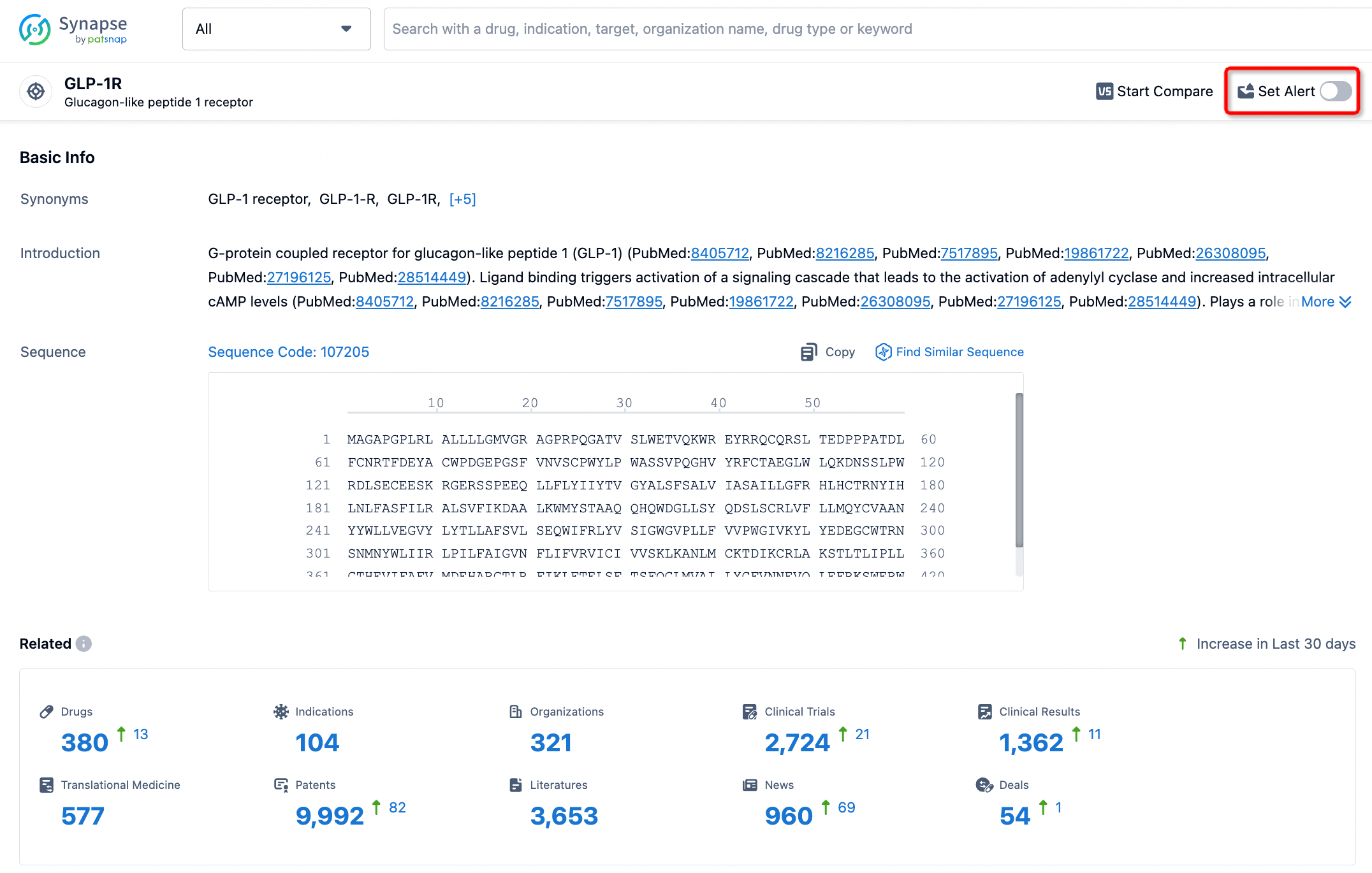
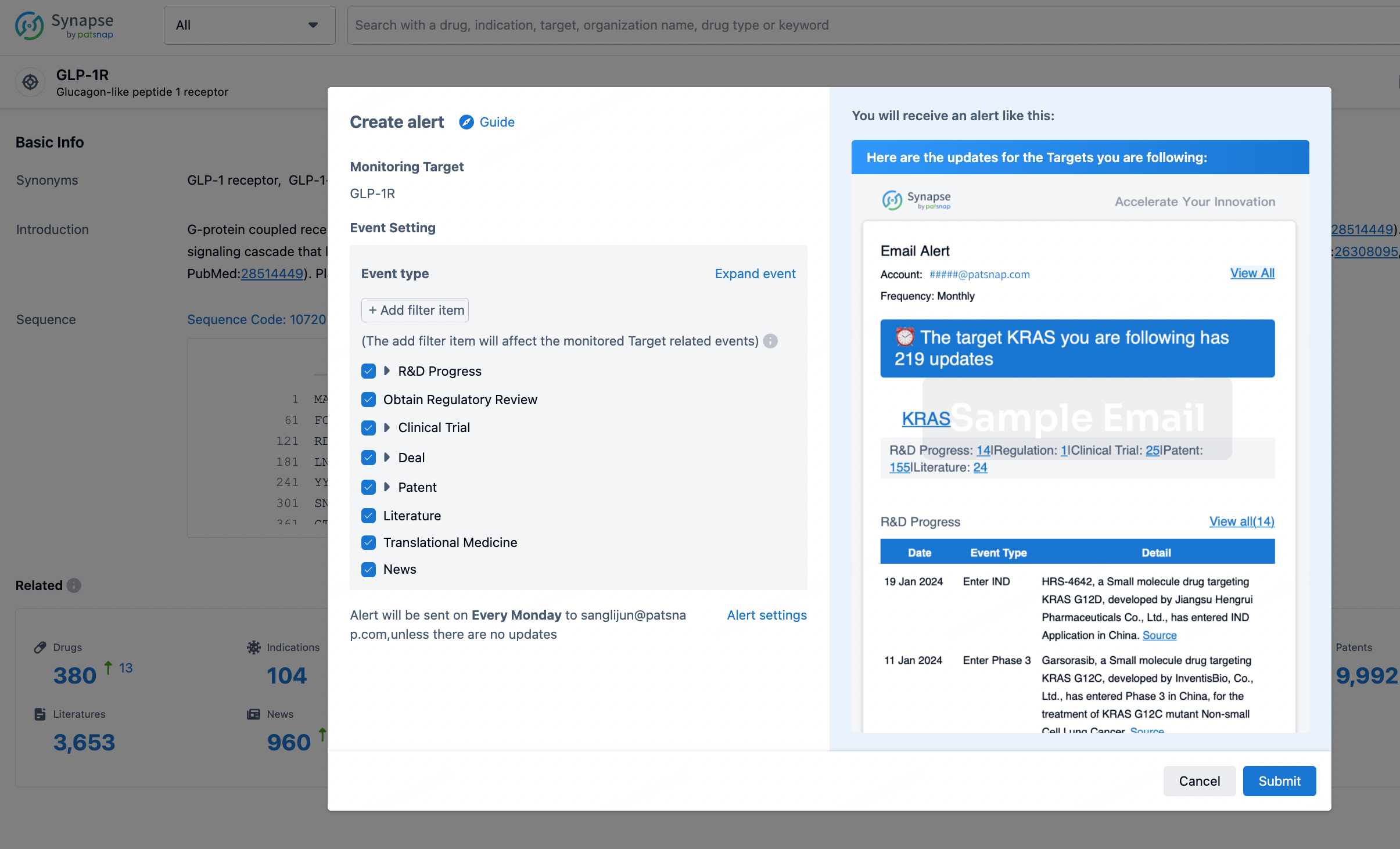
In the Synapse database, you can stay updated on the latest research and development advances of all targets. This service is accessible anytime and anywhere, with updates available daily or weekly. Use the "Set Alert" function to stay informed. Click on the image below to embark on a brand new journey of drug discovery!

AI Agents Built for Biopharma Breakthroughs
Accelerate discovery. Empower decisions. Transform outcomes.
Get started for free today!
Accelerate Strategic R&D decision making with Synapse, PatSnap’s AI-powered Connected Innovation Intelligence Platform Built for Life Sciences Professionals.
Start your data trial now!
Synapse data is also accessible to external entities via APIs or data packages. Empower better decisions with the latest in pharmaceutical intelligence.