Request Demo
What are IL-4Rα modulators and how do they work?
21 June 2024
In recent years, the realm of immunotherapy has made significant strides, particularly with the advent of targeted therapies aimed at modulating the immune system. One such breakthrough involves IL-4Rα modulators. These innovative agents have garnered considerable attention for their potential to transform the treatment landscape for various inflammatory and autoimmune conditions. Understanding IL-4Rα modulators requires delving into their mechanisms of action, therapeutic applications, and the promising future they hold in medical science.
Interleukin-4 receptor alpha (IL-4Rα) is a critical component of the immune system that plays a pivotal role in the regulation of inflammatory responses. The IL-4Rα subunit is part of the receptor complexes for both IL-4 and IL-13, cytokines that are instrumental in driving the Th2 (T-helper type 2) immune response. Th2 responses are typically associated with the promotion of allergic reactions and the suppression of Th1-mediated immunity, which is crucial for fighting off intracellular pathogens. IL-4Rα modulators are designed to either inhibit or enhance the signaling pathways mediated by IL-4 and IL-13, thus offering a targeted approach to manage various immune-related conditions.
IL-4Rα modulators operate by influencing the signaling cascades triggered upon the binding of IL-4 or IL-13 to their receptor complex. These modulators can be broadly categorized into antagonists and agonists, each serving distinct therapeutic purposes. IL-4Rα antagonists work by blocking the interaction between IL-4/IL-13 and their receptor, thereby inhibiting the downstream signaling pathways that lead to inflammation and allergic responses. This blockade can be achieved through various mechanisms, such as the use of monoclonal antibodies that specifically target the IL-4Rα subunit.
On the other hand, IL-4Rα agonists mimic the action of IL-4 or IL-13 by binding to the receptor and activating similar signaling pathways. These agonists can be useful in conditions where an enhanced Th2 response is desirable. The modulation of IL-4Rα activity thus provides a versatile tool for fine-tuning immune responses, making these agents invaluable in the management of a wide array of diseases.
The therapeutic potential of IL-4Rα modulators spans a diverse range of medical conditions, primarily those involving dysregulated immune responses. One of the most well-established uses of IL-4Rα antagonists is in the treatment of atopic dermatitis (AD), a chronic inflammatory skin disease characterized by intense itching and eczematous lesions. Dupilumab, a monoclonal antibody against IL-4Rα, has emerged as a groundbreaking therapy for moderate-to-severe AD, offering significant relief to patients who previously had limited treatment options.
Beyond atopic dermatitis, IL-4Rα modulators have shown promise in the management of other allergic diseases, such as asthma and chronic rhinosinusitis with nasal polyps (CRSwNP). Asthma, particularly its severe forms, is often driven by Th2-mediated inflammation, making IL-4Rα antagonists an effective therapeutic strategy. Clinical trials have demonstrated that these modulators can reduce asthma exacerbations and improve lung function, underscoring their potential to enhance the quality of life for asthmatic patients.
IL-4Rα modulators are also being investigated for their potential in treating autoimmune diseases, where the immune system erroneously targets the body's own tissues. Conditions like rheumatoid arthritis (RA) and systemic lupus erythematosus (SLE) involve complex immune dysregulation, and preliminary studies suggest that modulating IL-4Rα activity could help restore immune balance and alleviate disease symptoms.
In addition to their application in allergic and autoimmune diseases, IL-4Rα modulators are being explored for their potential role in cancer immunotherapy. The tumor microenvironment often exhibits an immune-privileged status that facilitates tumor growth and metastasis. By modulating IL-4Rα activity, researchers aim to shift the immune balance within the tumor microenvironment, potentially enhancing anti-tumor immunity and improving the efficacy of existing cancer treatments.
In conclusion, IL-4Rα modulators represent a promising frontier in immunotherapy, offering targeted and effective treatment options for a variety of inflammatory, allergic, and autoimmune conditions. As research continues to unravel the complexities of IL-4Rα signaling and its implications in different diseases, these modulators are poised to play an increasingly significant role in precision medicine, ultimately improving patient outcomes and quality of life.
Interleukin-4 receptor alpha (IL-4Rα) is a critical component of the immune system that plays a pivotal role in the regulation of inflammatory responses. The IL-4Rα subunit is part of the receptor complexes for both IL-4 and IL-13, cytokines that are instrumental in driving the Th2 (T-helper type 2) immune response. Th2 responses are typically associated with the promotion of allergic reactions and the suppression of Th1-mediated immunity, which is crucial for fighting off intracellular pathogens. IL-4Rα modulators are designed to either inhibit or enhance the signaling pathways mediated by IL-4 and IL-13, thus offering a targeted approach to manage various immune-related conditions.
IL-4Rα modulators operate by influencing the signaling cascades triggered upon the binding of IL-4 or IL-13 to their receptor complex. These modulators can be broadly categorized into antagonists and agonists, each serving distinct therapeutic purposes. IL-4Rα antagonists work by blocking the interaction between IL-4/IL-13 and their receptor, thereby inhibiting the downstream signaling pathways that lead to inflammation and allergic responses. This blockade can be achieved through various mechanisms, such as the use of monoclonal antibodies that specifically target the IL-4Rα subunit.
On the other hand, IL-4Rα agonists mimic the action of IL-4 or IL-13 by binding to the receptor and activating similar signaling pathways. These agonists can be useful in conditions where an enhanced Th2 response is desirable. The modulation of IL-4Rα activity thus provides a versatile tool for fine-tuning immune responses, making these agents invaluable in the management of a wide array of diseases.
The therapeutic potential of IL-4Rα modulators spans a diverse range of medical conditions, primarily those involving dysregulated immune responses. One of the most well-established uses of IL-4Rα antagonists is in the treatment of atopic dermatitis (AD), a chronic inflammatory skin disease characterized by intense itching and eczematous lesions. Dupilumab, a monoclonal antibody against IL-4Rα, has emerged as a groundbreaking therapy for moderate-to-severe AD, offering significant relief to patients who previously had limited treatment options.
Beyond atopic dermatitis, IL-4Rα modulators have shown promise in the management of other allergic diseases, such as asthma and chronic rhinosinusitis with nasal polyps (CRSwNP). Asthma, particularly its severe forms, is often driven by Th2-mediated inflammation, making IL-4Rα antagonists an effective therapeutic strategy. Clinical trials have demonstrated that these modulators can reduce asthma exacerbations and improve lung function, underscoring their potential to enhance the quality of life for asthmatic patients.
IL-4Rα modulators are also being investigated for their potential in treating autoimmune diseases, where the immune system erroneously targets the body's own tissues. Conditions like rheumatoid arthritis (RA) and systemic lupus erythematosus (SLE) involve complex immune dysregulation, and preliminary studies suggest that modulating IL-4Rα activity could help restore immune balance and alleviate disease symptoms.
In addition to their application in allergic and autoimmune diseases, IL-4Rα modulators are being explored for their potential role in cancer immunotherapy. The tumor microenvironment often exhibits an immune-privileged status that facilitates tumor growth and metastasis. By modulating IL-4Rα activity, researchers aim to shift the immune balance within the tumor microenvironment, potentially enhancing anti-tumor immunity and improving the efficacy of existing cancer treatments.
In conclusion, IL-4Rα modulators represent a promising frontier in immunotherapy, offering targeted and effective treatment options for a variety of inflammatory, allergic, and autoimmune conditions. As research continues to unravel the complexities of IL-4Rα signaling and its implications in different diseases, these modulators are poised to play an increasingly significant role in precision medicine, ultimately improving patient outcomes and quality of life.
How to obtain the latest development progress of all targets?
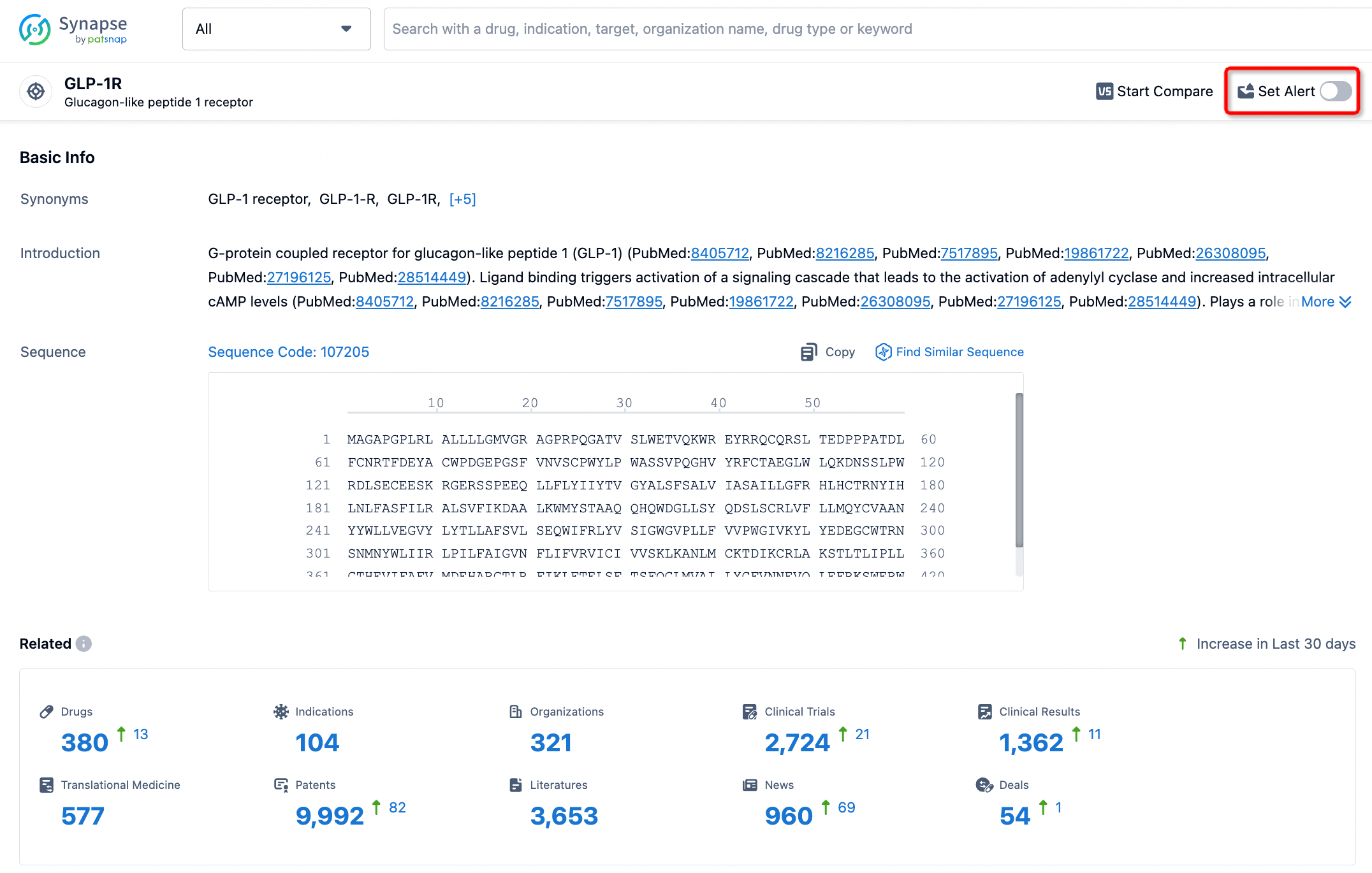
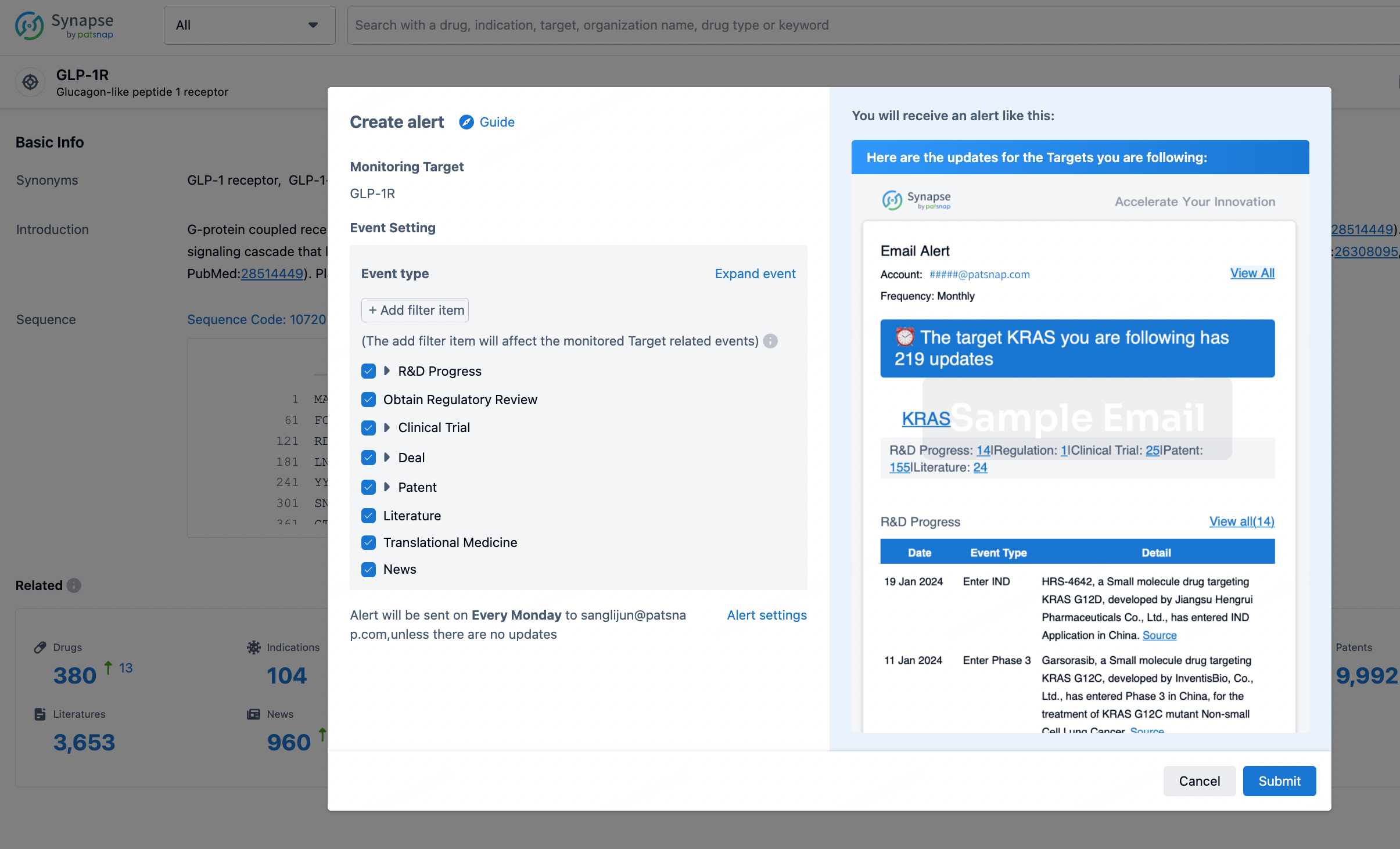
In the Synapse database, you can stay updated on the latest research and development advances of all targets. This service is accessible anytime and anywhere, with updates available daily or weekly. Use the "Set Alert" function to stay informed. Click on the image below to embark on a brand new journey of drug discovery!

AI Agents Built for Biopharma Breakthroughs
Accelerate discovery. Empower decisions. Transform outcomes.
Get started for free today!
Accelerate Strategic R&D decision making with Synapse, PatSnap’s AI-powered Connected Innovation Intelligence Platform Built for Life Sciences Professionals.
Start your data trial now!
Synapse data is also accessible to external entities via APIs or data packages. Empower better decisions with the latest in pharmaceutical intelligence.