Request Demo
What are KLK14 inhibitors and how do they work?
25 June 2024
Kallikrein-related peptidase 14, commonly known as KLK14, is a serine protease enzyme implicated in various physiological processes and pathological conditions. Like other members of the kallikrein family, KLK14 is involved in the degradation of extracellular matrix components, activation of growth factors, and modulation of cell signaling pathways. Given its widespread involvement in the body, particularly in tissues such as the skin, prostate, and central nervous system, the regulation of KLK14 activity has attracted significant scientific interest. KLK14 inhibitors are molecules designed to specifically reduce or block the activity of KLK14, thereby offering potential therapeutic benefits for a range of conditions.
KLK14 inhibitors function by binding to the active site of the enzyme, thereby preventing it from interacting with its natural substrates. This binding can occur through different mechanisms, depending on the type of inhibitor. Some inhibitors are small molecules that fit snugly into the enzyme's active site, essentially "plugging" it and preventing substrate access. Others are larger peptides or proteins that may bind to regions adjacent to the active site, causing conformational changes that reduce the enzyme's activity. In both cases, the goal is to reduce the enzymatic activity of KLK14, thereby mitigating its effects on extracellular matrix remodeling, inflammation, and other physiological processes.
Additionally, KLK14 inhibitors can be designed to be highly specific, targeting only the KLK14 enzyme without affecting other related kallikreins or serine proteases. This specificity is crucial for minimizing off-target effects and ensuring that only the pathological processes involving KLK14 are addressed. Advances in computational biology and high-throughput screening have accelerated the discovery and optimization of these inhibitors, making it increasingly feasible to develop highly selective KLK14 inhibitors.
The therapeutic applications of KLK14 inhibitors are diverse, reflecting the enzyme's involvement in multiple physiological and pathological processes. One of the most promising areas for KLK14 inhibitor application is in dermatology. KLK14 has been implicated in various skin conditions, including atopic dermatitis, psoriasis, and chronic wounds. By inhibiting KLK14, it may be possible to reduce inflammation, promote wound healing, and restore skin barrier function, thereby offering significant benefits for patients with these conditions.
In oncology, KLK14 inhibitors hold potential as well. KLK14 is overexpressed in several types of cancer, including prostate, ovarian, and breast cancers. Its role in promoting tumor growth, invasion, and metastasis makes it an attractive target for cancer therapy. By inhibiting KLK14, it may be possible to slow tumor progression, reduce metastatic spread, and enhance the efficacy of existing treatments. Preclinical studies have shown promising results, suggesting that KLK14 inhibitors could become a valuable addition to the oncologist's toolkit.
Neurological applications of KLK14 inhibitors are also being explored. KLK14 is expressed in the central nervous system and has been linked to conditions such as Alzheimer's disease and multiple sclerosis. In these conditions, KLK14 may contribute to neuroinflammation and neurodegeneration. By selectively inhibiting KLK14, it might be possible to alleviate symptoms and slow disease progression, offering hope for patients with these debilitating neurological disorders.
Furthermore, KLK14 inhibitors may find use in gastrointestinal diseases, such as inflammatory bowel disease (IBD). The enzyme's involvement in inflammation and tissue remodeling makes it a potential target for reducing intestinal inflammation and promoting mucosal healing in IBD patients. Early studies are investigating the efficacy of KLK14 inhibitors in animal models, with the hope of translating these findings into clinical benefits.
In conclusion, KLK14 inhibitors represent a promising frontier in medical research, offering potential therapeutic benefits across a wide range of conditions. By specifically targeting the activity of KLK14, these inhibitors hold the potential to modulate key physiological processes involved in disease progression. Ongoing research and development efforts are likely to yield new and more effective KLK14 inhibitors, paving the way for novel treatments that can improve patient outcomes in dermatology, oncology, neurology, and beyond. As our understanding of KLK14 continues to grow, so too will the potential applications and impact of KLK14 inhibitors in medicine.
KLK14 inhibitors function by binding to the active site of the enzyme, thereby preventing it from interacting with its natural substrates. This binding can occur through different mechanisms, depending on the type of inhibitor. Some inhibitors are small molecules that fit snugly into the enzyme's active site, essentially "plugging" it and preventing substrate access. Others are larger peptides or proteins that may bind to regions adjacent to the active site, causing conformational changes that reduce the enzyme's activity. In both cases, the goal is to reduce the enzymatic activity of KLK14, thereby mitigating its effects on extracellular matrix remodeling, inflammation, and other physiological processes.
Additionally, KLK14 inhibitors can be designed to be highly specific, targeting only the KLK14 enzyme without affecting other related kallikreins or serine proteases. This specificity is crucial for minimizing off-target effects and ensuring that only the pathological processes involving KLK14 are addressed. Advances in computational biology and high-throughput screening have accelerated the discovery and optimization of these inhibitors, making it increasingly feasible to develop highly selective KLK14 inhibitors.
The therapeutic applications of KLK14 inhibitors are diverse, reflecting the enzyme's involvement in multiple physiological and pathological processes. One of the most promising areas for KLK14 inhibitor application is in dermatology. KLK14 has been implicated in various skin conditions, including atopic dermatitis, psoriasis, and chronic wounds. By inhibiting KLK14, it may be possible to reduce inflammation, promote wound healing, and restore skin barrier function, thereby offering significant benefits for patients with these conditions.
In oncology, KLK14 inhibitors hold potential as well. KLK14 is overexpressed in several types of cancer, including prostate, ovarian, and breast cancers. Its role in promoting tumor growth, invasion, and metastasis makes it an attractive target for cancer therapy. By inhibiting KLK14, it may be possible to slow tumor progression, reduce metastatic spread, and enhance the efficacy of existing treatments. Preclinical studies have shown promising results, suggesting that KLK14 inhibitors could become a valuable addition to the oncologist's toolkit.
Neurological applications of KLK14 inhibitors are also being explored. KLK14 is expressed in the central nervous system and has been linked to conditions such as Alzheimer's disease and multiple sclerosis. In these conditions, KLK14 may contribute to neuroinflammation and neurodegeneration. By selectively inhibiting KLK14, it might be possible to alleviate symptoms and slow disease progression, offering hope for patients with these debilitating neurological disorders.
Furthermore, KLK14 inhibitors may find use in gastrointestinal diseases, such as inflammatory bowel disease (IBD). The enzyme's involvement in inflammation and tissue remodeling makes it a potential target for reducing intestinal inflammation and promoting mucosal healing in IBD patients. Early studies are investigating the efficacy of KLK14 inhibitors in animal models, with the hope of translating these findings into clinical benefits.
In conclusion, KLK14 inhibitors represent a promising frontier in medical research, offering potential therapeutic benefits across a wide range of conditions. By specifically targeting the activity of KLK14, these inhibitors hold the potential to modulate key physiological processes involved in disease progression. Ongoing research and development efforts are likely to yield new and more effective KLK14 inhibitors, paving the way for novel treatments that can improve patient outcomes in dermatology, oncology, neurology, and beyond. As our understanding of KLK14 continues to grow, so too will the potential applications and impact of KLK14 inhibitors in medicine.
How to obtain the latest development progress of all targets?
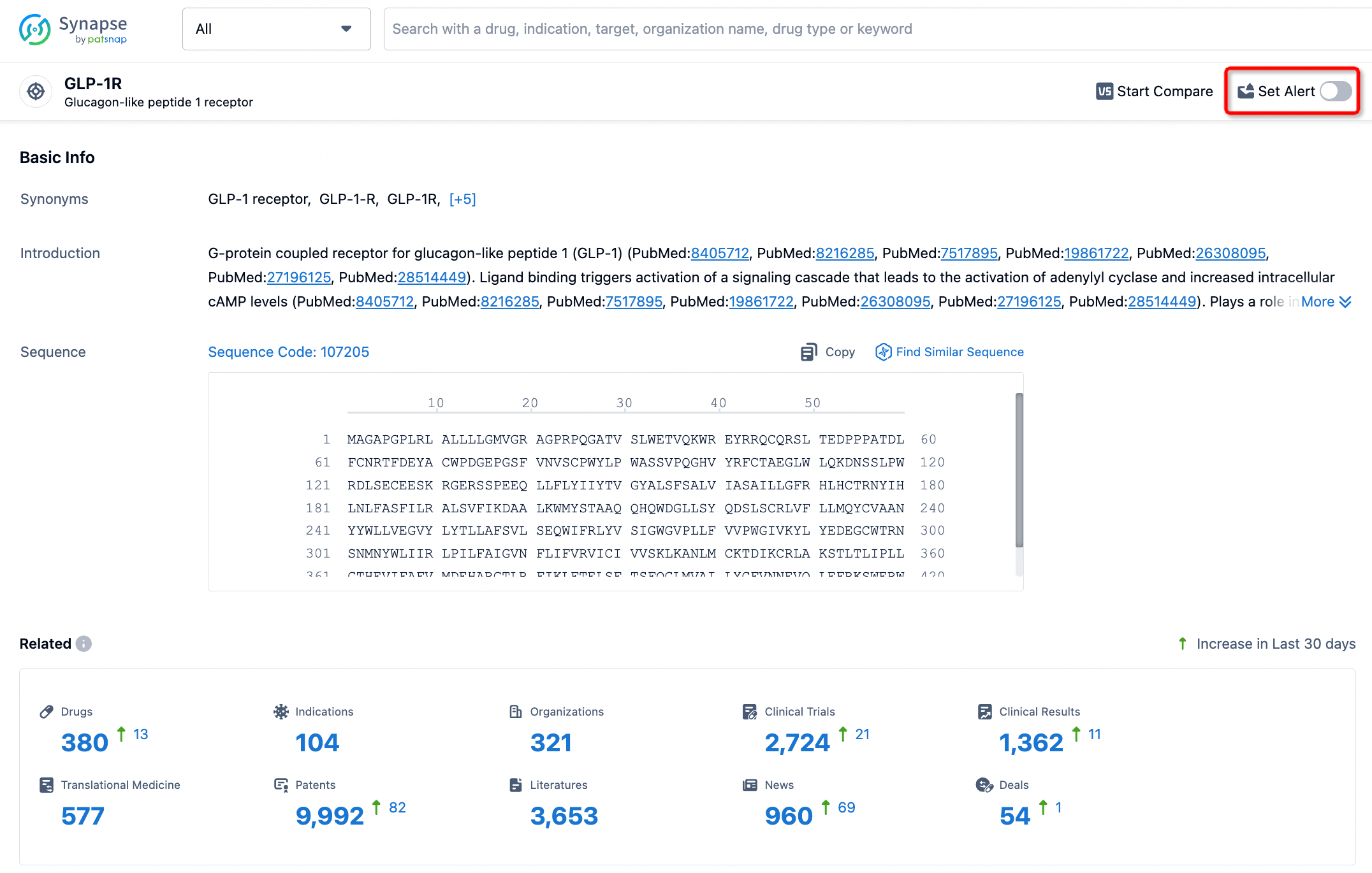
In the Synapse database, you can stay updated on the latest research and development advances of all targets. This service is accessible anytime and anywhere, with updates available daily or weekly. Use the "Set Alert" function to stay informed. Click on the image below to embark on a brand new journey of drug discovery!


AI Agents Built for Biopharma Breakthroughs
Accelerate discovery. Empower decisions. Transform outcomes.
Get started for free today!
Accelerate Strategic R&D decision making with Synapse, PatSnap’s AI-powered Connected Innovation Intelligence Platform Built for Life Sciences Professionals.
Start your data trial now!
Synapse data is also accessible to external entities via APIs or data packages. Empower better decisions with the latest in pharmaceutical intelligence.